
Choosing a water brush depends on matching the brush’s tip material, tip shape, barrel capacity, and water flow mechanism to your specific painting medium and skill level. Unlike traditional brushes that require an external water source, a water brush contains an integrated reservoir that feeds moisture directly to the bristles. This design makes it a favorite for artists on the go, but finding the right model requires understanding how these tools interact with different papers, inks, and techniques.
For beginners, a medium round brush with a flexible squeeze barrel offers a forgiving learning curve for basic washes. Advanced artists, calligraphers, and urban sketchers often require specialized tips—such as flat or detail nibs—and precise valve-controlled flow systems to prevent pooling on textured papers. By evaluating these physical features against your preferred style, you can select a tool that enhances your creative process without causing frustration.
What to Look for When Choosing a Water Brush
To select the ideal water brush, you must first understand its core anatomy. A standard water brush consists of three primary components: the synthetic tip, the water reservoir or barrel, and the flow control mechanism. The tip is almost always made of synthetic nylon fibers, which are selected for their durability, springiness, and ease of cleaning. Unlike natural hair, synthetic nylon resists staining and maintains its shape even after prolonged exposure to water and pigments.
Products mentioned in this guide
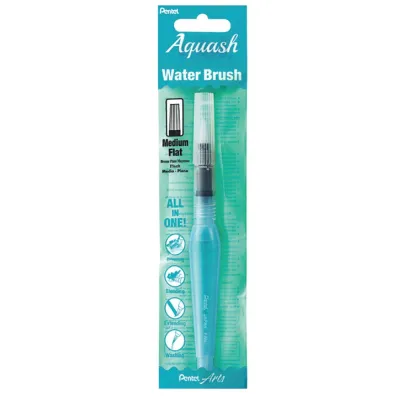
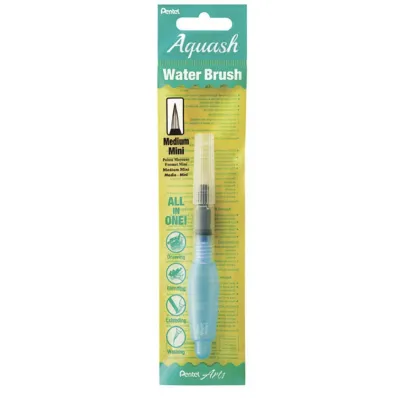
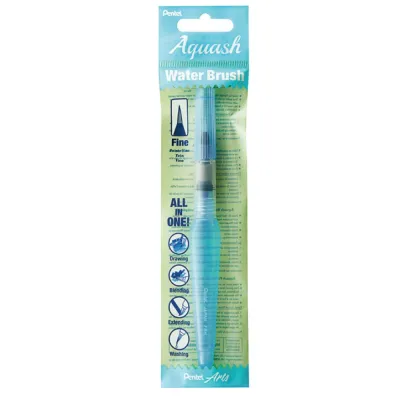
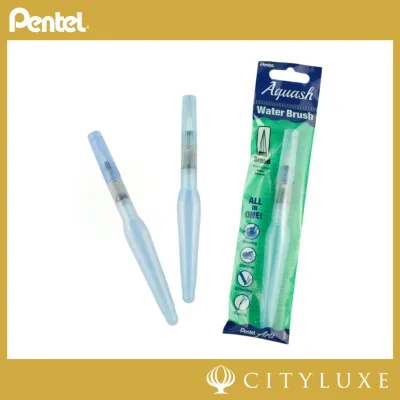
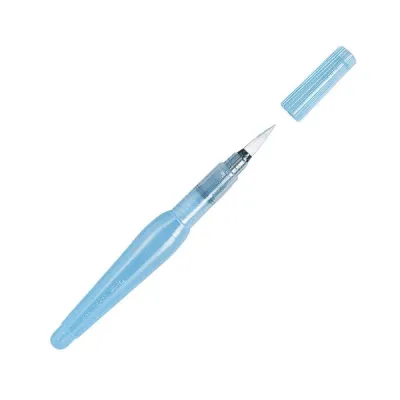
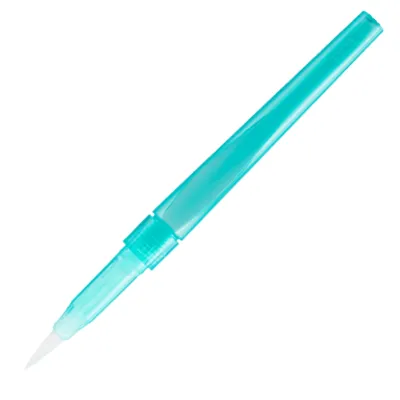
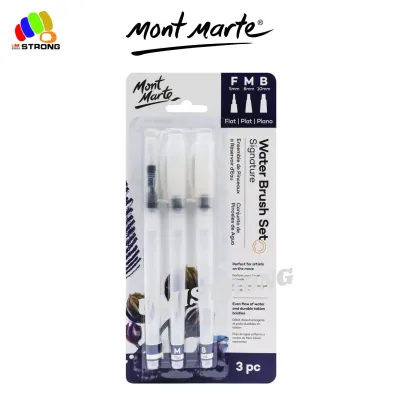
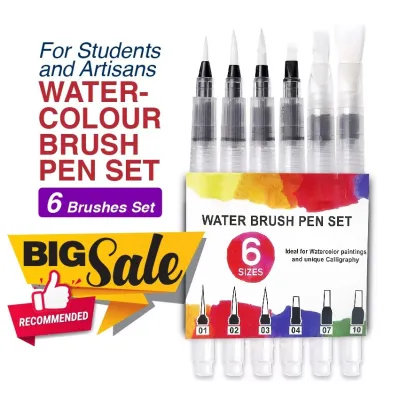
Prices are valid at publication and may change. Please refer to the product page for the latest price.
Tip shapes dictate the types of strokes and techniques you can achieve. Round tips are the most versatile, capable of producing both broad washes and relatively fine lines depending on the pressure applied. Flat tips are excellent for creating broad, even washes of color, sharp geometric edges, and straight lines. Angled tips offer a hybrid utility, allowing for both wide strokes and sharp, precise corner work. Detail tips, which are extra-fine and narrow, are engineered specifically for micro-details, tight outlines, and delicate linework.
Barrel capacity directly impacts both the portability of the brush and your uninterrupted painting time. Small barrels, typically holding around 5 to 7 milliliters of water, are highly compact and ideal for pocket-sized travel kits, though they require frequent refilling. Medium barrels hold roughly 7 to 12 milliliters, offering a practical balance for most sketching sessions. Large reservoirs, holding 12 milliliters or more, are bulkier but allow for extended painting sessions without interruption.
The water flow mechanism determines how moisture travels from the reservoir to the bristles. Squeeze-barrel designs require you to physically press the plastic barrel to force water into the tip. This system is highly intuitive but demands manual coordination to avoid accidental flooding. Valve-controlled designs utilize an internal mechanism, such as a spring-loaded valve, that regulates water flow via gravity and capillary action, maintaining a consistent level of moisture without requiring constant manual squeezing.
Finally, always check the manufacturer’s product labels for material compatibility. While most water brushes are designed to be filled strictly with plain water, some models feature seals and feeds that can handle highly diluted water-soluble inks or liquid watercolors. Using incompatible materials, such as acrylic-based or waterproof inks, can permanently clog the internal flow channel and ruin the synthetic bristles.
Best Water Brushes for Watercolor Painting
Watercolor painting requires a delicate balance of water control, pigment load, and paper interaction. The right water brush must deliver a predictable amount of moisture to allow for smooth gradients, even washes, and precise wet-on-wet blending without oversaturating the paper.

Beginner Picks: Forgiving Tips and Simple Water Flow
For those new to watercolor, a medium-sized round tip is the most practical starting point. These tips hold a generous volume of water within the bristle belly, making them highly forgiving when you are still learning how to manage pressure. The medium size is versatile enough to cover larger areas of a sketch while still tapering to a usable point for basic detail work.
Standard squeeze-barrel designs are ideal for beginners because they provide immediate, tactile feedback. By squeezing the barrel, you can easily observe how water moves into the bristles and onto the paper, helping you build an intuitive understanding of paint-to-water ratios. This manual control is essential for practicing basic watercolor techniques like wet-on-wet blending and flat washes.
When choosing a beginner brush, it is crucial to verify the “snap” of the nylon tip. Snap refers to how quickly and cleanly the bristles return to their original pointed shape after being bent or pressed against the paper. A brush with good snap prevents the tip from becoming floppy or splayed when fully saturated, ensuring you maintain control over your brushstrokes.
Advanced Picks: Precision Details and Refillable Barrels
Experienced watercolorists often require specialized tips to execute advanced techniques. Detail tips (such as extra-fine rounds) and flat or angled tips are indispensable for lifting dry pigment, painting sharp foliage, or creating controlled, multi-layered gradients. These shapes allow for precise edge control that standard round brushes cannot easily replicate.
Advanced brushes often feature wider barrel openings or specialized adapters that simplify the refilling process. This design allows you to refill the reservoir quickly from larger water containers without needing a dropper, or even fill the barrel with custom, pre-mixed color washes for monochromatic painting sessions.
Because advanced work demands absolute precision, you must verify that the brush’s water delivery is highly stable. Before starting a delicate piece, test the brush on a piece of scrap watercolor paper. This test ensures that the valve or squeeze mechanism does not release sudden, uncontrolled surges of water that could ruin fine details or cause unwanted backruns (blooms) in your paint layers.
Best Water Brushes for Calligraphy and Hand Lettering
Calligraphy and hand lettering rely on dynamic line variation, which is achieved by transitioning between thick downstrokes and thin upstrokes. A water brush used for lettering must offer excellent structural recovery and consistent ink flow to maintain clean, crisp letterforms.
Beginner Picks: Flexible Nylon for Easy Pressure Control
Beginners practicing basic thick-and-thin lettering strokes should look for medium-to-large round synthetic tips with high flexibility. Highly flexible nylon bristles bend easily under downward pressure to create thick, dramatic strokes, and spring back effortlessly when pressure is released to form clean upstrokes, minimizing hand fatigue during long practice sessions.
A secure, airtight cap is another essential feature for lettering brushes. Because lettering practice often involves frequent pauses to plan layouts or check guides, the brush tip can dry out quickly if exposed to the air. A well-designed cap prevents the synthetic fibers from drying out or deforming, preserving the sharp point required for fine entry and exit strokes.
Before introducing liquid pigments, watercolor inks, or concentrated color to your brush, always conduct an initial test using plain water on practice paper. This trial allows you to observe how the brush tip spreads under your specific hand pressure and helps you gauge the flow rate of the water before working with staining pigments.
Advanced Picks: Fine Tips and Angled Nibs for Flourishes
Advanced lettering artists and calligraphers working on intricate scripts, tight spacing, or delicate flourishes require extra-fine round tips or small angled nibs. These specialized shapes provide the control needed to execute precise serif details, micro-lettering, and hairline loops without the risk of the lines merging into a single blot.
For professional-grade lettering, the synthetic fibers must maintain a perfectly cohesive edge even when fully saturated with water or diluted ink. Inferior brushes often suffer from stray, splaying bristles that create unwanted lines, which can ruin the clean contours of formal script styles.
Advanced users must carefully verify the brush’s flow rate in relation to their chosen paper. Because calligraphy paper is often smoother and less absorbent than heavy watercolor paper, excessive water flow can cause the ink to bleed or feather. Choosing a brush with a tighter valve control helps maintain a drier tip, ensuring sharp, crisp edges on standard writing surfaces.
Best Water Brushes for Urban Sketching and Travel
Urban sketching and travel painting require art supplies that are durable, highly portable, and completely leak-proof. A travel-friendly water brush eliminates the need to carry open water cups, making it possible to paint in cafes, on public transit, or outdoors.
Compact Sets for Light Travel
For lightweight travel, look for short-barrel or pocket-sized water brushes. These compact designs are significantly shorter than standard brushes, allowing them to fit easily into small pencil cases, travel pouches, or portable watercolor tins alongside half-pan paint sets.
When carrying water-filled brushes in a bag, leak prevention is paramount. High-quality travel brushes feature secure, reverse-threaded barrel joints and tight rubber gaskets that prevent water from escaping, even when subjected to atmospheric pressure changes during travel or flights.
Opting for a multi-brush set that includes a small, medium, and detail brush is highly recommended for mobile artists. This combination provides the versatility needed to tackle quick landscape washes, architectural details, and fine linework without adding unnecessary weight or bulk to your travel kit.
Heavy-Duty Brushes for Rough Paper and Mixed Media
Urban sketchers who work on highly textured, cold-pressed, or rough watercolor paper need brushes with densely packed, exceptionally durable synthetic bristles. Rough papers act like fine sandpaper, quickly wearing down and splaying delicate, low-grade synthetic fibers.
A slightly stiffer synthetic tip is highly advantageous for mixed-media applications. Stiffer bristles provide the mechanical resistance needed to lift dried watercolor pigment, blend heavy graphite, or dissolve watercolor pencil lines directly on the page without damaging the brush’s structural integrity.
Always inspect the ferrule—the metal or plastic sleeve that secures the bristles to the plastic barrel—before purchasing a heavy-duty brush. The ferrule must be firmly crimped and made of corrosion-resistant materials to ensure it does not loosen, wobble, or rust during vigorous outdoor scrubbing and frequent exposure to moisture.
Quick Comparison of Top Water Brush Types
To help you quickly match a water brush configuration to your primary artistic needs, the table below summarizes the key differences between the most common brush profiles.
| Brush Profile | Best Application | Tip Shape | Barrel Capacity | Ideal Skill Level | Key Limitation |
|---|---|---|---|---|---|
| Standard Round | Versatile washes, basic sketching, and general watercoloring | Medium Round | Medium (7ml – 12ml) | Beginner to Intermediate | Less precise for micro-details and fine line work |
| Detail Round | Fine linework, intricate details, and small-scale lettering | Extra-Fine Round | Small (5ml – 7ml) | Intermediate to Advanced | Holds less water; unsuitable for broad color washes |
| Flat/Angled | Sharp geometric edges, broad washes, and flat lettering | Flat or Angled | Medium to Large (10ml+) | Intermediate to Advanced | Requires precise angle control to avoid uneven strokes |
| Short Travel | On-the-go sketching, outdoor painting, and light travel | Various (usually Round) | Small (5ml – 7ml) | All Levels | Requires frequent refilling during long painting sessions |
How to Clean and Store Water Brushes in Humid Climates
Proper maintenance is essential to extend the lifespan of your water brush and ensure consistent water flow. In humid climates, such as Singapore, failing to dry and store your brushes correctly can quickly lead to mold and mildew growth inside the reservoir or among the bristles, ruining the tool.
To clean your brush after a painting session, follow this straightforward flushing process:
- Squeeze clean water from the barrel through the brush tip to flush out any pigment trapped near the ferrule.
- Continue squeezing and wiping the bristles gently on a clean paper towel or lint-free cloth until the water runs completely clear.
- If you used diluted ink, ensure no residue remains at the base of the bristles, as dried ink can permanently clog the flow channel.
While the bristles are still damp, gently reshape the synthetic tip with your fingers, pulling them into a sharp point or a clean, flat edge depending on the brush shape. This step ensures that the nylon fibers dry in their correct alignment, preserving the brush’s performance for your next session.
Before storing your water brush, you must let it air-dry completely with the cap off in a well-ventilated area. In humid environments, trapping moisture inside a capped brush creates an ideal breeding ground for mold. If you plan to store the brush unused for more than a few days, empty the water reservoir entirely and allow both the barrel and the cap to dry separately.
Never use boiling water or harsh chemical solvents, such as acetone or alcohol, to clean your water brush. High temperatures can permanently melt or warp the synthetic nylon bristles, while harsh solvents can degrade the plastic barrel, destroy the rubber seals, and cause the brush to leak.
Frequently Asked Questions (FAQ)
Can I use waterproof ink or sumi ink in a standard water brush?
Standard water brushes are designed primarily for plain water. You should not use waterproof inks, acrylic inks, or heavy sumi inks in them, as these mediums contain binders like shellac or acrylic polymers that dry water-insoluble. Once dried inside the brush, these binders permanently clog the internal valve and ruin the bristles. Always check the manufacturer’s product label to confirm if a specific model is rated for ink use. If the instructions are unclear, it is best to dedicate a separate, inexpensive brush exclusively for ink work.
How do I fix a frayed or bent water brush tip?
You can easily restore a bent or frayed synthetic nylon tip using a simple hot water technique. Dip the bent bristles into hot—but not boiling—water for approximately 5 to 10 seconds. Remove the brush, gently reshape the damp bristles back into a sharp point using your fingers, and then immediately rinse the tip under cold water to set the nylon fibers in place. Never pull or cut off stray bristles, as this alters the brush’s water-holding capacity and permanently damages its structural shape.
Are water brushes suitable for traditional Chinese or Japanese calligraphy?
While water brushes are highly convenient for modern sketching, brush lettering, and casual practice, they are not suitable for traditional Chinese or Japanese calligraphy. Traditional ink wash and calligraphy techniques require precise control over the ink-to-water ratio, which is achieved by manually dipping animal-hair brushes into freshly ground ink. The continuous, automatic water flow from a water brush reservoir can easily oversaturate highly absorbent traditional rice paper (xuan paper), leading to uncontrolled bleeding and feathering of the ink.

Community discussion
Share your experience or ask a question. Comments are reviewed before publication.