
Finding the perfect Teachers’ Day greeting card in Singapore requires balancing heartfelt personalization, durable material quality, and compliance with local school guidelines. While a simple card may seem like a minor gesture, it serves as a lasting keepsake that educators often treasure for years. To make a meaningful impression, parents and students should look beyond generic designs and evaluate cards based on their physical construction, visual appeal, and suitability for the recipient.
By understanding what makes a card durable and how to match its design to a teacher’s profile, you can select a token of appreciation that stands out and survives the journey in a student’s school bag. This guide outlines the essential quality factors, design profiles, and shopping avenues to help you make an informed choice.
Key Factors for Evaluating Greeting Card Quality
Paper weight and texture are the primary indicators of a card’s overall quality. Standard printer paper is typically 80 GSM (grams per square meter), which is too flimsy and prone to tearing or ink bleed-through. High-quality greeting cards should be printed on sturdy cardstock ranging from 250 GSM to 350 GSM. This weight gives the card a premium, substantial feel and ensures it can stand upright on a teacher’s desk without sagging.
Products mentioned in this guide
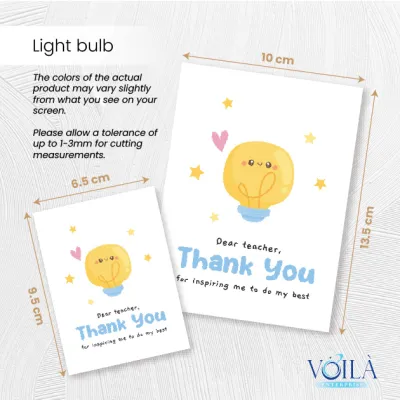
Prices are valid at publication and may change. Please refer to the product page for the latest price.
The texture of the paper also dictates how well it accepts different writing instruments. Uncoated or matte cardstock is highly recommended if your child plans to write with gel pens, fountain pens, or markers, as the porous surface absorbs ink quickly and prevents smudging. Coated or glossy finishes look vibrant and are excellent for printed graphics, but they require quick-drying ink or extra drying time to prevent the message from smearing.
Adequate space for personalization is another crucial factor to consider. Look for cards that feature a completely blank interior or a very minimal, unobtrusive greeting on one side. This design choice leaves ample space for a child to write a personalized message. Younger children who are still developing their motor skills write in larger, less controlled letters, meaning they require a larger blank canvas. Older students may want to write a longer, multi-paragraph note of gratitude, which also demands a clean, unlined interior.
Size and portability play a practical role in ensuring the card arrives at school in pristine condition. Standard card sizes like A6 or folded A5 are highly practical because they fit easily into standard envelopes and can be slipped into a student’s school folder or backpack without bending. Oversized or oddly shaped cards, such as long panoramic formats or delicate circular designs, are highly prone to getting creased, torn, or bent during the daily commute to school. Choosing a standard size also ensures that the teacher can easily store the card in a desk drawer or a keepsake box.
Matching Card Designs to Different Teacher Profiles
For secondary school teachers, junior college tutors, or senior educators, a classic and professional aesthetic is highly appropriate. These designs typically feature minimalist layouts, elegant typography, or subtle botanical and floral illustrations. The color palette is often muted, using pastel tones, deep navy, or forest green. A sophisticated card conveys respect and acknowledges the professional dedication of the educator, making it a safe and refined choice for older students to present.

Preschool, kindergarten, and lower primary school teachers often appreciate playful, vibrant, and interactive card designs. Pop-up cards, 3D structures, or cards with interactive elements like pull-tabs bring a sense of joy and wonder. These formats are highly engaging for younger children to present, as they can participate in opening the card to reveal the hidden design. When selecting interactive cards, ensure the paper mechanisms are sturdy enough to withstand multiple openings without tearing.
For environmentally conscious educators, eco-friendly cards made from recycled materials or seed paper offer a thoughtful alternative. Seed paper is a biodegradable medium embedded with wildflower or herb seeds. After reading the card, the teacher can plant it in a pot of soil, allowing the paper to compost while the seeds grow into living plants. This option provides a secondary, sustainable use that extends the life of the gift. When purchasing seed paper, verify that the seeds are suitable for Singapore’s tropical climate, such as basil, marigolds, or local wildflowers, to ensure successful germination.
Where to Shop for Teachers' Day Cards in Singapore
Visiting physical retail stores in Singapore allows you to physically inspect the paper quality, feel the texture of the cardstock, and check the envelope thickness before purchasing. Many local bookstores and major stationery chains offer dedicated seasonal displays in the weeks leading up to Teachers’ Day. These physical outlets often sell convenient bundled sets, containing multiple cards and matching envelopes at a cost-effective price point. This is the ideal option for parents who need to buy cards for multiple subject teachers on a tight timeline.
Online shopping portals and e-commerce platforms offer an extensive variety of designs, ranging from bulk packs of minimalist cards to intricate 3D pop-up creations. Purchasing from online marketplaces allows you to compare prices easily and read user reviews to assess the actual print quality and paper thickness. However, online shopping requires careful planning. You must factor in delivery lead times, which can stretch during peak promotional periods or seasonal holidays. It is advisable to place online orders at least two to three weeks in advance to ensure they arrive well before the school celebrations.
For those seeking unique, small-batch designs that stand out from mass-produced options, independent local designers and craft markets are excellent sources. Many Singapore-based illustrators and stationery artists create exclusive Teachers’ Day collections featuring local humor, Singlish puns, or beautiful hand-drawn illustrations. These cards are often printed on premium, sustainably sourced paper. Because these are produced in limited quantities, they may require pre-ordering online or visiting weekend makers’ markets and pop-up events in retail spaces.
Elevating the Gifting Experience Beyond the Card
A heartfelt, handwritten message is often the most valued part of any Teachers’ Day gift. To help your child write a sincere note, guide them with a simple, structured template rather than letting them copy a generic phrase. Encourage them to highlight a specific memory, a lesson they enjoyed, or a time the teacher helped them overcome a challenge. For example, a simple prompt structure could be: “Dear Teacher [Name], thank you for teaching me [Subject]. I really loved the lesson when we [Activity/Memory]. Thank you for always being patient with me.” This level of personalization makes the card truly unique and memorable.
If you wish to accompany the card with a small physical token, practical stationery items are highly appreciated and widely accepted. Consider pairing the card with a high-quality gel pen, a set of pastel highlighters, a durable metal bookmark, or a pad of aesthetic sticky notes. These items are highly functional for teachers who spend hours grading papers and planning lessons. Ensure the selected item is compact enough to be presented alongside the envelope or neatly tucked inside a small gift bag, keeping the presentation clean and organized.
To prevent the card from getting crumpled, stained, or bent during the child’s journey to school, proper protection is essential. Place the card and its envelope inside a rigid plastic sleeve, a clear cellophane pocket, or a sturdy document folder before packing it into the school bag. Instruct your child to keep the card in this protective layer until they are ready to hand it over to their teacher. This simple step ensures that the card arrives in pristine, presentation-ready condition, reflecting the care and respect intended by the gesture.
Frequently Asked Questions (FAQ)
Is it appropriate to give a gift card along with the greeting card?
In Singapore, public school educators are bound by strict civil service guidelines regarding the acceptance of gifts. Teachers are generally discouraged or prohibited from accepting monetary gifts, cash equivalents, or high-value gift cards to maintain professional integrity and prevent conflicts of interest. Giving a gift card can place the teacher in an awkward position where they must declare or return the item. A heartfelt, handwritten greeting card, occasionally paired with a low-cost, practical token like stationery, is the most appropriate, compliant, and deeply appreciated way to express gratitude.
How far in advance should I order custom or handmade cards?
If you are planning to order custom-printed cards or personalized handmade designs from independent creators, you should place your order at least three to four weeks before Teachers’ Day. Custom production requires time for design approval, printing, and assembly. Additionally, you must account for local postal or courier delivery times, which can experience delays during peak seasonal periods. If you are within two weeks of the celebration, it is safer to opt for ready-made cards from local retail stores or online sellers with guaranteed express shipping to avoid the risk of the card arriving late.
What should I do if my child wants to make the card from scratch?
Encouraging your child to create a DIY card is a wonderful way to show sincerity. To ensure the handmade card is durable and looks presentable, provide them with heavy-weight paper or blank cardstock (at least 200 GSM) rather than standard drawing paper. Use a ruler and a bone folder (or the back of a butter knife) to score a clean, crisp fold down the center of the card to prevent the paper from cracking. Focus on the sincerity of the child’s artwork and handwriting rather than aiming for professional perfection; teachers highly value the effort and personal touch of a child’s own drawings and words.

Community discussion
Share your experience or ask a question. Comments are reviewed before publication.