
To choose the right SmartPac shipping bag size in Singapore, you must match your parcel’s physical dimensions and packed weight against the specific capacity thresholds of the prepaid postal service. Because these flexible poly mailers and padded envelopes are designed primarily for trackable letterbox delivery, selecting the correct size ensures your items slide safely into the recipient’s letterbox without bursting the seams or exceeding weight limits. In Singapore’s e-commerce landscape, balancing the item’s raw volume with protective padding is key to a secure, professional delivery. This guide walks you through measuring your items, calculating thickness allowances, accounting for protective void fill, and verifying courier specifications to ensure your packages arrive in pristine condition.
Step 1: Accurately Measure Your Parcel Dimensions and Weight
Before purchasing any prepaid shipping bags, you must gather precise physical data for the items you intend to ship. This process requires more than a visual estimate; you must measure the three critical dimensions—length, width, and height—using a rigid ruler or a reliable measuring tape. Ensure that you measure the item in its fully prepared state. If you are shipping a soft garment, fold it exactly as it will sit inside the mailer. If you are shipping a rigid product, measure its widest points, including any protruding parts, buttons, or retail packaging corners.
Once you have recorded these dimensions, place the fully assembled item on a calibrated digital scale. In Singapore’s postal network, weight thresholds are strictly enforced for prepaid services. Exceeding the designated weight limit can result in delivery delays, return-to-sender actions, or additional postage charges. Knowing the exact weight of your raw item is the first step in determining which service tier is viable.
Products mentioned in this guide
![*FREE SHIPPING* [CHOOSE OPTION] Singapore Post Smartpac Small Smartpac Medium Mini Lite 600g 1kg Singpost Smart pac Sing Post PolyM Poly M](https://img.lazcdn.com/g/p/ca35df7d5aaeef118422794879cc317a.jpg_400x400q80.jpg_.webp)
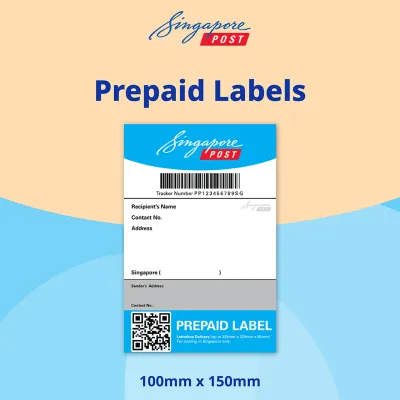
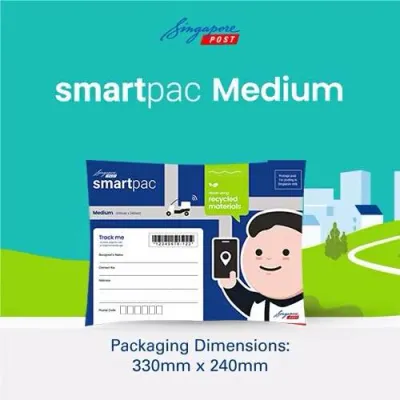
![[SINGPOST] BOX smartpac - A postage-paid packaging for local delivery. Trackable via the SingPost mobile app.](https://img.lazcdn.com/g/p/3360d819ebee92c4900de5d10f98c2e8.png_400x400q80.png_.webp)
Prices are valid at publication and may change. Please refer to the product page for the latest price.
It is vital to distinguish between an item’s flat footprint and its volumetric footprint. When a flat, two-dimensional shipping bag is filled with a three-dimensional object, the sides of the bag pull inward. This physical displacement reduces the usable length and width of the bag. A rigid item, such as a book or a boxed cosmetic product, does not conform to the flexible plastic and requires a substantial spatial buffer. Conversely, soft goods like t-shirts can shift and compress, allowing them to utilize almost the entire nominal volume of the bag. Understanding this difference prevents the common error of choosing a bag that matches the item’s flat dimensions but fails to close once the item’s thickness is introduced.
Step 2: Match Parcel Profiles to Shipping Bag Capacities
Selecting the correct packaging requires categorizing your items based on their structural rigidity and shape. Different materials behave uniquely when subjected to the compression and movement of transit. By grouping your inventory into specific profiles, you can systematically apply the correct dimensional formulas and choose the most efficient shipping bag option.

Flat, Soft, and Flexible Items
Soft goods such as clothing, softcover books, documents, and textiles are the easiest to pack because they naturally conform to the shape of the shipping bag. For these items, your primary focus should be on the maximum length and width of the item when folded or stacked. Because soft items do not have rigid corners, they require very little extra spatial clearance along the seams of the mailer.
When preparing apparel, fold the garments tightly to minimize air pockets and control the overall thickness. A flat, uniform fold allows the item to distribute its weight evenly across the bag. Select a bag size that allows the folded garment to slide in easily without requiring force. The ideal fit should allow you to seal the adhesive flap smoothly, leaving the package flat and neat. Avoid excessive bunching, which can create high-pressure spots that make the parcel difficult to slide into standard Singaporean letterboxes.
Rigid, Boxed, or Fragile Items
Rigid items—such as hardback books, electronic accessories, cosmetics in plastic bottles, or boxed board games—do not bend or yield. To pack these safely, you must add a calculated buffer margin to the bag’s nominal dimensions. If you attempt to force a rigid box into a bag that is too small, the sharp corners of the box will exert concentrated pressure on the seams, leading to tears during automated sorting.
To determine if a rigid item will fit, use a simple wrap-around calculation. The minimum required width of your flat shipping bag must be equal to or greater than the width of your item plus its thickness, along with a safety buffer of at least 15 to 20 millimeters. Similarly, the required length of the bag must accommodate the item’s length, its thickness, and the necessary clearance for the adhesive flap to fold over completely.
Additionally, check the manufacturer’s specifications for the material composition of the shipping mailer. High-density polyethylene (HDPE) or co-extruded plastic bags offer superior tear resistance and tensile strength compared to standard low-density poly mailers. If your rigid item has sharp edges, wrap those edges in protective card or tape before inserting them, ensuring the outer plastic is not subjected to direct puncture risks.
Irregular or Multi-Item Bundles
Shipping multiple items or oddly shaped goods in a single parcel presents a unique packaging challenge. When dealing with irregular items, such as a combination of a mug and a soft toy, you must calculate the combined “bounding box.” This is the imaginary rectangular space that would completely enclose all the items when they are arranged together in their most compact configuration.
For these complex bundles, prioritize shipping bags that feature higher thickness ratings (measured in microns) and generous dimensional allowances. Seam stress is highly common when multiple items shift independently inside a single flexible bag. To prevent this, bundle the items together securely using stretch wrap or eco-friendly paper bands before placing them into the mailer.
If the items are highly irregular or fragile, it is highly recommended to place them inside a small, lightweight corrugated cardboard box first. This internal box provides a uniform, flat-sided structure that protects the items from external impacts and ensures the outer prepaid mailer is not punctured by shifting contents.
Step 3: Factor in Protective Packaging and Void Fill
Many shippers make the mistake of measuring only their raw product, forgetting that protective packaging layers add significant volume and weight. If your item requires cushioning to survive transit, you must calculate this added bulk before selecting your shipping bag size.
Consider the thickness of your chosen protective materials. Standard bubble wrap typically adds about 5 to 10 millimeters of thickness per wrap layer. If you wrap an item twice to protect it from drops, you are adding up to 20 millimeters to both the width and the depth of your parcel. Foam inserts, molded pulp trays, and crumpled honeycomb paper wrapping can add even more volume. Additionally, these materials have their own weight; while bubble wrap is light, heavy cardboard stiffeners or thick foam inserts can push a borderline parcel over the maximum weight limit of your prepaid service.
To accommodate this extra bulk, you must adjust your target shipping bag size upward. Attempting to squeeze a heavily padded item into a tight bag will compress the bubble wrap or foam. This compression squeezes the air out of the protective pockets, defeating their shock-absorbing purpose and leaving your item vulnerable to damage. The packaging must remain lofty and resilient to perform its job.
The goal is to find a balance: you want enough space so that the protective layers are not squashed, yet not so much empty space that the item shifts wildly inside the bag. If there is excess void space after wrapping, use lightweight crumpled paper or air pillows to fill the gaps. This prevents the item from sliding back and forth, which can generate kinetic energy and cause internal damage when the parcel is handled by postal sorting systems.
Step 4: Avoid Common Sizing and Packing Mistakes
To ensure your parcels arrive safely and professional-looking at their destination in Singapore, avoid these four critical packing errors:
- Overstuffing: Forcing an item into a bag that is too small stretches the plastic material to its structural limit. This puts immense tension on the welded side seams and the adhesive closure. During transit, parcels are stacked and sorted; an overstuffed bag is highly likely to burst open under the weight of other packages, leading to lost or damaged contents.
- Excessive Oversizing: Using a bag that is far too large for a small item creates loose, flapping plastic. This excess material can easily get caught in automated sorting conveyor belts, causing the bag to rip. Furthermore, loose items slide around violently, increasing the risk of impact damage, while the wrinkled, deflated package looks unprofessional to customers.
- Ignoring the Seal Area: The dimensions listed on shipping bag packaging almost always include the total length of the plastic sheet, which includes the adhesive flap. However, the usable length ends at the fold line. Always deduct the flap width (usually 30 to 50 millimeters) from the manufacturer's listed length to find the true usable internal space.
- Neglecting Edge Protection: Poly mailers are highly resistant to pulling forces but can be easily punctured by sharp corners. If you are shipping items with pointed edges, such as metal stationery, acrylic stands, or hard plastic cases, you must cushion those specific points with foam or cardboard corners before bagging them.
Step 5: Verify Courier Weight Limits and Service Specifications
Once you have selected a bag size that fits your item and its protective packaging, you must perform a final verification against the operational rules of the delivery service in Singapore. Prepaid shipping options like SmartPac operate under strict weight and thickness limits designed to fit standard residential letterboxes.
For example, standard trackable letterbox services in Singapore typically enforce a maximum weight limit of 1 kilogram or 2 kilograms per package. Additionally, there are strict thickness limits—often around 50 millimeters to 70 millimeters—to ensure the parcel can slide easily into standard HDB and private estate letterboxes. If your packed bag exceeds these dimensions, the postman may not be able to deliver it to the letterbox, resulting in delivery delays or requiring the recipient to collect it from a post office.
Before committing to bulk purchases of shipping bags, always check the most current guidelines provided by the official postal service or courier provider in Singapore. Review their list of prohibited items—which typically includes liquids, perishable goods, and flammable materials—to ensure your products are eligible for transport. Taking a few minutes to verify these specifications prevents costly packaging waste and ensures a seamless delivery experience.
Frequently Asked Questions (FAQ)
Does the adhesive flap count towards the usable bag dimensions?
No, the adhesive flap is not part of the usable internal storage space of a shipping bag. Manufacturers list the outer dimensions of the flat bag, which includes the flap that folds over to seal the package. To ensure your items fit securely, you should always subtract the length of the adhesive flap—typically between 30 and 50 millimeters—from the total listed length of the bag.
What should I do if my parcel is exactly at the maximum size limit?
If your parcel’s dimensions or weight are exactly at the maximum limit of a specific bag size, you should always step up to the next larger size category. A perfectly tight fit leaves no safety margin for the bag to flex, stretch, or absorb impacts during automated sorting. Moving up a size ensures you have enough room for protective padding and prevents seam bursts.

Community discussion
Share your experience or ask a question. Comments are reviewed before publication.