
To choose the right size red plastic courier bag, you must measure your product’s maximum length, width, and height, calculate the required flat bag dimensions by adding the height to both the width and length, and include a safety margin for seams and the adhesive flap. Selecting the correct size prevents transit damage, reduces material waste, and ensures your shipments comply with local logistics standards. Red plastic bags offer a vibrant, highly visible packaging solution, but achieving a secure fit requires careful calculation of product volume and material thickness.
Measure Product Dimensions Accurately
Before purchasing red plastic bags for your shipping needs, you must establish the exact physical dimensions of the items you plan to send. Relying on manufacturer product listings or visual estimations often leads to choosing bags that are too tight, which can cause seams to burst during transit. Use a rigid tape measure or a sturdy ruler rather than a flexible sewing tape, as rigid tools provide a more accurate, straight-line measurement of three-dimensional objects.
For standard rectangular items, measure the maximum length, width, and height. If your product has an irregular shape—such as clothing with bulky folds, soft toys, or items with protruding parts—you must determine its maximum bounding box. This means measuring the absolute widest, longest, and tallest points of the item as if it were enclosed in a tight rectangular box.
Products mentioned in this guide
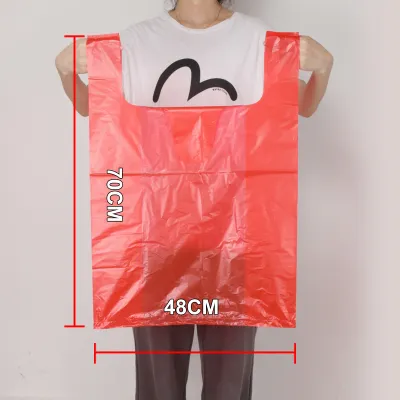
Prices are valid at publication and may change. Please refer to the product page for the latest price.
When shipping multiple items together in a single courier bag, place them together in the configuration you intend to ship them. Measure the combined length, width, and height of the entire bundle. Additionally, weigh the combined items using a reliable scale. Knowing the total weight is crucial because heavier items require thicker plastic material to prevent sagging and tearing, even if they physically fit inside the bag’s dimensions.
Translate Product Size to Flat Bag Dimensions
Once you have the exact measurements of your product, you must translate these three-dimensional figures into the two-dimensional, flat lay dimensions of a red plastic courier bag. A common mistake is choosing a bag with flat dimensions that match the product’s length and width, which leaves no room for the product’s thickness.

To determine the minimum required flat width of the bag, add the product’s width to its height, and then add a safety margin of at least 20 mm to 30 mm to account for the side seams and ease of insertion. For example, if an item is 150 mm wide and 30 mm thick, the flat bag width must be at least 200 mm to allow the material to wrap around the sides without splitting the seams.
To calculate the required flat length of the bag, add the product’s length to its height. You must also add an additional margin of 40 mm to 50 mm to accommodate the adhesive sealing flap. This flap must fold over cleanly to create a secure seal. If the bag is too short, the adhesive strip will rest on the curve of the product rather than flat against the plastic backing, which compromises the seal’s security.
For soft, compressible items like apparel, the material may shift or expand during handling. While you can compress these items slightly to fit into a smaller bag, doing so puts continuous pressure on the seams. For these products, add an extra 10% to the calculated width and length to ensure the bag does not stretch to its physical limit, preventing punctures or accidental opening during sorting.
Evaluate Material Thickness and Durability Specs
Choosing the correct size is only half the battle; the red plastic bags must also possess the structural integrity to survive the logistics chain. Begin by inspecting your product for sharp edges, rigid corners, or hard protrusions. Items like boxed board games, metal stationery components, or hard plastic cases can easily puncture thin plastic film when subjected to the friction of automated sorting belts.
To prevent punctures, review the manufacturer’s technical specifications for material thickness, which is typically measured in microns or mils. For lightweight, soft items like clothing, a thickness of 50 to 60 microns is generally sufficient. However, for heavier items, books, or products with defined corners, look for heavy-duty bags with a thickness of 75 to 100 microns. Always check the manufacturer’s stated weight capacity labels rather than guessing the strength based on how the plastic feels to the touch.
Additionally, verify the construction details of the bag, focusing on the side weld strength and tear resistance. Well-constructed courier bags often feature reinforced side seals to prevent splitting when stuffed. If you are shipping valuable or confidential items, ensure the bag is made of co-extruded plastic—which typically features a red exterior and an opaque black interior layer—to provide high opacity and prevent anyone from seeing the contents through the plastic.
Check Logistics and E-commerce Packaging Requirements
Before finalizing your packaging choice, ensure that your red plastic bags comply with the operational rules of your logistics carriers and e-commerce platforms. While vibrant red packaging helps your brand stand out, it can present unique challenges during automated sorting. Many logistics providers use optical scanners that require high contrast to read barcodes. A shipping label printed on thin paper and stuck directly onto a bright red bag may suffer from low contrast if the red color bleeds through, leading to scanning failures.
Furthermore, verify that the bag’s closure mechanism meets the security standards of your delivery services. Most modern courier bags feature a hot-melt self-adhesive strip that creates a permanent, tamper-evident seal. Ensure the adhesive is rated for the climate conditions of your shipping route, especially if packages will be exposed to high humidity or elevated temperatures in transit vehicles.
Finally, consider the environmental and disposal regulations applicable to plastic packaging in your region. Many modern distribution networks encourage or require the use of recyclable plastics or bags made from post-consumer recycled content. Check the recycling symbols printed on the bags to ensure they align with local waste management guidelines.
Frequently Asked Questions (FAQ)
Do red plastic bags affect barcode scanning?
Yes, dark or highly saturated packaging colors like red can sometimes reduce the contrast needed for optical barcode scanners to read shipping labels accurately. To prevent scanning issues, always use high-quality, opaque white shipping labels that completely block out the red background. Alternatively, you can place your shipping documents inside a clear, adhesive-backed packing list envelope stuck firmly to the outside of the bag.
How should I store unused plastic courier bags?
To maintain the adhesive quality and material integrity of your unused red plastic bags, store them in a cool, dry environment away from direct sunlight and extreme heat. Prolonged exposure to UV rays and high temperatures can degrade the plastic film and cause the self-adhesive glue on the sealing flaps to dry out or lose its bonding strength. Keep the bags flat in their original packaging or a closed box to protect them from dust, moisture, and accidental punctures before use.

Community discussion
Share your experience or ask a question. Comments are reviewed before publication.