
Choosing the right size packing plastic bag requires calculating the item’s three-dimensional volume and translating those measurements into a flat, two-dimensional bag size. Selecting a bag that is too small leads to split seams and damaged goods, while an oversized bag increases shipping costs and allows items to shift excessively. By applying simple sizing formulas and accounting for material thickness, you can ensure a secure, professional fit for every shipment.
Understanding Packing Plastic Bag Dimensions
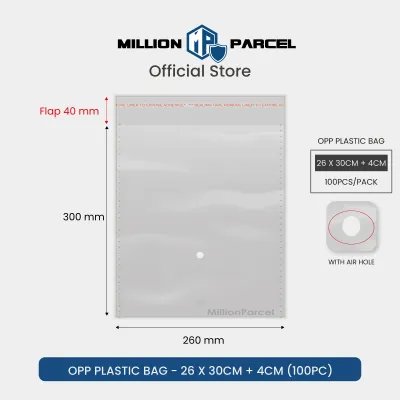
Standard shipping bags are labeled by width and length (W x L). It is critical to verify whether the stated length includes the adhesive flap. In most standard mailers, the flap—usually measuring 4 cm to 5 cm—is excluded from the main length measurement, meaning the usable length is shorter than the total physical length.
Thickness is measured in microns or mils. Common shipping bags range from 40 to 80 microns. Thicker bags offer higher puncture resistance but are stiffer. This stiffness reduces the bag’s ability to stretch and conform around bulky items, reducing the usable internal volume compared to a thinner, more flexible bag of the same nominal dimensions.
Products mentioned in this guide
![[Hock Kee Plastic Enterprise] Plastic Bag (Similar to Ntuc Size)- 30Pcs](https://img.lazcdn.com/g/p/ade8b9e4191a3dc35416c7562826923d.jpg_400x400q80.jpg_.webp)
![[Food Grade] ONS HDPE Transparent Thin Pack Hygienical Food Packaging Plastic Bag For Food](https://img.lazcdn.com/g/p/cff0a1803b5723254f9d034f5132a5b1.png_400x400q80.png_.webp)
Prices are valid at publication and may change. Please refer to the product page for the latest price.
A standard flat bag has no depth. When you insert a three-dimensional object, the sides pull inward, shrinking the effective width and length. Gusseted bags, which feature folded pleats on the sides or bottom, expand to accommodate depth without sacrificing nominal width, making them ideal for boxed or thick items.
How to Measure and Calculate the Required Bag Size
Start by measuring the maximum length, width, and height of the item. If you plan to wrap the item in bubble wrap, foam, or corrugated wrap, perform these measurements after the protective packaging is fully applied. Even a single layer of bubble wrap can add 1 cm to 2 cm to every dimension.

To convert a three-dimensional item into a flat bag size, use these standard formulas:
- Minimum Bag Width = Item Width + Item Height + 2 cm
- Minimum Bag Length = Item Length + Item Height + 5 cm
For example, if you are shipping a book that is 20 cm wide, 25 cm long, and 4 cm thick, your minimum bag width should be 20 + 4 + 2 = 26 cm. Your minimum bag length should be 25 + 4 + 5 = 34 cm. Therefore, look for a bag that is at least 26 cm x 34 cm.
If you plan to fold the bag over multiple times for extra water resistance or use a heat sealer instead of the built-in adhesive strip, add an extra 3 cm to 5 cm to the length. This prevents the plastic from pulling too tightly against the seal, which can cause the adhesive to peel open under transit stress.
Matching Bag Sizes to Common Shipping Categories
Flat items like documents, single t-shirts, and flat posters require minimal depth compensation. For standard A4 documents or thin catalogs, a bag measuring approximately 25 cm x 34 cm provides a comfortable fit. Lightweight apparel like a single shirt typically fits well in a 30 cm x 40 cm bag, as the fabric can compress easily.
Items like shoeboxes, plush toys, or boxed electronics require much larger dimensions to accommodate their volume. A standard shoebox, for example, often requires a bag of at least 40 cm x 50 cm to slide in smoothly without tearing the corners. Plush toys are highly compressible, but their irregular shapes mean you should size up to avoid putting excessive pressure on the seams.
While a packing plastic bag is excellent for lightweight, non-fragile items, it offers zero structural protection. If you are shipping fragile electronics, glassware, or items with delicate retail packaging that must not be dented, you must use a rigid corrugated box instead. You can still place the box inside a plastic bag for waterproofing, but the bag alone should never be the sole protective layer for breakable goods.
Adjusting for Multiple Items and Irregular Shapes
When shipping multiple items in a single packing plastic bag, secure them together first. Use stretch wrap, rubber bands, or a small inner bag to consolidate the items into a single, stable unit. This prevents them from sliding around inside the larger shipping bag, which can cause uneven weight distribution and lead to tears during sorting.
Rigid items with sharp corners, such as hardback books, plastic toy packaging, or metal tools, pose a high risk of puncturing plastic bags. To prevent this, wrap the sharp edges in thick cardboard scraps or multiple layers of bubble wrap before bagging. Alternatively, select a heavy-duty bag with a thickness of 75 microns or more to withstand the friction.
If you have a highly irregular or sprawling item, it is often safer to use multiple smaller bags for separate components rather than forcing them into one oversized, loose bag. An excessively large bag leaves loose plastic flaps that can easily get caught in automated postal sorting machinery, leading to ripped packaging and lost items. If you must use a larger bag, fold the excess plastic flat against the item and secure it tightly with shipping tape. This also helps you avoid unexpected S$2 to S$5 postage surcharges for oversized parcels.
Frequently Asked Questions (FAQ)
Can I use a bag that is exactly the same size as my item?
No. A bag with the exact same dimensions as your item will not close. Flat plastic bags have zero depth, so inserting any item with thickness immediately pulls the sides inward, reducing the available width and length. Forcing an item into an identical-sized bag puts extreme tension on the side seams, leading to split edges, failed adhesive seals, and exposed contents during transit. Always allow a minimum clearance of 2 cm to 5 cm beyond the item’s flat dimensions.
Does the thickness of the plastic change the size I should buy?
Yes, indirectly. Thicker plastic bags are significantly stiffer than standard utility bags. This stiffness makes it harder for the plastic to stretch and mold around the contours of bulky or irregular items. When using thicker, puncture-resistant bags for rigid items, it is wise to size up by an extra 1 cm to 2 cm in both width and length to compensate for this lack of flexibility.
How much extra space should I leave for the adhesive seal?
For standard self-sealing packing plastic bags, the adhesive strip is located on a flap that typically measures between 4 cm and 5 cm in length. To ensure a secure closure, this entire flap must fold over completely and adhere to the flat exterior of the bag, not the item inside. If the bag is packed too full, the flap will stretch diagonally, preventing the adhesive from making full contact and risking accidental opening during shipping.

Community discussion
Share your experience or ask a question. Comments are reviewed before publication.