
To choose the right size bubble wrap envelope, you must match the three-dimensional measurements of your item—length, width, and thickness—to the envelope’s internal usable dimensions rather than its external size. Adding a safety margin of at least 1 to 2 centimeters to all sides ensures the item slides in easily, the seams do not burst, and the adhesive flap seals securely. Taking these steps prevents shipping damage and avoids paying excess postage for oversized packaging.
Understanding Bubble Wrap Envelope Sizing and Dimensions
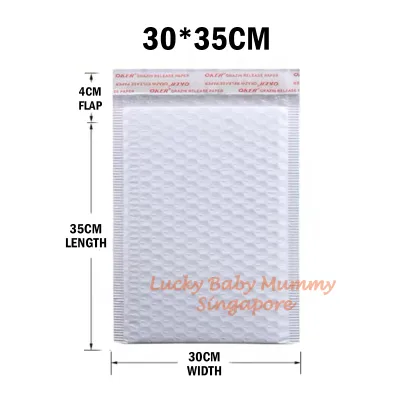
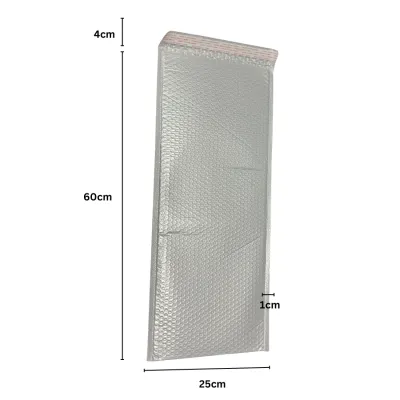
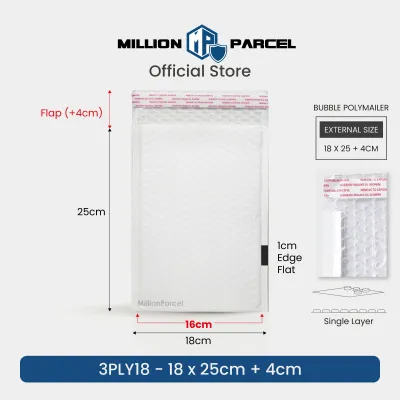
When browsing packaging supplies, the dimensions printed on the box or product listing are often the outer measurements. These outer dimensions represent the total footprint of the envelope, including the sealed side seams and the top flap. For packing purposes, the outer dimensions are highly misleading because they do not represent the actual space available for your item.
The inner dimensions represent the true usable packing space. Because bubble wrap envelopes feature an integrated layer of plastic air bubbles, this lining significantly reduces the internal volume. A flat paper envelope with the same outer dimensions will always hold a thicker item than a padded mailer of the identical nominal size.
Products mentioned in this guide
![[SG] ⭐CHEAPEST BUNDLE⭐ Bubble Polymailer | Bubble Envelope | Bubble Mailer | Padded Envelope | Bulk Purchase](https://img.lazcdn.com/g/p/36288e6d5c9f9ac480e77bf88495d447.jpg_400x400q80.jpg_.webp)
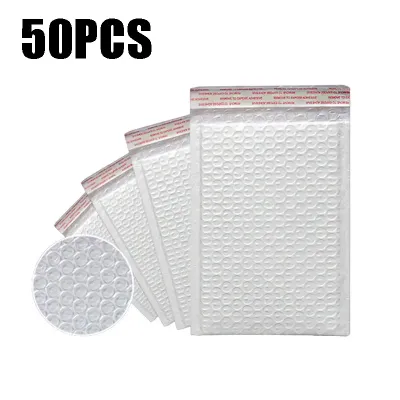
Prices are valid at publication and may change. Please refer to the product page for the latest price.
To avoid purchasing the wrong size, always check the manufacturer’s specifications for the internal width and length. Reliable packaging brands list both sets of measurements clearly on their packaging or product detail sheets. If only one set of dimensions is visible, it is safest to assume they are outer measurements and subtract the thickness of the bubble lining from each side.
Additionally, the thickness of the bubble lining itself can vary between brands. Standard bubble mailers typically feature bubbles that are about 3 to 4 millimeters thick, but heavy-duty versions may have thicker padding. This variance means that two envelopes with the exact same outer dimensions from different manufacturers might offer different amounts of internal space.
How to Measure Your Items for the Right Envelope Fit
Finding the perfect fit begins with obtaining precise measurements of the item you intend to ship. Use a reliable ruler or measuring tape to record the maximum length, width, and thickness of the object. Always measure the item at its widest and thickest points, especially if it has an irregular shape or protruding parts.

For flat items like documents, photographs, or thin booklets, calculating the required envelope size is straightforward. You only need to ensure the inner dimensions of the mailer are slightly larger than the length and width of the item. A small clearance of about 1 centimeter on each side is usually sufficient to allow the item to slide in without bending.
For three-dimensional items like cosmetics, small electronics, or jewelry boxes, the thickness of the item directly impacts the required width and length of the envelope. As the envelope stretches to accommodate the height of the object, it pulls the front and back walls closer together, effectively reducing the available width and length. To compensate for this physical distortion, add the thickness of your item to both the length and width measurements before comparing them to the envelope’s inner dimensions.
If you are shipping an item with an irregular shape, such as a cylindrical bottle or a triangular ornament, treat the item as a rectangular box. Measure the maximum diameter or the widest cross-section to represent the thickness. This conservative approach ensures that the envelope will have enough volume to wrap around the most challenging parts of the object without tearing.
Adjusting for Item Fragility and Extra Packaging
The fragility of your item dictates whether you need to add extra protective layers before placing it inside the bubble mailer. While the built-in bubble lining offers basic cushioning against minor impacts, delicate items often require additional safeguards. If you plan to wrap the item in extra sheets of bubble wrap, foam sheets, or tissue paper, you must measure the item after it has been fully wrapped.
Adding structural support is another common practice that alters the required envelope size. For example, shipping a collectible comic book or a delicate art print often requires placing a rigid piece of corrugated cardboard or a stiffener inside the envelope to prevent bending. This cardboard insert adds both thickness and rigid outer boundaries, meaning you will need a larger envelope size than the item’s standalone dimensions suggest.
For highly fragile items, you might even consider a double-packaging method. This involves placing the item inside a small cardboard box first, and then sliding that box into a bubble wrap envelope. In this scenario, the envelope’s inner dimensions must be matched to the outer dimensions of the box, plus a generous margin to allow for easy insertion and sealing.
Before committing to a bulk purchase of shipping supplies, it is highly recommended to order a small sample pack containing various sizes. Placing your wrapped item and any necessary inserts inside a sample mailer allows you to verify the fit in real-world conditions. This physical test ensures the seams are not under tension and the adhesive strip can close flat without stretching.
Common Sizing Mistakes to Avoid When Packing
One of the most frequent errors in packaging is choosing an envelope that is too tight for the item. When an object is forced into a mailer that is too small, the internal air bubbles are compressed tightly against the item and the outer walls. This compression deprives the bubbles of their shock-absorbing cushion, making the contents highly vulnerable to drop damage during transit.
Conversely, selecting an oversized envelope presents its own set of risks. When an item has too much room to move, it will slide back and forth inside the mailer during sorting and transport. This constant movement can cause the item to crash against the edges of the envelope, potentially damaging delicate corners or tearing the outer paper layer from the inside.
Another overlooked detail is the length of the sealing flap. If an item is too thick, it will pull the opening of the envelope wide apart, leaving insufficient material for the adhesive flap to fold over and seal properly. A compromised seal can easily pop open under pressure in a delivery van, exposing your contents to moisture, dust, or loss.
Finally, many shippers forget to account for the weight of the item when choosing a size. A larger envelope often carries heavier items, but if a heavy item is placed in a mailer with weak seams, the package can burst. Matching the item’s weight to the envelope’s material strength is just as important as matching the physical dimensions.
Your Step-by-Step Envelope Selection Checklist
To streamline your shipping routine and ensure consistent packaging quality, follow this practical checklist for every shipment:
- Measure the item's maximum length, width, and thickness at its widest points.
- Add any extra wrapping, bubble sheets, or rigid cardboard inserts, then measure the entire bundle again.
- Add a minimum buffer of 1.5 centimeters to the total width and length to account for the envelope's bubble lining and physical expansion.
- Compare these adjusted figures to the manufacturer's listed inner dimensions, never the outer dimensions.
- Verify that the item's weight does not exceed the structural limits of the envelope material, whether paper or poly.
- Test the seal by ensuring the adhesive flap folds over completely and makes full contact with the designated sealing area.
Keeping a small inventory of three or four standard envelope sizes is highly efficient for home businesses and online sellers. Having a small, medium, and large option on hand prevents the temptation to squeeze an item into a tight mailer or waste money shipping a tiny item in a giant envelope.
This systematic approach not only protects your products but also optimizes your shipping costs. By using the smallest envelope that safely fits your item, you minimize dimensional weight charges and reduce the amount of packaging waste generated by your business.
Frequently Asked Questions (FAQ)
Can I use a bubble wrap envelope for heavy items like books?
Yes, you can use bubble wrap envelopes for books, but you must pay close attention to the weight and the sharp corners of the book. Heavy or dense items put significant stress on the bottom and side seams of a paper or plastic mailer during transit. If a book is particularly heavy, the seams can split open when the package is dropped or stacked under other mail. For heavy books or multi-volume sets, it is safer to use a rigid corrugated box or select heavy-duty poly bubble mailers with reinforced heat-sealed edges.
Do I need to size up if my item is exactly the same size as the envelope's inner dimensions?
Yes, you must always size up if your item matches the inner dimensions exactly. The listed inner dimensions represent the flat space inside the envelope before any item is inserted. As soon as you insert an item with any physical thickness, the envelope must expand outward, which pulls the sides inward and reduces the available length and width. To ensure a safe and easy fit, always choose an envelope with inner dimensions that are at least 1 to 2 centimeters larger than your item’s actual measurements.

Community discussion
Share your experience or ask a question. Comments are reviewed before publication.