
Determining the correct shipping polymer bag size requires more than just matching the bag to your product’s basic dimensions. To prevent material waste, avoid transit damage, and maintain a professional presentation, you must account for product shape, additional protective packaging, and the physical mechanics of a flat bag wrapping around a three-dimensional object. This guide provides a systematic approach to measuring, calculating, and selecting the optimal bag dimensions for your specific product categories.
How to Measure Your Products Accurately
To find the right bag size, you must first establish a reliable baseline by measuring the actual physical footprint of the item as it will be prepared for shipping. This means you should not rely on the manufacturer’s listed product dimensions alone, as these often omit the bulk of protective wrapping or retail packaging.
Begin by placing your item on a flat surface in the exact state it will be shipped. Use a reliable measuring tape or ruler to find the maximum length, width, and height (or thickness) of the product. Always measure the widest and thickest points of the item, especially for irregular shapes like soft toys, rolled textiles, or bundled stationery.
Products mentioned in this guide
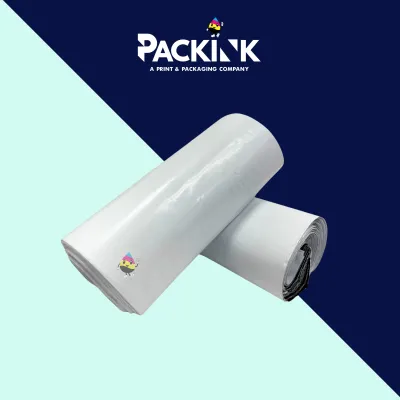
![[100pcs] White Polymailer Bags – Waterproof Tear-Resistant Courier Shipping Bags for eCommerce & Mailing](https://img.lazcdn.com/g/p/5ac19457619c8d71b03e006291511e2b.png_400x400q80.png_.webp)
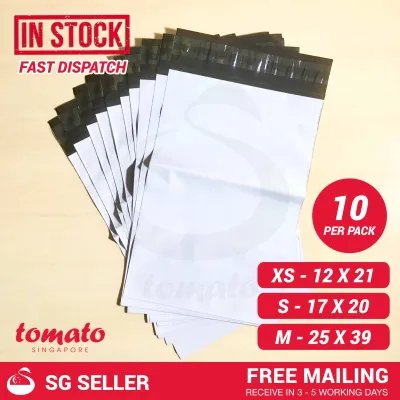
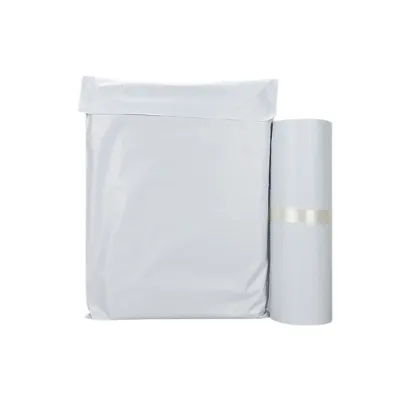
Prices are valid at publication and may change. Please refer to the product page for the latest price.
If you plan to wrap the item in bubble wrap, place it inside a corrugated box, or add cardboard backing inserts, perform these steps before taking your measurements. The added bulk of these protective layers significantly increases the overall dimensions, and failing to account for them will result in a bag that is too tight to seal.
Calculating the Correct Flat Bag Dimensions
Once you have the final three-dimensional measurements of your prepared product, you must translate these into the two-dimensional flat dimensions of a shipping polymer bag. Because a flat bag must stretch and curve around a three-dimensional object, the bag’s stated dimensions must always be larger than the product’s flat footprint.

To calculate the minimum required bag width, add the product’s width to its thickness, then add a standard clearance allowance of at least 20 to 30 millimeters. This extra allowance helps the product slide into the bag easily without tearing the side seams. For example, a book that is 150 millimeters wide and 30 millimeters thick will require a bag with a flat width of at least 200 millimeters.
To calculate the minimum required bag length, add the product’s length to its thickness, then add the length of the adhesive flap, which typically ranges from 40 to 50 millimeters. This helps make sure that when you fold the flap over to seal the package, the adhesive strip makes full contact with the back of the bag rather than stretching over the product’s edge.
Adjusting Sizes for Different Product Categories
Different types of goods require distinct sizing strategies to balance material costs, protection, and presentation. Tailoring your bag selection to the specific category of your inventory helps minimize common shipping mishaps.
For flat and flexible items, such as documents, catalogs, or single garments, you can select bags with minimal extra allowance. Since these items have negligible thickness, they do not cause the bag to contract significantly. Keeping the fit relatively snug reduces the movement of the contents during transit, which helps maintain a neat presentation and reduces the risk of creasing.
Rigid and boxed goods, such as hardcover stationery sets, board games, or boxed electronics, require a more generous margin. The sharp corners of rigid boxes put intense localized pressure on the polymer material. If the bag is too tight, these corners can easily puncture the plastic during sorting and transit, so adding extra width and length is essential to absorb movement.
Fragile items requiring heavy padding, such as glass ink bottles or delicate ceramic desk organizers, demand careful volume calculations. When you wrap an item in multiple layers of bubble wrap, the overall volume expands exponentially. Help make sure the polymer bag is large enough to accommodate this cushioning without compressing it, as compressed bubble wrap loses its ability to absorb shocks.
Avoiding Common Sizing and Packaging Mistakes
Selecting the wrong bag size can lead to increased operational costs, wasted materials, and damaged goods that harm your brand’s reputation. Recognizing these pitfalls early helps streamline your fulfillment process.
Choosing a bag that is too small is a frequent error that compromises package integrity. When a product is forced into an undersized bag, the tension puts continuous stress on the side seams and stretches the polymer to its tearing point. This tension also prevents the adhesive flap from sealing flat, leaving gaps where moisture, dust, or rain can enter during delivery.
Conversely, using excessively oversized bags is highly inefficient. Excess plastic flaps around during transit, which can get caught in automated sorting machinery and cause tears. Furthermore, shipping carriers often calculate postage based on dimensional weight, meaning you may pay higher shipping fees for transporting trapped air, while the product inside slides around and collides with other items.
Another common oversight is forgetting to account for the adhesive flap length when reviewing manufacturer specifications. Some suppliers list the total length of the bag including the flap, while others list only the usable length up to the seal line. Always verify whether the stated length includes the flap to avoid purchasing bags that are too short to close properly.
Frequently Asked Questions (FAQ)
Can I use one bag size for multiple product variations?
Standardizing on a few versatile bag sizes is often highly cost-effective, especially if you manage a diverse inventory of stationery or apparel. Using a single mid-sized bag for several similar items simplifies your packaging inventory and allows you to purchase bags in larger, discounted bulk quantities.
However, you must evaluate the trade-offs for each product type. If a smaller item has too much empty space inside a standardized bag, you must fold the excess material over and tape it down securely. If this process requires significant extra labor or additional packing tape, purchasing a dedicated smaller bag size may be more economical in the long run.
Does bag thickness affect the dimensions I need?
While the nominal thickness of a polymer bag—typically measured in microns—does not alter its physical flat dimensions, it does change how the material behaves. Thicker, heavy-duty bags are stiffer and have less elasticity than thinner, standard-grade utility bags.
When packaging heavy, dense, or sharp-edged items that require high-micron bags, you should allow slightly more dimensional margin. The stiff material does not conform as easily to irregular shapes, making it harder to slide bulky items inside. Adding a small extra allowance to both the width and length helps make sure you can fold and seal the heavy-duty flap comfortably without straining the seams.

Community discussion
Share your experience or ask a question. Comments are reviewed before publication.