
Choosing the correct shipping bag size is a critical step in optimizing your packaging workflow, protecting your products, and managing your shipping budget. When a shipping bag is too small, the seams are placed under immense tension, which often leads to splits, tears, and exposed items during transit. Conversely, selecting an excessively large bag not only wastes material but can also significantly increase your shipping fees due to volumetric weight pricing models used by local couriers. To find the ideal dimensions, you must accurately measure your product’s three-dimensional shape, calculate the necessary flat bag dimensions with appropriate margins, and select a material that matches the physical characteristics of your goods.
Measure Your Product Dimensions Accurately
Before you can select or order any shipping bags, you must establish a precise set of baseline measurements for the items you intend to ship. Using a standard ruler or a flexible measuring tape, measure the length, width, and thickness of your product at its widest and thickest points. For flat, uniform items like softcover notebooks or single planners, this process is straightforward, but you must still measure the spine thickness carefully, as binding styles can add unexpected bulk.
If you are shipping irregularly shaped items, such as a bundle of loose pens, custom-shaped sticker sheets, or desk organizers, you must account for their irregular geometry. Visualize an imaginary rectangular box—often referred to as a bounding box—that completely encloses the item. Measure the maximum length, width, and height of this imaginary box to ensure your shipping bag can accommodate the item’s most extreme dimensions without stretching or tearing.
Products mentioned in this guide
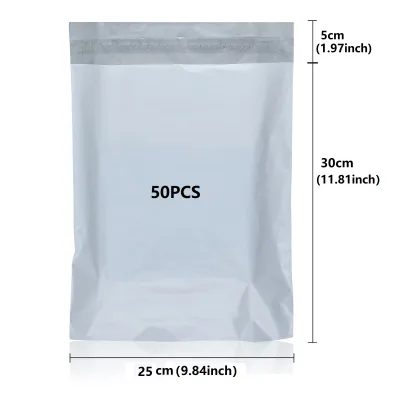
Prices are valid at publication and may change. Please refer to the product page for the latest price.
It is also essential to determine how the product will be prepared for shipment. Decide whether the item will be placed directly into the shipping bag as a loose, unboxed product, or if it will first be housed inside its own retail packaging or a protective inner box. A rigid retail box has fixed, unyielding corners that require larger tolerances than flexible, soft goods. Always measure the outermost dimensions of the final, fully assembled inner packaging rather than the bare product itself to ensure an accurate starting point for your calculations.
Calculate the Correct Shipping Bag Size
Once you have the exact physical measurements of your product or its inner box, you must translate these three-dimensional figures into the flat, two-dimensional dimensions of a shipping bag. When a flat bag is filled, its front and back panels pull toward each other to wrap around the product’s depth, which naturally reduces the usable width and length of the bag. To compensate for this physical transformation, you must apply a reliable sizing formula.

To calculate the minimum flat width of the shipping bag, add the product’s width to its thickness, and then add a safety margin of at least 15 to 20 millimeters. This extra margin ensures the product can slide into the bag smoothly without catching on the sides or putting immediate stress on the side welds. For example, if you are shipping a book that is 180 millimeters wide and 30 millimeters thick, your minimum flat bag width should be at least 225 to 230 millimeters.
To calculate the minimum flat length of the shipping bag, add the product’s length to its thickness, and then add the length of the sealing flap, which typically ranges from 40 to 50 millimeters depending on the manufacturer. Finally, add a small buffer of 10 to 15 millimeters to allow the bag to fold over neatly. If your product requires internal protective wraps, such as bubble wrap, tissue paper, or corrugated cardboard inserts to protect delicate paper edges or prevent ink bottles from breaking, make sure to wrap the product first and measure the wrapped bundle. Protective cushioning can easily double or triple the thickness of flat stationery items, requiring a much larger bag than the unwrapped product.
Match Bag Material to Your Product Characteristics
The physical characteristics of your product—such as its weight, rigidity, and sensitivity to environmental factors—should dictate the material and thickness of the shipping bag you choose. For items with sharp edges, rigid corners, or heavy metal components, such as wire-bound journals, staplers, or metal rulers, standard thin plastic bags are highly susceptible to punctures. For these items, look for co-extruded polyethylene mailers, which utilize multiple layers of plastic fused together to offer high puncture resistance and tear strength.
Heavier stationery sets, bulk paper reams, or multiple desk accessories exert significant pressure on the bottom and side seams of a shipping bag during transit. When selecting bags, verify the manufacturer’s weight limits and seam strength ratings. Bags with reinforced side welds or bottom gussets are highly recommended for heavier shipments, as they distribute the weight more evenly and resist bursting when handled roughly by courier staff or automated sorting systems.
Environmental protection is another critical factor, especially in tropical climates like Singapore where sudden downpours and high humidity are common. Paper-based stationery, envelopes, and cardboard-backed items are highly sensitive to moisture, which can cause warping, ink bleeding, or mold. To verify the water resistance of a shipping bag material, you can perform an observable trial by spraying water onto a sample bag and checking if any moisture penetrates the seams or material. Additionally, ensure the bag material is completely opaque to protect the privacy of high-value items and prevent contents from being visible from the outside.
Test the Fit Before Ordering in Bulk
To avoid costly sizing mistakes and ensure a secure packaging process, always validate your calculations with a physical test before committing to a large wholesale purchase. Most reputable packaging suppliers offer sample packs containing a variety of standard bag sizes for a nominal fee, or you can use existing spare bags in your inventory to conduct a trial run.
Place your fully wrapped product inside the sample bag and observe how it fits. Check for excessive empty space; if the bag is too loose, the product will slide around during transit, which can damage delicate paper corners, bend spiral bindings, or cause liquid ink refills to leak. Furthermore, loose, flapping plastic can catch on conveyor belts in sorting facilities, risking damage to the entire package.
Conversely, look for signs of tight stretching. If the bag is pulled taut across the product’s edges, the seams are at risk of failing under the pressure of transit handling. Simulate the complete sealing process by peeling off the protective liner and folding the adhesive flap over. The flap should seal flat against the body of the bag without any pulling, wrinkling, or tension. If the adhesive strip is strained or partially exposed, the seal may fail, allowing dust, dirt, or moisture to enter and ruin your products.
Common Sizing Mistakes That Increase Costs or Damage
Avoiding common packaging pitfalls can save your business significant amounts of money in damaged goods and unnecessary shipping fees. One of the most frequent errors is ignoring the three-dimensional thickness of the product, treating it instead as a flat, two-dimensional object. A stack of notebooks that is 250 millimeters wide and 40 millimeters thick will never fit into a flat shipping bag that is exactly 250 millimeters wide, yet many shippers make this assumption and end up with unusable inventory.
Another common mistake is forgetting to account for the length of the sealing flap in the overall bag dimensions. When the product occupies the entire length of the bag, the flap must be stretched over the top edge to close. This creates an insecure, highly stressed seal that can easily pop open during transit, exposing your items to loss or damage. Always ensure there is enough length for the flap to fold over naturally and bond securely to the flat surface of the bag.
Finally, overlooking courier pricing models can lead to inflated shipping budgets. Many logistics providers calculate shipping fees based on volumetric weight rather than actual physical weight. If you use an oversized shipping bag and leave large, air-filled corners, the courier’s automated scanners may measure the package as a larger volume, pushing it into a more expensive pricing tier. For example, a small sizing mistake can increase your shipping cost by S$1 to S$2 per package over hundreds of shipments, quickly eating into your margins. Folding over any excess bag material and securing it with tape, or choosing a bag that closely matches your product’s dimensions, is a simple way to keep your shipping costs within standard, affordable tiers.
Frequently Asked Questions (FAQ)
Should I use a standard or padded shipping bag for fragile items?
Standard flat poly mailers are excellent for non-fragile items that only require protection from dust, dirt, and moisture, such as softcover notebooks, plastic folders, or products that already have robust retail packaging. However, they offer no impact protection. For fragile stationery items, delicate fountain pens, glass ink bottles, or items with sensitive corners that can bend easily, you should always upgrade to padded shipping bags or bubble-lined mailers. The built-in air cushioning absorbs shocks, drops, and vibrations during transit, ensuring your delicate items arrive in pristine condition.
How does packaging size affect courier fees in Singapore?
In Singapore, local courier services and logistics providers typically calculate shipping fees using either the actual weight of the package or its volumetric weight, whichever is higher. Volumetric weight is determined by multiplying the package’s length, width, and height and dividing by a standard courier factor. If you use a shipping bag that is too large, the excess plastic can create bulky, air-filled pockets that increase the measured dimensions. To optimize your shipping costs and keep fees within standard pricing tiers, select a bag that fits your product snugly, and fold any excess bag material tightly over the item before sealing to minimize the overall volume.

Community discussion
Share your experience or ask a question. Comments are reviewed before publication.