
Selecting the right tools is the critical first step to a successful and frustration-free stitching experience when starting embroidery. The ideal starter set must feature dedicated embroidery needles—commonly known as crewel needles—which are specifically designed with sharp tips to pierce woven fabrics and elongated eyes to accommodate multiple strands of cotton embroidery floss. Selecting a high-quality, well-labeled set ensures that your stitches remain neat, your fabric undamaged, and your hands comfortable throughout hours of creative work.
Rather than buying individual loose needles, a curated set provides the necessary variety to experiment with different thread thicknesses and fabric weights. This guide outlines how to evaluate needle types, identify essential quality features, build a versatile starter kit, and source reliable tools locally.
Understanding Embroidery Needle Types and Sizes
To navigate the sewing aisle successfully, you must first understand that not all needles are created equal. For surface embroidery, three primary needle types dominate the craft: crewel, tapestry, and chenille needles. Each serves a distinct structural purpose based on its eye size, shaft length, and tip sharpness.
Products mentioned in this guide
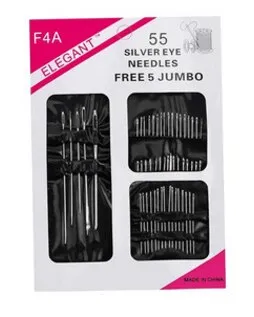
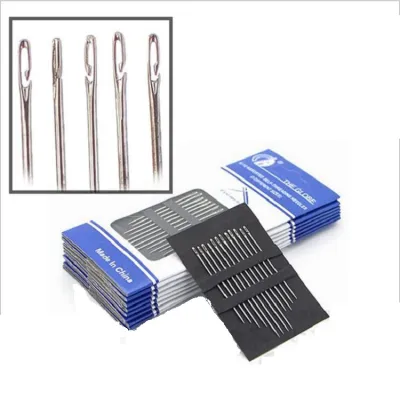
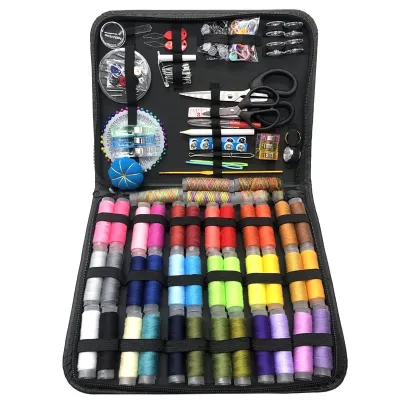
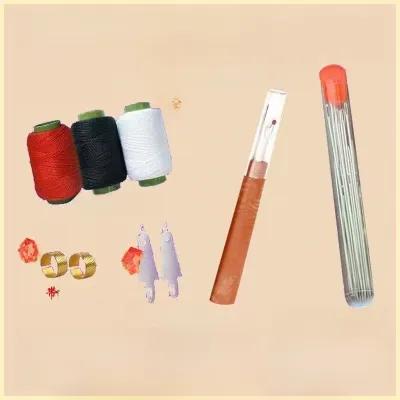
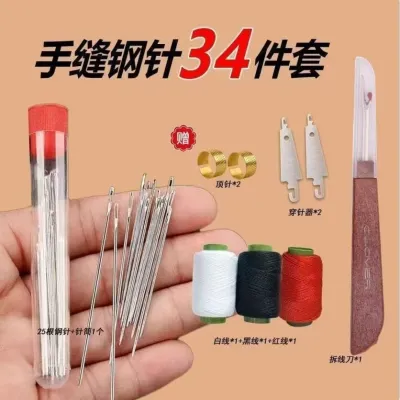
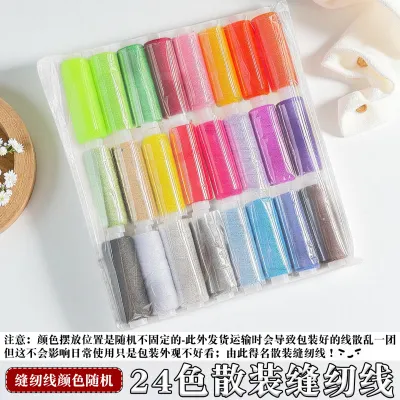
Prices are valid at publication and may change. Please refer to the product page for the latest price.
Crewel needles, which are the standard needles used for classic surface embroidery, feature a sharp point and an elongated eye. The sharp tip allows the needle to pierce cleanly through tightly woven fabrics like cotton calico, linen, and denim. The long eye is engineered to hold multiple strands of stranded embroidery floss, allowing you to thread two, three, or even all six strands without bunching or shredding the thread.
Tapestry needles, by contrast, have a blunt tip and a large, wide eye. These are designed specifically for counted thread techniques, such as cross-stitch, where you work on open-weave fabrics. The blunt tip prevents you from splitting the fabric threads, guiding the needle smoothly through the pre-existing holes instead. Tapestry needles are also invaluable in surface embroidery for whipped or woven stitches, where you need to slide the needle under existing stitches without catching the background fabric.
Chenille needles combine the best of both worlds: they feature the large, long eye of a tapestry needle but terminate in a sharp point like a crewel needle. These are ideal for working with thick, heavy threads, such as crewel wool, silk ribbons, or chunky pearl cotton, on heavy, dense fabrics.
Understanding the sizing convention is equally vital. Needle sizes are designated by numbers, and the system operates on an inverse scale: the larger the number, the finer and shorter the needle. For example, a size 1 needle is exceptionally thick and long, whereas a size 10 needle is incredibly thin and short. For most beginner embroidery projects using standard six-strand cotton floss, needles ranging from size 5 to size 10 are the most useful.
When selecting a needle from your set, always check the manufacturer’s size chart to match the needle thickness with your fabric weave and thread weight. If the needle is too thick, it will leave permanent, unsightly holes in your fabric. If it is too thin, the eye will rub excessively against the thread as you pull it through, causing the floss to fray, thin out, and eventually snap.
Essential Features to Check in a Beginner Sewing Needle Set
When shopping for a sewing needle set, evaluating the physical quality of the needles is paramount to ensuring a smooth stitching experience. The material composition and surface finish of the needle directly impact how easily it glides through fabric and how long it resists wear.

Most high-quality needles are manufactured from tempered high-carbon steel, which provides the necessary strength to prevent bending or snapping under pressure. The plating applied to the steel is what determines the friction level. Nickel-plated needles are the industry standard, offering a highly polished, smooth surface that minimizes resistance as you pull the needle through the fabric. For beginners, gold-eyed needles are highly recommended because the gold plating inside and around the eye is exceptionally smooth, reducing thread friction and making the needle significantly easier to thread under standard household lighting.
The storage case included with the sewing needle set is another critical feature that is often overlooked. A secure, well-organized case is essential for safety, especially in households with children or pets, and prevents the loss of these tiny, sharp tools. Look for sets packaged in circular dial dispensers (often called needle compacts) or slide-top cases with magnetic inserts. Crucially, the case must feature clear, legible size markings. Because the physical difference between a size 7 and a size 8 needle is microscopic, a labeled storage system ensures you always know exactly which needle you are retrieving and where to return it when finished.
Finally, analyze the variety offered within the set. A practical beginner set should provide a balanced assortment of sizes rather than a massive quantity of identical needles. Avoid bulk assortments that claim to offer dozens of assorted needles but actually contain uselessly tiny sharps or identical, low-quality needles with rough eyes. A curated set of 10 to 25 needles spanning sizes 5 to 10 will offer far more utility and value for your initial projects.
How to Build Your First Embroidery Needle Kit
Assembling your first embroidery needle kit does not require a massive financial investment, but it does require a strategic approach to ensure you have the right tools for the job. To begin, your core kit should center around a high-quality crewel sewing needle set containing sizes 5, 7, and 9.
These three sizes form the backbone of standard surface embroidery. A size 5 needle is robust enough to handle four to six strands of embroidery floss, making it perfect for thick outline stitches, heavy satin fills, and textured French knots. A size 7 needle is the ultimate all-rounder, ideal for the highly common two-to-three-strand work used in delicate floral designs and precise lettering. A size 9 needle is exceptionally fine, perfect for single-strand split stitches, detailed pet portraits, or miniature embroidery work.
To complement this core set, you can use a simple decision matrix to determine if you need to add supplementary needles. If your upcoming project involves cross-stitch or decorative weaving techniques (such as the woven wheel rose), you should supplement your kit with a small pack of tapestry needles in sizes 24 and 26. If you plan to experiment with thick wool threads or ribbon embroidery, adding a few chenille needles in sizes 18 to 22 will ensure your kit remains versatile.
When budgeting for your starter kit in Singapore, prioritize quality over sheer volume. A premium, branded sewing needle set from an established manufacturer typically costs between S$4 and S$12 at local retailers. These needles undergo rigorous quality control, ensuring smooth eyes and straight shafts. In contrast, unbranded bulk packs sold for S$1 to S$3 on general online marketplaces often feature rough metal burrs inside the eyes that shred your thread, leading to immense frustration. Spending a few extra dollars on a reputable set is a highly cost-effective decision that will save you hours of struggle and wasted embroidery floss.
Where to Source and Verify Needle Sets in Singapore
Acquiring your sewing needle set in Singapore can be done through physical craft shops or online platforms, each offering distinct advantages. For beginners, visiting a dedicated local craft supply store or haberdashery shop is highly beneficial. Singapore hosts several long-standing craft stores in areas like Chinatown, Plaza Singapura, and neighborhood town centers. Shopping in person allows you to physically inspect the packaging, feel the weight of the tools, and seek immediate advice from experienced store staff who can guide you to the correct brand for your specific fabric.
Alternatively, general online marketplaces and specialized craft e-commerce platforms offer unparalleled convenience and access to international brands that may not be stocked locally. When shopping online, however, you must exercise caution. Read customer feedback carefully, focusing on comments regarding packaging security and product authenticity, as counterfeit sewing accessories are common.
Once your needle set is delivered, perform a thorough physical verification before you begin stitching. Hold each needle up to a bright light or use a magnifying glass to inspect the eye; it should be perfectly smooth and free of tiny metal fragments or rough edges. Gently roll the needle shaft across a flat, hard surface like a glass table to verify that it is perfectly straight; a bent needle will cause uneven tension and hand strain. Finally, check the entire surface for any signs of discoloration, dullness, or rust, which can transfer permanent stains to your embroidery fabric. If you detect any manufacturing defects, utilize the seller’s return policy immediately to secure a replacement.
Frequently Asked Questions (FAQ)
How do I know when it is time to replace an embroidery needle?
An embroidery needle is a consumable tool that gradually wears down with use. The most obvious sign that it is time for a replacement is when the needle begins to snag or drag as it passes through the fabric, often accompanied by a distinct popping sound. This indicates that the sharp tip has become dull, microscopic burrs have formed, or the shaft has sustained a subtle bend. Additionally, if you notice your embroidery floss fraying repeatedly near the eye, or if you experience unusual hand fatigue while stitching, the needle’s finish has likely degraded, and it should be discarded safely.
Can I use standard sewing needles for basic embroidery?
While it is physically possible to force thread through a standard sewing needle (often called a sharp), it is highly discouraged for embroidery. Standard sewing needles are designed with small, round eyes meant for thin, single-strand sewing thread. Forcing thick, multi-stranded embroidery floss through these tiny eyes compresses the thread, stripping away its sheen and causing severe fraying. Furthermore, the narrow eye of a standard needle does not create a large enough hole in the fabric for the thick floss to pass through smoothly, resulting in excessive friction, fabric puckering, and hand strain.
How should I store my needles to prevent rust in a humid climate?
Singapore’s tropical climate, characterized by consistently high relative humidity, poses a significant rust hazard for steel sewing needles. To protect your investment, never store needles loose in open pin cushions or stuck directly into unfinished fabric scraps, as these materials trap ambient moisture against the metal. Instead, store your needle sets in airtight plastic containers or small glass vials. Always include a small silica gel desiccant packet or an anti-tarnish strip inside the storage container to actively absorb moisture and prevent oxidation, ensuring your needles remain bright, smooth, and rust-free.

Community discussion
Share your experience or ask a question. Comments are reviewed before publication.