
Choosing the right polymailer size requires matching the flat dimensions of the shipping bag with the three-dimensional volume of your packaged product. To find the correct fit, you must measure your item’s maximum length, width, and thickness in its fully prepped state, then apply a simple sizing formula that accounts for product depth and the adhesive seal. Selecting the correct size prevents split seams, reduces shipping costs, and ensures your items arrive safely. Whether you run a home-based e-commerce business or manage a busy warehouse, mastering this calculation saves time and prevents costly return shipping fees.
How to Measure Your Products for Shipping
Before ordering shipping supplies, you need accurate baseline measurements of your items. Always measure your product in its final, ready-to-ship state rather than its raw form. If you fold a t-shirt, roll a poster, or place an item inside an inner gift box, measure that compiled bundle as it will sit inside the mailer.
Remember to account for any protective wrapping materials you plan to use. Bubble wrap, foam sheets, or thick tissue paper add noticeable bulk to your item’s overall dimensions. Wrapping a product even once can increase its thickness by a centimeter or more, which directly impacts the required bag size.
Products mentioned in this guide
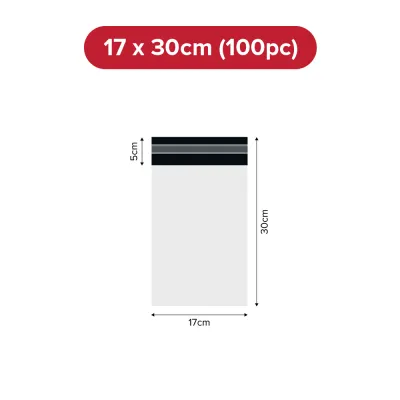
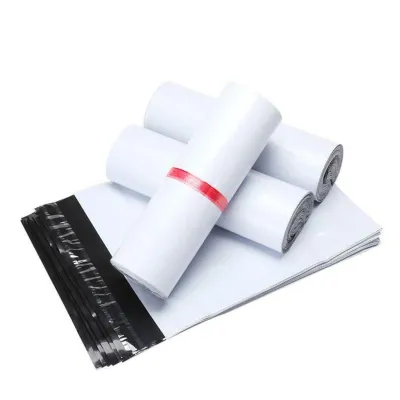

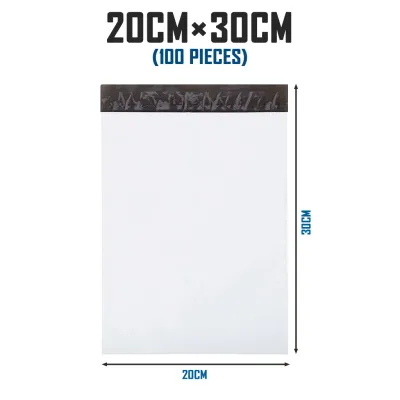
![[SG] ⭐CHEAPEST⭐ White Polymailer / Courier Bag / Mailer bag 100pcs shipping mailing](https://img.lazcdn.com/g/p/05fe20a8a01e6122b014cb5ab571993c.jpg_400x400q80.jpg_.webp)
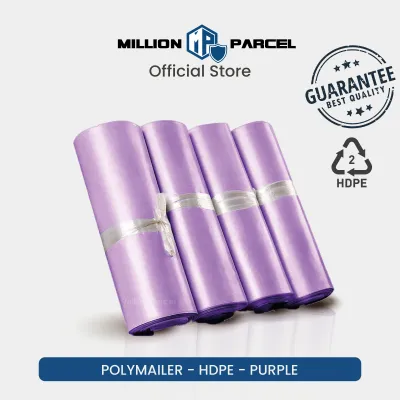
Prices are valid at publication and may change. Please refer to the product page for the latest price.
To get consistent and reliable measurements, place your prepped item on a flat, stable surface. Use a standard measuring tape or a rigid ruler to record the maximum length, width, and height (or thickness) at the widest points. Write these numbers down in centimeters or millimeters to keep your calculations precise. For irregularly shaped items, always measure the widest and thickest points to ensure the mailer can accommodate the largest section.
The Polymailer Sizing Formula Explained
A common point of confusion is assuming a flat polymailer can hold an item of the exact same width. Because a polymailer is a flat two-dimensional envelope, it must stretch outward to accommodate a three-dimensional object, which pulls the sides inward and reduces the usable width.

To calculate the minimum required polymailer width, use this basic formula:
Required Mailer Width = Product Width + Product Thickness + Safety Margin
The safety margin is typically at least 1 to 2 centimeters to ensure the item slides in easily without putting excessive tension on the side seams. For example, if a book is 15 centimeters wide and 3 centimeters thick, you will need a mailer with a flat width of at least 19 to 20 centimeters.
To calculate the minimum required polymailer length, use this formula:
Required Mailer Length = Product Length + Product Thickness + Sealing Flap Allowance
The sealing flap allowance represents the extra length needed to fold the adhesive strip over the opening. This usually requires an additional 4 to 5 centimeters, depending on the mailer design. Using these formulas ensures your mailer has enough physical volume to close securely without tearing.
Adjusting for Thickness, Girth, and Flexibility
The physical characteristics of your product dictate how strictly you must apply these sizing formulas. Rigid or boxed items, such as books, board games, or cosmetics in structured packaging, have no flexibility. They require a full girth allowance because the plastic cannot stretch or deform around their sharp corners.
In contrast, soft and compressible items like apparel, plush toys, or yarn are highly forgiving. These products naturally shift and compress to fill the empty corners of the mailer. For highly compressible items, you can often choose a mailer closer to the product’s flat dimensions, as the material will yield during packing.
However, there is a clear threshold where a product becomes too bulky or fragile for a standard polymailer. If your item is exceptionally thick, heavy, or has sharp, rigid edges that risk puncturing the plastic, you should switch to a corrugated shipping box. Polymailers excel at lightweight, non-fragile goods, but structured boxes remain the safest choice for heavy or delicate items. Padded mailers can offer a middle ground, but they have even less internal space due to the built-in bubble lining.
Common Sizing Mistakes to Avoid
One of the most frequent errors is confusing the total flat width of an empty mailer with its actual usable packing width. When you insert a three-dimensional item, the flat bag loses width as it expands to accommodate the item’s depth. Always calculate your needs based on the expanded volume rather than the flat dimensions.
Another mistake is measuring the raw product instead of the fully prepped package. If you measure a shirt flat on a table but ship it rolled or wrapped in bubble wrap, the final package will be much thicker than your initial measurements suggest. Always wrap and prep a sample item completely before taking your final measurements.
Lastly, do not ignore the adhesive flap length when looking at manufacturer specifications. The total length listed by suppliers often includes the flap itself. Once you fold and seal the flap, that length is permanently lost to the exterior seal, reducing the interior space available for your product. Overstuffing a mailer to compensate for this loss can also lead to higher shipping rates if the package bulges excessively.
Frequently Asked Questions (FAQ)
Does polymailer thickness affect the size I should order?
No, material thickness does not alter the physical dimensions or the sizing calculations of the bag. Thickness, usually measured in microns or mils, dictates the durability, opacity, and tear resistance of the plastic. You should select your mailer dimensions based on the physical size of your product, and choose the material thickness based on the product’s weight and the presence of sharp edges.
What if my product dimensions fall exactly between two polymailer sizes?
If your calculated dimensions fall between two standard mailer sizes, always choose the larger size. Sizing up ensures that the adhesive strip can seal flat without straining the side seams of the bag. A slightly loose mailer can easily be folded over and taped down, whereas a mailer that is too tight risks bursting open during transit or tearing when the courier handles it.

Community discussion
Share your experience or ask a question. Comments are reviewed before publication.