
Finding the correct plastic shipping bag size requires matching the three-dimensional volume of your product to the flat dimensions of the packaging. If the bag is too small, the seams can burst during transit; if it is too large, you risk paying excess shipping fees due to volumetric weight calculations. By applying a simple sizing formula that accounts for product length, width, and thickness, you can ensure a secure fit that protects your items while minimizing material waste.
Understanding Bag Dimensions and Product Measurements
To establish a reliable baseline for sizing, you must first measure your product at its bulkiest points. Use a ruler or measuring tape to find the maximum length, width, and thickness (depth) of the item. Relying on average dimensions or flat measurements of a three-dimensional object will lead to an undersized bag, as any thickness consumes both width and length when the bag stretches over the item.
Next, differentiate between flat bags and gusseted designs. A flat bag has only two dimensions (width and length) when empty, meaning any item thickness directly reduces the usable internal space. In contrast, gusseted bags feature folded side or bottom panels that expand to accommodate bulky items, which helps maintain more of the bag’s nominal width and length during packing.
Products mentioned in this guide
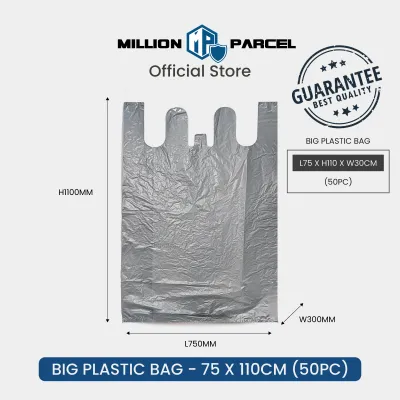
Prices are valid at publication and may change. Please refer to the product page for the latest price.
Finally, identify the sealing lip or flap on the shipping bag. This adhesive-strip area is designed to fold over and seal the opening, meaning it does not contribute to the usable internal length of the bag. When reviewing manufacturer specifications, always verify whether the listed length includes or excludes this flap to avoid purchasing bags that are too short to close.
The Sizing Formula for Flat and Bulky Items
To find the minimum required bag width for a three-dimensional product, you must account for the wrap-around effect. For flat items with negligible thickness, the bag width should simply be the product width plus a small buffer of about 20 to 30 millimetres. For boxy or cylindrical items, calculate the minimum bag width by adding the product’s width and its thickness, then adding an extra 25 millimetres to allow the item to slide in easily.

Determining the required bag length follows a similar logic. The minimum bag length is calculated by adding the product’s length, its thickness, and a sealing allowance of at least 50 millimetres. This allowance ensures there is enough material to fold the flap over the opening and secure the adhesive seal without putting tension on the seam.
You must adjust these variables based on whether your items are soft or rigid. Soft, compressible items like apparel can be squeezed, allowing you to use a slightly tighter fit or a smaller bag. Rigid items, such as books or boxed stationery, cannot compress and require strict adherence to the formula to prevent the corners from puncturing the plastic.
Material Differences: Poly Mailers vs. Plastic Shopping Bags
When selecting packaging, it is important to distinguish between dedicated poly mailers and standard plastic shopping bags. Poly mailers are designed specifically for shipping, featuring a flat top, a self-sealing adhesive strip, and a seamless bottom to maximize strength. Standard plastic shopping bags, which often feature integrated handles, are less suited for courier transit because the handle cutouts reduce the usable vertical space and leave the contents exposed unless taped shut.
Material thickness and tear resistance also differ significantly between these options. Poly mailers are typically rated by micron thickness, with heavy-duty options offering enhanced puncture resistance for shipping rigid or sharp-edged items. Standard shopping bags are generally thinner and designed for carrying light retail purchases, making them prone to tearing under the friction of automated sorting machines.
Consequently, standard plastic shopping bags are typically reserved for local, hand-delivered orders or immediate point-of-sale use. For courier transit and postal networks, dedicated poly mailers with tamper-evident seals are necessary to protect the contents from moisture, dirt, and unauthorized opening.
Common Sizing Mistakes and How to Avoid Them
One of the most frequent packaging errors is forgetting to subtract the sealing flap from the bag’s total length. If a manufacturer lists a bag as 300 millimetres long, but 40 millimetres of that is the adhesive flap, the actual usable length is only 260 millimetres. Always check the product specifications to confirm the usable dimensions before making a bulk purchase.
Another common mistake is underestimating how much width is lost when a flat bag expands around a thick object. A box that is 200 millimetres wide and 100 millimetres thick will not fit into a flat bag that is 250 millimetres wide, even though the width seems sufficient on paper. The physical expansion pulls the sides inward, requiring a much wider bag than anticipated.
Finally, consider how oversized packaging affects your shipping costs. Courier services often calculate shipping rates based on dimensional weight rather than actual weight. Using a bag that is far too large creates excess loose plastic or requires folding and taping, which can result in irregular bulges that trigger higher volumetric shipping rates.
Frequently Asked Questions (FAQ)
How much extra space should I leave for the sealing flap?
For most standard shipments, you should allow a minimum of 50 millimetres of extra length for the sealing flap. If your product is exceptionally thick or rigid, you may need to increase this buffer to 75 millimetres to ensure the flap folds over smoothly without pulling or tearing the plastic. Always verify if the manufacturer’s stated dimensions already exclude the flap.
What if my product dimensions fall exactly between two standard bag sizes?
If your product dimensions fall between two standard sizes, choose the larger size if the item is rigid, fragile, or has sharp corners that could puncture a tight bag. You should only select the smaller size if the product is highly compressible, such as a soft t-shirt, and the bag’s material is thick enough to withstand the tension without splitting at the seams.

Community discussion
Share your experience or ask a question. Comments are reviewed before publication.