
Selecting the perfect parcel box is a balancing act between physical protection and cost efficiency. If the box is too small, your items risk being crushed or punctured during transit; if it is too large, you end up paying inflated shipping fees for transporting trapped air. Finding the ideal dimensions requires a structured approach that accounts for the item’s physical shape, fragility, and the pricing structures used by modern courier networks.
Measure Your Item and Assess Its Fragility
To establish the absolute minimum internal dimensions of your parcel box, you must begin with precise physical measurements. Lay the item on a flat surface and use a rigid metal measuring tape rather than a flexible tailor’s tape, which can sag and lead to underestimation. Measure the maximum length, width, and height of the object. Always measure at the absolute widest points, making sure to include any protruding components such as handles, knobs, cables, wheels, or irregular decorative elements that dictate the minimum bounding box.
For items with highly irregular or organic shapes, imagine the object enclosed in a tight, transparent rectangular block. The dimensions of this imaginary block represent your baseline measurements. If you are shipping multiple items, place them together in the exact configuration they will be packed and measure the total outer boundary of the cluster.
Products mentioned in this guide
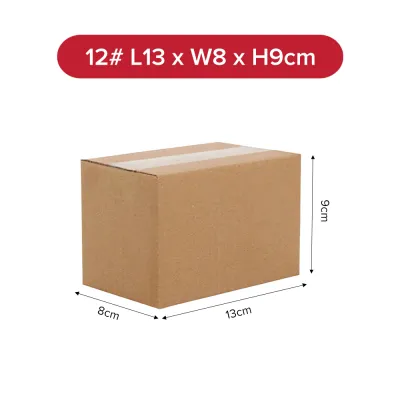
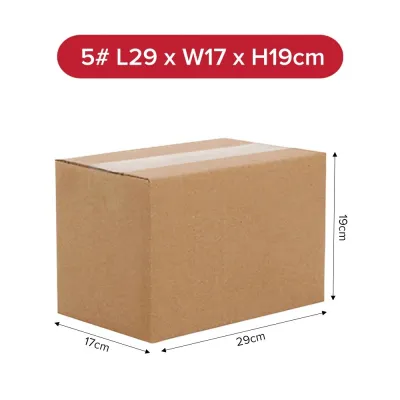
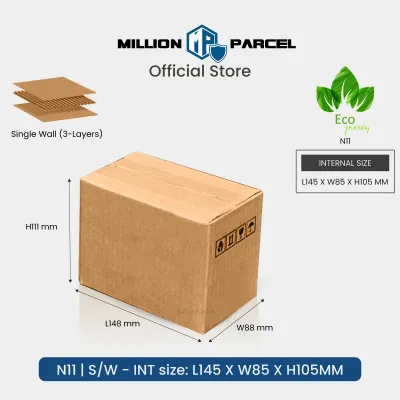
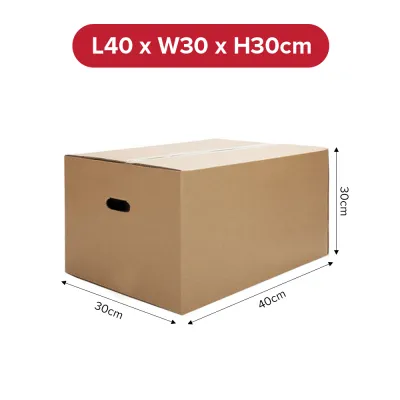
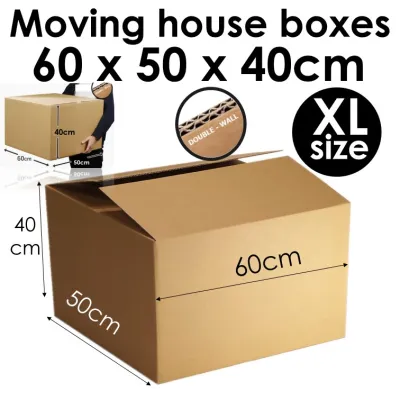
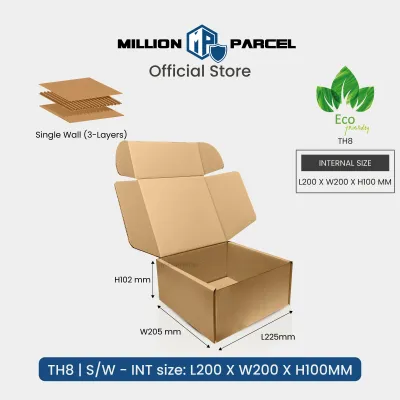
Prices are valid at publication and may change. Please refer to the product page for the latest price.
Once you have recorded the dimensions, evaluate the item’s physical characteristics, weight, and material. Heavy or dense items like mechanical parts or metal tools require thick, rigid box walls to prevent the contents from tearing through the cardboard. Conversely, lightweight but highly fragile items like glassware, ceramics, or liquid containers require substantial clearance for protective materials rather than structural wall strength alone. Standard durable goods, such as clothing, soft toys, or hardcover books, are highly resilient and can be packed with minimal clearance, allowing you to choose a box size very close to the item’s actual dimensions.
Calculate the Space Needed for Cushioning and Void Fill
The raw dimensions of your item only represent the starting point; you must now calculate the additional space required for protective cushioning and void fill. This step is critical because placing an item directly against the inner walls of a parcel box exposes it to the direct force of external impacts during transit. For non-fragile items like apparel or pre-packaged durable goods, a minimal clearance of 1 to 2 centimeters on all sides is typically sufficient to allow easy packing and protect against minor scuffs.

For fragile, delicate, or high-value items, you must allocate a dedicated buffer zone of at least 5 to 8 centimeters (approximately 2 to 3 inches) of space on all six sides of the box. This buffer zone must be filled with appropriate protective materials. When choosing your void fill, consider how the material behaves under pressure. Bubble wrap provides excellent localized cushioning but must be wrapped in multiple layers to achieve the desired thickness; remember to account for its compressed thickness under the weight of the item.
Other materials like kraft paper, air pillows, or starch-based packing peanuts serve different packaging roles. Kraft paper is ideal for wrapping and light crumpling to fill small gaps, while air pillows are highly efficient for filling large empty spaces without adding weight. However, a common shipping mistake is selecting a box that is far too large and attempting to resolve the gap by stuffing it completely with dense void fill. This practice not only wastes expensive packaging materials but can also significantly increase the overall weight and size of the package, leading to higher shipping rates. Keep the clearance space tightly matched to the fragility level of the item to maintain a cost-effective and secure package.
Check Volumetric Weight to Avoid Paying for Empty Space
Understanding how courier services calculate shipping costs is essential for keeping your logistics expenses under control. Most domestic and international courier services in Singapore use a pricing model based on two distinct metrics: actual physical weight and volumetric (or dimensional) weight. The courier will calculate both values and bill you based on whichever is greater. This means that shipping a large, lightweight box filled mostly with air and packing peanuts can cost the same as shipping a small, dense box of equivalent volume.
To calculate volumetric weight, couriers use a standard formula that translates the outer dimensions of the parcel box into a theoretical weight equivalent. The standard formula used by most local and international shipping providers is:
Volumetric Weight (kg) = (Length in cm x Width in cm x Height in cm) / Dimensional Divisor
While the standard dimensional divisor for international air freight is commonly 5,000, domestic couriers in Singapore may use divisors ranging from 5,000 to 6,000. For example, if you ship a lightweight item in a box measuring 40 cm x 30 cm x 30 cm, the volume is 36,000 cubic centimeters. Using a standard divisor of 5,000, the volumetric weight is calculated as 7.2 kilograms. If the actual physical weight of the item is only 1.5 kilograms, you will still be billed at the 7.2-kilogram rate.
This discrepancy highlights the financial danger of over-sizing your packaging. If your selected parcel box is significantly larger than the item and its necessary cushioning, you are actively paying to ship empty space. To diagnose and prevent this issue, perform a quick calculation before finalizing your box selection. If the calculated volumetric weight is more than double the actual physical weight, evaluate whether you can transition to a smaller box size or use a more compact wrapping method, such as a padded mailer, to bring the volumetric weight closer to the actual weight.
Match Your Calculated Dimensions to Standard Parcel Box Sizes
Once you have determined your target outer dimensions, the next step is to match these requirements against standard, commercially available parcel box sizes. Opting for standard sizes is highly economical, as custom-manufactured boxes carry high setup costs and are generally only practical for high-volume commercial operations. Standard cardboard boxes are widely categorized into clear size tiers, allowing you to quickly narrow down your options.
Small mailer boxes and self-sealing cardboard envelopes are ideal for flat, lightweight items like cosmetics, jewelry, books, and small electronic accessories. Medium-sized corrugated boxes are the industry workhorses, perfectly suited for shoes, larger household electronics, kitchenware, and folded apparel. Large, heavy-duty shipping cartons are reserved for bulkier items, multiple-item shipments, or products that require extensive multi-layered cushioning.
When dealing with unusually shaped, long, or narrow items, standard rectangular boxes may leave excessive empty space at the ends. In these scenarios, consider specialized box designs. Telescoping boxes consist of two pieces that slide over one another, allowing you to adjust the length to fit the item precisely. Multi-depth or adjustable-height cartons feature pre-scored horizontal lines along the inner walls, allowing you to easily cut down the corners and fold the box to a lower height, instantly reducing the volume and volumetric weight.
The following table serves as a quick reference guide to help you match common item categories with recommended standard box dimensions and appropriate cushioning clearances:
| Item Category | Typical Physical Dimensions (cm) | Recommended Cushioning Clearance | Suggested Box Type & Size (cm) |
|---|---|---|---|
| Books & Documents | 21 x 15 x 3 | 1 to 2 cm (Minimal) | Small Mailer Box (25 x 18 x 5) |
| Cosmetics & Skincare | 15 x 5 x 5 | 2 to 3 cm (Moderate) | Small Corrugated Box (20 x 10 x 10) |
| Smartphones & Tablets | 18 x 10 x 2 | 3 to 5 cm (High) | Medium Mailer Box (24 x 16 x 8) |
| Footwear & Shoeboxes | 32 x 20 x 12 | 1 to 2 cm (Minimal) | Medium Shipping Box (35 x 22 x 15) |
| Glassware & Ceramics | 12 x 12 x 15 | 5 to 8 cm (Very High) | Double-Wall Box (25 x 25 x 25) |
Verify Your Box Choice with a Pre-Shipment Physical Test
Before you apply packing tape and hand your package over to the courier, you must physically verify that your chosen parcel box size and packing configuration are correct. Even the most precise calculations can occasionally overlook how materials shift under real-world handling conditions. Performing two simple, non-destructive physical checks will ensure your package is fully prepared for transit.
First, conduct the Shake Test. Once the item and all cushioning materials are placed inside the box, temporarily close the top flaps and gently shake the box from side to side and up and down. If you feel or hear any internal movement, sliding, or rattling, the packing is insufficient. Internal movement indicates that the void fill is either too loose or there is a gap that will allow the item to shift and strike the outer walls during transit.
Second, perform the Compression Check. Place the box on a flat surface and apply light, even pressure with your hands to the top face and all four side walls. The box should feel firm and resist collapsing inward. If the cardboard bulges outward or collapses easily under light pressure, it indicates that the box is either too large for the structural support provided by the contents, or the void fill is too sparse to maintain the box’s shape.
If your package fails either of these tests, apply immediate corrective measures. If the item shifts, add more compressed void fill to lock it securely in place. If the box is bulging or struggling to support a heavy item, do not simply add more tape. Instead, transition to a smaller, tighter-fitting box, or upgrade to a heavier-duty corrugated grade, such as a double-wall box, which provides significantly higher structural integrity and crush resistance.
Frequently Asked Questions (FAQ)
Can I reuse an old parcel box for shipping?
You can reuse an old parcel box, but you must first carefully inspect its structural integrity. Check the corners and edges for soft spots, tears, or crushing, and ensure the corrugated flutes inside the cardboard layers have not collapsed, as this reduces the box’s stacking strength by up to 50 percent. Additionally, you must completely remove or thoroughly obscure all old shipping labels, addresses, and barcodes using a dark marker to prevent automated courier sorting systems from misrouting your package.
What is the best box size for shipping multiple items together?
To ship multiple items in a single parcel box, arrange the items on a flat surface in the tightest possible configuration and measure the total length, width, and height of the entire group to establish your base dimensions. Ensure that every individual item is wrapped separately in bubble wrap or paper to prevent them from rubbing or knocking against each other during transit. Add a consistent 5 to 8-centimeter cushioning buffer around the entire grouped boundary, and verify that the combined weight of the items does not exceed the maximum weight capacity printed on the box’s bottom manufacturer’s stamp.

Community discussion
Share your experience or ask a question. Comments are reviewed before publication.