
Selecting the correct paper box packaging is a critical decision that directly impacts product safety, customer satisfaction, and your business’s bottom line. Whether you are shipping delicate handmade items across Singapore or managing a high-volume e-commerce storefront, matching your product to the correct box dimensions prevents costly transit damage and unnecessary shipping fees. The ideal packaging solution balances a secure, snug fit for the contents with just enough space for protective materials, ensuring your items arrive in pristine condition.
Using incorrect box sizes often leads to a cascade of logistical issues. A box that is too large requires excessive void fill, increases your shipping costs due to volumetric weight pricing, and raises the risk of items shifting and breaking during transit. Conversely, a box that is too small can bulge, compromising its structural integrity and making it highly susceptible to crushing when stacked in delivery vehicles. Finding the sweet spot requires a clear understanding of packaging standards, product-specific requirements, and shipping calculations.
Understanding Box Dimensions and Measurement Standards
To avoid costly sizing errors and ensure accurate ordering, you must first understand how the packaging industry measures and lists box dimensions. The standard format used worldwide is Length x Width x Height (L x W x H). Length is always the longest dimension of the box’s opening, Width is the shorter dimension of the opening, and Height is the depth of the box from the opening to the bottom.
Products mentioned in this guide
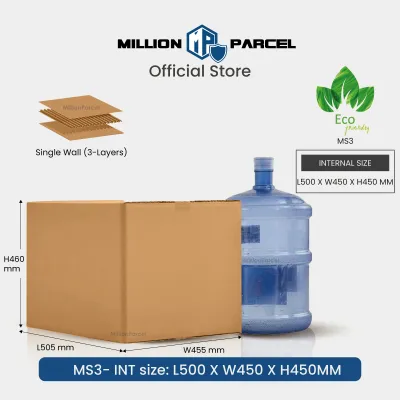
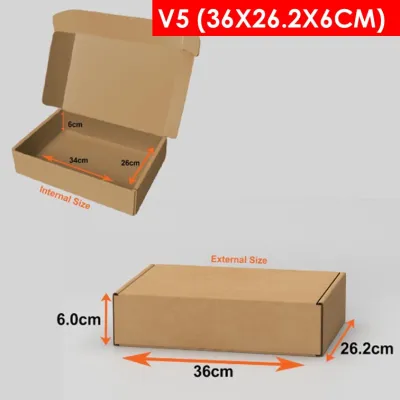
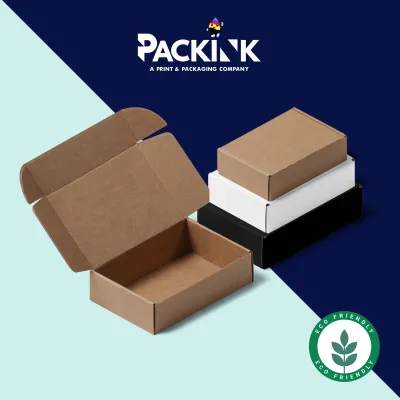
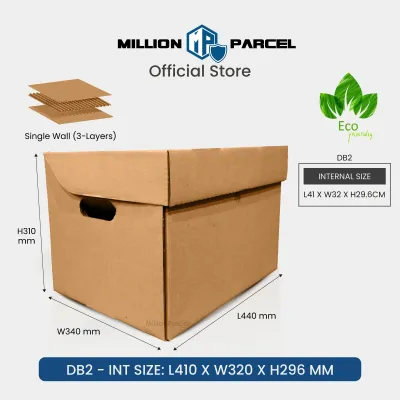
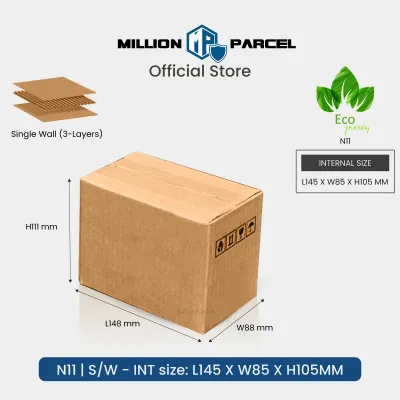
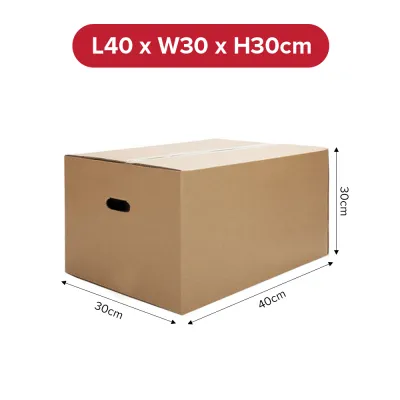
Prices are valid at publication and may change. Please refer to the product page for the latest price.
There is a critical difference between internal and external dimensions, and confusing the two can ruin your packaging strategy. Internal dimensions measure the usable space inside the box after it is assembled. These are the measurements you must use to determine if your product, along with any protective wrapping, will fit inside. External dimensions measure the outside of the box, which includes the thickness of the corrugated walls and any flaps. Logistics providers and courier services use external dimensions to calculate shipping volumes, warehouse storage space, and stacking limits.
When sourcing paper box packaging, always verify whether the supplier’s listed dimensions refer to the inside or the outside of the box. Most reputable manufacturers list internal dimensions as the standard, but custom box makers or international suppliers may default to external measurements. If you are close to the margin on a product fit, a difference of just a few millimeters in wall thickness can prevent your item from fitting inside, forcing you to return inventory or source alternative packaging at the last minute.
Sizing Strategies for Paper Box Packaging Across Product Categories
Different types of products have unique spatial, structural, and protective requirements. Applying a one-size-fits-all approach to your paper box packaging often leads to damaged goods or inflated shipping bills. Tailoring your box selection to the specific category of your product ensures optimal protection and presentation.

Food Items and Perishables
Packaging food items requires a high level of precision to maintain freshness, prevent physical damage, and ensure hygiene. A snug fit is essential for delicate food items, such as baked goods, pastries, or gourmet chocolates, to prevent them from shifting during transit. When food items slide around inside a box, they can collide with the walls or each other, causing aesthetic damage, structural breakage, or messy spills that ruin the customer experience.
If you are shipping temperature-sensitive perishables within Singapore’s humid tropical climate, you must account for the extra internal space required for thermal management. Ice packs, gel packs, or insulated foil liners take up significant volume inside the box. You must calculate the dimensions of these cooling elements alongside your product to ensure the box is large enough to accommodate everything without squeezing or crushing the food.
Additionally, many food products require moisture-resistant or greaseproof liners to protect the integrity of the paper box. While these liners are thin, they add a small but necessary layer of thickness to your internal volume calculations. If the liner material is folded or layered, it can reduce the usable width and length of the box by several millimeters, which must be factored in before placing a bulk packaging order.
Apparel and Soft Goods
Sizing paper boxes for apparel and soft goods is unique because clothing is highly flexible and compressible. You should never base your box dimensions on the flat, laid-out measurements of a garment. Instead, measure the item only after it has been folded, rolled, or compressed into its final shipping configuration.
For most clothing items, low-profile mailer boxes are the most efficient option. These shallow boxes keep the folded garments flat and secure, minimizing empty space and preventing the clothing from bunching up or becoming excessively wrinkled during transit. Using a low-profile box also keeps the external volume of the package as small as possible, which directly reduces volumetric shipping costs.
When calculating the required box size, remember to factor in the thickness of any primary packaging or branding elements. If you wrap your garments in tissue paper, place them inside poly mailers, or include thick cardboard branding inserts and thank-you cards, these additions will increase the overall height and width of the folded item. Failing to account for these minor layers can result in a tight fit that makes the box difficult to seal neatly.
E-commerce Shipments and Fragile Goods
Shipping fragile items safely through courier networks requires robust protective layers and strategic box sizing. You must always measure your product after it has been wrapped in its primary protective layer, such as bubble wrap, foam sleeves, or corrugated wrap. Measuring the bare product and assuming it will fit with wrapping is a common mistake that leads to crushed items or burst box seams.
To ensure fragile items survive rough handling, establish a general framework for adding buffer space. You should aim for adequate clearance on all six sides of the box to accommodate void fill materials like crumpled kraft paper, air pillows, or packing peanuts. This buffer zone acts as a shock absorber, preventing external impacts on the box walls from transferring directly to the delicate product inside.
Avoid leaving excessive empty space in the box, even if you plan to fill it with packing materials. If a heavy or dense item is placed in an oversized box with loose void fill, it can shift during transit, build up momentum, and potentially break through the corrugated paper walls. The goal is a firm, stable pack where the product is suspended securely in the center of the box, surrounded by tightly packed cushioning.
Calculating the Ideal Box Size: A Step-by-Step Guide
Determining the exact paper box dimensions for your product does not have to be a guessing game. By following a structured, step-by-step workflow, you can identify the ideal box size for any single item or bundled product kit.
- Step 1: Measure the physical product. Place your product (or the complete bundle of items) on a flat surface in the exact configuration it will be packed. Use a reliable ruler or measuring tape to record the maximum length, width, and height at the widest points. Do not round down these measurements; always round up to the nearest millimeter.
- Step 2: Add the thickness of internal packaging. If your product uses inner dividers, custom molded pulp trays, or is wrapped in tissue paper, measure these elements. Add their combined thickness to your initial product measurements. For example, if you use a cardboard divider that is 3 mm thick, ensure this is added to the total width or length requirement.
- Step 3: Add clearance for void fill and cushioning. For non-fragile items, a clearance of 5 mm to 10 mm on all sides is usually sufficient to allow for easy packing and unpacking. For fragile or heavy items, increase this clearance to 20 mm to 50 mm on all sides to accommodate protective bubble wrap or paper cushioning.
- Step 4: Cross-reference with supplier specifications. Once you have your final calculated dimensions, compare them against the box supplier's catalog. Do not rely on generic assumptions about box strength. Check the manufacturer's stated weight limits, material grades (such as single-wall versus double-wall corrugated paper), and Edge Crush Test (ECT) ratings.
An ECT rating measures the compressive strength of the corrugated board along its edges, indicating how much stacking pressure the box can withstand. For lightweight items, a standard single-wall box with a 32 ECT rating is typically sufficient. For heavier shipments, fragile electronics, or items that will be stacked high in shipping containers, verify with your supplier if a double-wall box with a 44 ECT rating or higher is required to prevent structural collapse.
Optimizing for Shipping Costs and Storage Efficiency
Choosing the right paper box size is not just about product protection; it is also a vital financial decision. Logistics providers and e-commerce fulfillment partners do not charge shipping fees based solely on the actual weight of a package. Instead, they use a system called dimensional weight, or volumetric weight, which reflects the amount of space a package occupies in a delivery vehicle.
Dimensional weight is calculated using a standard formula: (Length x Width x Height in centimeters) divided by a courier-specific divisor. In Singapore, local couriers like SingPost, Ninja Van, and international logistics providers typically use a divisor of 5000. If your calculated dimensional weight is higher than the actual physical weight of your package, you will be billed for the dimensional weight. Choosing a box that is even slightly larger than necessary can significantly inflate your shipping costs over time, as you are essentially paying to ship empty air.
Oversized boxes also lead to secondary operational inefficiencies. They consume more void fill materials, which increases your packaging material costs per order. Furthermore, large boxes occupy valuable storage space in your warehouse, retail backroom, or home office. In a market like Singapore where commercial storage space comes at a premium, optimizing your box sizes directly translates to lower storage overheads.
To balance cost and operational complexity, avoid ordering a unique box size for every single product in your inventory. Instead, analyze your sales data and curate a streamlined inventory of 3 to 5 standard box sizes. This range should be versatile enough to cover the vast majority of your order combinations. Keeping a limited number of standard sizes simplifies your packing workflow, reduces assembly errors, and allows you to purchase your packaging materials in larger bulk quantities to secure better wholesale pricing.
Frequently Asked Questions (FAQ)
How much extra space should I leave inside a shipping box for fragile items?
For fragile items, you should generally leave a uniform buffer zone of 20 mm to 50 mm of space on all six sides of the box. This space must be filled completely with shock-absorbing materials like bubble wrap, crumpled kraft paper, or air pillows to prevent the product from moving. To verify if your packaging is secure, perform a simple shake test: seal the box completely and shake it gently. If you feel or hear the product shifting, sliding, or rattling inside, you need to add more void fill or transition to a smaller box size.
Can I use the same paper box for both retail display and e-commerce shipping?
While it is possible to use the same box for both scenarios, it is rarely ideal due to conflicting design requirements. Retail display packaging focuses on visual appeal, compact shelf footprints, and easy-open features, often using thin, lightweight paperboard that lacks structural rigidity. E-commerce shipping packaging, on the other hand, requires durable corrugated cardboard to withstand rough handling, stacking, and environmental moisture during transit. For delicate, heavy, or high-value goods, you should place the retail-packaged item inside a dedicated, sturdier shipping box with adequate internal clearance and cushioning to ensure it survives the journey.

Community discussion
Share your experience or ask a question. Comments are reviewed before publication.