
Choosing the right foam for packing fragile items requires balancing thickness, density, and the physical characteristics of the item itself. The goal is to prevent the item from shifting or bottoming out during transit while ensuring it fits securely within its outer container. By matching the material’s properties to the weight and fragility of your goods, you can create a reliable protective barrier that withstands the rigors of shipping.
Decoding Foam Thickness and Density for Packaging
Understanding the difference between foam thickness and foam density is essential for selecting the right protective packaging. Thickness refers to the physical depth of the cushioning layer, which provides the deceleration zone during an impact. Density, on the other hand, refers to the mass of the foam per unit volume, which dictates its load-bearing capacity and firmness. A thick but low-density foam may compress completely under a heavy object, rendering its thickness useless.
Cell structure also plays a critical role in how foam wraps perform under stress. Closed-cell foam wraps feature tiny, sealed air pockets that offer excellent surface protection and moisture resistance, making them ideal for delicate finishes. Open-cell structures or larger-cell variations are designed for deeper shock absorption, absorbing energy by compressing and slowly rebounding when subjected to sudden drops.
Products mentioned in this guide
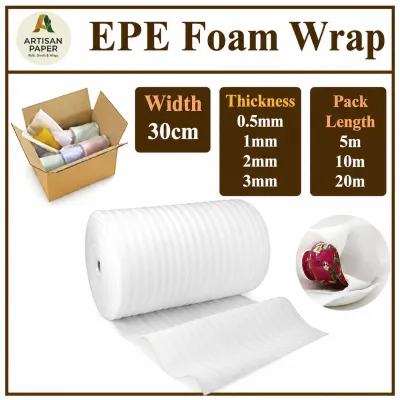
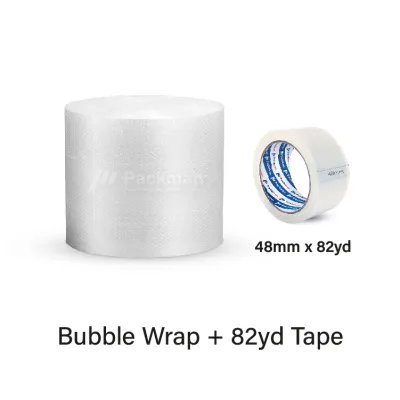
![[SG] Bubble Wrap® 10m | Foam Roll 5m | Packing Tapes – Cushioning for Packing Moving Warehouse Use](https://img.lazcdn.com/g/p/5d1b2367f552267faa5f9fe7d51ee653.jpg_400x400q80.jpg_.webp)
Prices are valid at publication and may change. Please refer to the product page for the latest price.
While it might seem logical to use the thickest foam available, thicker is not universally better. If the foam is too thick, it can overfill the shipping box, forcing you to compress the cushioning just to seal the flaps. This pre-compression robs the foam of its ability to absorb further shocks, transferring the impact energy directly to the fragile item inside and increasing the risk of breakage.
Matching Foam Specifications to Item Fragility and Weight
Heavy items, such as solid ceramic sculptures or metal-housed electronics, exert significant force on packaging materials. If you use a low-density foam, the weight of the item will cause it to bottom out, meaning the item sinks through the foam and rests directly against the hard outer box. High-density foam is essential here to distribute the weight evenly and maintain a protective barrier.

Delicate items like thin glassware or porcelain require highly conforming, soft surface protection to prevent scratches and minor vibrations from causing hairline fractures. For electronic components, static electricity is a major hazard; in these cases, specialized anti-static foam wraps are necessary to prevent electrostatic discharge while providing physical cushioning.
To verify if your chosen foam is appropriate, perform a visual compression check before sealing. Place the wrapped item on a flat surface and observe how much the foam compresses under the item’s natural weight. If the foam compresses by more than half its original thickness under static conditions, you need a higher density or a thicker grade of foam to ensure adequate protection.
Adjusting for Transit Conditions and Box Dimensions
Long-distance shipping routes, multiple sorting hubs, and rough handling conditions increase the cumulative shock an item experiences. For these demanding journeys, adding extra foam layers or reinforcing vulnerable areas with specialized foam edge protectors can prevent corner impacts from breaching the packaging.
A critical step in packaging is maintaining a consistent, uncompressed cushion zone—often referred to as the void fill buffer—between the wrapped item and all six interior walls of the shipping carton. This buffer ensures that if the box is dropped or crushed, the outer wall can deform slightly without immediately impacting the fragile contents inside.
While flexible foam rolls are highly versatile for wrapping irregular shapes, they have structural limits. For extremely heavy, sharp, or complex items, flexible wraps may compress unevenly or tear. In these scenarios, rigid molded foam inserts or custom-cut foam blocks are necessary to lock the item securely in place and distribute heavy loads across a wider surface area.
Practical Packing Workflow for Maximum Protection
Begin by securing the foam tightly around the item’s contours. Use high-quality packaging tape to hold the foam in place, but avoid pulling the tape so tight that it crushes the foam cells. Pay special attention to protruding elements, such as handles, spouts, or decorative details, by wrapping them individually before wrapping the entire object.
For highly irregular or extremely fragile shapes, a multi-layered approach works best. Apply a thin, highly flexible foam sheet as the primary layer to protect the surface from scratches and dust. Follow this with a thicker, high-density shock-absorbing outer layer to handle heavier impacts and fill larger voids within the box.
Once the item is boxed and the void fill is added, perform a final verification before sealing the seams. Close the box flaps and gently shake the package. Listen closely for any movement; an audible rattle or a shifting sensation indicates that there is still empty space inside. If you detect movement, add more foam or void fill until the package is completely silent and stable.
Frequently Asked Questions (FAQ)
Can I use multiple layers of thin foam instead of one thick layer?
Yes, layering thin foam can be highly effective, especially when wrapping complex, irregular contours that a single thick sheet cannot easily conform to. However, keep in mind that multiple layers can introduce tiny air gaps between the sheets, which may slightly reduce overall shock absorption efficiency compared to a single, solid block of the same thickness. For heavy items, a single dense foam sheet or block remains the more reliable choice to prevent bottoming out.
Does the type of outer box change the foam thickness I need?
Yes, the structural integrity of your outer container directly influences your cushioning requirements. A standard single-wall corrugated box offers limited puncture and crush resistance, requiring a thicker foam buffer to protect the contents. Upgrading to a heavy-duty double-wall box significantly increases the package’s overall rigidity, shifting some of the shock-absorption burden to the box itself and allowing you to optimize or slightly reduce the internal foam thickness safely.

Community discussion
Share your experience or ask a question. Comments are reviewed before publication.