
Choosing the correct ONS plastic bag size is essential for protecting products, minimizing shipping costs, and presenting a professional image to customers. Using a bag that is too small leads to split seams, exposed items, and packing delays, while an oversized bag creates excess waste and risks getting caught in automated sorting machinery. To find the ideal fit, you must look beyond simple flat measurements and account for product thickness, material flexibility, and protective packaging.
Understand ONS Plastic Bag Dimensions and Measurement Standards
When browsing packaging supplies, shipping bags are typically listed by their flat external dimensions, represented as width by length (for example, 250mm x 350mm). However, interpreting these numbers correctly requires understanding how manufacturers measure their products.
First, clarify whether the listed length includes the sealing flap. In most standard specifications, the length measurement refers only to the usable body of the bag, with the adhesive flap extending an additional 40mm to 50mm beyond that length. However, some suppliers include the flap in the total length. Always verify the manufacturer’s specification sheet to confirm whether you are looking at the “usable length” or the “total overall length.”
Products mentioned in this guide
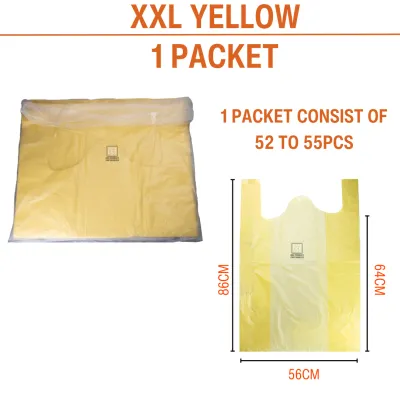
Prices are valid at publication and may change. Please refer to the product page for the latest price.
Second, remember that flat plastic bags are measured externally. The internal usable space is always slightly smaller due to the heat-sealed side seams, which typically consume 2mm to 5mm on each edge.
Finally, standard plastic shipping bags are two-dimensional envelopes with no side or bottom gussets. Because they lack built-in depth, inserting any three-dimensional object will pull the front and back sheets together, reducing both the effective width and length of the bag.
Measure Your Products Accurately for Packaging
To determine the minimum bag size required for your inventory, you must measure your products in three dimensions. Do not rely on the manufacturer’s listed product dimensions alone, as these often exclude external retail packaging, tags, or protective sleeves.

Use a rigid ruler or calipers to measure the maximum length, width, and thickness (height) of the product or its retail box. Once you have these three figures, you can calculate the minimum flat bag dimensions using standard packaging formulas.
To find the required bag width, use the following formula: Required Bag Width = Product Width + Product Thickness + Margin
The margin should be at least 10mm to 20mm to allow the item to slide in easily without friction.
To find the required bag length, use this formula: Required Bag Length = Product Length + Product Thickness + Margin
This length represents the usable space needed below the sealing line. If the manufacturer’s listed bag length includes the sealing flap, you must add the flap’s height (usually 40mm) to this total.
For irregularly shaped items, a flexible measuring tape offers a more reliable measurement. Wrap the tape around the thickest part of the product to find its total circumference. Divide this circumference by two, and then add a margin of 15mm to 20mm to find the minimum flat bag width.
Match Bag Sizes to Common Product Categories
Different types of merchandise require different sizing considerations based on how they behave under pressure. Categorizing your inventory by physical properties—specifically compressibility and rigidity—simplifies the process of selecting the right ONS plastic bag.
Flat and Flexible Items
Flat and flexible items include apparel, textiles, softbound notebooks, documents, and soft stationery accessories. These products are highly forgiving when it comes to packaging size because they can compress and conform to the flat shape of the bag.
When packaging soft items like t-shirts or hoodies, you can use a tighter fit with a minimal margin of about 10mm on the width. The flexibility of the fabric allows the bag to wrap snugly around the item without placing excessive stress on the side seams.
Furthermore, because these items can be folded or compressed slightly during the packing process, they often fit into smaller bags than their flat, uncompressed dimensions would suggest. This snug fit prevents the product from shifting during transit, maintaining a neat presentation upon arrival.
Bulky or Rigid Items
Bulky or rigid items include hardcover books, boxed stationery sets, electronics, and items housed in stiff plastic or cardboard retail packaging. Unlike apparel, these items cannot compress, and their sharp, unyielding corners present a high risk of puncturing flat plastic films.
For these products, you must strictly apply the circumference formula to calculate the required bag width. Forcing a rigid box into a bag that is too narrow will concentrate tension directly on the heat-sealed side seams, causing them to split open during transit.
Always round up to the next standard bag size if your calculations fall between two sizes. If a rigid item is exceptionally thick—such as a box exceeding 60mm in height—standard flat plastic bags may not be the best choice. In these scenarios, switching to a gusseted shipping bag or a corrugated mailer box is highly recommended to ensure structural integrity.
Account for Padding, Sealing, and Shipping Conditions
Selecting the right bag size also requires factoring in the protective materials used to safeguard your items during transit. If your product requires bubble wrap, foam wrap, or tissue paper, always measure the item after these protective layers have been applied.
A single layer of standard bubble wrap can add 10mm to 20mm to both the width and thickness of an item. Failing to account for this extra volume will result in a bag that is too tight, compressing the bubble wrap and reducing its cushioning effectiveness.
Additionally, ensure the sealing flap can close flat without tension. The adhesive strip on ONS plastic bags relies on full contact with the flat plastic surface to create a secure, tamper-evident bond. If the bag is overstuffed, the flap will seal at an angle, leaving gaps where moisture, dust, or rain can enter during local transit.
Environmental factors also play a role in packaging performance. In warm, humid climates like Singapore, high temperatures during transit can affect plastic elasticity and adhesive strength. Over-tensioned seams are far more susceptible to bursting when subjected to the physical impacts of automated sorting belts and delivery vehicle vibrations. Providing a comfortable margin within the bag prevents premature seam failure.
Verify the Fit Before Bulk Ordering
While mathematical formulas provide an excellent starting point, physical testing is the only way to guarantee a perfect fit before committing to a bulk purchase of ONS plastic bags. Ordering a small sample pack containing various sizes allows you to conduct real-world trials with your actual products.
When testing a bag size, use this physical evaluation checklist:
First, assess the ease of insertion. The product should slide into the bag smoothly without requiring force, twisting, or squeezing, which slows down fulfillment times.
Second, check the flap coverage. The sealing flap must fold over easily and lie completely flat against the body of the bag, with the adhesive strip fully covered and sealed.
Third, inspect the side seams. Look closely at the edges of the bag; if you see white stress marks, crinkling, or pulling along the seams, the bag is too small and is at risk of bursting.
Finally, evaluate the overall presentation. If there is excessive loose plastic flapping around, the bag is too large, which looks unprofessional and increases the risk of the package getting caught in postal machinery. Adjust your final size selection based on these physical observations to achieve the perfect balance of security, efficiency, and presentation.
Frequently Asked Questions (FAQ)
Can I use a larger bag and fold the excess material?
Using an oversized bag and folding down the excess is acceptable for occasional, urgent shipments, but it is not recommended as a standard practice. Excess loose plastic can easily get caught in automated sorting rollers at postal hubs, which can tear the bag or damage the contents. If you must use a larger bag, fold the excess material tightly against the body of the parcel and secure it firmly with heavy-duty packaging tape to create a flat, compact, and snag-free package.
Do standard plastic shipping bags stretch to fit thicker items?
Although high-quality polyethylene shipping bags possess a degree of natural elasticity, you should never rely on plastic stretch to accommodate thick or oversized items. Stretching the plastic thins the material, significantly reducing its puncture resistance and putting immense pressure on the heat-sealed side seams. This increases the likelihood of the bag tearing during transit. Always select a bag size that accommodates your product’s volume naturally without stretching the film.

Community discussion
Share your experience or ask a question. Comments are reviewed before publication.