
Selecting your first mini watercolour starter set is an exciting step into the world of painting, but the sheer variety of options can feel overwhelming. For a beginner, the ideal set balances compact portability with high-quality, easily blendable pigments that do not frustrate your early learning stages. A well-designed miniature kit allows you to practice color theory at home or capture quick sketches outdoors without the burden of carrying heavy, bulky art supplies.
In Singapore’s unique tropical environment, practical factors like casing durability, paint stability under high humidity, and ease of maintenance become just as important as the paint quality itself. By focusing on key product specifications, physical build quality, and your personal painting goals, you can find a starter set that offers excellent value and grows with your developing skills. This guide outlines exactly what to look for, how to verify product authenticity, and how to prepare your new kit for its very first brushstroke.
What Defines a Good Mini Watercolour Starter Set
To evaluate a mini watercolour starter set, you must first look at the paint format and the utility of the colour range. Most miniature kits feature solid paint pans—specifically half-pans, which measure roughly 1.5cm by 2cm—rather than liquid tubes. Solid pans are highly recommended for beginners because they are less messy, dry quickly after use, and prevent you from accidentally wasting paint. A good starter set does not need dozens of colours; instead, look for a balanced palette of 12 essential shades. This typically includes a split-primary system (a warm and a cool version of red, yellow, and blue), a couple of earth tones like burnt sienna, and a neutral tint. This limited selection forces you to learn the essential skill of colour mixing, preventing muddy results while keeping the physical footprint of the kit incredibly small.
Products mentioned in this guide
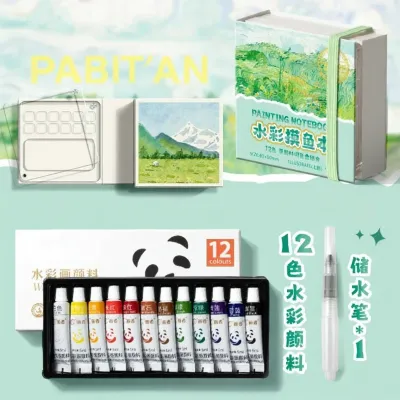
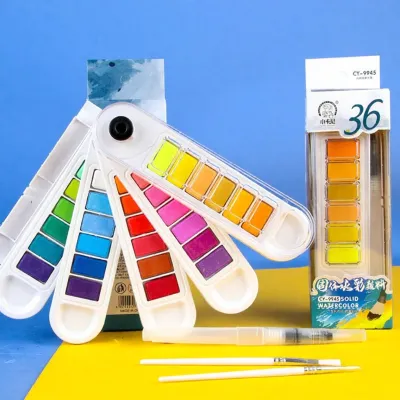
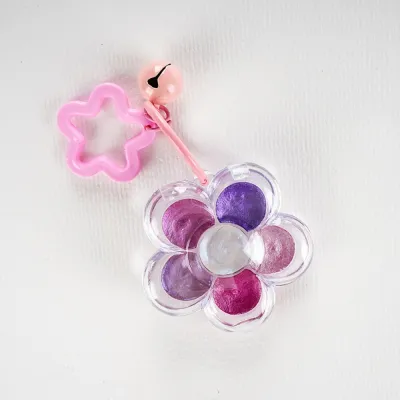
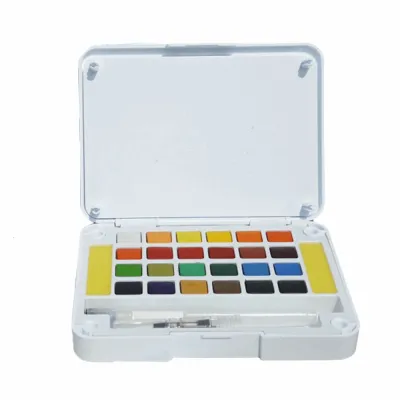
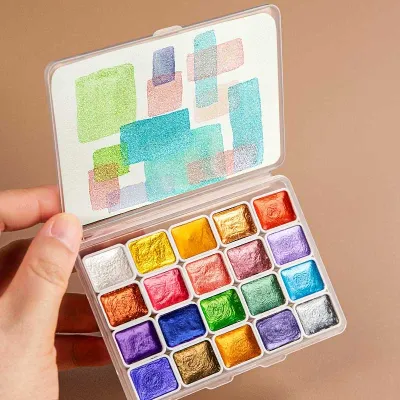
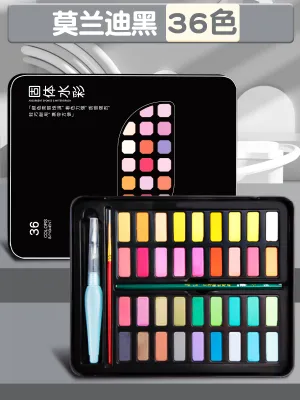
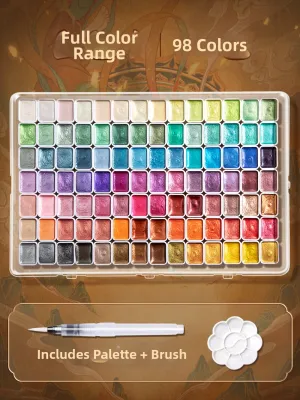
Prices are valid at publication and may change. Please refer to the product page for the latest price.
Another critical factor is the portability and construction of the outer casing. The case serves as both a protective shell for your paints and a mobile workspace. Enamel-coated metal tins and high-grade molded plastic cases are the two primary options. Metal tins offer superior durability, secure metal hinges, and fold-out mixing wells that stay flat on a table. Plastic cases are significantly lighter and often feature highly innovative, modular designs, though their plastic hinges can wear down over time if subjected to rough handling. Regardless of the material, the closure mechanism must be absolutely secure. A latch that accidentally pops open inside a backpack can ruin both your art supplies and your personal belongings.
Finally, assess the quality of the included accessories, as many mini sets are designed to be self-contained systems. A built-in mixing palette is non-negotiable; look for deep, distinct wells that prevent different paint mixtures from running into one another. Many modern pocket sets include a water brush—a synthetic brush with a refillable water reservoir in the handle—which eliminates the need for a separate water cup. While highly convenient for quick outdoor sketching, ensure the water brush valve regulates flow smoothly without dripping. If the set includes a traditional collapsible travel brush, check that the cap fits securely on the back of the handle to provide a comfortable, balanced grip during use.
Key Specifications to Check Before Buying
When browsing options, reading the manufacturer’s packaging and specifications sheet will save you from purchasing a set that does not match your skill level. The first distinction to make is between student-grade and professional-grade paints. Student-grade sets (often labeled as “Academy,” “Studio,” or “Fine”) are formulated with affordable synthetic binders and alternative pigments. They are highly cost-effective, forgiving for beginners, and perfect for daily practice. Professional-grade sets use pure, highly concentrated pigments and natural gum arabic binders. While they offer incredible vibrancy and smooth blending, they require more control and represent a much higher initial investment. For most beginners, a high-quality student-grade set from a reputable manufacturer offers the perfect balance of performance and affordability.

Next, look closely at the pigment codes and performance indicators printed on the color chart or the side of the box. Reputable brands list specific pigment codes (such as PB29 for Ultramarine or PY150 for Nickel Azo Yellow) rather than generic color names. Single-pigment paints are much easier to mix without creating dull, muddy tones. Additionally, check the lightfastness rating, which indicates how well the paint resists fading when exposed to light over time. This is usually rated on an ASTM scale (Class I being excellent) or a star system (three or four stars indicating high permanence). Transparency symbols are also crucial: an empty square or circle denotes a transparent paint, while a filled symbol indicates opacity. Transparent watercolours allow light to pass through to the paper, creating the luminous, layered washes characteristic of the medium.
Safety and compliance certifications should never be overlooked, especially if the set will be used in shared household spaces or by younger family members. Look for recognized non-toxic seals on the packaging, such as the AP (Approved Product) seal from the Art and Creative Materials Institute (ACMI) or the European CE mark. These certifications guarantee that the paints have been toxicologically evaluated and do not contain harmful quantities of heavy metals or toxic chemicals. Because watercolour painting often involves close contact with wet brushes and occasional skin splashes, choosing a certified non-toxic set provides essential peace of mind.
Building Your Shortlist: Matching Sets to Your Goals
Your choice of a mini watercolour set should align directly with where and how you plan to paint. If your primary goal is travel and outdoor sketching—perhaps capturing the historic shophouses of Chinatown or the lush greenery of the Singapore Botanic Gardens—prioritize ultra-compact pocket configurations. For these scenarios, look for a lightweight plastic set that fits comfortably in the palm of your hand, preferably with an integrated thumb ring on the bottom of the case to help you hold it securely while standing. The set should feature a highly reliable leak-proof seal and include a compact water brush, allowing you to paint on the go without needing a flat table or an external water source.
If you intend to focus on daily home practice at a dedicated desk, your priorities will shift toward longevity and customizability. In this case, a slightly larger metal tin containing 12 to 18 removable half-pans is highly advantageous. Removable pans allow you to rearrange your color layout as you develop your personal preferences. More importantly, they allow you to replace individual colours as they run out. Instead of buying an entirely new set when your favorite blue is empty, you can simply purchase a single replacement half-pan or refill the empty plastic shell with paint from a tube, making this a highly sustainable and cost-effective approach for long-term hobbyists.
If you are purchasing a set as a gift or simply want a casual, hassle-free entry into the hobby, look for comprehensive all-in-one bundles. These curated kits often come in beautifully designed presentation boxes and include not just the paint palette, but also a small pad of dedicated watercolour paper, a drawing pencil for sketching outlines, a sponge for controlling brush moisture, and a mixing guide. Choosing an all-in-one bundle removes the friction of having to research and purchase multiple separate items, allowing you or your gift recipient to open the box and start painting immediately.
Where to Buy and How to Verify Authenticity in Singapore
To ensure you are getting genuine products that perform as expected, it is highly beneficial to shop through reliable local channels. Visiting physical art supply and stationery stores, particularly those located in established creative hubs like Bras Basah Complex or specialized retail malls, offers distinct advantages. In a physical store, you can hold the compact tins to assess their weight, test the stiffness of the case latches, and inspect the layout of the mixing wells in person. Store staff in these specialized shops are often practicing artists themselves and can offer valuable, practical advice on which student-grade sets perform best for local painting styles.
If you prefer the convenience of online shopping, stick to official brand storefronts and authorized distributors on major ecommerce platforms. Look for verified seller badges, high positive feedback ratings, and direct links from the manufacturer’s official global website to their local digital storefront. Authorized sellers will clearly state product specifications, import origins, and warranty or return policies. Shopping through these official channels ensures you receive fresh stock that has been stored in climate-controlled environments, preserving the quality of the binders and pigments.
Be vigilant against common red flags when browsing online marketplaces. Unusually low prices—such as a professional-grade set listed at a fraction of its standard retail value—are a strong indicator of counterfeit goods or expired stock. Counterfeit watercolours often use cheap dyes that fade rapidly, chalky fillers that crack when dry, or binders that emit unpleasant chemical odors. Other warning signs include blurry product images, missing manufacturer details on the packaging, and listings that use generic, unbranded descriptions. Investing in a genuine set from a recognized brand ensures safety, consistent performance, and a much more frustrating-free learning experience.
First Steps After Unboxing Your Watercolour Set
Once you have purchased your mini watercolour set, taking a few systematic steps before you begin your first painting will ensure optimal results. Start by creating a custom swatch card. Smoothness, bleed resistance, drying speed, and water resistance are not universal properties of the paint alone; they depend entirely on how the specific paint formulation interacts with your chosen paper. Cut a small piece of watercolour paper to fit inside the lid of your tin. Paint a small square of each colour from your set onto this paper, transitioning from a highly concentrated, thick application to a very diluted wash. This swatch card serves as an accurate visual reference, as dry watercolour paint often looks significantly lighter and different from the concentrated solid block in the pan.
Next, prepare any included brushes for their first use. New paintbrushes are treated with a water-soluble sizing agent, such as gum arabic, to protect the delicate bristles and maintain their shape during shipping and retail display. If you try to paint with a brand-new brush immediately, the bristles will feel stiff and will not hold water correctly. To remove this sizing, gently dip the brush tip into a cup of lukewarm water and swirl it softly against the palm of your hand. Avoid using hot water, which can dissolve the glue holding the bristles in the metal ferrule. Once the bristles feel completely soft and flexible, rinse them thoroughly and reshape the tip with your fingers.
Finally, establish a proper storage and maintenance routine to protect your investment, which is especially important in Singapore’s warm, highly humid climate. High humidity can prevent wet watercolour pans from drying completely, creating an environment where mould can easily grow on the organic binders. After a painting session, never snap the lid closed immediately while the pans are still wet. Leave the palette open in a well-ventilated room, away from direct sunlight, until the paint surface is dry to the touch. Once dry, store the kit in a cool, dark drawer. Keeping a small, food-safe silica gel packet inside your art storage box is an excellent, simple way to absorb excess moisture and keep your paints in pristine condition.
Frequently Asked Questions (FAQ)
Can I refill the pans in a mini watercolour set?
Yes, most mini watercolour sets are designed to be highly sustainable and can be refilled easily. If your set features removable plastic half-pans, you can purchase individual replacement pans of the same brand or compatible third-party pans that share the standard dimensions. Alternatively, you can purchase watercolour paint in tubes, squeeze a small amount of the wet paint into your empty pan, and let it dry completely over a few days. This tube-refill method is highly economical and allows you to customize your pocket tin with unique colours from different brands.
Do I need to buy separate watercolour paper for these sets?
Yes, using dedicated watercolour paper is absolutely essential for a successful painting experience. Standard printer paper, notebook paper, or general sketchbooks are too thin and lack the necessary surface sizing to handle water. When exposed to wet washes, ordinary paper will buckle, warp, pill, and cause the pigments to bleed uncontrollably. For the best results, look for paper specifically labeled for watercolour with a weight of at least 300 gsm (grams per square metre). Cold-pressed paper is highly recommended for beginners, as its slightly textured surface handles water beautifully and accommodates a wide variety of painting techniques.

Community discussion
Share your experience or ask a question. Comments are reviewed before publication.