
Selecting the correct mailing box size is the most effective way to protect your items during transit while keeping shipping costs manageable. A box that is too small risks crushing your items, while an oversized box allows contents to slide around and invites high dimensional weight fees from couriers. To find the perfect fit, you must measure your items accurately, account for protective cushioning, and understand how box manufacturers list their dimensions.
Measure Your Items and Calculate Required Dimensions
Before browsing packaging supplies, you need to determine the exact physical footprint of the items you plan to ship. Start by placing your item on a flat surface. Use a reliable tape measure to record the length, width, and height at the absolute widest, longest, and tallest points.
If your item has an irregular or curved shape—such as a ceramic mug with a handle or a decorative sculpture—treat it as an invisible rectangular block. Measure from the outermost tip of the handle to the opposite edge to ensure no part of the item is forced against the cardboard wall. Failing to account for these protrusions often leads to punctured boxes or broken components during transit.
Products mentioned in this guide
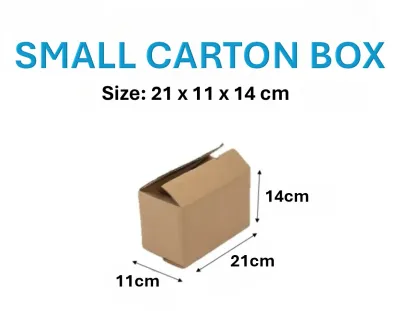
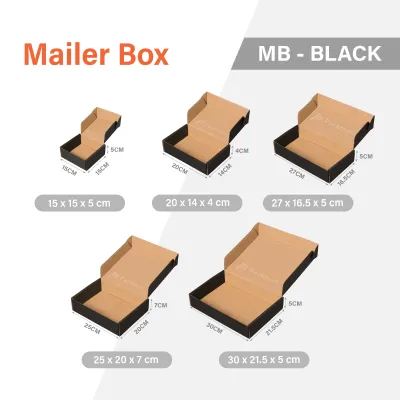
![[Stock] 6 sizes Small Kraft Cardboard Packing Gift Box /Brown Kraft Literature Mailing Boxes/Handmade Cardboard Display Paper Boxes](https://img.lazcdn.com/g/p/008710b3f7037fd5c196b2483c84e58c.jpg_400x400q80.jpg_.webp)
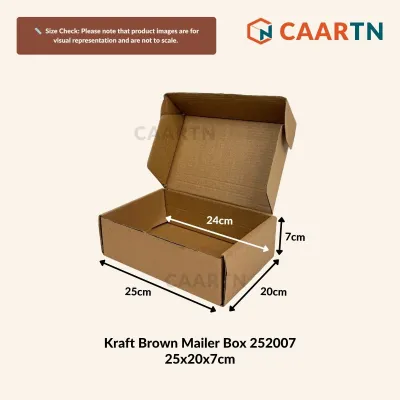
Prices are valid at publication and may change. Please refer to the product page for the latest price.
Once you have the base measurements, you must add a baseline clearance for protective wrapping. Items wrapped in standard bubble wrap, honeycomb paper, or tissue paper require extra physical space. For lightweight or non-fragile items, adding a small clearance of about 1 to 2 centimetres to each dimension is usually sufficient. For highly fragile items that require multiple layers of bubble wrap, you may need to add 3 to 5 centimetres to your initial measurements to ensure the wrapped item fits comfortably.
Understand Box Dimensions and Material Thickness
When shopping for packaging, always look for the listed internal dimensions rather than the external measurements. Manufacturers typically print internal dimensions because they represent the actual usable space available for your goods. External dimensions are larger because they include the thickness of the corrugated cardboard walls, which can vary significantly depending on the box design.

The thickness of your mailing box depends on its corrugated board construction. Single-wall corrugated boxes consist of one wavy fluted layer sandwiched between two flat linerboards. These are lightweight, cost-effective, and ideal for shipping sturdy items like books, clothing, or durable stationery.
Double-wall corrugated boxes feature two layers of fluting, providing superior puncture resistance and stacking strength for heavier or highly delicate items traveling long distances. Keep in mind that thicker walls and reinforced corners naturally reduce the usable internal space of the box. If you upgrade from a single-wall to a double-wall box, verify that the internal dimensions still accommodate your wrapped items.
In humid climates like Singapore, cardboard can absorb moisture from the air, which slightly reduces its structural rigidity over time. Choosing a slightly sturdier board grade or a double-wall construction can help prevent the box from sagging or collapsing under weight during storage or transit.
Balance Box Size with Void Fill and Transit Movement
A secure parcel requires a careful balance between the box walls and the cushioning materials inside. You must leave enough clearance on all sides of your item to accommodate void fill, such as packing peanuts, air pillows, or crumpled kraft paper. This protective barrier absorbs shocks and prevents the item from shifting when the parcel is handled or stacked.
Avoid the temptation to use an oversized box just because it is readily available. Excessively large boxes require a massive amount of void fill to secure the item, which increases your packaging material costs. Furthermore, if the void fill settles during transit, the item can shift violently inside the empty space, leading to internal damage before it reaches its destination.
Conversely, an undersized box is equally problematic. If you force an item into a box that is too tight, the cushioning materials will be completely compressed against the walls. Compressed bubble wrap or crumpled paper loses its shock-absorbing properties, transferring all impact forces directly to your item. Aim for a snug but uncompressed fit where the item is suspended safely in the center of the box.
Check Weight Limits and Courier Sizing Rules
Choosing the right box size is only half the battle; you must also ensure the box can support the weight of your shipment and comply with courier guidelines. Most high-quality mailing boxes feature a manufacturer’s stamp on the bottom flap indicating its structural rating, such as the Edge Crush Test (ECT) or burst strength. Check these specifications to verify that the box is rated to hold the weight of your items without tearing or bursting at the seams.
Additionally, keep courier pricing structures in mind when selecting your box size. Many shipping services use dimensional weight pricing, which calculates shipping fees based on the external volume of the box rather than its actual physical weight. A lightweight item packed in an unnecessarily large box can incur surprisingly high shipping costs because it occupies valuable space in the delivery vehicle.
Finally, verify the physical size limits of your chosen delivery method. If you plan to drop off your parcels at local self-service lockers, automated mail drops, or postal boxes, check their maximum slot dimensions beforehand. A box that is even a few millimetres too wide or tall may not fit into the locker compartment, leading to rejected shipments, missed pickup deadlines, or unexpected courier surcharges.
Frequently Asked Questions (FAQ)
How do I measure an irregularly shaped item for a box?
To measure an irregularly shaped item, imagine it is sitting inside a tight-fitting rectangular box. Measure the absolute maximum length, width, and height of the item, including any handles, cords, or decorative protrusions. When packing, use generous amounts of void fill to pack the uneven gaps around the item, ensuring it cannot wobble or tilt inside the mailing box during transit.
Is it safe to reuse an old mailing box for shipping?
Reusing a mailing box is acceptable only if it passes a thorough structural inspection. Check the box for soft or crushed corners, deep creases, tears, or water damage, as these flaws significantly reduce its stacking strength. Be sure to peel off or completely black out all old shipping labels, addresses, and barcodes to prevent automated sorting machines from misrouting your package. Avoid reusing boxes for heavy, valuable, or highly fragile items.

Community discussion
Share your experience or ask a question. Comments are reviewed before publication.