
Selecting the right magnetic drawing board for your child’s art activities in Singapore requires balancing creative freedom with practical durability. These classic, mess-free toys offer an excellent alternative to paper and digital screens, allowing children to doodle, write, and sketch without the risk of marker stains on walls or furniture. In Singapore’s compact urban living spaces, a reusable drawing surface keeps play areas tidy while providing endless opportunities for fine motor skill development. Whether you are looking for a compact travel companion for long MRT rides or a large tabletop canvas for home-based art sessions, understanding the underlying technology and design variations is key to making an informed decision.
The ideal magnetic board should offer a smooth drawing experience, clear contrast, and a reliable erasing mechanism that stands up to repeated use. Because these boards rely on physical magnetic attraction rather than digital components, their performance depends heavily on build quality, material selection, and mechanical design. By evaluating how different models handle stylus friction, line consistency, and screen clearing, you can find a board that matches your child’s developmental stage and creative preferences. This guide outlines the essential features, safety considerations, and maintenance practices to help you select a high-quality magnetic board that will inspire your child’s artistic journey for years to come.
Key Features to Evaluate Before Buying
When evaluating magnetic drawing boards, the physical dimensions of the drawing area should be your first consideration. A board that is too small can frustrate a child who is developing broad-arm drawing motions, while an oversized board can be cumbersome to carry and store. For younger toddlers, a drawing area that matches their natural arm span allows them to reach all corners of the screen comfortably without straining. If the board is intended primarily for home use, a larger tabletop model provides ample space for detailed drawings and cooperative play. Conversely, if you need a portable option for car trips or dining out, a compact frame with a smaller screen is much easier to pack into a diaper bag or backpack.
Products mentioned in this guide
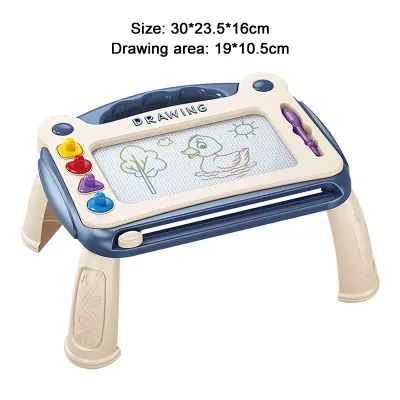
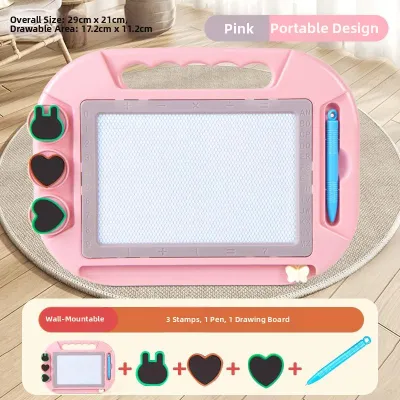
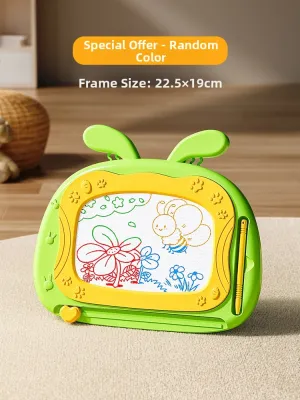
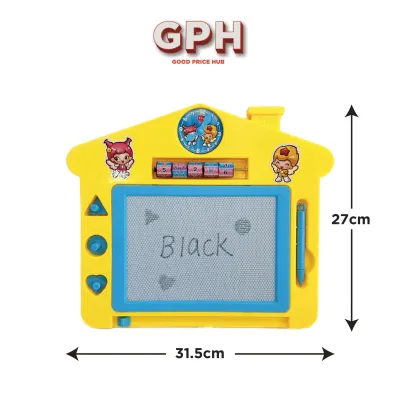
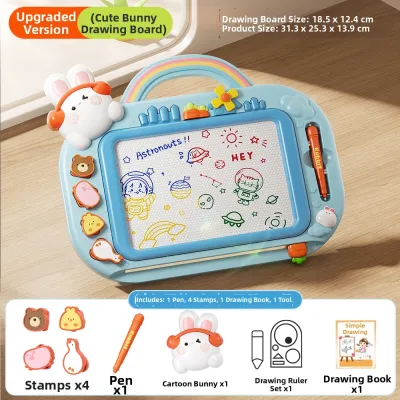
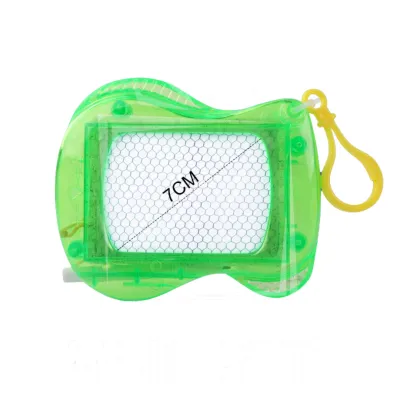
Prices are valid at publication and may change. Please refer to the product page for the latest price.
The efficiency of the erasing mechanism directly impacts the longevity and usability of the board. Most standard magnetic boards utilize a sliding bar located at the bottom of the frame, which sweeps a magnetic strip across the back of the screen to reset the internal particles. When testing a board, observe how smoothly this slider moves along its track. A stiff or jerky slider can be difficult for small hands to operate independently, leading to frustration. Furthermore, check the screen clarity after a single swipe; high-quality boards should clear the screen completely without leaving grey shadows, ghost images, or dark streaks that interfere with the next drawing.
The magnetic stylus is the primary tool your child will use to interact with the board, making its design and construction critical. A stylus that is securely tethered to the frame with a durable cord prevents the pen from getting lost, which is a common issue with untethered accessories. Examine the nib of the stylus; it should be rounded and smooth to prevent scratching the protective plastic film on the screen surface. Some advanced boards offer varying line thicknesses based on the angle of the pen or the strength of the magnet inside the tip. Testing the stylus to ensure it produces consistent, solid lines without requiring excessive downward pressure will help ensure a frustrating-free drawing experience for your child.
Age Appropriateness and Safety Considerations
Safety is paramount when choosing any toy for children, and magnetic drawing boards are no exception. For infants and toddlers under three years of age, the primary concern is the presence of small parts that pose a choking hazard. Many magnetic boards come with accessory stamps in various shapes, such as circles, triangles, or stars, which allow children to print patterns on the screen. Ensure that these stamps are large enough to pass safety checks for young children and cannot be easily swallowed. If the board uses small magnetic beads sealed inside a grid, inspect the outer plastic casing thoroughly to ensure there are no cracks or weak seams that could allow the beads to escape.

The structural integrity of the frame is another crucial safety factor, especially since these boards are frequently dropped on hard surfaces like HDB tiled floors. Look for boards constructed from thick, high-impact plastic with reinforced corners that resist cracking upon impact. The edges of the frame should be smoothly rounded with no sharp seams or molding flash that could scratch sensitive skin. Additionally, check the packaging for recognized safety certification labels, which indicate that the materials used are non-toxic and free from harmful chemicals, heavy metals, or phthalates.
The weight and handle design of the board should align with your child’s physical capabilities. A board that is too heavy can cause physical strain or injury if dropped on a child’s foot. Look for models that feature integrated, ergonomically designed handles that allow small hands to grip and carry the board securely. A lightweight design encourages independence, as your child can easily retrieve the board from a toy shelf and carry it to their play area without adult assistance.
Matching the Board Type to Creative Preferences
Different types of magnetic boards cater to distinct creative styles and developmental milestones. Standard magnetic dust boards are the most common variety, featuring a honeycomb grid filled with a viscous liquid and tiny iron oxide particles. When the magnetic stylus passes over the screen, it pulls the dark particles to the surface, creating a visible line. These boards are excellent for quick, repetitive sketching, practicing handwriting, and playing simple games like tic-tac-toe. They offer a highly responsive drawing experience that closely mimics pencil on paper, making them ideal for children who enjoy freehand doodling and rapid erasing.
For children who benefit from tactile feedback and structured pattern creation, magnetic bead boards offer a unique alternative. These boards consist of a solid plastic surface perforated with a grid of small holes, with metal beads sealed safely underneath. When the child traces the stylus over the grid, the beads are pulled upward into the holes with a satisfying click, creating a textured, pixelated image. This type of board is exceptional for developing fine motor skills, hand-eye coordination, and spatial awareness. It encourages children to focus on precision and patience, making it a great tool for older kids who enjoy creating geometric designs or following pattern cards.
If your child prefers a painting experience but you want to avoid the mess of wet pigments, hybrid or water-reveal magnetic options are worth exploring. Some multi-functional boards feature a dual-sided design, with a classic magnetic drawing surface on one side and a water-reveal mat or chalkboard on the reverse. Water-reveal surfaces allow children to use a water-filled brush to paint on a special fabric mat, which changes color when wet and fades back to white as it dries. This hybrid approach provides the sensory experience of painting—such as brush stroke control and color blending—while remaining completely mess-free and reusable, making it a versatile addition to your child’s art toolkit.
Maintenance and Longevity Checks
To ensure your magnetic drawing board remains functional and clear over time, proper maintenance is essential. The protective plastic film covering the drawing screen is susceptible to scratching, which can cloud the display and make drawings difficult to see. Clean the surface regularly using a soft, dry microfiber cloth to remove dust and fingerprints. If the screen requires a deeper clean, use a slightly damp cloth with water only; avoid harsh chemical cleaners, alcohol, or abrasive scrubs, as these can degrade the plastic or seep into the internal housing, damaging the magnetic suspension liquid.
Storage conditions play a significant role in preserving the magnetic properties and structural integrity of the board. Store the board in a flat position in a cool, dry place away from direct sunlight, as prolonged exposure to heat can dry out the internal liquid or warp the plastic frame. In Singapore’s humid climate, keeping the board in a well-ventilated area prevents moisture buildup on fabric tethers or carrying straps. Additionally, keep the board away from strong external magnets, such as household speakers or refrigerator magnets, which can permanently disrupt the alignment of the internal magnetic particles and cause dead zones on the screen.
If you encounter issues like incomplete erasure, stuck magnetic particles, or a stiff sliding mechanism, simple troubleshooting steps can often resolve the problem. If the screen leaves dark streaks after erasing, try sliding the eraser back and forth slowly several times to redistribute the internal particles. For a stiff slider, check the track on the back or bottom of the frame for trapped dirt, lint, or small toy parts. Gently clear any debris using a soft brush or compressed air. Never force a stuck slider, as this can crack the internal guide rails or tear the magnetic sheet, rendering the erasing function permanently broken.
Where to Source and Verify Options in Singapore
Finding a high-quality magnetic drawing board in Singapore involves exploring both physical retail stores and online platforms to compare options. Visiting physical toy stores, department stores, or specialty stationery shops allows you to conduct hands-on testing before making a purchase. This is the best way to evaluate the tactile feel of the stylus, the smoothness of the sliding eraser, and the overall weight of the board. Testing a physical sample helps you verify that the screen contrast is sharp and that the frame feels sturdy enough to withstand daily use by an active child.
When shopping on online marketplaces or official brand stores, verifying seller authenticity is crucial to avoid low-quality counterfeits. Look for listings that feature official distributor badges, high seller ratings, and detailed product specifications. Reading customer reviews, particularly those with photos or videos, can provide valuable insights into how the board performs in real-world conditions over time. Be cautious of listings with unusually low prices, as these may indicate substandard materials that do not meet international safety regulations.
Before finalizing your purchase, compare prices in S$ across different retailers to ensure you are getting a fair deal. Check the warranty terms and return policies offered by the seller or manufacturer, especially for premium or multi-functional boards. A reliable return policy provides peace of mind in case the board arrives with manufacturing defects, such as a cracked screen or a malfunctioning eraser mechanism. By combining hands-on evaluation with careful online research, you can confidently select a safe, durable, and engaging magnetic board for your child.
Frequently Asked Questions (FAQ)
Can magnetic drawing boards be taken on flights?
Yes, magnetic drawing boards are excellent travel companions for flights because they are completely battery-free and do not produce any mess. They generally comply with airline carry-on regulations since the magnetic fields they generate are extremely weak and localized, posing no risk to aircraft instruments. To protect the board during transit, pack it in your carry-on bag rather than checked luggage to prevent it from being crushed under heavy bags. Placing a piece of cardboard or a soft notebook over the screen can protect the protective film from being punctured or scratched by other items in your bag.
How do I fix a sliding eraser that is stuck or leaving streaks?
If the sliding eraser becomes stiff or leaves dark streaks on the screen, first inspect the track on the underside of the frame for any trapped debris, such as lint, crumbs, or small paper fragments. Use a dry toothbrush or a can of compressed air to gently clear out any obstructions. If the slider is still difficult to move, avoid forcing it, as this can snap the plastic mechanism or tear the internal magnetic sheet. Instead, try turning the board face down and tapping the back gently to help dislodge any stuck magnetic particles, then slowly slide the eraser from end to end to restore smooth operation.

Community discussion
Share your experience or ask a question. Comments are reviewed before publication.