
Choosing the right magnetic board for kids requires matching the toy’s physical specifications to your child’s developmental stage. A toddler needs a rugged, drop-resistant frame with a thick, easy-to-grip stylus and zero small parts, while a primary school student benefits from a high-contrast screen, a fine-tip pen, and a lightweight profile for travel. Selecting the wrong board can lead to frustration, rapid wear, or potential safety hazards.
By understanding how a child’s grip, motor skills, and play style evolve, you can select a magnetic board that remains engaging and functional. This guide breaks down the essential hardware specifications, safety considerations, and age-specific features to help you make an informed decision.
Quick Reference: Magnetic Board Features by Age Group
To help you make a fast, informed decision, the table below outlines the ideal specifications for a magnetic board for kids based on their age and developmental milestones.
Products mentioned in this guide
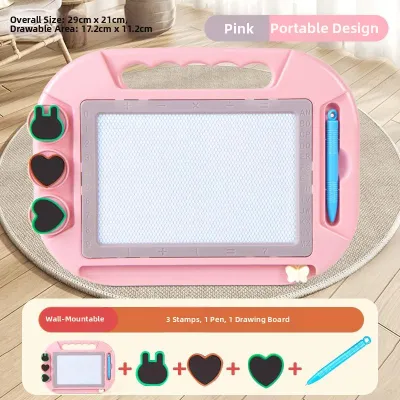
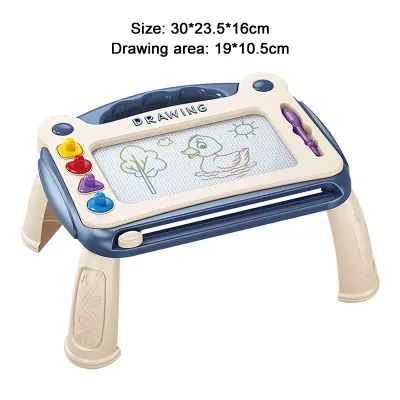
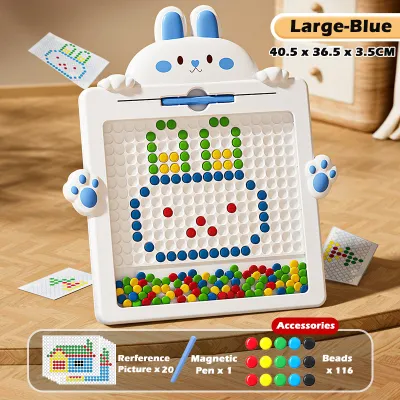
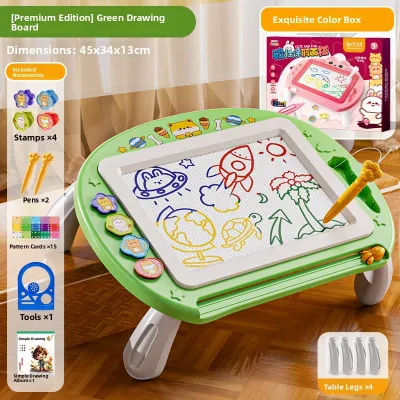
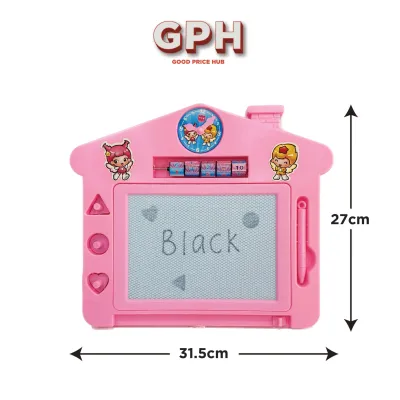
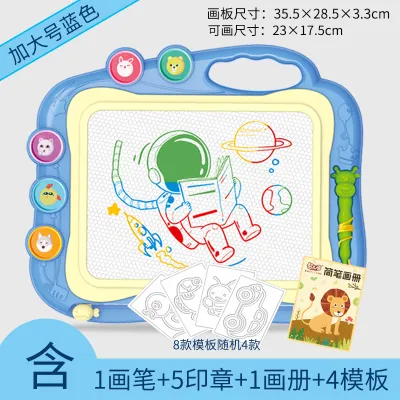
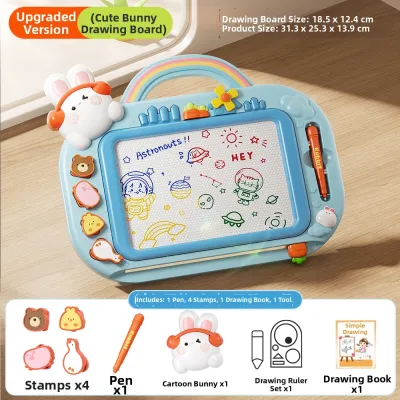
Prices are valid at publication and may change. Please refer to the product page for the latest price.
| Age Group | Recommended Board Size | Stylus/Pen Design | Key Accessories | Core Safety & Design Focus |
|---|---|---|---|---|
| Toddlers (Ages 1–3) | Small to Medium (approx. A5 to A4 active area) | Ultra-thick, rounded barrel, permanently tethered | None (avoid loose stamps or shapes) | Zero choking hazards, high-impact ABS plastic, rounded corners |
| Preschoolers (Ages 3–5) | Medium to Large (approx. A4 to A3 active area) | Medium thickness, ergonomic grip, tethered or slotted | Large magnetic stamps, basic tracing stencils | Sturdy frame, secure parts, transition to intentional drawing |
| Primary School (Ages 6+) | Compact travel size or Large easel-style | Fine-tip, pen-like profile, untethered with storage slot | Math/alphabet tiles, geometric shapes, drawing guides | High-contrast screen, slim profile for school bags, educational versatility |
Selecting a board within these parameters ensures that the toy matches your child’s physical capabilities, preventing frustration while keeping playtime safe.
How Motor Skills and Age Dictate Board Choice
A child’s physical interaction with a drawing surface changes dramatically over their first six years. Toddlers initially use a full-palmar grasp, clutching the writing instrument in their fist and using their entire arm to make broad, sweeping strokes. For this stage, a magnetic board must feature a thick, chunky stylus that fits comfortably in a small palm, along with a highly responsive screen that registers marks even under uneven pressure.

As children transition into the preschool years, they develop the digital grasp and eventually the refined pincer grasp, using their fingers to control the pen. This transition requires a shift toward slimmer, more ergonomic pen barrels that mimic real pencils. If the stylus is too thick or too thin for their current developmental stage, children may struggle to control their strokes, which can hinder the development of proper hand-eye coordination.
Physical resistance also plays a critical role in usability. High-quality magnetic screens contain tiny magnetic particles suspended in a viscous liquid or gel inside a honeycomb grid. A stylus with a magnet that is too strong can create excessive drag, making it difficult for a weak toddler grip to pull the pen smoothly across the screen. Conversely, if the magnetic pull is too weak, the lines will appear faint and unsatisfying to an older child trying to write letters or numbers. Matching the board’s magnetic resistance to your child’s physical strength ensures a smooth, frustrating-free drawing experience.
Core Specifications to Check Before Buying
When shopping for a magnetic board for kids, several universal hardware and design specifications warrant close inspection. Evaluating these components beforehand ensures the board is durable, functional, and suited to your home environment.
Board Size and Drawing Surface
It is easy to confuse the overall frame size of a magnetic board with its actual active drawing area. Manufacturers often advertise the outer dimensions, but a wide plastic bezel can significantly reduce the usable canvas. For travel, dining out, or car rides, look for a compact board with a slim bezel and an active drawing area of roughly A5 size, which fits easily into a backpack or on a child’s lap.
For home use, a larger canvas—equivalent to A4 or A3 size—is highly beneficial. These larger boards provide ample space for broad arm movements and collaborative play. If you choose a large-format board, verify whether it features an integrated easel stand or if it is designed to lay flat on a table. Tabletop boards should have non-slip rubber feet on the underside to prevent the unit from sliding around during use.
Magnetic Pen and Stylus Design
The design of the stylus determines how easily a child can draw and how often the pen goes missing. Thick, textured barrels are ideal for younger hands, while smooth, pen-like styluses suit older children.
Tethered pens are excellent for preventing loss, but the cord must be long enough to allow a left- or right-handed child to reach all four corners of the screen without straining. However, long cords can pose a minor entanglement risk for very young children, so look for models with a recessed storage slot where the pen snaps securely into place when not in use. For older children, an untethered pen offers complete freedom of movement, provided the board has a reliable click-in storage slot to keep the pen secure during transport.
Erase Mechanism and Screen Quality
The sliding erase bar is the mechanical heart of a magnetic drawing board. A high-quality erase mechanism should slide smoothly from side to side with minimal physical resistance, clearing the screen completely in one or two passes. If the slider is stiff, jerky, or leaves faint vertical lines of uncleared particles, it will frustrate young users.
Screen contrast and clarity depend on the density of the internal magnetic particles and the quality of the front plastic sheet. Premium boards feature a well-sealed honeycomb grid that keeps the dark iron oxide particles evenly distributed. Cheaper, poorly sealed screens often suffer from “ghosting”—where faint residual marks remain visible even after multiple erases—or dark spots where the internal fluid has settled unevenly. Before purchasing, verify that the screen offers sharp, high-contrast lines and a clear, uniform background.
Toddlers (Ages 1–3): Prioritizing Safety and Basic Grip
For toddlers, safety is the absolute priority. At this stage, children explore objects with their mouths, making small, detachable parts an immediate choking hazard. When selecting a magnetic board for kids in this age bracket, look for models that are completely self-contained. Avoid any boards that include loose magnetic stamps, stencils, or small sliding beads.
The drawing stylus must be permanently tethered to the board with a short, heavy-duty cord that cannot be easily chewed through or pulled loose. The frame itself should be constructed from thick, high-impact ABS plastic with rounded corners and no sharp edges. Because toddlers frequently drop toys onto hard surfaces—such as ceramic tile or vinyl flooring common in Singapore homes—the board must be resilient enough to withstand repeated impacts without cracking or exposing the internal magnetic screen.
Look for a screen that provides high visual contrast with minimal effort. Toddlers are still developing their hand-eye coordination and appreciate immediate, high-contrast visual feedback from their scribbles. Multi-color screens, which display different colors in different quadrants of the board, can be highly engaging for this age group, provided the overall build quality remains robust.
Preschoolers (Ages 3–5): Encouraging Creativity and Fine Motor Skills
As children enter preschool, their play shifts from random scribbling to intentional shapes, early letter formation, and imaginative storytelling. This developmental leap makes magnetic accessories highly valuable. Look for boards that include large magnetic stamps in basic shapes like circles, triangles, and squares. These stamps should feature large, easy-to-grasp handles that allow preschoolers to practice precise placement and spatial awareness.
At this stage, children are transitioning to a more mature pencil grip. A stylus with a slightly tapered, ergonomic barrel helps facilitate this transition. The active drawing area should be larger than a toddler board to accommodate more detailed drawings and early writing practice.
Tracing stencils that clip securely over the drawing screen are another excellent feature for preschoolers. These stencils guide the stylus along specific paths, helping children develop the fine motor control required for writing letters and numbers. Ensure any included stencils are made of durable, flexible plastic with smooth, rounded edges that will not scratch the screen or pinch small fingers.
Primary School (Ages 6+): Portability and Structured Play
For primary school children, the magnetic board transitions from a simple drawing toy into a versatile tool for structured learning, math practice, and travel entertainment. Portability becomes a key feature. Look for slim, lightweight boards with built-in carrying handles or protective travel covers that slide easily into school bags or seatback pockets.
Older children require a higher level of drawing precision. Look for boards with a fine-tip stylus and high magnetic resistance, which allow for detailed sketching, writing out spelling words, or solving math equations. The screen should offer exceptional contrast and a fast, clean erase mechanism to keep up with rapid drafting.
Many boards designed for this age group offer dual-purpose surfaces. For example, one side may feature a classic magnetic drawing screen, while the reverse side functions as a dry-erase whiteboard or a magnetic chalkboard. This versatility allows the board to double as a surface for educational manipulatives, such as magnetic alphabet letters, fraction bars, or travel-sized board games like chess and checkers. This multi-functional design ensures the board remains useful and engaging long after the child has outgrown basic drawing toys.
Safety Checks and Long-Term Maintenance
To ensure your child’s magnetic board remains safe and functional over its lifespan, regular inspections and proper maintenance are essential. Over time, physical wear can compromise the safety of even the most durable toys.
- Inspect the Screen Regularly: Periodically check the clear plastic screen for deep scratches, cracks, or punctures. The internal magnetic particles are suspended in a liquid or gel that must remain completely sealed. If you notice any leaks, cracks, or structural damage to the screen or frame, discontinue use immediately and dispose of the board.
- Clean with Care: To clean the drawing surface, use a dry or slightly damp microfiber cloth. Avoid using harsh chemical cleaners, window sprays, isopropyl alcohol, or abrasive scrubbing pads. These substances can cloud the clear plastic screen, degrade the outer protective coating, or weaken the plastic frame.
- Avoid Extreme Heat: Singapore's tropical climate requires careful storage of plastic toys. Never leave a magnetic drawing board in direct sunlight on a balcony or inside a parked car, where interior temperatures can rise rapidly. Extreme heat can warp the plastic frame, cause the internal liquid suspension to expand and leak, or permanently weaken the magnetic properties of the stylus and internal components.
- Check the Stylus Tip: Inspect the tip of the magnetic pen to ensure the small magnet is securely embedded and shows no signs of loosening. A loose magnet is a severe swallowing hazard and must be addressed immediately by replacing the pen or the entire board.
By performing these simple checks and following basic care guidelines, you can maximize the lifespan of the board while ensuring a safe play environment for your child.
Frequently Asked Questions (FAQ)
Are magnetic drawing boards safe for toddlers?
Yes, high-quality, sealed magnetic drawing boards are safe for toddlers, provided they are designed specifically for their age group. Always verify that the board has no small, detachable accessories (such as stamps or stencils) and that the stylus is permanently tethered. Check the manufacturer’s age grading before purchasing, and regularly inspect the unit for cracks or physical damage that could expose the internal magnetic gel.
Why is my magnetic board leaving ghost marks after erasing?
Ghosting occurs when the internal magnetic particles become stuck in the honeycomb grid or when the outer plastic screen becomes micro-scratched over time, trapping the particles near the surface. While gently tapping the back of the board or sliding the eraser bar back and forth several times can sometimes release stuck particles, persistent ghosting is a sign of wear. If the screen remains cloudy or dark after erasing, the board has likely reached the end of its usable life and should be replaced.
Can I use regular household magnets on a kids' magnetic drawing board?
No, you should avoid using standard household magnets, especially strong neodymium magnets, on a magnetic drawing board. These boards rely on a specialized, low-intensity magnetic stylus to pull fine iron oxide particles to the surface. Strong household magnets can permanently clump the internal particles, damage the delicate honeycomb grid, or scratch the soft plastic screen, rendering the erase mechanism ineffective.
Community discussion
Share your experience or ask a question. Comments are reviewed before publication.