
Selecting the ideal Liquitex acrylic paint set as a beginner depends on balancing your immediate budget with your long-term artistic goals. For most beginners, the Liquitex Basics range offers the most practical starting point, providing a generous volume of paint at an accessible price point for high-volume practice and experimentation. However, if you prefer to work on smaller, highly detailed projects where color intensity and blending are critical, starting with a smaller, curated set of Liquitex Professional Heavy Body or Soft Body acrylics can be a highly rewarding alternative. By understanding how these different product lines behave on various surfaces, you can select a starter kit that supports your learning curve without leading to unnecessary expenses.
When choosing your first set, consider how much paint you will use and what surfaces you plan to decorate. Acrylics are incredibly versatile, but their performance—including drying speed, smoothness, and color vibrancy—depends heavily on the specific combination of paint grade, brush type, and paper or canvas substrate. Rather than searching for a single universal winner, focus on matching the paint’s physical properties to your intended techniques. This guide will help you navigate the Liquitex ecosystem, evaluate starter kits systematically, and establish a reliable setup for your creative journey.
Understanding Liquitex Acrylic Lines for Beginners
Liquitex categorizes its acrylic paints into distinct lines designed for different skill levels, budgets, and applications. The two primary lines a beginner will encounter are Liquitex Basics and the Liquitex Professional range, which includes Heavy Body and Soft Body formulas. Understanding the structural differences between these lines is essential for making an informed purchase.
Products mentioned in this guide
![Liquitex Basics Acrylic Paint Set [12×22ml] | Student-Grade Lightfast Pigments Multi-Surface](https://img.lazcdn.com/g/p/c6e09f18e8afd5c9cfb1018bfc235ebd.jpg_400x400q80.jpg_.webp)
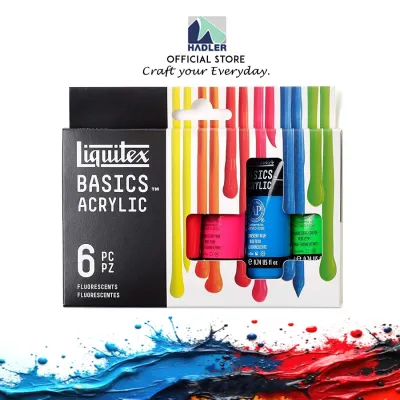
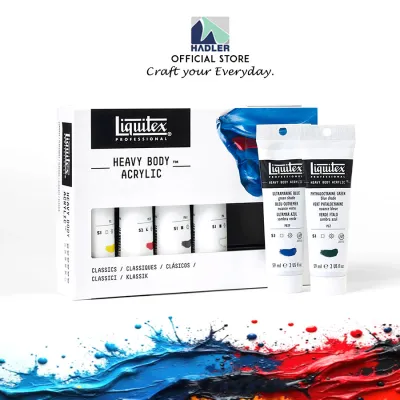
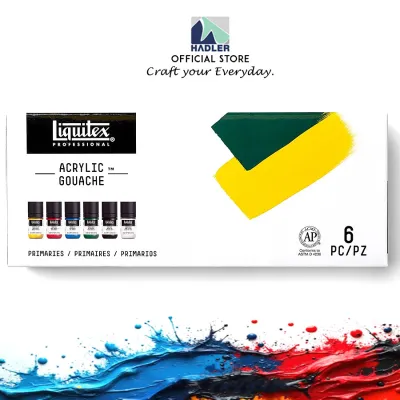
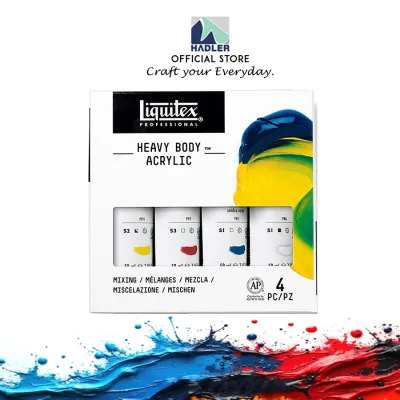
![[SG Stocks Local Delivery] Artist 400ml Liquitex Basics Professional Acrylic Paint / Acrylic Painting Color Medium in Bottle / Fine Art Acrylic Colour / 1 ART PLACE](https://img.lazcdn.com/g/p/mdc/400505382039894f24e765b1deb63408.jpg_400x400q80.jpg_.webp)
Prices are valid at publication and may change. Please refer to the product page for the latest price.
The primary difference lies in the pigment load and binder ratio. Liquitex Basics is a student-grade paint, meaning it contains a lower concentration of pigments and a higher proportion of binders and fillers. While this formulation keeps the price economical—often allowing you to purchase a comprehensive multi-tube starter set for a modest budget of S$20 to S$40—it also means the colors may appear slightly less vibrant when heavily diluted or mixed. In contrast, the Professional lines feature a much higher concentration of artist-grade pigments and minimal fillers. This results in exceptional color purity, superior tinting strength, and cleaner color mixes, though a small starter set of these professional paints may cost closer to S$50 to S$80 for fewer, smaller tubes.
For a beginner, the choice between student-grade and professional-grade often comes down to your planned painting volume. If you are working on large canvases, practicing broad brushstrokes, or experimenting with thick impasto layers, a larger Basics set is highly advantageous. It allows you to paint freely without the psychological barrier of wasting expensive materials. On the other hand, if you are working on small-scale illustrations, detailed card-making, or miniature painting, a small professional set of six core colors will offer a more satisfying experience. The high pigment load ensures that even tiny amounts of paint deliver rich, opaque coverage, which is crucial when working on a miniature scale.
To understand how a specific paint will behave before you squeeze it onto your palette, you must learn to read the product labels. Liquitex tubes feature clear indicators for lightfastness, opacity, and pigment composition. Lightfastness refers to a paint’s resistance to fading when exposed to light over time; look for ratings of ASTM I (Excellent) or ASTM II (Very Good) to ensure your artwork remains vibrant for years. Opacity is typically indicated by a small square symbol: a clear square represents a transparent paint, a half-shaded square indicates semi-opaque, and a fully black square denotes an opaque paint. Transparent colors are excellent for glazing and layering, while opaque colors provide solid coverage in a single coat. Additionally, the label will list the specific pigment codes (such as PW6 for Titanium White or PB29 for Ultramarine Blue), which helps you identify single-pigment colors that mix more predictably than multi-pigment convenience shades.
Key Dimensions for Evaluating a Starter Kit
When evaluating different Liquitex starter kits, it is easy to be swayed by the sheer number of colors included in a set. However, a structured evaluation based on color selection, tube volume, and bundled accessories will help you choose a kit that offers the best long-term value.

Color count and palette selection are critical to developing your color-mixing skills. While a 24-color set might seem convenient, it often contains many pre-mixed convenience colors that you could easily mix yourself. For beginners, a set featuring a split-primary palette—containing both a warm and a cool version of red, yellow, and blue, along with titanium white and a dark neutral like mars black—is highly recommended. This six-to-eight-tube configuration forces you to practice color mixing, helping you understand color relationships and how to avoid creating muddy tones. It also ensures you do not become reliant on specific pre-mixed shades that can be difficult to replicate once a single tube runs out.
The physical size of the tubes in a starter kit is another practical consideration. Liquitex sets commonly feature tube sizes ranging from 22ml to 118ml. A set containing 22ml tubes is an excellent, low-risk way to sample a wide variety of colors, but you will quickly find that certain high-use colors, particularly titanium white, are depleted much faster than others. If you plan to paint regularly, look for sets that offer 59ml tubes. This size provides a generous amount of paint for multiple projects while remaining compact enough to store easily. It also strikes a balance between providing enough material for high-volume practice and minimizing the risk of the paint drying out in the tube if your painting sessions are spaced weeks apart.
Many starter kits are sold as complete sets that bundle paints with accessories such as plastic palettes, synthetic brushes, palette knives, or small canvas panels. While these bundles can be convenient for immediate use, it is important to evaluate the quality of the included tools. Often, the brushes included in budget starter kits are prone to shedding synthetic bristles into your wet paint, and the plastic palettes can be difficult to clean once acrylic paint dries on them. In many cases, you will achieve better results by purchasing a paint-only set and selecting a few high-quality, dedicated synthetic brushes and a sturdy mixing palette separately. This approach ensures your tools perform reliably and do not hinder your learning process.
Matching the Set to Your Specific Art Goals
Your choice of a Liquitex set should align closely with your preferred painting style, surface medium, and technique. Because acrylic paint is highly adaptable, selecting a formula with the right viscosity and finish will make your creative process much smoother.
If your primary goal is traditional canvas or board painting, you will benefit most from a medium-to-heavy viscosity paint. The Liquitex Basics and Professional Heavy Body lines are designed specifically for this purpose. These paints have a thick, buttery consistency that holds brushstrokes, palette knife marks, and textures beautifully. This allows you to experiment with layering, blending directly on the canvas, and building up physical texture. When working on canvas, ensure the surface is properly primed with gesso to prevent the paint’s moisture from soaking into the fabric fibers, which can cause uneven drying and dull colors.
For artists focusing on detail work, illustration, or painting miniatures, heavy body paints can be difficult to manage, as they can easily clog fine details and leave unwanted brush textures. For these applications, look for sets featuring Liquitex Soft Body acrylics or Acrylic Inks. Soft Body paint has a fluid, creamy consistency that flows smoothly from fine-tipped brushes without requiring heavy dilution with water. Diluting heavy body paint excessively with water can weaken the acrylic binder, leading to poor adhesion and a fragile paint film. Using a dedicated fluid formula ensures high pigment concentration and excellent coverage while preserving the intricate details of your substrate.
If you are interested in mixed media, journaling, or crafting on non-traditional surfaces like wood, leather, or unglazed ceramics, paint flexibility and adhesion are paramount. Liquitex acrylics dry to a highly flexible, water-resistant finish, making them excellent for surfaces that may bend or flex. However, because different materials absorb moisture differently, it is crucial to perform an observable trial before committing to a major project. Apply a small test patch of paint to a scrap piece of your chosen material, let it dry completely for 24 hours, and check for adhesion by gently scratching the surface or flexing the material. This simple check will help you determine if the surface requires sanding, priming, or a specific sealant to ensure long-term durability.
Pre-Purchase Checks and Storage Considerations
To ensure your investment in art supplies lasts as long as possible, you must take steps to verify product quality before purchasing and practice proper storage and maintenance habits at home.
When buying Liquitex sets, especially from online marketplaces or local stationery shops, always verify that you are purchasing from reputable, authorized retailers. Check the packaging seals upon arrival; the caps should be tightly sealed, and the tubes should feel pliable rather than stiff or completely solid. Be wary of heavily discounted sets that may have been stored in non-climate-controlled warehouses, as exposure to extreme heat can cause the acrylic emulsion to break down. This separation is easily identified if a clear, yellowish liquid runs out of the tube when squeezed, leaving a dry, clumpy pigment mass behind that cannot be easily remixed.
Proper storage is particularly important in warm, humid climates. Store your paint tubes in a cool, dry place away from direct sunlight and fluctuating temperatures, which can accelerate the drying process inside the tube. Before screwing the cap back onto a tube, take a moment to wipe any excess paint off the plastic threads with a damp cloth. If paint is allowed to dry on the threads, it creates an imperfect seal that lets air slowly seep into the tube, causing the paint to skin over and eventually solidify. Additionally, ensure the caps are tightened securely to maintain an airtight environment.
Maintaining your painting tools is just as important as caring for your paints. Acrylic paint dries rapidly and becomes completely water-insoluble once cured, meaning that any paint left to dry on your brushes will permanently ruin the bristles. Establish a routine of rinsing your brushes in a jar of clean water frequently during your painting session. Once you are finished, wash the brushes thoroughly with mild soap and lukewarm water until the water runs completely clear. Gently reshape the brush heads with your fingers and lay them flat on a towel to dry; storing wet brushes upright can cause water to seep into the metal ferrule, dissolving the glue and causing the bristles to shed over time.
Frequently Asked Questions (FAQ)
Can I mix student-grade and professional-grade acrylics?
Yes, you can safely mix Liquitex Basics with professional-grade Heavy Body or Soft Body acrylics. Because they share a compatible acrylic polymer binder, they will bond together without cracking or peeling. However, mixing them will alter the pigment concentration, drying time, and overall finish. The professional paint’s high vibrancy will be slightly diluted by the fillers in the student-grade paint, and the final sheen may vary between matte and satin depending on the ratio of the mix.
How long does an opened acrylic paint set last?
An opened tube of Liquitex acrylic paint can last anywhere from two to five years if stored correctly. To check if your paint is still usable, squeeze a small amount onto a palette. If the paint has completely solidified, has a sour or moldy odor, or if the binder has separated into a watery liquid that cannot be remixed by kneading the tube, the paint has expired and should be discarded.
Do I need to buy additional mediums with a starter set?
For absolute beginners, a starter set alone is entirely sufficient for learning the basics of color mixing, brush control, and layering. You do not need to purchase additional mediums immediately. As you progress, you might consider a retarder to slow down the drying time—especially useful in warm climates—or a flow improver to thin the paint for detailed work without compromising the binder’s structural integrity.

Community discussion
Share your experience or ask a question. Comments are reviewed before publication.