
To find the perfect kraft paper box size, you must measure your items’ maximum dimensions, account for the thickness of the box walls, and add precise clearance for protective padding. Choosing a box that is too small leads to structural bulging and damaged goods, while an oversized box increases shipping costs and allows items to shift during transit. By balancing internal usable space with external shipping constraints, you can secure your products efficiently and professionally.
Measure Your Items and Calculate Base Dimensions
Begin by placing your item on a flat surface to capture its true physical footprint. Use a reliable ruler or measuring tape to find the absolute maximum length, width, and height. It is critical to measure the outermost edges, including any protruding handles, decorative lids, or attached accessories, as these small extensions often cause packing failures if overlooked.
When shipping multiple items in a single kraft paper box, arrange them exactly as they will sit inside the final package. Grouping them tightly allows you to measure the combined block as a single unit, giving you the true length, width, and height of the entire cluster.
Products mentioned in this guide
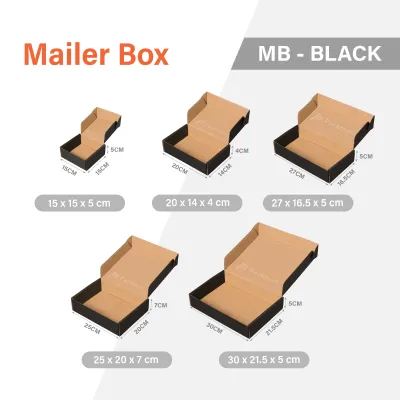
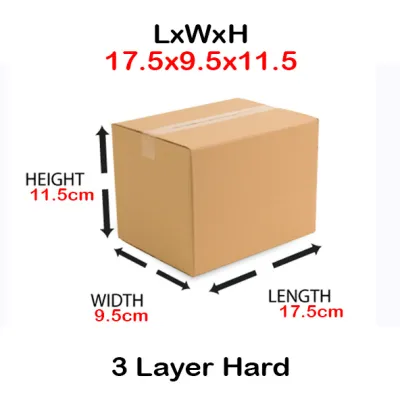
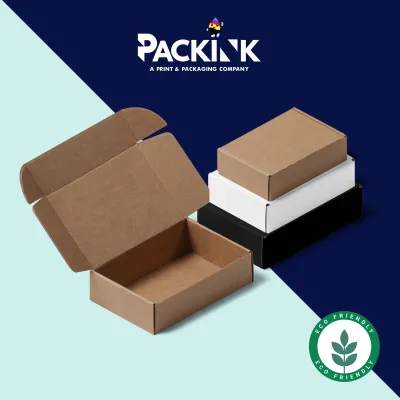
Prices are valid at publication and may change. Please refer to the product page for the latest price.
To prevent calculation errors, record all measurements in a single consistent unit, such as millimeters or centimeters. Mixing metric and imperial units during the planning phase frequently leads to ordering the wrong box size, so maintaining a uniform standard from the start is essential.
Understand Inner Versus Outer Box Dimensions
When browsing packaging options, you will encounter two distinct sets of measurements: inner dimensions and outer dimensions. The inner dimensions represent the actual usable space inside the box, which directly dictates whether your items and their protective wrapping will fit.

In contrast, the outer dimensions measure the total physical footprint of the closed box from the outside. Shipping carriers and warehouse systems use these outer measurements to calculate shipping volume, dimensional weight, and storage space requirements on shelves or pallets.
The difference between these two sets of dimensions depends heavily on the thickness of the paperboard and the type of corrugation flutes used. Single-wall or double-wall corrugated kraft boxes have thick, wavy structural layers that can subtract several millimeters from the internal width, length, and height compared to the external measurements.
Always review the manufacturer’s specification sheet or product label to confirm which standard is being advertised. Assuming a listed size refers to the interior space when it actually represents the exterior can result in a box that is too tight for your items.
Allocate Padding Space Based on Item Fragility
A secure packaging setup requires a deliberate buffer between your items and the box walls. For fragile items like glassware, ceramics, or delicate stationery, you must add extra clearance on all six interior sides to accommodate protective materials like bubble wrap, paper cushioning, or foam inserts.
For rigid, non-fragile items such as books, notebooks, or durable plastic goods, you can plan for minimal clearance. These items generally only require a snug fit with a thin layer of wrapping paper to prevent surface scratches and minor shifting during transit.
When calculating your final required inner volume, remember to account for the compressed thickness of your padding. Materials like crumpled kraft paper or bubble wrap compress under the weight of the item, so your initial measurements should allow enough uncompressed space to maintain a protective barrier.
If the necessary padding forces you to choose a box with disproportionately large outer dimensions, stop and reconsider your packaging strategy. Extremely large boxes filled mostly with air or loose fill can become structurally unstable, making them prone to crushing when stacked under heavier parcels.
Evaluate Shipping and Storage Constraints
The outer dimensions of your selected kraft paper box directly influence your ongoing logistics and shipping expenses. Most courier services calculate shipping fees using dimensional weight formulas, which charge based on the box’s volume rather than its actual physical weight.
If you manage an inventory of goods, you must also verify that the outer dimensions of the assembled boxes fit neatly within your storage setup. Check that the boxes align with your shelving units, storage bins, or standard pallet configurations to maximize warehouse space and prevent overhangs.
Larger kraft boxes naturally face greater physical stress during transit and stacking. As box volume increases, the structural integrity of the flat panels decreases, meaning you may need to select heavier paper grades, double-wall corrugation, or boxes with reinforced edges to prevent the sides from collapsing under pressure.
Verify and Test the Final Packaging Setup
Before committing to a bulk order of kraft paper boxes, it is highly recommended to perform a physical test pack. Secure a single sample box of your chosen size, place your actual items inside, and apply the exact type and amount of padding you plan to use in your daily operations.
Once the box is taped shut, lift it and shake it gently to check for internal movement. If you hear rattling or feel the contents shifting significantly, you may need to add more void fill or transition to a slightly smaller box size to keep the items secure.
Carefully inspect the exterior of the sealed test box for any signs of bulging, tearing, or strained seams. Bulging panels indicate that the box is overfilled or too small, which compromises its stacking strength and increases the risk of bursting during transit.
If your physical tests reveal persistent structural weaknesses, tight fits, or alignment conflicts, consult the box manufacturer or a qualified packaging specialist. They can provide detailed specifications on paper weight, flute profiles, and custom sizing options tailored to your specific product line.
Frequently Asked Questions (FAQ)
Should I buy a box that exactly matches my item dimensions?
Buying a box that exactly matches your item’s dimensions is highly risky because it leaves zero clearance for protective padding. Without a buffer, any external impact or pressure on the box walls will transfer directly to your item, significantly increasing the likelihood of damage during transit. An exact fit is only acceptable for highly rigid, non-fragile items that are already individually wrapped or do not require cushioning, such as flat wooden blocks or durable metal components.
How does paper thickness affect the internal space of a kraft box?
The thickness of the paperboard or corrugated walls directly reduces the usable interior space of a kraft box. For example, double-wall corrugated boxes have much thicker walls than single-wall boxes, meaning their inner dimensions will be significantly smaller than their outer dimensions. To ensure a proper fit, always base your packaging calculations on the manufacturer’s stated inner dimensions rather than trying to manually estimate and subtract wall thickness from the outer dimensions.

Community discussion
Share your experience or ask a question. Comments are reviewed before publication.