
Finding the perfect happy birthday envelope requires matching the physical dimensions of your greeting card or money packet to the internal space of the envelope. To ensure a seamless fit that prevents bending, tearing, or excessive sliding, the envelope’s internal dimensions should be approximately 5 to 10 millimeters larger than the item on all sides.
Because birthday cards and traditional money packets come in a vast array of shapes, thicknesses, and folding styles, a single universal envelope size does not exist. By learning how to measure your items accurately, decode retail packaging labels, and verify dimensions when shopping online, you can ensure your celebratory cards and monetary gifts are presented beautifully and securely.
How to Measure and Calculate the Ideal Envelope Size
To find the correct envelope size, start by measuring the exact physical dimensions of your birthday card or money packet. Place the item flat on a hard, level surface and use a standard ruler to measure its length and width in millimeters. Accurate flat measurements prevent you from purchasing an envelope that is too tight, which can crush the corners of your card.
Products mentioned in this guide
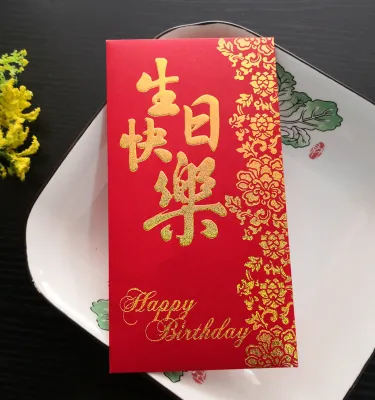
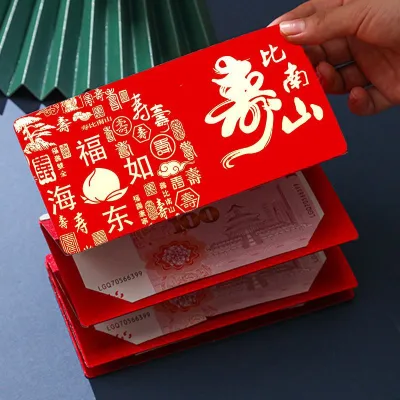
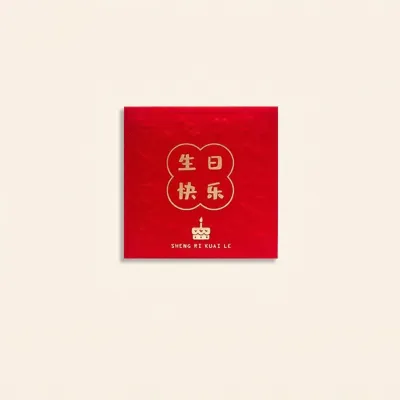
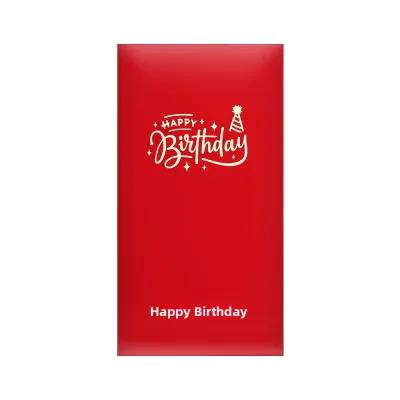
Prices are valid at publication and may change. Please refer to the product page for the latest price.
Next, you must account for the thickness of the item. While standard flat cards require minimal clearance, birthday cards with 3D embellishments, ribbons, pop-up elements, or multiple paper inserts require extra space. If your card is exceptionally thick, add the thickness measurement directly to your width and length calculations to prevent the envelope paper from stretching or splitting at the seams.
Finally, calculate your target envelope size by adding a standard clearance margin of 5 to 10 millimeters to both the measured length and width. This buffer ensures that the card slides into the envelope smoothly and can be retrieved by the recipient easily without any risk of tearing the edges.
Understanding Standard Envelope Size Labels
When browsing stationery, you will frequently encounter standard sizing systems such as the C-series or the A-series. In these systems, envelopes are designed to correspond directly with standard paper sizes; for example, a C6 envelope is sized to fit an A6 card, while a C5 envelope perfectly accommodates an A5 card. Understanding these basic relationships helps narrow down your options quickly.

However, you should always verify the actual physical dimensions printed on the packaging rather than relying solely on letter-number codes. Sizing standards can vary slightly between different manufacturers and regions, meaning a standard code from one brand might differ by a few millimeters from another. Checking the explicit measurements in millimeters or inches on the product label is the most reliable way to avoid sizing errors.
It is also crucial to distinguish between external and internal envelope dimensions. Retail packaging typically lists the external measurements of the envelope. Because of the space taken up by glued seams, paper folds, and manufacturing tolerances, the actual usable internal space will always be slightly smaller than the external dimensions listed on the label.
Sizing Strategies for Birthday Greeting Cards
Different styles of birthday cards require distinct envelope considerations. A single-page flat card lies completely flat and needs very little extra clearance. In contrast, a folded card naturally springs open slightly at the crease, which increases its effective thickness and requires a slightly more generous envelope to prevent the paper from bowing.
Always check the card manufacturer’s packaging first, as many retail birthday cards are sold with a recommended envelope size printed on the back or on the outer protective sleeve. For custom-shaped, oversized, or intricate pop-up cards, matching the manufacturer’s specified envelope size is highly recommended to preserve the structural integrity of the card.
Additionally, consider how the envelope flap style affects the insertion of your card. A square flap offers a modern aesthetic and a wider opening, making it easier to insert rigid, highly decorated, or delicate cards. A classic diamond flap has a deeper throat and a more angled opening, which might restrict the insertion angle for thick or heavily embellished birthday cards.
Sizing for Money Packets and Folded Cash
If you are placing a traditional money packet, such as an ang bao, inside a happy birthday envelope, you must measure the packet itself rather than the cash inside. Ensure the outer envelope is large enough to accommodate the entire packet comfortably, preventing the decorative corners of the money packet from bending or fraying during transit.
For situations where you are inserting cash or a cheque directly into the envelope without a secondary packet, fold the bills neatly and measure the folded stack. Choose a compact envelope size that holds the contents snugly so they do not slide around excessively, which can cause the cash to settle unevenly or get caught when the recipient opens the seal.
Security is another key factor when enclosing monetary gifts. Look for envelopes that feature tinted security linings or opaque interior patterns. These design elements prevent the contents from being visible when the envelope is held up to the light, ensuring your monetary gift remains private and secure until it is opened.
Verification Checklist for Online Purchases
When purchasing envelopes from an online marketplace, do not rely solely on generic product titles like “standard size” or “birthday envelope.” Scroll down to the detailed specification table provided by the seller to confirm the exact internal and external measurements before adding the item to your cart.
Take a moment to review customer feedback and product reviews for real-world insights. Other buyers often share helpful details regarding sizing discrepancies, paper thickness, or minor manufacturing variations. This feedback can alert you if a specific batch of envelopes runs slightly smaller than advertised or if the paper is prone to minor shrinkage in humid conditions.
Finally, factor in the sealing mechanism of the envelope, whether it is a self-seal adhesive strip, a peel-and-seal tape, or a traditional gummed flap. The adhesive area and the fold of the flap take up a small amount of space at the top of the envelope. Ensure that this sealing area does not encroach on the usable interior space, especially if your birthday card is close to the maximum height limit.
Frequently Asked Questions (FAQ)
Can I use a standard business envelope for a birthday card?
Standard business envelopes, such as the common DL size, are long and narrow, designed specifically for tri-folded letter paper. While a small birthday card might physically fit inside, the excess empty space at the sides allows the card to slide around, which can damage delicate corners. Furthermore, the formal, utilitarian appearance of a business envelope lacks the festive and personal feel of a dedicated happy birthday envelope.
How do I measure an envelope if the packaging has no dimensions listed?
If you have loose envelopes at home with no packaging labels, place the envelope flat on a table and use a ruler to measure the external width and height. To estimate the usable internal space, subtract approximately 3 to 5 millimeters from both measurements. This subtraction accounts for the glued seams on the sides and the fold of the top flap, giving you a realistic estimate of the maximum card size that will fit inside.

Community discussion
Share your experience or ask a question. Comments are reviewed before publication.