
Selecting the right school adhesive depends on your child’s developmental stage, motor skills, and the specific materials required for their school projects. For younger children in Singapore’s preschools and lower primary levels, solid glue sticks offer a mess-free, washable solution for lightweight paper. As students progress to upper primary and secondary school, their projects evolve from simple paper crafts to complex 3D models, dioramas, and Design & Technology (D&T) coursework, requiring stronger liquid PVA glues, double-sided tapes, and specialty craft adhesives.
Choosing the appropriate adhesive ensures that school projects stay intact during the daily commute, withstand Singapore’s humid climate, and remain safe for students to handle independently. By matching the adhesive type to the student’s grade level, parents can support creative learning while minimizing messy cleanups at home. This guide breaks down the most suitable options for each educational stage, helping you build a practical back-to-school stationery kit.
Understanding Common Glue Types for School Projects
Before selecting an adhesive for your child’s school bag, it is helpful to understand the primary categories of school glues and how they interact with different materials. Each type of adhesive has distinct properties that make it suitable for specific tasks, from quick paper pasting to structural model building.
Products mentioned in this guide
Prices are valid at publication and may change. Please refer to the product page for the latest price.
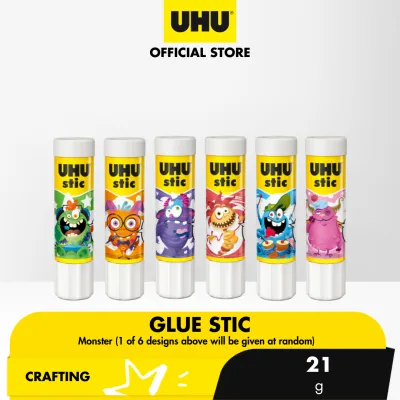
Solid glue sticks are the most common adhesive found in primary school pencil cases. They feature a low-moisture, solid formula that glides smoothly onto paper, providing a clean application that minimizes paper wrinkling and warping. Because they dry relatively quickly and do not spill, they are highly suitable for lightweight paper, construction paper, and basic notebook work.
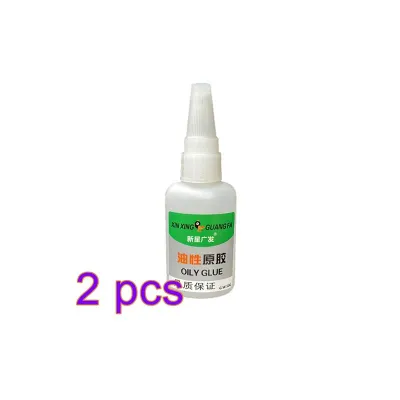
Liquid white glue, commonly known as polyvinyl acetate (PVA) glue, offers a much stronger and more flexible bond than solid glue sticks. This water-based adhesive penetrates porous materials, making it highly effective for bonding heavier paper, cardboard, wood, and fabric. However, liquid PVA glue requires a longer drying time and must be applied sparingly to prevent thin paper from warping.
Adhesive rollers and double-sided tapes provide an instant, dry bond with no drying time required. These tools house a strip of double-sided adhesive that transfers directly onto the surface when rolled or pressed. They are ideal for neat edges, mounting photographs, and assembling presentation boards where liquid glue might cause unsightly bumps or wet spots.
Specialty craft glues encompass thicker formulas, such as tacky glues or multi-purpose gel adhesives, designed for mixed-media projects. These adhesives have a high viscosity, meaning they do not run easily and can hold heavier items in place while drying. They are designed to bond non-paper materials like felt, plastic, sequins, and wooden craft sticks, which are common in advanced school projects.
Matching Adhesives to Grade Levels and Project Needs
As children grow, their fine motor skills and the complexity of their school assignments change significantly. Selecting an adhesive is not just about bonding strength; it is about finding a tool that matches a student’s manual dexterity and the structural demands of their schoolwork.

In Singapore, school projects transition from simple cutting-and-pasting activities in early childhood to structured science models, art portfolios, and design prototypes in later years. Understanding this progression helps parents select adhesives that empower students to work independently and confidently.
Kindergarten and Lower Primary (Preschool to Primary 2)
For children in preschool up to Primary 2, the primary focus is on developing fine motor skills while keeping the workspace manageable. Solid glue sticks are the standard recommendation for this age group because they are easy to hold, require simple twisting motions, and do not spill when tipped over. The solid formula also prevents young children from applying excessive amounts of glue, which can ruin paper crafts and create sticky messes on school desks.
If a project specifically calls for liquid glue, look for washable, non-toxic liquid formulas housed in easy-squeeze bottles with wide bases that resist tipping. These bottles often feature specialized tips or sponge applicators that control the flow of glue, helping young hands apply the adhesive evenly without squeezing out too much product at once.
At this stage, it is crucial to avoid adhesives that contain strong chemical solvents, require precise application tools, or feature small, detachable parts that could pose choking hazards. Stick to simple, water-based formulas that wash out of school uniforms and off study tables easily with plain water.
Upper Primary (Primary 3 to Primary 6)
As students enter upper primary, school projects become more ambitious, often involving science dioramas, social studies posters, and complex art assignments. Liquid PVA glue becomes essential here, as it provides the structural strength needed to bond cardboard, craft sticks, and heavier cardstock that solid glue sticks cannot hold securely.
For presentation boards and project posters, adhesive rollers and double-sided tapes are excellent additions to the pencil case. They allow students to mount printed sheets and photographs instantly, ensuring a flat, professional finish without the risk of paper warping or wrinkling. This is particularly useful for school exhibitions where visual presentation is assessed.
During these years, students learn to manage drying times and apply the correct amount of pressure to secure a bond. Introducing them to dual-tip liquid glues—which feature a fine nozzle on one end for detailed work and a broad sponge applicator on the other—helps them transition to more detailed crafting tasks.
Secondary School and Advanced Projects
Secondary school students engage in highly detailed coursework, including Art elective programs and Design & Technology (D&T) projects. These assignments frequently require bonding diverse materials such as acrylic, balsa wood, fabric, and metal components that standard school glues cannot support.
Specialty tacky glues and multi-purpose craft adhesives are highly useful for these mixed-media applications. They offer a thicker consistency that holds heavy components in place immediately, preventing sliding while the adhesive cures. This allows students to build stable 3D structures and architectural models without needing constant physical support.
For intricate detailing, paper quilling, or architectural model-making, precision glue pens with fine metal tips allow students to apply micro-dots of adhesive exactly where needed. These tools prevent excess glue from seeping out and ruining the clean lines of a finished design portfolio.
When advanced projects require heavy-duty adhesives, such as epoxy or high-heat glue guns, students must follow school workshop safety guidelines. These tools should only be used under direct teacher or parental supervision, ensuring proper ventilation and protective measures are in place to prevent accidental burns or exposure to fumes.
Key Factors to Check Before Purchasing
When shopping for school adhesives at local stationery shops or online marketplaces, reviewing the product labels carefully ensures you select a safe and effective product.
First, verify safety certifications on the packaging. Look for clear “non-toxic” labels or international safety standards such as ASTM D-4236. This is especially important for younger children who may accidentally touch their faces or mouths during craft sessions.
Second, check washability claims. Water-based glues that can be easily cleaned from skin, clothing, and school uniforms with warm water and soap will save significant effort during laundry days. Avoid permanent solvent-based adhesives for general school use unless specifically required for advanced secondary projects.
Third, assess the applicator tip design based on the user’s age. Sponge tips and roller applicators are excellent for broad coverage, while fine-point nozzles and pen-style tips are better suited for older students who need precise control.
Finally, review the drying time and clarity of the adhesive. For visual art projects and presentation boards, choosing a glue that dries completely transparent ensures a clean, professional appearance even if some excess product squeezes out of the joints.
Practical Tips for Storage and Maintenance
Singapore’s warm and humid climate can affect the shelf life and performance of school adhesives if they are not stored correctly. To prevent liquid glues from drying out and clogging, store the bottles upright with the caps tightly sealed. For stubborn formulas, storing them upside down in a small cup can keep the adhesive near the nozzle, but ensure the cap is completely closed to prevent slow leaks.
Before capping a solid glue stick, use a scrap piece of paper or a damp cloth to wipe away any excess glue from the screw threads and the interior of the cap. This simple step prevents the cap from bonding to the tube, making it much easier for children to open during their next class and extending the life of the product.
Address adhesive spills immediately to make cleanup easier. While the glue is still wet, wipe it away with a damp cloth; for dried water-based glues, soaking the area with warm, soapy water will help soften the bond for easy removal from desks, clothing, and school uniforms.
Frequently Asked Questions (FAQ)
Can I use a hot glue gun for primary school projects?
Hot glue guns pose a significant burn risk and are generally not recommended for independent use by primary school students. If a project requires the rapid, strong bond of hot glue, a low-temperature glue gun should only be used under direct adult supervision, or the task should be handled entirely by an adult to ensure safety.
Why does my liquid glue make the paper wrinkle?
Liquid glues contain water, which is absorbed by the fibers of thin paper, causing them to expand, swell, and warp as they dry. To prevent wrinkling, switch to a solid glue stick or an adhesive roller, or apply the liquid glue in an extremely thin, even layer using a scrap piece of cardboard or a brush to distribute the moisture evenly.

Community discussion
Share your experience or ask a question. Comments are reviewed before publication.