
Selecting the correct courier bag size is essential for protecting your products, minimizing shipping costs, and presenting a professional package to your customers. To choose the right Everythink courier bag size, you must measure your product’s maximum length, width, and height, add a buffer for any protective packaging like bubble wrap, and calculate the necessary seal allowance for the adhesive flap. Choosing a bag that is too small risks tearing the seams, while an oversized bag can leave excess material that catches on automated sorting machinery during transit. By taking precise measurements and understanding how flat dimensions translate to three-dimensional volume, you can streamline your fulfillment process and ensure your items arrive in pristine condition.
Measure Your Products and Packing Requirements
Before browsing available bag sizes, you must determine the exact dimensions of your items in their final, ready-to-ship state. This means measuring the maximum length, width, and thickness of the product after it has been prepared for dispatch. If you are shipping multiple items in a single order, stack them exactly as they will be packaged and measure the entire bundle as a single unit. Do not rely on the manufacturer’s product dimensions listed on the retail box, as these often exclude the extra bulk added by protective wrapping.
Do not measure the bare product alone if you plan to use protective packaging. Internal packaging materials such as bubble wrap, foam sheets, cardboard stiffeners, or paper shredding add significant volume to your shipment. For example, wrapping a book in two layers of bubble wrap can easily add several centimeters to both its width and thickness. If you include promotional inserts, thank-you cards, or external invoice sleeves, ensure these are placed with the product during measurement so they do not cause the bag to bulge unexpectedly.
Products mentioned in this guide
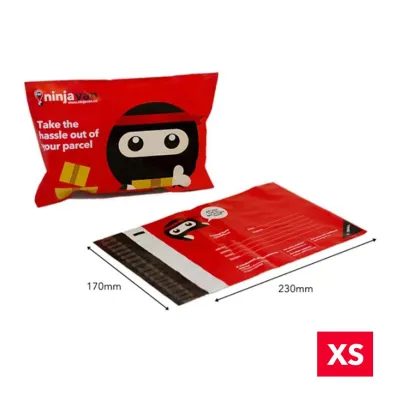
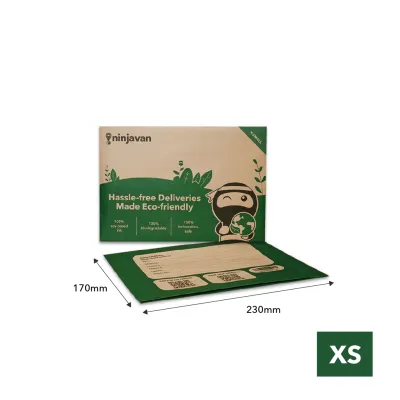
Prices are valid at publication and may change. Please refer to the product page for the latest price.
You should also evaluate the physical flexibility of your items. Soft goods, such as apparel, t-shirts, and plush toys, can easily compress and conform to the shape of a flexible poly mailer. For these items, you have more leeway in sizing because the product can shift to fill the bag’s volume. Conversely, rigid items like hardcover notebooks, photo frames, or electronic accessories cannot bend. These products require precise measurements and a more generous size allowance, as any tight corners can put concentrated pressure on the bag’s seams, potentially causing a blowout during transit.
Calculate the Required Bag Size and Seal Allowance
When reviewing courier bag dimensions, it is important to understand that the stated measurements typically represent the flat outer dimensions of the bag when empty. This flat measurement does not account for the three-dimensional volume created when an item is inserted. As a bag expands to accommodate a thick item, its usable length and width decrease.

To find the minimum required bag width and length, you can use a standard sizing formula that accounts for product thickness. To determine the necessary bag width, add the product’s width to its thickness, then add a safety margin of at least 10 to 20 millimeters to allow the item to slide in easily. For the bag length, add the product’s length to its thickness, and then add the length of the adhesive flap. The adhesive flap, which typically ranges from 40 to 50 millimeters, must fold over completely to contact the back of the bag and create a secure, tamper-evident seal.
If you are shipping items with significant depth, such as shoe boxes or thick textbooks, the expansion of the bag will pull the sides inward. For these bulky items, choosing a bag with a built-in bottom gusset can be highly beneficial, as it allows the bag to expand three-dimensionally without distorting the overall shape or putting excessive tension on the side seals. Always ensure that your calculations leave enough flat space at the top of the bag so the adhesive strip can lie completely flat against the poly material without wrinkling, which could compromise the seal’s water resistance.
Match Bag Size and Thickness to Your Product Type
Different categories of goods demand different combinations of bag dimensions and material thicknesses to ensure they arrive safely at their destination. Flat and rigid items, such as documents, catalogs, and stationery notebooks, require a close fit to prevent them from sliding around inside the packaging. When packing rigid items, pay close attention to the corners. Sharp edges can easily puncture thin plastic, so it is wise to opt for a thicker grade of poly mailer or wrap the corners in protective tape before inserting them into the bag.
For soft and foldable items like clothing, textiles, and bedding, the primary goal is to optimize the folding arrangement to match standard bag sizes. You can fold a t-shirt or dress to fit a variety of dimensions, allowing you to standardize on one or two versatile bag sizes for your entire apparel line. Because soft goods are naturally puncture-resistant and absorb impacts well, you can often use standard-thickness bags. However, ensure the bag is not packed so tightly that it resembles a fully inflated balloon, as this makes it highly susceptible to bursting under the weight of other parcels in a delivery van.
Small or irregularly shaped items, such as cosmetics, jewelry boxes, or small hardware components, present unique packaging challenges. If you place a small item in a large courier bag, the excess empty space can fold over itself, creating loose flaps of plastic. These loose flaps can easily get caught in automated sorting belts or conveyor rollers at courier hubs, leading to torn packaging or lost items. To prevent this, select a bag that closely matches the item’s size, or fold the excess material tightly against the product and secure it with packaging tape to create a compact, streamlined parcel.
Verify Everythink Size Charts and Material Specifications
Before finalizing your purchase of Everythink courier bags, always consult the manufacturer’s official size charts and product specifications. These charts typically list both the overall dimensions (including the flap) and the usable inner dimensions. Verifying these details prevents the common mistake of purchasing bags that are slightly too short because the flap length was included in the main length measurement.
In addition to dimensions, review the material thickness, which is usually measured in microns or mils. For lightweight, non-fragile items, a standard thickness of 50 to 60 microns is generally sufficient for daily shipping needs. If you are shipping heavier items, goods with sharp edges, or high-value products, look for heavy-duty options with a thickness of 70 to 80 microns or more. Thicker bags offer superior puncture resistance and opacity, ensuring that the contents remain confidential and protected from rough handling.
Finally, examine the adhesive seal and closure features. A high-quality courier bag should feature a strong, hot-melt adhesive strip protected by a release liner. Once the liner is removed and the flap is pressed down, the adhesive should form a permanent bond that cannot be opened without visibly tearing the plastic. This tamper-evident feature is crucial for security, especially when shipping valuable items through local courier networks or international postal services. For businesses operating locally, optimizing package dimensions can keep shipping fees within the standard local delivery tier (often starting around S$3.00 to S$4.50), preventing unexpected surcharges.
Frequently Asked Questions (FAQ)
Is a courier bag suitable for fragile or easily crushed items?
Standard poly courier bags are flexible and do not provide structural protection against impact, dropping, or heavy loads. If you are shipping fragile items like glassware, ceramics, or delicate electronics, a courier bag should not be used as the sole packaging material. Instead, pack the fragile item securely inside a rigid cardboard box with ample cushioning, such as bubble wrap or packing peanuts. You can then place the entire box inside a courier bag to provide a waterproof outer layer and protect the box from scuffs and moisture during transit.
What if my product dimensions fall between two bag sizes?
If your calculated dimensions fall between two available courier bag sizes, it is always best to size up. Attempting to force an item into a bag that is slightly too small will stretch the plastic, weaken the seams, and prevent the adhesive flap from sealing properly. When using a slightly larger bag, simply insert your product, fold the excess plastic material tightly around the item, and secure it firmly with packaging tape. This eliminates loose flaps, keeps the item secure, and ensures the package remains compact enough to avoid dimensional weight surcharges from your shipping carrier.

Community discussion
Share your experience or ask a question. Comments are reviewed before publication.