
Selecting the right crochet hook size is one of the most critical decisions you will make before starting any crochet project. The relationship between your hook and your yarn determines the structural integrity, physical dimensions, and overall drape of the finished item. Using a hook that is too large results in loose, structurally weak stitches, while a hook that is too small produces a stiff, inflexible fabric that can be incredibly difficult to work with.
For crafters in Singapore, navigating this selection process can sometimes feel complicated. Local craft stores and online marketplaces offer a diverse array of yarns sourced from Japan, Europe, the United Kingdom, and the United States. Because these regions use different labeling systems, understanding how to translate these measurements is essential to achieving the perfect stitch tension. By mastering the fundamentals of yarn weights and hook compatibility, you can confidently approach any pattern and ensure your creative vision translates perfectly into the finished piece.
Understanding Yarn Weights and Hook Sizing Systems
Yarn weight refers directly to the thickness of the individual yarn strand, not the physical weight of the skein. To help crafters maintain consistency, the craft industry categorizes yarns into standard weight classes ranging from lace weight (the thinnest) to jumbo weight (the thickest). Each of these categories is designed to work within a specific range of crochet hook sizes to create a balanced fabric.
Products mentioned in this guide
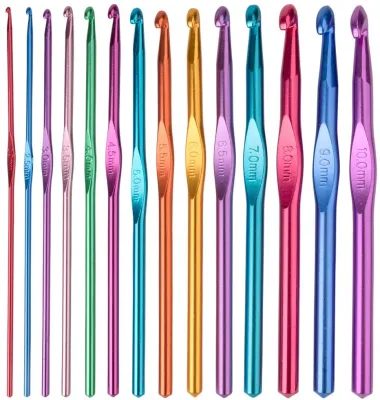
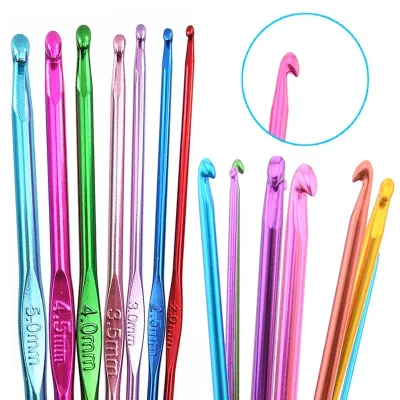
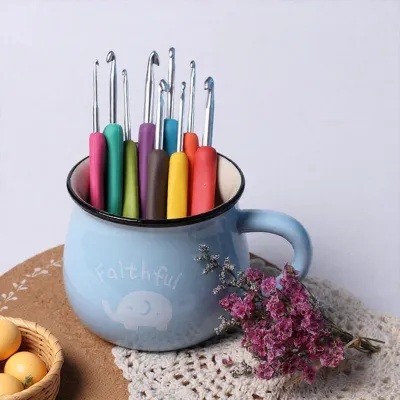
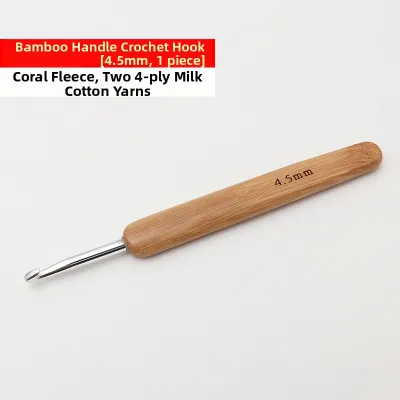
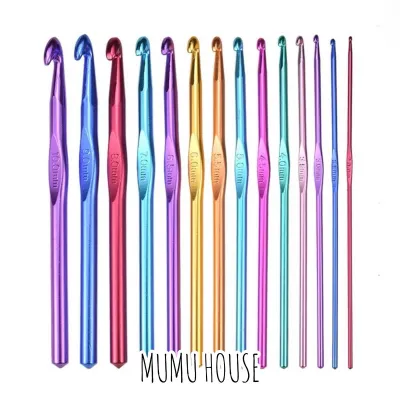
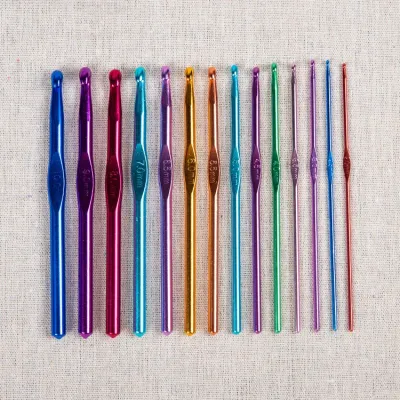
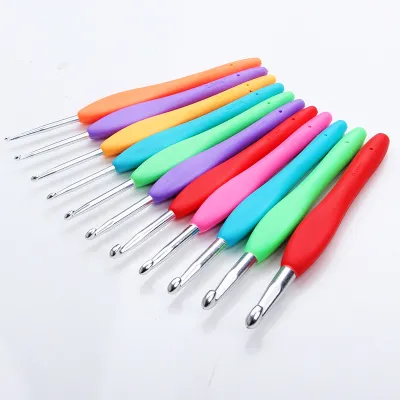
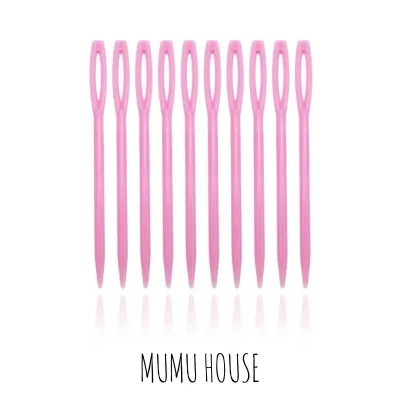
Prices are valid at publication and may change. Please refer to the product page for the latest price.
When shopping for crochet hooks, you will encounter three primary sizing systems. The metric system, which measures the diameter of the hook shaft in millimeters (mm), is the most accurate and globally consistent standard. In contrast, the United States uses a letter and number system (such as H-8 or I-9), while the United Kingdom and Canada historically used a reverse numbering system where smaller numbers indicate larger hooks. To avoid confusion, always look for the metric millimeter measurement, which is almost always printed alongside regional sizes on modern hook shafts.
You can typically find the recommended hook size directly on the paper banderole, or label, wrapped around your yarn skein. Manufacturers print technical information on these labels, usually presented in a small grid or graphic layout. Look for a small icon of a crochet hook, which will have a recommended metric size (such as 4.0 mm) and often the equivalent US letter size printed inside or next to it. This recommended size is calculated to produce a standard, balanced fabric, serving as the perfect starting point for your project.
Standard Yarn Weight to Crochet Hook Size Chart
While yarn labels provide an excellent starting point, having a comprehensive reference chart allows you to plan projects, substitute yarns, and purchase the correct tools in advance. The following chart maps the standard yarn weight categories to their common industry names, typical metric hook ranges, and common project applications.

| Yarn Weight Category | Common Names | Recommended Metric Hook Size (mm) | Recommended US Hook Size | Typical Project Applications |
|---|---|---|---|---|
| 0: Lace | Thread, Cobweb, Fingering | 1.4 mm to 2.25 mm (Steel: 0.6 mm–1.6 mm) | Steel 6, 7, 8 / Regular B-1 | Delicate doilies, bridal lace, micro-crochet |
| 1: Super Fine | Sock, Fingering, Baby | 2.25 mm to 3.5 mm | B-1 to E-4 | Lightweight socks, fine shawls, baby garments |
| 2: Fine | Sport, Baby | 3.5 mm to 4.5 mm | E-4 to 7 | Lightweight sweaters, baby blankets, accessories |
| 3: Light | DK (Double Knitting), Light Worsted | 4.5 mm to 5.5 mm | 7 to I-9 | Summer cardigans, light scarves, amigurumi toys |
| 4: Medium | Worsted, Afghan, Aran | 5.5 mm to 6.5 mm | I-9 to K-10.5 | Classic sweaters, warm blankets, winter hats |
| 5: Bulky | Chunky, Craft, Rug | 6.5 mm to 9.0 mm | K-10.5 to M-13 | Thick winter cowls, heavy blankets, home decor |
| 6: Super Bulky | Super Chunky, Roving | 9.0 mm to 15.0 mm | M-13 to Q | Statement rugs, quick blankets, thick baskets |
| 7: Jumbo | Roving, T-shirt yarn | 15.0 mm and larger | Q to U and larger | Arm-crochet style blankets, large storage baskets |
It is important to remember that this chart represents baseline recommendations rather than absolute rules. Several variables can influence how a specific yarn behaves with a given hook size. For instance, natural plant fibers like cotton and linen have very little elasticity and tend to produce a stiffer fabric, which may require you to use a slightly larger hook to maintain flexibility. On the other hand, highly elastic animal fibers like wool or premium acrylics can expand or contract, altering how the stitches sit together.
To verify the manufacturer’s suggested starting size on commercial yarn, look closely at the small square graphic printed on the label. This icon typically features a drawing of a crochet hook alongside a set of numbers. The number inside the square indicates the recommended hook size, while the numbers surrounding the box outline the expected stitch and row count for a standard tension swatch.
How to Test and Adjust Your Tension with a Gauge Swatch
Even when you match your yarn weight and hook size perfectly according to the label, your individual crocheting style plays a massive role in the final outcome. Some crafters naturally hold their yarn tightly, resulting in smaller, denser stitches, while others crochet with a loose, relaxed grip that creates larger, airier stitches. To ensure your finished project matches the dimensions specified in your pattern, you must crochet a gauge swatch.
To create a standard gauge swatch, look at your pattern to identify the specified stitch and the target gauge. Using the recommended hook size and yarn, chain enough stitches to create a piece that is roughly 5 to 6 inches (12 to 15 cm) wide. Crocheting a swatch slightly larger than the standard 4×4 inch (10×10 cm) measuring area is crucial, as the edge stitches of a swatch are often slightly distorted and do not represent your true tension. Work in the specified stitch pattern until your swatch reaches a height of 5 to 6 inches, then fasten off.
Once your swatch is complete, lay it completely flat on a hard, even surface like a table. Avoid stretching, pulling, or pinning the fabric, as this will distort your measurements. Place a rigid ruler or a specialized square gauge tool over the center of your swatch. Count the individual stitches across exactly 4 inches (10 cm) horizontally, including any fractional stitches. Next, align your ruler vertically and count the number of rows within exactly 4 inches. Compare these numbers directly to the gauge requirements listed in your pattern.
If your stitch count does not match the pattern, you must adjust your hook size using a simple decision matrix:
- Too many stitches per inch: If you count more stitches than the pattern specifies, your stitches are too small. This indicates that your tension is too tight. To correct this, switch to a larger crochet hook (for example, moving from a 4.0 mm to a 4.5 mm hook) to increase your stitch size and loosen the fabric.
- Too few stitches per inch: If you count fewer stitches than specified, your stitches are too large. This indicates that your tension is too loose. To correct this, switch to a smaller crochet hook (such as moving from a 4.0 mm to a 3.5 mm hook) to tighten your stitches and reduce the overall size.
For projects where fit and dimensions are critical, such as sweaters, hats, or cardigans, you should always wash and block your gauge swatch before taking your final measurements. Many yarn fibers, especially natural wool, cotton, and bamboo, expand, stretch, or shrink significantly when submerged in water and allowed to dry. By washing your swatch exactly as you plan to launder the finished item, you can observe how the fibers relax and ensure your garment will still fit perfectly after its first wash.
When to Intentionally Deviate from Standard Hook Sizes
While matching your hook to the yarn label is excellent for standard projects, there are many scenarios where you should deliberately ignore the manufacturer’s recommendations. Adjusting your hook size away from the standard guidelines allows you to manipulate the density, drape, and structure of your fabric to suit specific design goals.
Crocheting Amigurumi and Stuffed Toys
When creating amigurumi, stuffed animals, or 3D sculptural items, your primary goal is to create a fabric that is incredibly dense and firm. If you use the standard hook size recommended on the yarn label, your stitches will have tiny natural gaps between them. When you pack the toy with polyester fiberfill, this stuffing will stretch the fabric slightly, causing the white filling to show through the gaps and ruin the aesthetic of your toy.
To prevent this issue, you should always select a crochet hook that is 0.5 mm to 1.0 mm smaller than what the yarn label recommends. For example, if you are using a standard DK weight yarn that suggests a 4.0 mm hook, you should opt for a 3.0 mm or even a 2.5 mm hook. This intentional downsizing forces your stitches to sit incredibly close together, creating a rigid, durable shell that completely hides the internal stuffing and helps your toy maintain its structural shape over years of handling.
Creating Lace and Draping Garments
In Singapore’s warm and humid tropical climate, heavy, dense crochet projects are rarely practical for everyday wear. Local crafters often prefer to work with lightweight, breathable fibers like cotton, bamboo, linen, or fine acrylic blends to create summer cardigans, flowing shawls, and airy tops. To make these garments comfortable to wear, the finished fabric must have a soft, fluid drape that moves naturally with the body rather than feeling stiff or board-like.
To achieve this lightweight, flowing texture, you should intentionally use a crochet hook that is 0.5 mm to 1.5 mm larger than the standard recommendation. If you are working with a sport-weight yarn that typically pairs with a 4.0 mm hook, upgrading to a 5.0 mm or 5.5 mm hook will open up your stitches. This technique creates a delicate, airy fabric with larger spaces between the stitches, allowing air to circulate freely while giving the garment an elegant, professional-looking drape.
Making Dense Blankets and Winter Wear
For items that require maximum insulation, durability, or a structured form, maintaining a tight, compact stitch pattern is essential. When crafting thick winter blankets, heavy travel beanies, sturdy coasters, or structured storage baskets, you want to minimize any gaps between your stitches. This ensures that cold air cannot penetrate your winter wear, and heavy-use home decor items can withstand daily wear and tear.
To achieve this level of durability and warmth, you should stick strictly to the exact hook size recommended on the yarn label, or even go slightly smaller by 0.25 mm to 0.5 mm. Using a standard or slightly smaller hook ensures that the yarn fibers lock together tightly, creating a dense barrier that traps heat effectively. Additionally, for functional items like coasters or table runners, this compact stitch structure provides a perfectly flat, stable surface that prevents cups and glasses from tipping over.
Frequently Asked Questions (FAQ)
Does the material of the crochet hook affect my tension?\n
Yes, the material of your crochet hook plays a significant role in your stitch tension because different materials offer varying levels of surface friction. Metal hooks, such as those made of polished aluminum or steel, are incredibly smooth and slippery, allowing yarn to glide effortlessly. While this speed is excellent for experienced crafters, beginners may find that the lack of resistance leads to loose, inconsistent stitches or causes loops to slide off the hook unexpectedly.
In contrast, wooden and bamboo hooks possess a natural grain that provides a subtle grip, creating more friction as the yarn moves over the shaft. This extra grip is incredibly useful when working with slippery, high-sheen yarns like silk, bamboo, or mercerized cotton, as it helps you maintain control and achieve a tighter, more consistent tension. Plastic and acrylic hooks offer a moderate level of grip but can sometimes feel slightly sticky when paired with synthetic acrylic yarns. If you struggle with inconsistent tension, experimenting with different hook materials is a highly effective way to find what works best for your natural hand movements.
What if my yarn label only recommends a knitting needle size?
If you are working with a yarn that is primarily marketed for knitting, the label may only display a knitting needle icon with a recommended millimeter size, completely omitting any mention of a crochet hook. In this scenario, you can safely use the recommended knitting needle size as your baseline starting point for your crochet hook. For example, if the label suggests using 4.5 mm knitting needles, you should begin your project with a 4.5 mm crochet hook.
However, because crochet stitches naturally consume more yarn and produce a thicker, less elastic fabric than knitting, this recommendation should only be treated as a rough estimate. It is highly recommended to crochet a gauge swatch when using a knitting-needle baseline. This step allows you to physically inspect the resulting fabric and ensure it has the correct density, flexibility, and feel for your specific crochet project before you commit to working on the entire piece.
Can I combine thinner yarns to match a heavier yarn weight?
Combining multiple strands of thinner yarn is an excellent technique for clearing out your leftover yarn stash, creating unique color gradients, or achieving a bulky weight when you only have fine yarns available. The general rule of thumb is that holding two strands of a lighter weight yarn together will approximate the next major weight category up. For example, holding two strands of fingering weight (Category 1) yarn together will roughly equal a sport weight (Category 2) or light DK weight (Category 3) yarn, while holding two strands of DK weight together will approximate a worsted weight (Category 4) yarn.
When you hold multiple strands together, you must treat them as a single, thick strand of yarn. You will need to select a larger crochet hook size that matches this new, combined thickness. Because fiber characteristics and spinning styles vary, always crochet a quick gauge swatch using your combined strands to verify that the resulting fabric has the thickness and structure you desire before starting your main project.

Community discussion
Share your experience or ask a question. Comments are reviewed before publication.