
Choosing the right crochet hook size for a project relies on a simple principle: matching the thickness of your yarn with a hook diameter that allows the fibers to interlock smoothly without creating a fabric that is either too stiff or too loose. While yarn labels provide a recommended starting point, achieving the perfect drape, structure, and size for your finished piece requires understanding how yarn weights, hook measurements, and your personal tension interact. By mastering these variables, you can confidently select the ideal tool for any project, whether you are crafting lightweight summer wear for warm climates or dense home decor items.
Understanding Yarn Weights and Crochet Hook Sizing Systems
To make an informed selection, you must first understand how yarn is classified. The Craft Yarn Council sets a standard yarn weight system, categorizing yarn from size 0 (Lace) up to size 7 (Jumbo). As the number increases, the physical thickness of the yarn strand increases. This thickness directly dictates the final fabric’s density, warmth, and drape. For instance, a delicate lace yarn produces airy, open patterns, whereas a bulky yarn creates thick, insulating fabrics. Matching these distinct thicknesses with the correct tool is essential for maintaining the structural integrity of your stitches.
When selecting a crochet hook, navigating the different sizing systems can initially feel overwhelming. Globally, the most reliable and precise measurement system is the millimeter (mm) standard. This metric measures the exact diameter of the hook’s shaft—the cylindrical area between the point and the thumb rest. Because the shaft determines the size of the loops you form, the millimeter measurement remains constant regardless of where the hook was manufactured.
Products mentioned in this guide
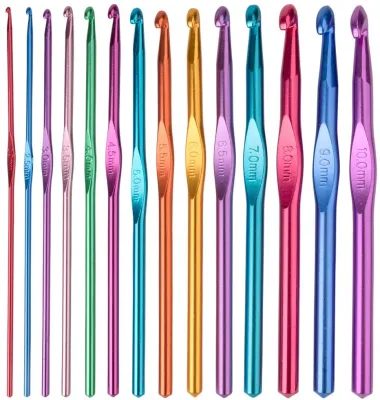
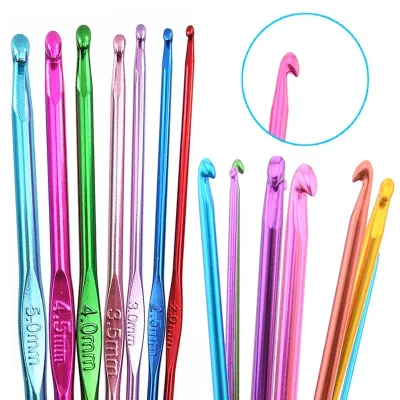
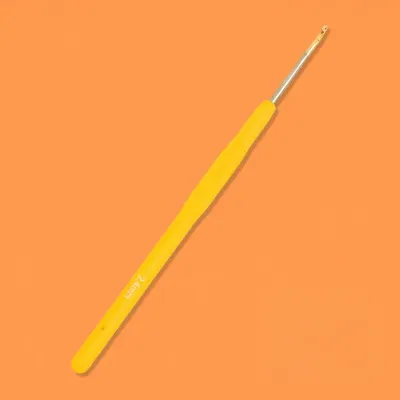
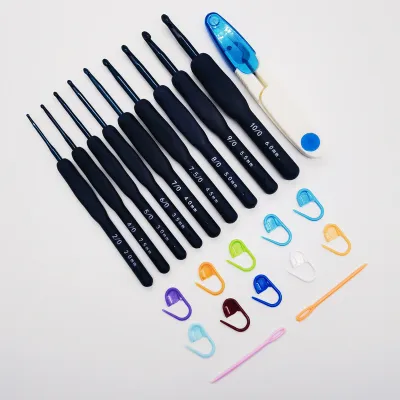
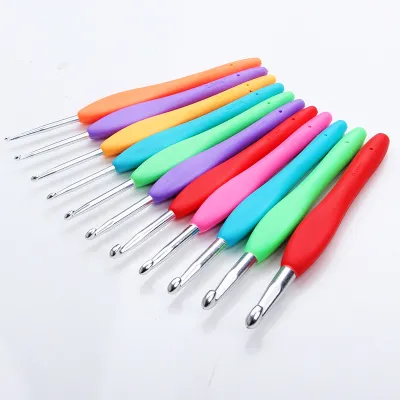
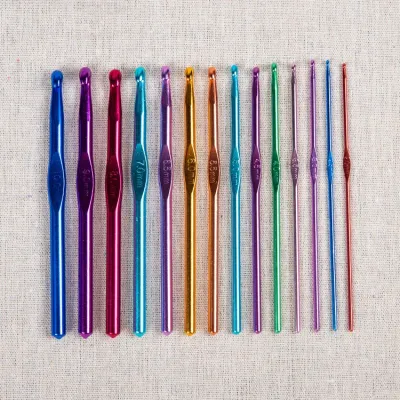
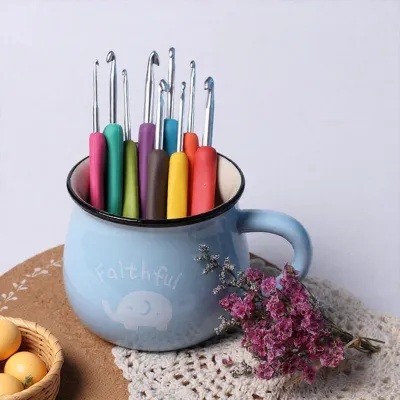
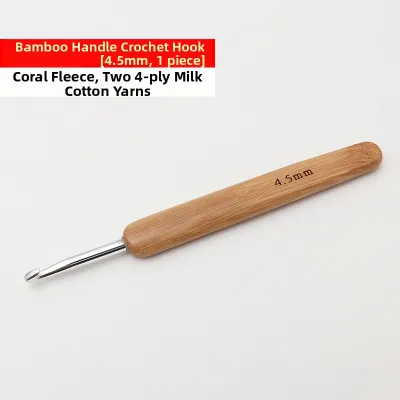
Prices are valid at publication and may change. Please refer to the product page for the latest price.
In contrast, other regional systems can introduce confusion. The United States uses a system of letters and numbers (such as G/6 or H/8), while the United Kingdom and Canada historically used a reverse numbering system where larger numbers indicated smaller hooks. Because these regional sizes can vary slightly between manufacturers—for example, some brands label a US G hook as 4.0 mm, while others label it as 4.25 mm—relying solely on letters or regional numbers can lead to sizing discrepancies in your work.
To build a reliable and versatile tool kit, get into the habit of checking the millimeter size printed on the hook’s handle, grip, or packaging. If you own vintage hooks or tools where the size markings have faded over time, a physical crochet hook gauge tool with precisely drilled holes is an invaluable accessory. Inserting the shaft of the hook into these holes allows you to quickly verify its exact millimeter diameter before starting a new project.
How to Match Your Crochet Hook to the Yarn Weight
Selecting the correct initial hook size is a systematic process that combines manufacturer recommendations, standard reference guidelines, and pattern instructions. By following three clear steps, you can establish a reliable baseline for any project.

Step 1: Read the Yarn Label Before you begin crocheting, examine the paper band wrapped around your yarn skein. Manufacturers print essential specifications here, including the fiber content, care instructions, and a standard yarn weight symbol (a small skein icon containing a number from 0 to 7). Near this symbol, you will typically find a small illustration of a crochet hook alongside a recommended millimeter size or range. This recommendation represents the manufacturer’s tested baseline, indicating the hook size that will produce a balanced, standard fabric with that specific yarn.
Step 2: Consult a Standard Reference Chart If you are working with mystery yarn that lacks a label, or if you want to understand the typical pairings across different categories, a standard reference chart is highly useful. The following table outlines the standard yarn weight categories, their common names, and the corresponding millimeter hook sizes generally recommended for standard projects.
| Yarn Weight Category | Common Names | Recommended Crochet Hook Size (mm) |
|---|---|---|
| 0 – Lace | Fingering, 10-Count Crochet Thread | 1.40 mm to 2.25 mm |
| 1 – Super Fine | Sock, Fingering, Baby | 2.25 mm to 3.50 mm |
| 2 – Fine | Sport, Baby | 3.50 mm to 4.50 mm |
| 3 – Light | DK (Double Knitting), Light Worsted | 4.50 mm to 5.50 mm |
| 4 – Medium | Worsted, Aran, Afghan | 5.50 mm to 6.50 mm |
| 5 – Bulky | Chunky, Craft, Rug | 6.50 mm to 9.00 mm |
| 6 – Super Bulky | Bulky, Roving | 9.00 mm to 15.00 mm |
| 7 – Jumbo | Ultra Bulky, Massive | 15.00 mm and larger |
Keep in mind that while this table serves as an excellent starting point, individual yarn textures, fiber compositions, and spin styles can influence how a yarn behaves. A highly textured boucle yarn, for example, may require a larger hook than a smooth mercerized cotton of the same weight to prevent the stitches from snagging.
Step 3: Check the Pattern Requirements If you are following a specific design, the pattern designer’s recommended hook size should always take precedence over the suggestion on the yarn label. Designers select hook sizes to achieve a specific aesthetic or structural outcome, which may intentionally differ from standard baselines. For example, a pattern for a summer shawl might call for a medium-weight yarn paired with an unusually large hook to create an airy, flowing fabric. Always defer to the pattern’s specifications first to ensure your finished dimensions match the designer’s intent.
Testing Your Tension: How to Make and Measure a Gauge Swatch
Even when you match your yarn and hook size perfectly according to standard charts, your unique physical style of crocheting plays a massive role in the final outcome. This is where testing your tension by creating a gauge swatch becomes a non-negotiable step, particularly for projects where exact fit or dimensions are critical, such as garments, hats, or structured bags.
Your personal tension refers to how tightly or loosely you hold the yarn and pull your loops. If you naturally grip the yarn tightly, your stitches will be smaller and denser than average, meaning your finished project will turn out smaller than intended. Conversely, if you crochet with a relaxed, loose grip, your stitches will be larger and more open, resulting in an oversized item that may sag over time. A gauge swatch allows you to measure your personal stitching style against the standard parameters of your pattern, ensuring a perfect fit.
Actionable Steps to Make a Swatch To create an accurate gauge swatch, you need to work a square that is slightly larger than the standard 10×10 cm (4×4 inch) measurement area specified in most patterns.
- Using your selected yarn and the recommended hook, chain enough stitches to measure roughly 15 cm wide.
- Work in the stitch pattern specified by your design until the piece measures approximately 15 cm in height.
- Fasten off the yarn and lay the swatch flat on a smooth surface.
- For the most accurate results, block your swatch according to the yarn's care instructions (such as washing and pinning it flat to dry) to allow the fibers to relax and settle into their permanent shape.
How to Measure and Adjust Your Hook Once your swatch is dry and resting flat without any stretching, place a firm ruler or a specialized gauge counting tool over the center of the square.
- Count the number of individual stitches across a horizontal 10 cm span.
- Count the number of rows vertically within a 10 cm span.
- Compare these counts to the gauge listed in your pattern.
- If your swatch has more stitches and rows than the pattern specifies, your tension is too tight. To fix this, switch to a larger millimeter hook to make your loops larger, and make a new swatch to verify.
- If your swatch has fewer stitches and rows than specified, your tension is too loose. Switch to a smaller millimeter hook to tighten your loops, and repeat the swatching process.
- Never skip re-swatching after changing your hook size, as even a 0.5 mm difference can dramatically alter the fabric's final dimensions and drape.
When to Intentionally Change Your Hook Size for Different Projects
There are many scenarios where you should deliberately ignore the standard yarn-to-hook recommendations to achieve specific structural or aesthetic qualities in your work. Understanding when and why to deviate from the standard baseline allows you to customize your fabric’s behavior for different applications.
Amigurumi and Stuffed Toys When crocheting stuffed toys or amigurumi, structural integrity is paramount. If you use the standard hook size recommended on a yarn label, the resulting fabric will have small gaps between the stitches. When you fill the toy with polyester stuffing, the fiberfill will bulge through these gaps, ruining the toy’s appearance and allowing the stuffing to escape over time. To prevent this, you should intentionally size down your hook by 1.0 mm to 2.0 mm. This creates incredibly tight, dense stitches that form an impenetrable barrier, keeping the stuffing securely inside while giving the toy a firm, durable shape.
Lace, Shawls, and Draping Garments Conversely, garments and accessories like shawls, scarves, and lightweight cardigans require a soft, flowing quality known as drape. If the stitches are too tight, the garment will feel stiff, heavy, and uncomfortable to wear. In Singapore’s warm, humid climate, lightweight and breathable garments are essential. By pairing a fine cotton, bamboo, or linen yarn with a hook that is one or two sizes larger than recommended, you can create an open, airy stitch pattern. This allows air to circulate freely and ensures the fabric falls gracefully against the body rather than standing rigid.
Home Decor vs. Winter Wear The intended function of a project should always dictate your hook choice. Functional home decor items like coasters, storage baskets, and plant pot covers require a rigid, sturdy structure to support weight and stand upright. For these projects, pairing a medium or bulky yarn with a smaller hook ensures the stitches are compact enough to hold their shape under pressure. On the other hand, a cozy winter scarf or blanket designed for air-conditioned spaces benefits from a slightly larger hook, which yields a plush, squishy, and highly flexible texture that maximizes comfort. Always test these intentional deviations with a small swatch to ensure the resulting fabric behaves exactly as you envision.
Frequently Asked Questions (FAQ)
Does the crochet hook material affect my choice of size?
While the physical material of a hook (such as aluminum, wood, bamboo, or plastic) does not alter its actual millimeter diameter, it significantly influences how the yarn glides over the tool. Smooth metal hooks, like anodized aluminum, offer minimal friction, causing slippery fibers like silk, bamboo, or acrylic to slide very quickly. This can lead to looser tension. Wooden and bamboo hooks have a natural grip that holds onto fibers, making them excellent for controlling slippery yarns but potentially causing grippy wools to drag. This friction can cause you to tighten your grip, subtly altering your personal tension and gauge. When switching hook materials, always check your tension with a swatch.
What if my yarn label is missing or faded?
If you are working with unidentified yarn from your stash, you can estimate its weight category using the wraps-per-inch (WPI) method. Wind the yarn snugly around a standard ruler or pencil, ensuring the strands sit side-by-side without overlapping or leaving gaps. Count how many times the yarn wraps around the tool within a one-inch (2.54 cm) space. A count of 12 to 15 wraps indicates a light DK yarn, while 9 to 11 wraps typically suggest a medium worsted yarn. Once you have estimated the weight, select the corresponding baseline hook size from a standard reference chart to begin your test swatch.
Can I use a different hook size than the pattern recommends?
Yes, you can and should change your hook size if it is necessary to match the pattern’s stated gauge. Because individual tension varies so widely, the hook size listed in a pattern is simply the tool the designer used to achieve their results. If your tension is tighter or looser than the designer’s, using the exact same hook size will result in an incorrectly sized item. Additionally, you may choose to use a different hook size if you want to intentionally alter the project’s drape, density, or overall dimensions to suit your personal preferences.

Community discussion
Share your experience or ask a question. Comments are reviewed before publication.