
Selecting the right corrugated cardboard box size is a critical decision that directly impacts the safety of your items, the ease of transport, and your overall shipping or moving costs. To make the correct choice, you must first measure your items accurately, account for necessary protective cushioning, and verify that the structural strength of the box matches the weight of its contents. Whether you are preparing for a local move between Singapore residential estates, organizing a self-storage unit, or shipping products to customers overseas, choosing the correct box dimensions ensures your goods arrive intact without incurring unnecessary expenses.
Using the wrong box size often leads to avoidable damage. A box that is too small forces you to skimp on protective wrapping, leaving items vulnerable to external impacts. Conversely, an oversized box leaves too much empty space, allowing items to shift violently during transit or causing the box to collapse when stacked under heavier containers. By understanding how corrugated boxes are measured and matching them to specific item categories, you can streamline your packing process and secure your belongings effectively.
Understand Corrugated Cardboard Box Dimensions and Measurements
To select the ideal corrugated cardboard box, you must understand how manufacturers measure and list box dimensions. The industry standard is to express measurements in the order of Length x Width x Height (or Depth), typically in millimeters or centimeters. Length refers to the longer side of the box opening, width is the shorter side of the opening, and height is the vertical distance from the top opening to the bottom of the box.
Products mentioned in this guide
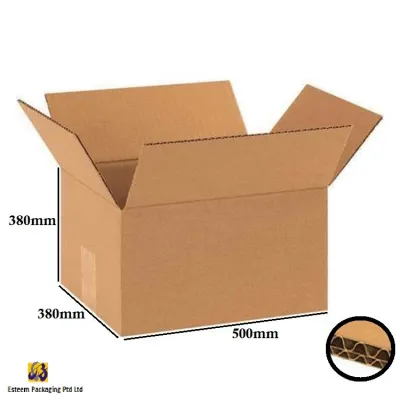
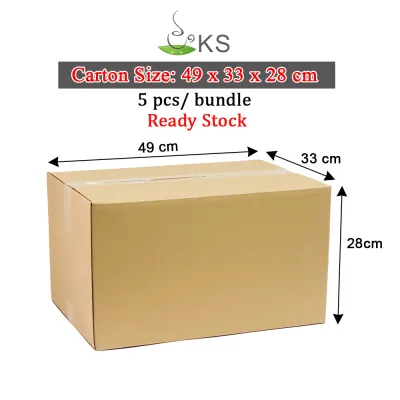
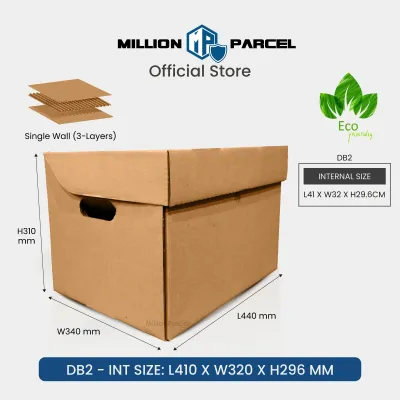
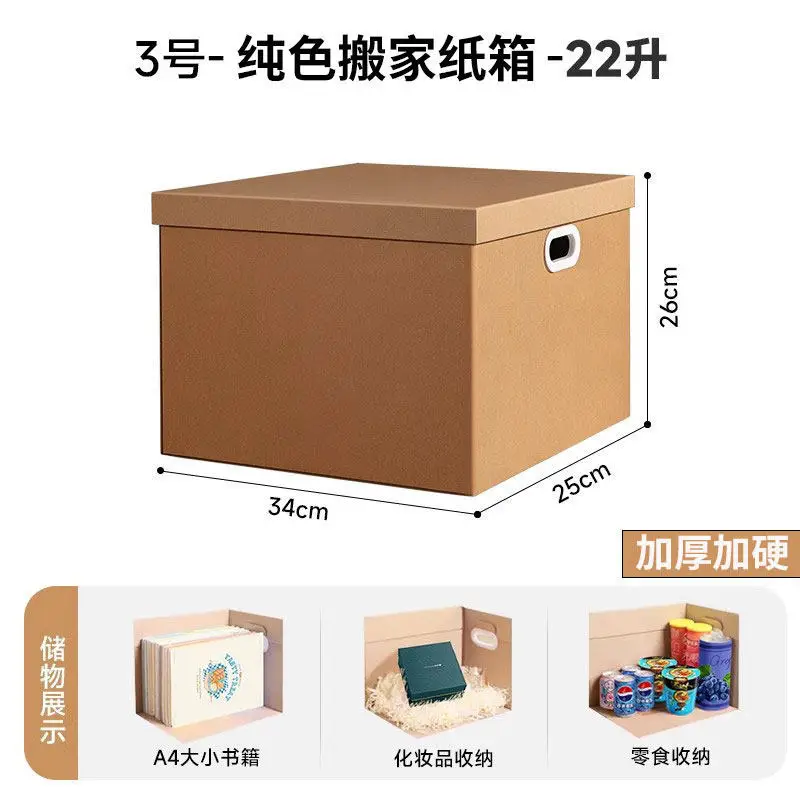
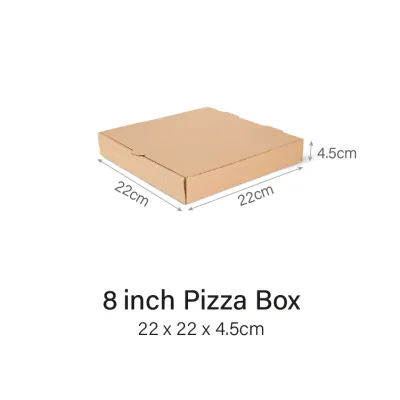
Prices are valid at publication and may change. Please refer to the product page for the latest price.
A common pitfall is failing to distinguish between internal and external dimensions. Manufacturers almost always specify internal dimensions because these dictate the actual usable space available for your items. Because corrugated cardboard has a physical thickness—ranging from a few millimeters for single-wall boards to over six millimeters for heavy-duty double-wall boards—the external footprint of the box will always be slightly larger than its internal capacity.
Before browsing for boxes, use a reliable measuring tape to find the maximum length, width, and height of the items you plan to pack. If you are packing multiple items together, group them as they would sit inside the box and measure the overall boundaries of the cluster. This initial measurement serves as your baseline. Always compare your item measurements against the listed internal dimensions of the box to guarantee a proper fit.
Match Box Sizes to Common Item Categories
Different types of items require distinct packing strategies to ensure safety and ease of handling. Matching your items to the correct box size category helps distribute weight evenly and prevents packing errors.

Small Boxes for Books, Documents, and Fragile Items
Small corrugated boxes, typically measuring around 30 x 20 x 20 cm, are the best choice for dense, heavy objects. Books, files, paper documents, and hand tools are deceptively heavy when grouped together. If you pack these items into a medium or large box, the total weight can easily exceed 20 kg, making the box extremely difficult to lift safely and risking a split bottom.
These compact boxes are also ideal for fragile items such as glassware, ceramics, and small electronics. Packing delicate items in smaller containers limits the amount of empty space, which naturally minimizes shifting during transit. It also allows you to focus your protective cushioning materials tightly around the items, creating a dense, shock-absorbing barrier that resists external crushing forces.
Medium Boxes for Kitchenware, Shoes, and Toys
Medium corrugated boxes, often sized around 40 x 30 x 30 cm or 50 x 40 x 35 cm, serve as the highly versatile workhorses of any packing project. These boxes are perfectly suited for mixed-weight items that require a balance of volume and structural support. Common candidates for medium boxes include kitchen pots, pans, utensils, shoes, toys, and small household appliances.
When packing medium boxes, the goal is to balance weight and volume so that the container remains manageable for a single person to carry. A helpful technique is to place heavier items, like frying pans or heavy toys, at the bottom of the box to establish a stable base. You can then fill the remaining upper space with lighter items, such as plastic containers or soft toys, ensuring the box is full enough to prevent collapsing without becoming too heavy.
Large and Extra-Large Boxes for Bedding and Light Bulky Items
Large and extra-large corrugated boxes, which can range from 60 x 40 x 40 cm to even larger dimensions, are designed specifically for lightweight, high-volume items. These containers provide the necessary space to pack bulky goods that take up a lot of room but do not weigh very much. Excellent examples include bed sheets, pillows, duvets, winter coats, cushions, and large stuffed toys.
You should strongly avoid the temptation to pack heavy items into large boxes. Overloading a large box compromises the corrugated structure of the cardboard, causing the sides to bulge and the bottom flaps to fail under pressure. Furthermore, an excessively heavy large box is a severe safety hazard, often leading to back strain or accidental drops during transport. Keep large boxes dedicated to light, fluffy items to ensure they remain safe to handle and stack.
Factor in Item Weight and Corrugated Board Strength
Choosing the right box size is only half the battle; you must also ensure the cardboard itself can support the weight of your items. Larger boxes naturally accommodate more items, which means they often require a stronger grade of corrugated cardboard to maintain their shape and protect their contents when stacked.
Corrugated cardboard is generally classified by its wall construction. Single-wall cardboard consists of a single layer of fluted paper sandwiched between two flat linerboards. This is the standard choice for most lightweight shipping, retail packaging, and general household moves. However, if you are packing heavier items, delicate electronics, or valuable goods, you should opt for double-wall cardboard. Double-wall construction adds an extra layer of fluting and an additional linerboard, providing significantly higher puncture resistance and stacking strength.
To verify the strength of a box, look for the Box Maker’s Certificate (BMC) or the Edge Crush Test (ECT) rating, which is typically printed on one of the bottom flaps. The ECT rating measures the box’s ability to withstand top-to-bottom crushing forces. A standard single-wall box often has a rating of 32 ECT, whereas heavy-duty double-wall boxes frequently carry ratings of 48 ECT or higher. Always check these manufacturer specifications to ensure the weight of your packed items does not exceed the certified weight limit of the box.
Calculate Space for Packing Materials and Void Fill
When determining the correct box size, you must never choose a box that matches the exact dimensions of your items. You must leave adequate clearance around the items to accommodate protective packaging materials, which are essential for absorbing shocks and vibrations during transit.
For fragile or high-value items, a reliable rule of thumb is to allow a clearance of approximately 3 to 5 cm on all sides of the item. This space should be filled with cushioning materials such as bubble wrap, packing paper, foam inserts, or biodegradable packing peanuts. If you attempt to squeeze an item into a box with no clearance, the item will press directly against the rigid cardboard walls. Any external impact on the box during transit will transfer directly to the item, often resulting in cracks or breakages.
On the other hand, avoid choosing a box that is excessively large for your item. An oversized box requires a massive amount of void fill to keep the item secure. If you do not use enough void fill, the item will slide around inside the box, gaining momentum with every movement of the delivery vehicle and likely damaging itself against the box walls. Settle on a size that allows for a snug, well-cushioned fit where the item remains suspended in the center of the protective materials.
Common Sizing Mistakes to Avoid When Packing
One of the most frequent errors is adopting a “one-size-fits-all” packing strategy. Sourcing only one large size of box in an attempt to simplify the packing process usually backfires. This practice leads to some boxes being dangerously heavy and others being half-empty, which compromises the stability of the entire stack during transport or storage.
Another major mistake is overpacking large boxes with dense items. It is easy to underestimate the cumulative weight of books, files, or canned goods. Always remember that the larger the box, the lighter the items inside should be. If you must pack heavy items, distribute them across multiple small boxes rather than concentrating them in a single large container.
Finally, shipping oversized boxes with minimal contents is highly inefficient and costly. Most commercial courier services and logistics providers in Singapore use dimensional weight (DIM weight) pricing to calculate shipping fees. DIM weight assesses the volume of the box rather than just its actual weight. If you ship a lightweight item in an unnecessarily large box, you will pay a premium for transporting empty air. Right-sizing your corrugated boxes is a simple and highly effective way to keep your shipping costs as low as possible.
Frequently Asked Questions (FAQ)
How do I measure an irregularly shaped item for a box?
To measure an irregularly shaped item, treat it as if it were enclosed in a solid rectangular block. Use a measuring tape to find the absolute longest, widest, and tallest points of the item. Once you have these three maximum measurements, add an additional 3 to 5 cm to each dimension to account for the necessary protective cushioning on all sides. This final calculated size represents the minimum internal dimensions you need when selecting your corrugated box.
Does the corrugated box size affect shipping costs?
Yes, corrugated box size has a direct impact on shipping costs due to dimensional weight (DIM weight) pricing used by most logistics carriers. Couriers calculate DIM weight by multiplying the box’s length, width, and height and dividing the result by a standard shipping factor. The carrier then bills you based on whichever is greater: the actual physical weight of the package or its dimensional weight. Sizing your box to fit your item precisely with just enough room for padding prevents you from paying extra fees for wasted space.

Community discussion
Share your experience or ask a question. Comments are reviewed before publication.