
Finding the perfect hook for your yarn is the defining step between a stiff, awkward fabric and a beautifully draped masterpiece. When working with Clover crochet hooks—highly regarded for their smooth glide and ergonomic designs—selecting the right size involves matching the tool to your yarn weight, project goals, and personal stitching tension. By understanding how different Clover hook lines interact with various fibers and learning how to adjust your hook size intentionally, you can achieve professional-grade results on every project.
Compare Clover Hook Lines for Comfort and Yarn Grip
To make an informed decision, you must first understand the physical characteristics of the primary Clover hook lines. Each series is engineered with specific materials, finishes, and grip styles that alter how the hook handles yarn and how comfortable it feels in your hand over long periods.
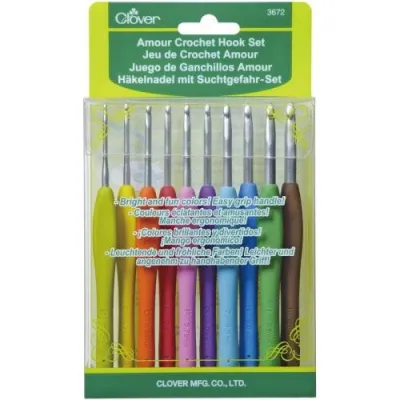
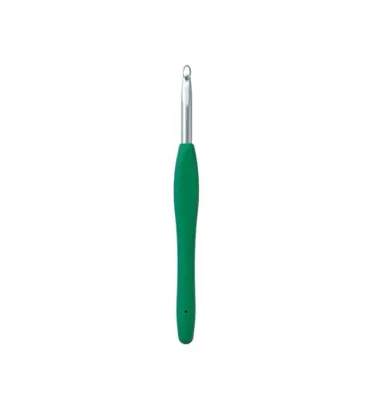
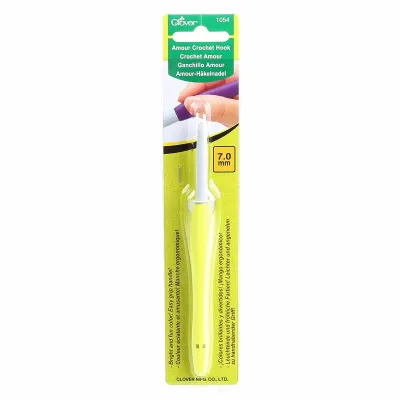
Clover Amour: This line features a smooth aluminum shaft (or steel for lace sizes, and plastic for jumbo sizes) paired with a vibrant, color-coded elastomer grip. The rubber-like handle is wider and rounded, providing excellent shock absorption and comfort for extended crocheting sessions. It is highly suited for general use and works beautifully with standard acrylic, wool, and blended yarns.
Products mentioned in this guide
![[SG Seller] Japan Clover Amure Crochet Hook 2.0mm - 6.0mm](https://img.lazcdn.com/g/p/4e30f1a34916787b906702eb32f0fa5d.jpg_400x400q80.jpg_.webp)
Prices are valid at publication and may change. Please refer to the product page for the latest price.
Clover Soft Touch: Built with a lightweight resin and plastic construction, these hooks feature a distinct flat thumb rest with a soft, non-slip cushion. The Soft Touch is exceptionally light, making it a favorite for those who prefer a pencil grip or suffer from hand fatigue. The smooth surface of the resin shaft is particularly helpful when working with sticky, textured, or slightly grabby yarns, allowing the stitches to slide off effortlessly.
Clover Takumi: Crafted from high-quality natural bamboo, the Takumi line offers a warm tactile feel and a subtle natural friction. This slight grip is incredibly helpful for beginners who struggle to keep their stitches from slipping off the hook, as well as for experienced crafters working with very slippery yarns like silk, rayon, or fine bamboo blends. In Singapore’s warm, humid tropical climate, some crafters find that bamboo hooks provide a comfortable grip that does not feel slippery even if hands become slightly warm during long crafting sessions.
Clover Lace: These are specialized steel hooks designed specifically for fine cotton threads and intricate lacework. They feature a smaller, protective cap to preserve the delicate, ultra-fine tip. The steel construction ensures the hook does not bend under the high tension required for micro-crochet and lace projects.
Beyond materials, pay close attention to the hook head shape. Clover hooks utilize a hybrid tapered head design that is highly efficient at catching yarn without splitting the fibers. During a brief trial with your chosen yarn, observe how the head catches the thread; your personal hand mechanics and wrist angles will dictate whether this shape feels intuitive. Additionally, check the physical grip thickness of the handle. A handle that is too thin or too thick for your hand span can cause unnecessary strain, so choose a line that matches your natural grip style.
Match Your Hook Size to the Yarn Weight
Once you have chosen the right hook line, the next step is establishing a baseline size. The standard starting point for any project is pairing the millimeter (mm) hook size with the weight of your yarn.

Most commercial yarn skeins feature a printed label containing recommended knitting needle and crochet hook sizes. This recommendation is represented either by a metric measurement in millimeters, a US letter/number (such as H-8 or I-9), or a UK/Canadian number. Because regional sizing systems can vary significantly between manufacturers, always verify the exact millimeter (mm) measurement engraved on your Clover hook. Clover clearly stamps the metric size directly onto the handle, which serves as the most reliable and universal standard.
To help you navigate this pairing process, use the following general framework as a baseline for matching Clover hook sizes to standard yarn weight categories:
- Lace / Thread (Size 0): Use a 0.60 mm to 1.60 mm Clover Lace steel hook. This pairing is ideal for delicate doilies, micro-crochet, and intricate lace edgings.
- Fingering / Sock (Size 1): Pair with a 2.25 mm to 3.25 mm hook. This range is excellent for lightweight socks, fine shawls, and delicate baby garments.
- Sport / Baby (Size 2): Pair with a 3.25 mm to 3.75 mm hook. Use this for lightweight sweaters, baby blankets, and accessories.
- DK / Light Worsted (Size 3): Pair with a 3.75 mm to 4.50 mm hook. This is a highly versatile combination for spring garments, blankets, and light accessories.
- Worsted / Aran (Size 4): Pair with a 5.00 mm to 6.00 mm hook. This is the most common combination for cozy blankets, winter sweaters, and hats.
- Bulky / Chunky (Size 5): Pair with a 6.00 mm to 8.00 mm hook. This size is perfect for quick-to-stitch winter wear, chunky scarves, and heavy blankets.
- Super Bulky (Size 6+): Pair with a 9.00 mm to 15.00 mm hook. Use these larger plastic Clover Amour hooks for thick rugs, baskets, and ultra-plush throws.
While this framework provides an excellent starting point, remember that the yarn label recommendation is a baseline, not an absolute rule. The specific construction of the yarn—such as whether it is a tightly spun plied yarn, a loose roving yarn, or a chainette tube—will influence how it behaves on the hook. Always be prepared to adjust your hook size based on how the yarn feels as you work.
Adjust Hook Size for Project Drape and Density
A successful crochet project relies on more than just matching standard charts. You must often intentionally deviate from the recommended hook size to achieve the specific functional requirements, drape, and density of your finished item.
Sizing Down (Smaller Hook): There are several scenarios where choosing a Clover hook that is one or two sizes smaller than the yarn label recommends is highly beneficial. The most common application is amigurumi (stuffed toys). To prevent the polyester fiberfill stuffing from peeking through or escaping, you need a dense, rigid fabric with zero visible gaps. Sizing down ensures your stitches are incredibly tight and structured. This technique is also essential for functional household items like market bags, coasters, and storage baskets, where structural integrity and durability are paramount.
Sizing Up (Larger Hook): Conversely, sizing up to a larger hook is crucial when you want to maximize drape, softness, and flexibility. For wearable garments like sweaters, cardigans, and summer shawls, a standard tight stitch can make the fabric feel stiff and cardboard-like. Using a larger Clover hook allows the yarn to bloom, creating a fluid, flowing fabric that moves naturally with the body. In Singapore’s tropical climate, using a larger hook with lightweight cotton or linen yarn is an excellent strategy to create airy, breathable open-stitch summer tops that remain comfortable in the heat.
Your individual crocheting tension also plays a massive role in this decision. Some crafters naturally hold their yarn with a tight grip, resulting in small, compact stitches. Others crochet with a very loose, relaxed hand. If you are a naturally tight crocheter, you will likely need to size up your Clover hook by 0.5 mm or more to prevent your work from turning out too small and stiff. If you have loose tension, sizing down will help you maintain clean stitch definition and prevent your projects from stretching out of shape.
Verify Your Stitch Tension with a Gauge Swatch
Before committing hours of labor to a major project, you must verify your stitch tension. Crocheting a gauge swatch is the only reliable way to ensure your chosen Clover hook and yarn combination will yield the correct dimensions and fabric density.
To create an accurate gauge swatch, follow these step-by-step instructions:
- Step 1: Chain enough stitches to create a swatch that is roughly 5 to 6 inches (13 to 15 cm) wide. Using the primary stitch pattern specified in your project instructions, crochet until the piece measures 5 to 6 inches in height.
- Step 2: Lay the completed swatch completely flat on a hard, level surface. Do not stretch or pull the fabric.
- Step 3: Place a rigid ruler or a dedicated gauge measuring tool over the center of the swatch. Avoid measuring near the edges, as edge stitches can be distorted.
- Step 4: Count the exact number of stitches and rows that fit within a 4×4 inch (10×10 cm) area. Include fractional stitches (such as a half stitch) for absolute accuracy.
Once you have your measurements, compare them to the gauge requirements listed in your pattern. Use this simple decision matrix to adjust your tool:
- Too many stitches per inch: Your fabric is too tight, and your finished item will turn out too small. Switch to a larger millimeter Clover hook to loosen your tension.
- Too few stitches per inch: Your fabric is too loose, and your finished item will turn out too large. Switch to a smaller millimeter Clover hook to tighten your tension.
For garments and items that will be laundered, always wash and dry your gauge swatch according to the yarn’s care instructions before measuring. Water and agitation cause fibers to relax, stretch, shrink, or bloom. Blocking the swatch ensures that the drape and dimensions you measure reflect how the finished project will behave after its first wash.
Frequently Asked Questions (FAQ)
What is the difference between Clover Amour and Soft Touch hooks?
The primary difference lies in the handle design and material. Clover Amour hooks feature a rounded, colorful elastomer (rubber-like) grip that offers excellent shock absorption, making them highly comfortable for crafters who use a knife grip or crochet for long hours. Clover Soft Touch hooks feature a flatter, lightweight resin handle with a soft, non-slip thumb pad, which is often preferred by those who use a pencil grip. While their handle ergonomics differ, both lines share the same optimized hook head geometry, ensuring identical yarn-catching performance.
Should I buy a full Clover hook set or individual sizes?
The best choice depends on your experience level and crafting habits. For beginners, purchasing a full Clover hook set is highly cost-effective, as it provides a comprehensive range of sizes to accommodate various yarn weights as you experiment with different projects. For experienced crafters who already know their preferred yarn weights, buying individual Clover hooks in specific, frequently used millimeter sizes (typically priced in a modest single-hook band) is more practical and avoids paying for sizes you may rarely use.

Community discussion
Share your experience or ask a question. Comments are reviewed before publication.