
Selecting the correct bubble envelope size is essential to ensure your items arrive safely without bursting the seams or incurring unnecessary shipping fees. To find the right fit, you must measure your item’s three-dimensional volume, account for the thickness of the inner bubble lining, and match the envelope’s internal dimensions to the specific fragility of your contents. Taking a few moments to calculate these requirements prevents transit damage and keeps your mailing process efficient.
How to Measure Your Item for a Bubble Envelope
To begin, place your item on a flat surface and use a standard ruler or measuring tape to find its maximum length, width, and height. Always measure at the widest, thickest, or most protruding points. For example, if you are mailing a keychain with a thick decorative clasp, measure the thickness at the clasp rather than the flatter body.
If your item has an irregular or organic shape, such as a handmade ceramic ornament or a small toy, imagine it sitting inside the smallest possible rectangular box. Measure the length, width, and depth of this imaginary box to establish your baseline dimensions.
Products mentioned in this guide
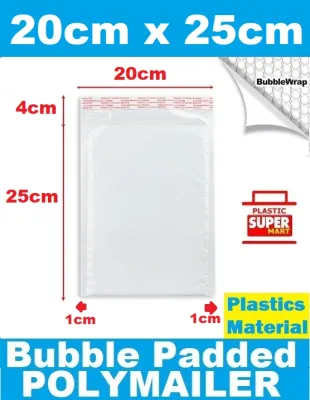
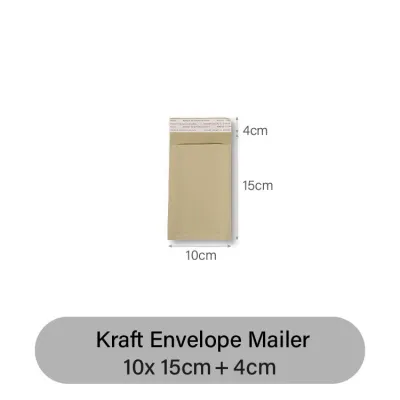
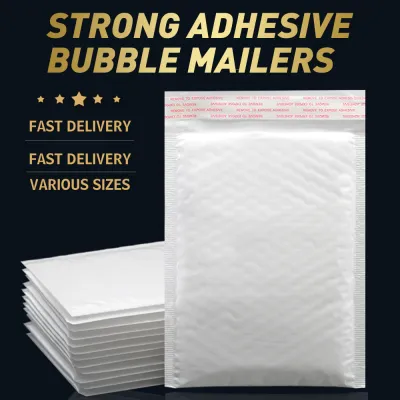
![[SG SELLER] Black Light Pink Lilac Pink Turquoise Bubble Envelope Bag Polymailer Bubble Wrap Envelope Wrap Bag](https://img.lazcdn.com/g/p/459a2341c3de79482ddaf9fb578ffe4c.jpg_400x400q80.jpg_.webp)
![[SG] ⭐CHEAPEST BUNDLE⭐ Bubble Polymailer | Bubble Envelope | Bubble Mailer | Padded Envelope | Bulk Purchase](https://img.lazcdn.com/g/p/36288e6d5c9f9ac480e77bf88495d447.jpg_400x400q80.jpg_.webp)
![[SG] ⭐CHEAPEST BUNDLE⭐ Bubble Polymailer | Bubble Envelope | Bubble Mailer | Padded Envelope | Bulk Purchase](https://img.lazcdn.com/g/p/40e64ebba58dc26934100879fa7789d6.jpg_400x400q80.jpg_.webp)
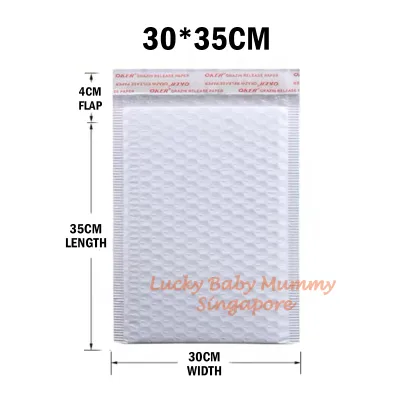
Prices are valid at publication and may change. Please refer to the product page for the latest price.
Additionally, consider any extra protective layers you plan to add before placing the item into the envelope. Wrapping an item in an extra sheet of bubble wrap or packing paper increases its overall physical dimensions. Always measure the item after it has been fully wrapped in these secondary materials to ensure your envelope calculations remain accurate.
Calculating the Required Envelope Dimensions
A common mistake is purchasing envelopes based solely on their external dimensions. The internal bubble lining significantly reduces the usable space inside the mailer compared to the outer measurements printed on the packaging. To avoid a tight fit that could split the seams during transit, you must calculate the minimum internal dimensions required.

To find the minimum internal width, add the item’s width to its thickness, then add a small buffer of at least 10 to 15 millimeters on each side. This extra space prevents the envelope from stretching too tightly, which can flatten the protective bubbles and compromise their cushioning ability.
To calculate the minimum internal length, add the item’s length to its thickness, and include a similar buffer. You must also ensure there is enough clearance at the top so the sealing flap can fold over completely and adhere flat against the back of the envelope. If the item sits too close to the opening, the adhesive strip will not seal properly, leaving the package vulnerable to opening during transit.
Matching Envelope Sizes to Common Item Categories
Different types of items require distinct fits to maximize protection and minimize shipping costs. For flat, non-fragile items like documents, certificates, or photographs, select an envelope size that fits relatively snugly. A close fit prevents the contents from shifting or sliding around, which can cause bent corners or creased edges.
For small, rigid, or fragile items such as cosmetics, small electronic accessories, or jewelry, prioritize envelopes with generous width and length allowances. This extra space ensures that the built-in bubble layer can fully absorb external shocks and vibrations without compressing directly against the item. If a fragile item is packed too tightly, any impact on the outside of the envelope will transfer directly to the product inside.
Soft or foldable items, such as apparel, t-shirts, or fabrics, should be measured based on their folded dimensions. For these items, heavy cushioning is rarely necessary, so you can focus more on the outer material’s tear resistance. A slightly snugger fit is acceptable here, provided the seams are not under tension.
Always verify the manufacturer’s stated internal dimensions on the product packaging or specification sheet rather than relying solely on generic size labels or letter codes. Standard sizing systems can vary significantly between different brands and regions, making direct measurement verification the safest approach.
Key Packaging Specs to Check Beyond Dimensions
Once you have determined the correct size, evaluating secondary envelope specifications will help ensure your package survives the shipping journey. First, assess the outer material of the envelope. Kraft paper offers a classic, professional look and is highly recyclable, but polyethylene (poly) mailers provide enhanced water resistance and tear durability, making them ideal for rainy climates or long-distance transit.
Next, examine the sealing mechanism. High-quality bubble envelopes typically feature a self-adhesive strip with hot-melt glue. Check that the adhesive strip is wide and covered by an easy-to-peel release liner. A strong, tamper-evident seal is crucial because it prevents the envelope from peeling open under pressure or being easily opened and resealed without detection.
Finally, inspect the bubble layer structure itself. Look for envelopes with consistent, fully inflated bubbles that do not easily pop when squeezed gently. The thickness of the bubble lining should match the fragility of your item; delicate items benefit from dual-layer or high-profile bubble linings, while sturdy items require only standard low-profile cushioning.
Frequently Asked Questions (FAQ)
Can I use a bubble envelope for heavy items?
Bubble envelopes are generally designed for lightweight to medium-weight items. If you attempt to mail heavy objects, such as metal tools, dense books, or heavy hardware, the weight can easily compromise the envelope’s seams and sealing adhesive during sorting and transit. For items that exceed standard envelope weight thresholds or feel excessively dense, switching to a sturdy corrugated box with appropriate internal packing material is a much safer choice.
How do I know if a bubble envelope is too big?
An envelope is too big if the item can slide freely from side to side or end to end with significant empty space remaining. This excessive movement allows the item to build momentum inside the package, increasing the risk of it breaking through the seams or getting damaged upon impact. Furthermore, using an oversized envelope can unnecessarily increase your shipping costs, as many postal services calculate postage based on the physical size of the package rather than just its weight.

Community discussion
Share your experience or ask a question. Comments are reviewed before publication.