
Selecting the right packaging is a critical decision for e-commerce sellers in Singapore. The packaging serves as the first physical touchpoint with a customer, protects the product during transit, and directly influences shipping costs. Among the various packaging options available, white large plastic courier bags—commonly known as poly mailers—are a staple for businesses handling high volumes of orders. These bags are lightweight, water-resistant, and highly versatile, making them ideal for shipping apparel, soft goods, and boxed items.
However, not all plastic courier bags are created equal. Choosing an inferior product can lead to torn packaging, damaged goods, lost items, and ultimately, dissatisfied customers and costly returns. For Singapore-based sellers navigating a humid tropical climate and a fast-paced logistics ecosystem, selecting the right courier bag requires a clear understanding of material specifications, sizing calculations, adhesive quality, and sourcing methods. This guide provides a comprehensive framework to help you evaluate and select the best white large plastic shipping bags for your e-commerce operations.
Key Selection Criteria for White Plastic Shipping Bags
When evaluating white plastic courier bags, several key performance indicators must be considered to ensure they meet the demands of modern e-commerce fulfillment. The primary goal is to find a bag that balances structural integrity with cost-effectiveness and professional presentation.
Products mentioned in this guide
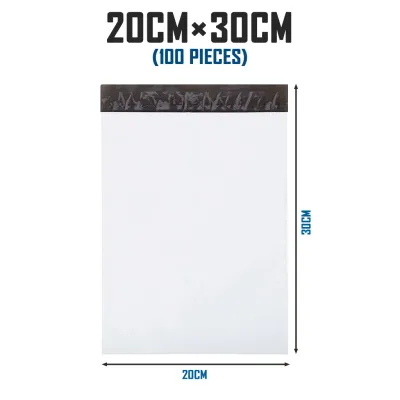
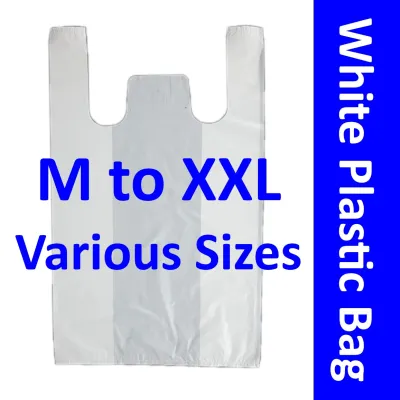
Prices are valid at publication and may change. Please refer to the product page for the latest price.
First and foremost is opacity. A high-quality white courier bag must be completely opaque to protect the privacy of the shipment and deter theft. If the plastic is too thin or poorly manufactured, the contents of the bag will be visible under normal lighting. To achieve complete opacity, premium mailers utilize a multi-layer co-extrusion process, featuring a clean white exterior layer and a dark grey or black interior layer. This dual-layer design ensures that even bright or highly detailed product packaging remains completely hidden from view.
Second, the exterior surface of the bag must be optimized for logistics processing. In Singapore’s e-commerce landscape, parcels are scanned multiple times by various third-party logistics providers. The outer white surface must readily accept thermal shipping labels, paper invoices, and permanent marker ink without smudging, peeling, or lifting. If the plastic formulation contains excessive slip additives—chemicals used during manufacturing to prevent bags from sticking together—it can prevent adhesive labels from bonding securely, leading to detached shipping labels and lost parcels in transit.
Finally, weight and flexibility are crucial for optimizing shipping costs. Unlike rigid cardboard boxes, plastic courier bags conform to the shape of the contents, minimizing excess volume. Because local courier services often calculate shipping fees based on either actual weight or volumetric weight, using a flexible, lightweight bag helps keep shipping expenses to a minimum. The ideal bag should stretch slightly to accommodate bulky items without tearing at the seams.
Understanding Material and Thickness for Durability
The durability of a plastic courier bag is determined by its material composition and thickness. Understanding these technical specifications allows sellers to make informed decisions based on the specific types of products they ship.

Most plastic shipping bags are made from Polyethylene (PE), which is categorized into Low-Density Polyethylene (LDPE) and High-Density Polyethylene (HDPE). LDPE is the preferred material for high-quality courier bags because it offers excellent flexibility, impact resistance, and tear strength. It can stretch significantly before puncturing, which is essential when packing soft goods with irregular shapes. HDPE, on the other hand, is more rigid and crinkly; while it offers high tensile strength, it is more prone to tearing once a puncture occurs. For most e-commerce applications, co-extruded LDPE provides the best balance of properties.
Thickness is measured in microns (micrometers, denoted as µm) or mils (one-thousandth of an inch). For large courier bags, which are designed to carry heavier or bulkier items, standard thickness levels generally range from 50 microns to 80 microns.
- 50 to 60 Microns: Suitable for lightweight, non-fragile items such as clothing, textiles, and soft plush toys. These bags offer moderate puncture resistance and are highly cost-effective for high-volume, low-weight shipments.
- 60 to 70 Microns: The industry standard for general e-commerce shipping. This thickness provides enhanced tear resistance and is suitable for shipping boxed items, shoes, books, and multiple apparel items in a single consignment.
- 70 to 80+ Microns: Heavy-duty bags designed for bulky, heavy, or semi-sharp items. These bags offer maximum puncture resistance and are ideal for shipping hardware, sports equipment, or multiple heavy items that exert significant pressure on the packaging walls.
To verify material quality without specialized laboratory equipment, sellers can perform simple, observable trials. A manual stretch test involves pulling a sample bag firmly in both directions; high-quality LDPE should stretch smoothly and deform plastically rather than snapping or tearing abruptly. A puncture test can be conducted by pressing a blunt object, such as a pen cap, against the inside of the bag to observe how much pressure the material can withstand before failing.
Sizing and Dimensions for Large E-commerce Parcels
Selecting the correct bag size is essential for protecting products and controlling shipping costs. Using a bag that is too small puts excessive stress on the seams and adhesive seal, while a bag that is too large results in wasted material, excess weight, and potential volumetric surcharges from courier services.
Large courier bags typically start at dimensions of 35×45 cm and can go up to 60×80 cm or larger. To determine the correct bag size for a specific product, sellers must account for all three dimensions of the item (length, width, and height) rather than relying solely on flat measurements.
To calculate the minimum required bag dimensions, use the following formulas:
- Required Bag Width = Product Width + Product Height + Safety Margin (minimum 2 to 3 cm)
- Required Bag Length = Product Length + Product Height + Sealing Flap Allowance (minimum 4 to 5 cm)
- Note on Flaps: The sealing flap, which contains the adhesive strip, is typically 4 to 5 cm long and should not be included in the usable length of the bag.
For example, if you are shipping a shoebox that measures 30 cm in length, 20 cm in width, and 12 cm in height, the minimum bag width required would be 20 + 12 + 3 = 35 cm. The minimum bag length required would be 30 + 12 + 5 = 47 cm. Therefore, a bag measuring at least 35×50 cm would be necessary to accommodate the box comfortably without risking seam failure.
Sellers must also consider local delivery constraints. In Singapore, smaller parcels are often delivered directly to HDB letterboxes or smart locker systems, which have strict dimensional limits. However, large plastic courier bags are almost exclusively handled via doorstep delivery or designated parcel drop-off points due to their size. Ensuring your packed bags are compact and free of excess, flapping plastic helps logistics personnel handle them efficiently and prevents the bags from getting caught in automated sorting conveyor belts.
Security Features and Tamper-Evident Seals
Product security during transit is a major concern for online retailers. A secure packaging system protects against both environmental elements and unauthorized access. The primary security feature of a plastic courier bag is its closure system.
High-quality courier bags feature a permanent, hot-melt pressure-sensitive adhesive (PSA) strip on the sealing flap. Once the release liner is removed and the flap is pressed against the body of the bag, the adhesive forms a molecular bond with the plastic. Within a few minutes, this bond becomes permanent. A true tamper-evident seal cannot be peeled open without visibly tearing, stretching, or distorting the plastic material. This ensures that any attempt to access the contents of the parcel during transit is immediately obvious to both the courier and the recipient.
When evaluating the closure system, pay attention to the release liner. Anti-static release liners are highly recommended for high-volume packing environments. Standard plastic liners can generate static electricity when peeled off, causing them to cling to the packer’s hands, clothing, or the workspace, which slows down the fulfillment process. Anti-static liners fall away easily, keeping the packing station clean and efficient.
Another critical security aspect is seam strength. The sides of a plastic courier bag are sealed using thermal welding during manufacturing. These side welds must be wide, uniform, and free of weak spots. If the welds are poorly executed, the bag can burst open along the sides when subjected to the drops, impacts, and compressions common in courier transit networks. Inspect the seams of sample bags by pulling them laterally; the weld should be as strong as the surrounding plastic material.
For businesses that want to offer a seamless customer experience, some large courier bags feature a double-adhesive strip design. This includes two parallel adhesive strips separated by a perforation line. The customer can open the bag cleanly along the perforation, and if they need to return the item, they can reuse the same bag by sealing it with the second adhesive strip. This reduces packaging waste and simplifies the return process for the consumer.
Building Your Shortlist: Sourcing and Evaluation Steps
To establish a reliable supply of high-quality white large plastic courier bags, Singapore-based e-commerce sellers should follow a structured sourcing and evaluation process. This prevents the common pitfall of purchasing large quantities of substandard packaging that fails during shipping.
Begin by identifying potential suppliers. Local packaging distributors, industrial estate wholesalers (located in areas like Ubi, Kallang, or Jurong), and specialized business-to-business online marketplaces are excellent starting points. Sourcing from local suppliers often provides faster lead times, lower minimum order quantities, and the ability to inspect physical samples before committing to a bulk purchase. Sourcing internationally via global wholesale platforms can offer lower unit costs but requires careful management of shipping times, import duties, and quality control.
Before placing a bulk order, always request or purchase a sample pack containing various sizes and thicknesses. Once the samples arrive, conduct a systematic in-house evaluation using the following checklist:
- Visual and Tactile Inspection: Hold the bag up to a bright light source to verify opacity. Feel the texture of the plastic; it should feel smooth, substantial, and free of thin spots, bubbles, or chemical odors that indicate low-grade recycled materials.
- Adhesive Bond Test: Seal a sample bag and let it sit at room temperature for five minutes to allow the adhesive to cure. Attempt to peel the flap open. The adhesive must tear the plastic of the bag body; if the flap peels open cleanly without damaging the plastic, the adhesive is insufficient.
- Label Adhesion Test: Apply your standard thermal shipping label to the exterior of the bag. Rub it down firmly and leave it for 24 hours. Attempt to peel the label off. The label should tear or pull up the plastic surface, indicating a strong bond.
- Environmental Exposure Test: Given Singapore's high humidity and ambient temperatures, place a sealed sample bag in a warm, humid environment (such as a non-air-conditioned storage space) for several days. Verify that the adhesive remains stable and does not liquefy, slip, or lose its tackiness.
- Load and Drop Test: Fill the bag with your heaviest typical product configuration. Seal it, lift it by the corners, and shake it gently. Drop the packed bag from a height of approximately one meter onto a hard surface several times to simulate transit handling. Inspect the seams and the material for any signs of splitting or puncturing.
By conducting these practical trials, you can confidently select a courier bag that protects your products, maintains your brand’s professional image, and optimizes your operational efficiency.
Frequently Asked Questions (FAQ)
Can white plastic courier bags be used for heavy or sharp items?
White plastic courier bags are highly durable, but they have physical limits. For heavy items, such as books or dense consumer goods, you should use heavy-duty bags with a thickness of at least 70 to 80 microns to prevent stretching and tearing. Sharp items, such as boxed products with pointed corners, metal components, or rigid plastic items, should not be placed directly into a plastic courier bag. The sharp edges can easily puncture the plastic during transit. To ship these items safely, wrap the sharp corners or the entire product in bubble wrap, foam sheeting, or corrugated cardboard before placing it inside the courier bag. This protective layer absorbs impacts and prevents the sharp edges from contacting the bag walls.
How should bulk plastic shipping bags be stored to maintain adhesive quality?
To preserve the integrity of the hot-melt adhesive and the plastic material, bulk courier bags must be stored correctly, especially in Singapore’s tropical climate. Store the bags in a cool, dry, and well-ventilated indoor environment, away from direct sunlight, moisture, and heat sources. Prolonged exposure to high temperatures (such as in unventilated metal warehouses or near sunny windows) can cause the hot-melt adhesive on the sealing strips to degrade, melt, or bleed past the release liner. This can make the bags difficult to separate and significantly reduce the strength of the seal when the bags are eventually used. Additionally, keep the bags in their original cartons or protective wrapping to prevent dust accumulation, which can interfere with label adhesion and sealing performance.

Community discussion
Share your experience or ask a question. Comments are reviewed before publication.