
Finding the right thank you card for a teacher in Singapore involves balancing physical quality, appropriate design, and a touch of personalization. Whether celebrating Teachers’ Day in September or marking the end of the academic year in November, a physical card remains one of the most meaningful ways to show appreciation. The ideal card should not only look beautiful but also withstand the local humid climate and accommodate the specific writing instruments you plan to use.
Selecting a card that feels substantial and looks polished shows the recipient that you have put thought into every detail of your gesture. By understanding what to look for in terms of paper quality, design suitability, and local retail options, you can find a card that perfectly conveys your gratitude to the educators who make a difference.
What to Look for in a Thank You Teacher Card
The physical and structural qualities of a greeting card set the tone before the recipient even reads your message. A flimsy card can detract from a heartfelt note, while a sturdy, well-crafted card feels like a keepsake. When shopping for a card, pay close attention to the paper weight, texture, format, and envelope quality.
Products mentioned in this guide
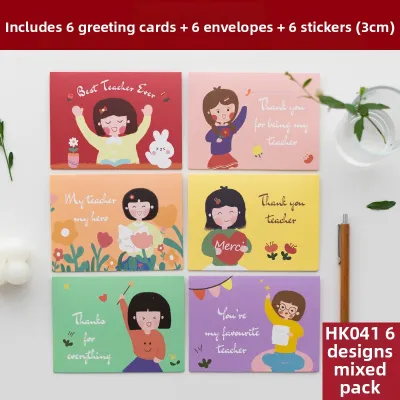
Prices are valid at publication and may change. Please refer to the product page for the latest price.
Paper weight is measured in grams per square meter (gsm). For a premium, substantial feel, look for cardstock that ranges between 250 gsm and 350 gsm. Heavyweight cardstock resists bending and stands upright easily on a teacher’s desk. Texture also plays a significant role in both the visual appeal and the writing experience. Uncoated matte paper offers a classic, tactile feel and is highly receptive to most inks, though very wet fountain pens may feather slightly on lower-quality fibers. Coated or semi-gloss papers make colorful illustrations pop, but they require longer drying times, making them prone to smudging if you write with gel pens or rollerballs. To ensure a clean finish, always perform a quick trial write with your chosen pen on a hidden corner of the card or a scrap piece of similar paper to check for drying speed and bleed resistance.
Format and size dictate how much space you have to express your thoughts. Standard folded cards, such as A6 (105mm x 148mm) or A5 (148mm x 210mm), are the most popular choices. They provide a private interior space for longer, personal messages or multiple signatures from a group of classmates. Flat postcards are an excellent alternative for shorter, punchy notes of appreciation or when a younger child wants to draw a quick picture without the pressure of filling a large folded page.
Do not overlook the quality of the accompanying envelope. A high-quality card deserves an envelope made from paper of at least 100 gsm to protect it during transit. In Singapore’s humid climate, traditional lick-and-seal gum can sometimes degrade, stick prematurely, or fail to seal securely. Opting for envelopes with peel-and-seal adhesive strips is a highly reliable choice. Alternatively, you can secure the envelope flap using a strip of decorative washi tape or a custom sticker, which adds an extra touch of style while ensuring the contents remain safe.
Matching the Card Design to the Teacher and Occasion
The visual style of a greeting card should reflect the unique relationship between the student, the parent, and the educator. Matching the design to the teacher’s personality and the educational level helps ensure your gesture is received with the warmth and professionalism it deserves.

Minimalist and elegant designs are highly suitable for formal relationships, secondary school teachers, junior college lecturers, university professors, or school administrators. Look for cards featuring clean typography, subtle gold or silver foil accents, and muted, sophisticated color palettes. These designs convey a high level of respect and mature gratitude, making them perfect for older students or parents wishing to thank a principal or head of department for their leadership.
Illustrative and vibrant styles are ideal for preschool, kindergarten, and primary school teachers, as well as art and music educators. Bright colors, playful hand-drawn illustrations, and cheerful characters resonate well with younger children and mirror the energetic, nurturing environment of early childhood classrooms. These designs feel approachable and joyful, capturing the fun and warmth of the early school years.
Subject-specific themes offer a thoughtful way to show that you appreciate a teacher’s specific passion. Look for subtle nods to their discipline, such as a card with a delicate constellation pattern for a physics teacher, a vintage typewriter illustration for an English literature teacher, or a botanical watercolor print for a biology teacher. Try to avoid overly cliché or juvenile graphics, such as giant red apples or cartoonish blackboards, unless they are executed with a modern, artistic twist. A sophisticated nod to their subject shows that you recognize and value their specific expertise.
Where to Buy Greeting Cards in Singapore
Singapore offers a diverse retail landscape for sourcing high-quality greeting cards, ranging from physical boutiques to online platforms. Knowing where to look based on your timeline and budget can help you find the perfect card efficiently.
Independent stationery boutiques, often located in creative hubs like the Bras Basah district, Bugis, or Katong, are excellent for finding curated, unique designs. These specialty shops frequently stock imported designer cards, letterpress options, and creations from local Singaporean illustrators. Shopping at these boutiques allows you to find cards with premium finishes, such as embossing, debossing, and heavy cotton paper textures that are rarely found in mass-market stores. These cards often range from S$6 to S$12, making them a wonderful choice for a highly special mentor.
Major bookstore chains, widely accessible in heartland malls across Singapore, offer a reliable and convenient option. These stores carry a broad selection of mainstream greeting card brands alongside practical multi-pack options. Multi-packs are incredibly cost-effective and convenient if you or your child need to write appreciation cards for multiple subject teachers, co-curricular activity (CCA) instructors, and tuition teachers. Prices here are generally budget-friendly, typically ranging from S$3 to S$6 per card.
Online marketplaces and local creator platforms are perfect for sourcing handmade, highly customized, or printable designs directly from independent artists. Many local creators offer beautiful, Singapore-themed teacher appreciation cards that feature local slang, school uniform illustrations, or references to local school life. When ordering from online platforms, always factor in local shipping times, which typically take 3 to 5 working days, to ensure your cards arrive well before the end-of-term celebrations or Teachers’ Day.
How to Personalize a Ready-Made Card
While a beautiful design and high-quality paper set a wonderful stage, the true value of a thank you card lies in the message written inside. Elevating a store-bought card with personal touches makes the gesture incredibly memorable for the teacher.
To structure a meaningful handwritten message, move away from generic phrases like “Thank you for being a great teacher.” Instead, follow a simple three-part structure. Start with a warm, respectful opening. Next, share a specific memory, a moment of encouragement, or an observable impact the teacher had during the year—for example, mentioning how their patience helped build confidence in mathematics during a challenging semester. Finally, close with a warm wish for their future or a happy holiday season. This specific feedback lets the teacher know that their hard work and dedication were truly noticed and appreciated.
If you wish to pair the card with a small token of appreciation, keep the items flat and lightweight to avoid damaging the card or tearing the envelope. Excellent options include a beautifully designed paper bookmark, a sheet of motivational stickers for their grading, or a gift card to a local coffee shop. To prevent these items from sliding out when the teacher opens the envelope, use a small piece of removable washi tape or acid-free double-sided tape to secure the token neatly to the inside flap of the card.
Involving young children in the process adds an irreplaceable layer of charm. For preschool or primary school students, encourage them to write their own name, draw a small picture, or write a short sentence in their own handwriting on one side of the card. Parents can write a more formal note of appreciation on the opposite side. This combination ensures the message remains highly personal and endearing while still conveying the parent’s formal gratitude clearly. When working with young children, ensure they use safe, non-toxic glue sticks or pre-cut adhesive tape rather than liquid glues to keep the card clean and free from warping.
Frequently Asked Questions (FAQ)
Is it appropriate to give a digital e-card instead of a physical card?
While digital e-cards are convenient and environmentally friendly, they often lack the tactile warmth and lasting impact of a physical card. In Singapore’s educational culture, physical cards are highly valued keepsakes that teachers frequently display on their desks or store in memory boxes to look back on in future years. If circumstances require a digital option—such as home-based learning periods or remote classes—ensure the e-card is highly personalized and sent directly to the teacher’s official school email address. If you are giving a physical card in a busy school environment, have your child hand it directly to the teacher during recess, homeroom, or after school to ensure it reaches them safely.
What topics or phrases should be avoided in a thank you teacher card?
To maintain professional boundaries, avoid asking overly personal questions about the teacher’s private life or family. Additionally, do not use the thank you card as an opportunity to discuss grades, exam results, or future academic placements, as this can make the gesture feel transactional rather than genuine. Avoid comparing the teacher to other educators in the school or offering unsolicited advice on their teaching methods. Keep the focus of the message entirely on positive experiences, personal growth, and sincere gratitude for their dedication and hard work throughout the academic year.

Community discussion
Share your experience or ask a question. Comments are reviewed before publication.