
Selecting the right adhesive for a lower primary student’s back-to-school checklist involves balancing ease of use with mess prevention. For young children transitioning into primary school, managing traditional liquid glue bottles often leads to sticky fingers, ruined worksheets, and messy pencil cases. A glue pen offers a highly controlled, ergonomic alternative that mimics the familiar shape of a marker or pencil. This design helps young learners apply adhesive with precision, reducing waste and keeping school desks clean. To find the most suitable option, parents should evaluate the physical format, tip design, and washability of the adhesive, ensuring the tool matches the specific crafting and pasting tasks scheduled for the school year.
How to Evaluate Glue Pens for Young Students
When preparing a back-to-school stationery kit, selecting a glue pen requires looking closely at how a seven-to-nine-year-old child interacts with writing tools. The primary goal of a “mess-free” design is to limit accidental spills and excessive dispensing. In practical terms, this means looking for pens that feature controlled flow mechanisms, such as spring-loaded tips or pressure-sensitive valves, which only release adhesive when pressed against a surface. This prevents the glue from oozing continuously when the pen is held stationary or left uncapped on a desk.
Ergonomics play an equally critical role in usability. Lower primary students are still developing their fine motor skills and hand strength. A glue pen with a slightly thicker barrel or a soft, textured grip zone is much easier for small hands to hold securely than a thin, slippery plastic tube. Additionally, parents should examine the mechanism used to advance or activate the glue. Click-top or twist-up mechanisms must operate smoothly without requiring excessive force. If a twist mechanism is too stiff, a child may struggle to use it independently, while a mechanism that is too loose can lead to accidental over-extension and breakage of the adhesive core.
Products mentioned in this guide
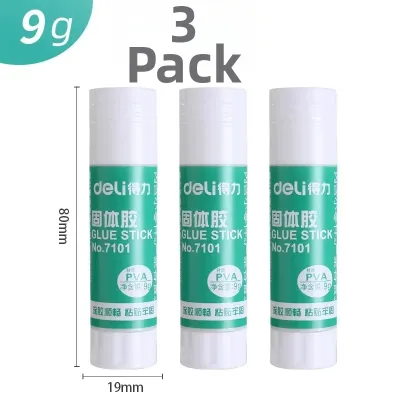
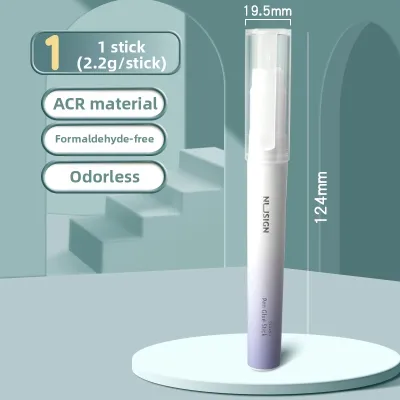
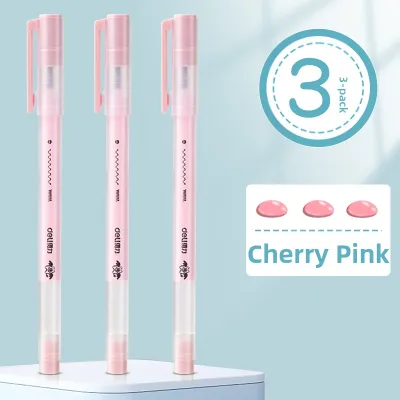
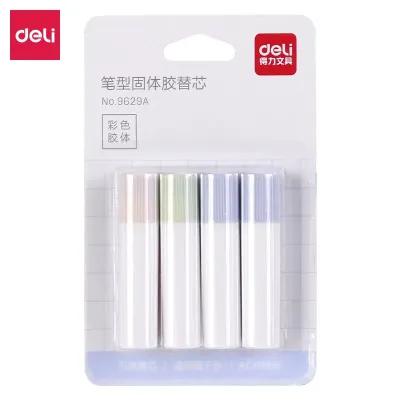
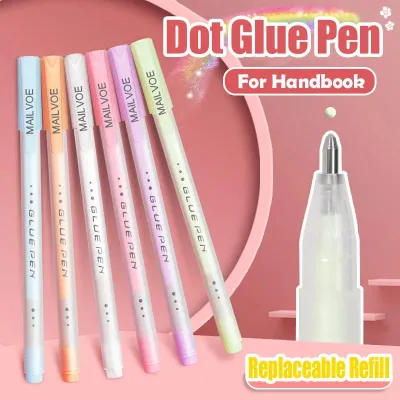
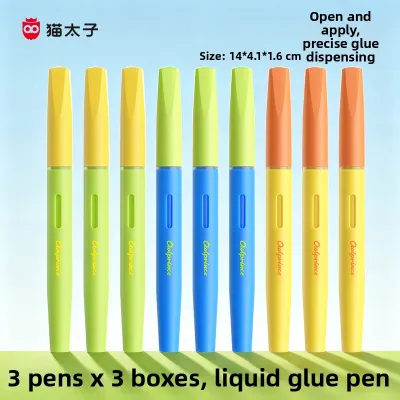
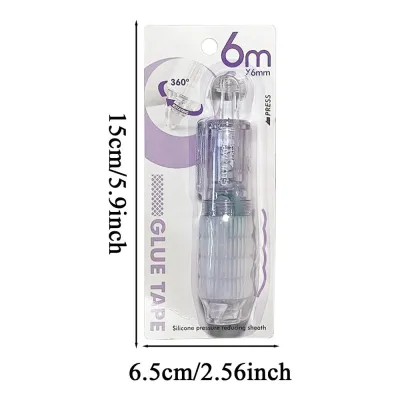
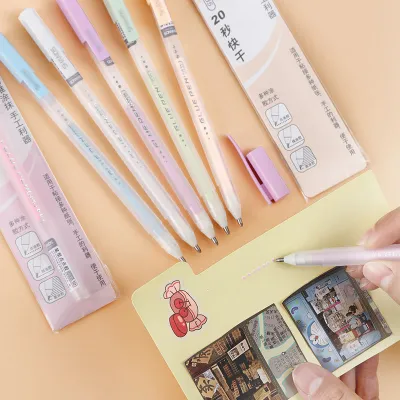
Prices are valid at publication and may change. Please refer to the product page for the latest price.
Paper compatibility and drying characteristics are also vital considerations. School projects typically involve a variety of paper types, from standard photocopy paper and notebook pages to thicker construction paper and cardboard. Parents should check the manufacturer’s packaging to verify which materials the glue is formulated to bond. A quick-drying formula is generally preferred for classroom environments, as it prevents pages from sticking together when a workbook is closed at the end of a lesson. However, the drying speed must be balanced with a reasonable open time, allowing young students a few moments to adjust the alignment of their paper cutouts before the bond becomes permanent.
Condition-Based Shortlist: Matching Glue Pen Formats to School Tasks
Not all school projects require the same type of adhesive application. A student pasting a large worksheet into an exercise book needs a different tool than one assembling an intricate paper sculpture or applying tiny decorative cutouts. Matching the glue pen format to the specific classroom task ensures both a strong bond and a clean workspace. By understanding the structural differences between liquid and solid formats, parents can select the most efficient tool for each activity on the school syllabus.

Liquid Glue Pens with Precision Tips
Liquid glue pens equipped with precision tips are highly effective for detailed, intricate craft work. These pens typically feature a fine metal, silicone, or fiber tip that dispenses a narrow line or small dots of liquid adhesive. This level of control is ideal for securing thin borders, delicate paper shapes, and small cutouts that would otherwise be crushed or torn by a larger glue stick. The precision tip allows students to apply glue exactly where it is needed, minimizing squeeze-out along the edges of the paper.
When evaluating these pens, parents should inspect the tip design and the cap seal. A high-quality silicone or ballpoint-style tip helps regulate the flow of liquid, preventing sudden drips or pools of glue. The cap must fit tightly, preferably with an audible click, to create an airtight seal that prevents the liquid adhesive from drying out and clogging the tip between uses.
Despite their precision, liquid glue pens have specific limitations. Because they dispense wet adhesive, they can cause thin notebook paper to wrinkle or warp if applied too heavily. They also require a slightly longer drying time compared to solid alternatives. Young students must be taught to use a light touch, applying small dots rather than continuous heavy lines, to avoid saturating the paper and causing bleed-through.
Solid Glue Stick Pens
Solid glue stick pens package the familiar, low-moisture formula of a traditional glue stick into a slim, pen-like casing. This format is highly suited for broad-coverage tasks, such as pasting full-page worksheets, handouts, and large colored paper shapes into exercise books. The solid formula contains very little water, which virtually eliminates the risk of paper wrinkling, warping, or bleeding through to the opposite side of the page.
To ensure a mess-free experience with solid glue pens, parents should verify the reliability of the twist or push mechanism. The glue should advance smoothly and retract fully into the barrel when not in use. It is important to check that the solid adhesive formula is firm enough to resist clumping or crumbling under moderate pressure, yet soft enough to glide smoothly across the paper without dragging or tearing the page.
The main limitation of solid glue stick pens is their lack of precision on very small or intricate surfaces. The relatively wide, flat tip of a solid glue pen makes it difficult to apply adhesive to narrow edges or tiny paper details without getting glue on the surrounding desk surface. For general classroom pasting, however, their quick-drying nature and clean application make them an excellent everyday option.
Color-Changing Glue Pens
Color-changing glue pens are specifically designed to assist young learners who are still mastering even adhesive application. These pens dispense glue in a bright, highly visible color—such as blue, purple, or pink—allowing students to see exactly where the adhesive has been applied. As the glue dries, the color fades away completely, leaving a clean, transparent bond. This visual feedback helps visual learners avoid over-applying glue in one spot or missing corners and edges.
When choosing a color-changing glue pen, parents should confirm that the initial color contrast is strong enough to be easily seen on both standard white printer paper and darker colored construction paper. The transition from colored to clear should occur within a reasonable timeframe—typically a few minutes—giving the student enough time to position their paper while ensuring the final project looks neat and professional without any leftover colored residue.
A key limitation to keep in mind is that if the glue is applied too thickly, the color-changing pigment may take significantly longer to fade, or it may temporarily show through very thin or light-colored papers. Teaching students to apply a thin, even layer ensures the color disappears promptly as the adhesive cures.
Practical Checks for Mess-Free Performance and Safety
Before finalizing a back-to-school stationery purchase, parents should perform several practical checks to ensure the glue pens are safe, clean, and durable enough for daily classroom use. Safety is the primary concern for lower primary students, who may accidentally get adhesive on their skin or even close to their mouths. Look for recognized non-toxic certifications on the product packaging, such as the AP (Approved Product) seal from the Art and Creative Materials Institute (ACMI) or the CE mark, which indicate the product has been evaluated for safety.
Washability is another crucial factor for maintaining school uniforms and home clothing. Parents should look for explicit “washable” labels on the packaging. Verify whether the manufacturer specifies that the glue can be washed out with cold water or if it requires warm water and standard laundry detergent. A truly washable formula ensures that accidental smudges on cotton, polyester, or school uniform blends can be easily removed in a standard wash cycle without leaving permanent stains or stiff residues.
Cap security and pencil case compatibility should also be tested. A glue pen that leaks or dries out in a pencil case creates an unnecessary mess and requires premature replacement. Check that the cap snaps securely onto the body of the pen and does not easily slip off when jostled inside a school bag. Some pens feature a pocket clip, which can help secure the pen inside a dedicated slot in a pencil case, preventing it from rolling around and losing its cap. When budgeting for school supplies, parents can easily find reliable multi-packs of these pens for under S$10, making it affordable to keep a spare in the study drawer.
Maintenance and Storage Tips to Extend Lifespan
Teaching lower primary students how to care for their stationery not only extends the lifespan of the tools but also prevents messy accidents in the classroom. The most critical habit to establish is proper capping. Students should be encouraged to listen for the “click” when replacing the cap, ensuring an airtight seal is formed immediately after use. When storing glue pens, following the manufacturer’s orientation guidelines is highly beneficial; some liquid pens are best stored horizontally to prevent pooling, while others recommend tip-down storage to keep the applicator ready for immediate use.
Regular tip cleaning is another simple step that prevents clogs and maintains a clean flow. If a small amount of adhesive accumulates on the applicator tip, it can dry and block the opening, leading to squeezing or pressing too hard during the next use, which often causes a sudden burst of glue. Gently wiping the tip with a damp cloth or paper towel at the end of the week removes any wet or semi-dry residue before it can harden into a stubborn clog.
If a minor clog does occur, parents should assist students in reviving the pen using safe, manufacturer-approved methods. For liquid pens with silicone or plastic tips, gently wiping the tip with a warm, damp cloth is often sufficient to soften and remove the dried glue. Avoid using sharp objects like needles, pins, or paperclips to clear the nozzle, as these can easily puncture the delicate flow-control valves or widen the tip, permanently ruining the pen’s mess-free performance. If a clog cannot be cleared through gentle external cleaning, it is safest to replace the pen to avoid accidental leaks.
Frequently Asked Questions (FAQ)
Are glue pens safe for lower primary students?
Yes, most glue pens designed for school use are safe for lower primary students, provided they carry clear non-toxic certifications. Parents should look for labels indicating the adhesive is acid-free, solvent-free, and non-toxic, such as the AP or CE marks. These formulations are designed to be gentle on sensitive skin and are safe for typical classroom handling. However, it is always recommended to check the age guidelines on the packaging, as some precision liquid pens may contain small parts, like caps or ballpoint tips, that present a choking hazard for very young children.
How can I prevent the glue pen tip from clogging?
To prevent clogging, ensure the cap is snapped on tightly immediately after every use to block air exposure. Regularly wiping the applicator tip with a clean, damp cloth before capping prevents leftover adhesive from drying and blocking the opening. If a minor clog forms, try wiping the tip with a warm, damp cloth to dissolve the dried residue. Avoid inserting pins or sharp objects into the tip, as this can damage the internal flow-control mechanism and lead to leaks.

Community discussion
Share your experience or ask a question. Comments are reviewed before publication.