
The ideal all-in-one crochet set for a beginner balances durable, smooth-finished metal hooks with tightly spun, medium-weight yarn. This combination ensures that your tools do not bend or snag while the yarn remains easy to see and manipulate without splitting. Sourcing these components together saves you the hassle of matching sizes independently, provided you select a kit built for longevity rather than immediate convenience.
Starting your crafting journey often involves navigating a vast sea of online options. Choosing a pre-assembled kit is a practical shortcut, but only if the set avoids the common pitfalls of brittle plastic tools and easily frayed fibers. By focusing on material specifications and ergonomic designs, you can secure a kit that supports your learning phase and remains useful as your skills progress.
Defining a Balanced All-in-One Crochet Set for Beginners
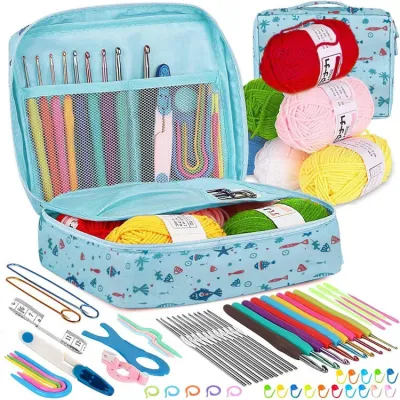
A complete starter crochet set must contain both the primary tools and the medium to complete at least one introductory project. This typically includes a range of hook sizes, several skeins of practice-friendly yarn, and essential structural accessories like stitch markers and tapestry needles. A tool-only set, by contrast, leaves you searching for compatible yarn, which often leads to mismatched pairings that frustrate early learning.
Products mentioned in this guide
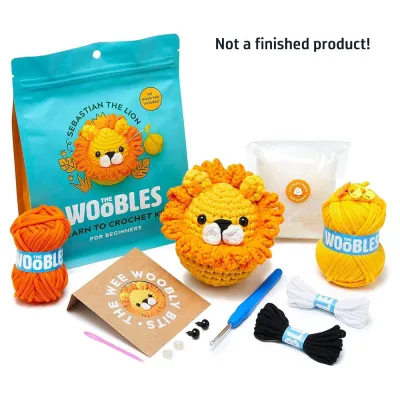
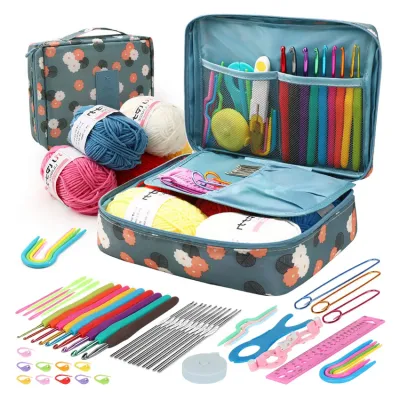
![[✅SG Ready Stock] 70Pcs DIYI Crochet Kit for Beginners Complete Crochet Knitting Kit Adorable Animal Crochet Starter Pack](https://img.lazcdn.com/g/p/2d3fdc639d4d617dd2a33c60c591bddb.png_400x400q80.png_.webp)
![🇸🇬 [In Stock]Adult Beginner Crochet Kits Knitting Starter Kits Kids Crochet Kits Wool Hooks and Knitting Accessories DIY Knitting Tools](https://img.lazcdn.com/g/p/985580b5e00451665da443451887f5a9.png_400x400q80.png_.webp)
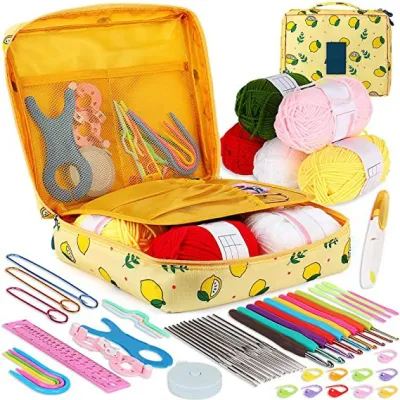
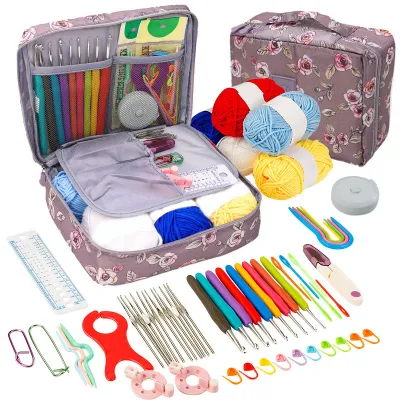
Prices are valid at publication and may change. Please refer to the product page for the latest price.
Budget-friendly kits, frequently priced under S$20 on online marketplaces, often compromise on material lifespan. You might find thin, unpadded metal hooks that cause hand fatigue, or low-grade yarn that splits at the slightest tension. Premium sets, typically ranging from S$35 to S$60, invest in ergonomic thermoplastic rubber handles, polished hook throats, and structurally sound yarns that withstand repeated unraveling as you practice.
The core of beginner success lies in matching hook size to yarn weight. For novices, a medium worsted weight (Category 4) or double knitting (DK, Category 3) yarn paired with a 4.0mm to 5.5mm hook offers the best visibility and physical control. Your chosen kit should explicitly state these specifications on its packaging or product listing to ensure you are not left guessing.
Evaluating Hook Durability and Ergonomics
Aluminum and steel are the industry standards for hook durability. Aluminum hooks are lightweight, highly resistant to bending under beginner tension, and offer a slick surface that allows yarn to glide effortlessly. Steel hooks are exceptionally strong but are generally reserved for very fine lace work. In contrast, plastic hooks can feel draggy and are prone to snapping, while bamboo hooks, though warm to the touch, can warp or splinter if exposed to high humidity without proper sealing.

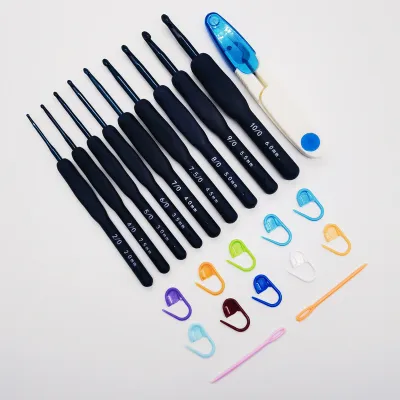
Beginners tend to grip their tools tightly, leading to rapid hand fatigue. Look for hooks featuring ergonomic handles made from soft elastomer or thermoplastic rubber. A wide, flattened thumb rest on the handle helps stabilize your grip, whether you hold the hook like a pencil or a knife. The handle should be securely bonded to the metal shaft; any twisting or sliding during a firm pull indicates poor manufacturing.
Before committing to a set, or immediately upon unboxing, inspect the hook’s head and throat. Run your fingers along the inside curve of the hook to check for microscopic metal burrs, sharp seams from casting molds, or rough plating. A high-quality hook has a perfectly smooth, anodized finish that prevents the yarn fibers from catching and splitting during stitch creation.
Assessing Yarn Quality and Practice Suitability
Acrylic and cotton-blend yarns are highly recommended for those taking their first stitches. Acrylic is resilient, inexpensive, and holds its shape well through multiple rounds of undoing and redoing mistakes. Cotton blends, such as a 60% cotton and 40% acrylic mix, provide excellent stitch definition, making it easy to see exactly where to insert your hook. Avoid highly textured, fuzzy, or dark-colored yarns in your first kit, as they obscure stitch anatomy and make learning incredibly difficult.
Yarn is made by twisting multiple smaller strands, known as plies, together. For beginners, a tightly spun multi-ply yarn is essential. If the twist is too loose, your hook will easily pierce the middle of the yarn strand rather than catching the entire loop, a frustrating issue known as splitting. You can verify twist consistency by pulling a short length of yarn from the skein and twisting it slightly between your fingers; it should spring back into a cohesive strand without separating.
Many starter kits provide just enough yarn for a few small practice swatches or a single tiny project. Check the product specifications for the total yardage or weight, usually measured in grams. A standard practice session or a basic beginner scarf typically requires at least 150 to 200 meters of medium-weight yarn. If your kit only includes small 25-gram skeins, plan to purchase additional utility yarn for extended practice.
Verifying Essential Accessories in Complete Kits
A truly self-contained crochet set must include several small but vital tools. Locking stitch markers are indispensable for marking the beginning of rounds or highlighting specific stitches. You will also need a blunt-tipped tapestry needle, preferably metal, as plastic needles can bend and struggle to weave in yarn tails, a flexible measuring tape to check your gauge, and a simple manual row counter to keep track of your progress.
Organization is key to maintaining your tools over time. Look for kits that come with a structured, zippered storage case featuring individual elastic slots for each hook size. Loose pouches or simple drawstring bags allow hooks and sharp tapestry needles to jumble together, which can scratch the polished surfaces of your hooks or lead to misplaced accessories.
Having the tools is only half the battle; you also need clear instructions. The best beginner kits include printed pattern booklets with step-by-step photographic guides, or provide digital access to high-definition video tutorials. Ensure these resources use standard terminology so you do not become confused by conflicting stitch names.
Building Your Shortlist: Filtering Sets on Online Craft Stores
When browsing online marketplaces, do not rely solely on the main product image, which often displays stylized arrangements of items not included in the actual package. Scroll down to the detailed text description and verify the exact packing list. Ensure the kit explicitly lists the hook sizes, ideally ranging from 2.0mm up to 6.0mm, and the precise number of yarn skeins included.
Customer feedback is an invaluable resource for identifying hidden quality issues. Filter reviews to look for mentions of hook snapping, handles sliding off, or yarn shedding. In humid climates, some low-grade rubber handles can become sticky over time; search reviews for keywords like “sticky grip” or “degraded rubber” to avoid these materials.
Before clicking the checkout button, run through a final verification. Confirm that the hook sizes match the yarn weights provided in the kit. Check that the seller offers a clear return or replacement policy in case a hook arrives bent or an accessory is missing. Finally, verify that the total cost fits your budget, keeping in mind that a slightly higher initial investment in a quality set can save you from having to replace broken tools within a few weeks.
Frequently Asked Questions (FAQ)
Are bamboo or aluminum hooks better for beginners?
Bamboo hooks offer a natural grip and a slight surface drag, which is highly beneficial for beginners who struggle with loose tension or find that their stitches slip off the hook too easily. However, aluminum hooks are generally preferred for overall durability and speed, as their smooth, anodized surface allows the yarn to glide effortlessly. If you choose bamboo, inspect them regularly and store them in a dry, cool place to prevent the wood from splintering or warping in humid conditions.
Can I use the yarn from a starter kit for wearable garments?
Most yarn included in beginner starter kits is optimized for structural practice, swatches, or small decorative projects like amigurumi, rather than wearable garments. These utility yarns are often stiff or highly synthetic, lacking the soft drape, breathability, and skin comfort required for sweaters or scarves. Before attempting to crochet a wearable item, check the yarn’s fiber content label; for garments, you will eventually want to transition to premium cotton, bamboo, or washable wool blends sourced specifically for their softness and drape.

Community discussion
Share your experience or ask a question. Comments are reviewed before publication.