
Selecting the right table calendar for daily planning in Singapore requires a thoughtful balance between functional layout design, physical desk space, and material durability. In a fast-paced work environment, a physical desk calendar serves as an invaluable, screen-free anchor for your daily tasks, helping you maintain focus amid digital notifications. However, finding the ideal calendar is not a one-size-fits-all task; it requires matching your writing habits and workspace constraints with specific product specifications. By focusing on structural design, paper weight, and layout utility, you can select a planning tool that seamlessly integrates into your daily routine.
Assessing Your Daily Planning Needs and Desk Space
Before browsing retail shelves or online catalogs, you must define your primary planning methodology and measure your physical workspace. Daily planning habits generally fall into two categories: high-density scheduling and light tracking. High-density planners require ample writing space to accommodate hourly time-blocking, detailed task lists, and frequent adjustments throughout the day. If your day is packed with back-to-back meetings, client calls, and strict project deadlines, a calendar with small, restricted date boxes will quickly become cluttered and unreadable. Conversely, if you use a desk calendar primarily for light tracking—such as monitoring habits, noting key milestones, or marking broad project phases—a minimalist layout with compact daily blocks will suffice.
The physical dimensions of your desk play an equally critical role in your decision. In Singapore, where home offices and corporate workspaces often feature compact desk setups, maximizing surface area is essential. A sprawling desk pad calendar might fit comfortably on a large executive desk, but it can easily overwhelm a standard 120-centimeter study table or a dedicated HDB study corner. Before purchasing, clear your workspace and measure the exact footprint you can allocate to a calendar. Consider how the calendar will sit alongside your laptop, external monitor, keyboard, and mouse. The goal is to ensure the calendar remains easily accessible for quick notes without forcing you to constantly rearrange your work tools.
Products mentioned in this guide
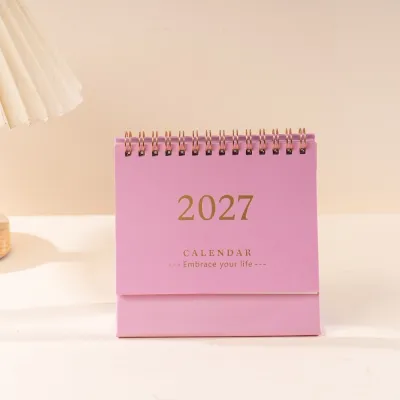
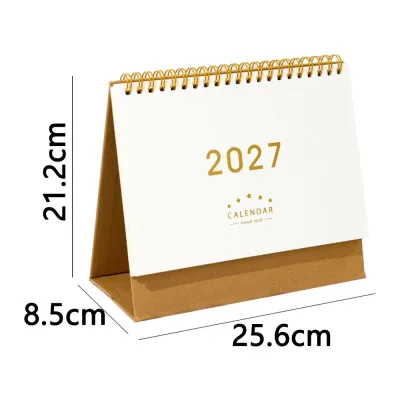
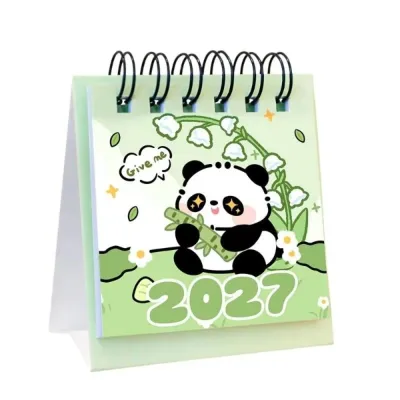

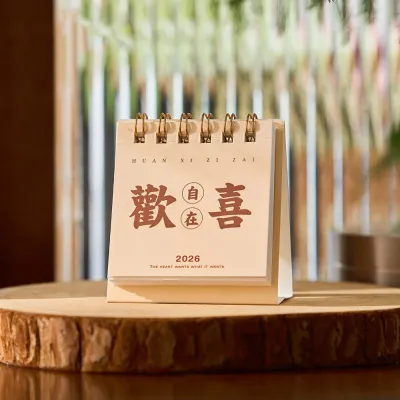
Prices are valid at publication and may change. Please refer to the product page for the latest price.
Additionally, consider your work style, particularly if you operate in a hybrid work model. If you split your week between a home office and a central business district workplace, portability becomes a key factor. A heavy, rigid-backed tent calendar is best suited for a permanent desktop setup where it remains stationary. If you need to transport your schedule between locations, look for slim, lightweight designs with fold-flat wire-o bindings that slide easily into a standard laptop sleeve or backpack without bending the pages.
Comparing Layout Styles for Effective Time Management
The layout of your table calendar dictates how you visualize your time and organize your daily responsibilities. The three primary layout styles—daily, weekly, and monthly—each serve distinct planning purposes and suit different cognitive styles.

Daily page-per-day layouts offer the maximum amount of writing space, making them ideal for detailed time-blocking and extensive to-do lists. These layouts often feature hourly increments, allowing you to map out your entire day from morning to evening. They are particularly useful for professionals who manage complex, multi-step projects or those who like to combine daily planning with brief journaling or reflection. The main trade-off with a daily layout is the loss of immediate long-term visibility; you must flip pages to see what lies ahead later in the week.
Weekly spreads strike a practical balance between daily detail and weekly perspective. Typically displaying seven days across a two-page spread or a single wide sheet, this format allows you to see your weekly workload at a glance while still providing dedicated slots for daily action items. Many weekly desk planners include additional margins for weekly goals, habit trackers, or general notes, making them highly versatile for balancing professional deadlines with personal errands.
Monthly grid formats are designed for high-level overview and milestone tracking. If your daily tasks are managed digitally and you only need a physical reference for major deadlines, public holidays, school terms, or travel plans, a monthly desk calendar is highly efficient. It provides an immediate visual representation of your month, helping you pace your projects and avoid scheduling conflicts.
Beyond the layout, the physical binding mechanism significantly affects daily usability. Wire-o or spiral-bound calendars are highly popular because they lie completely flat on the desk and allow you to flip pages 360 degrees without damaging the spine. Book-bound calendars offer a sleek, professional aesthetic but may require a paperweight to stay open on a specific page. Tear-off paper pads are excellent for those who prefer a clean slate each week or month, though they do not allow you to easily refer back to past notes once a page is discarded.
Evaluating Paper Quality and Functional Brand Features
The tactile experience of writing on a table calendar is heavily influenced by paper quality, which also determines how well the calendar handles different writing instruments. When evaluating stationery brands, the paper weight—measured in grams per square meter (GSM)—is the most reliable indicator of quality.
Standard office paper typically ranges from 70 GSM to 80 GSM, which is prone to ink feathering, ghosting, and bleed-through when used with wet inks. If you prefer writing with fountain pens, heavy gel pens, fine-liners, or highlighters, look for calendars featuring paper weights of 100 GSM to 120 GSM or higher. High-density, acid-free paper ensures that your writing remains crisp and legible on both sides of the page. Furthermore, Singapore’s tropical climate and high relative humidity can cause low-quality, highly absorbent paper to soften over time, increasing the likelihood of ink smudging. Opting for premium, coated, or high-GSM paper helps the calendar maintain its structural integrity and smooth writing surface throughout the year.
Functional design features can greatly enhance your daily planning efficiency. Look for calendars that incorporate thoughtful additions, such as perforated page corners or edges that allow for clean tearing. Built-in reference calendars showing the preceding and succeeding months on the margin of the current page save you from constantly flipping back and forth. Some designs also include integrated storage pockets for loose receipts, sticky notes, or business cards, keeping your desk clutter-free.
Another important consideration is whether to choose a dated or undated calendar. Dated calendars are convenient because they come pre-printed with days and months, often including local public holidays. However, if your planning needs are seasonal or irregular, an undated table calendar offers superior flexibility. Undated formats allow you to fill in the dates as you go, ensuring that no pages are wasted during quiet weeks, holidays, or busy periods when you rely entirely on digital tools.
Where to Buy and What to Verify Before Purchasing
Acquiring a high-quality table calendar involves choosing the right purchasing channel and carefully verifying product specifications to avoid common online shopping pitfalls.
Specialized physical stationery boutiques and official brand stores in Singapore offer the distinct advantage of tactile evaluation. Visiting a physical store allows you to feel the paper texture, test the sturdiness of the cardboard stand, and observe how easily the pages turn on the binding. For those who prefer the convenience of online shopping, general online marketplaces and dedicated stationery e-commerce platforms provide a wider variety of international brands and layout designs.
When buying online, it is crucial to cross-check the product descriptions for exact specifications. Do not rely solely on product photos, which can often make a calendar appear larger or thicker than it actually is. Always verify the precise dimensions in centimeters or millimeters and compare them against your measured desk space. Check the total page count and confirm whether the paper material is specified as acid-free or of a specific GSM rating.
User reviews are an invaluable resource for verifying a calendar’s real-world performance. Look specifically for feedback regarding paper texture and smoothness, as well as reports on whether the binding holds up to daily flipping without loosening. Pay close attention to reviews mentioning the accuracy of the printed dates, especially if you are purchasing an international brand that may not include local Singapore public holidays.
Finally, consider the long-term cost efficiency and sustainability of the calendar design. Some premium stationery brands offer reusable bases made of durable materials like wood, acrylic, or heavy-duty bookboard, allowing you to simply purchase paper refill inserts each year. This modular approach not only reduces waste but also ensures continuity in your planning setup year after year.
Frequently Asked Questions (FAQ)
Can I use a single table calendar for both personal and work tasks?
Yes, integrating both personal and professional tasks on a single table calendar is highly achievable with a structured visual system. One of the most effective methods is color-coding; assign distinct ink colors or highlighter shades to separate your work deadlines from personal commitments like fitness routines, family events, or social appointments. Alternatively, look for calendar layouts that feature divided daily sections, split columns, or dedicated side margins. This physical separation allows you to keep your professional to-do list on one side of the daily block while tracking personal reminders on the other, maintaining a clear boundary between both areas of your life on a single page.
How can I prevent ink smudging and bleed-through on calendar paper?
Preventing ink issues requires matching your writing instruments to the specific paper characteristics of your calendar. If your calendar features standard-grade paper (under 100 GSM), avoid using wet inks, broad-tip fountain pens, or heavy liquid highlighters, which are highly likely to bleed through or feather. Instead, opt for quick-dry gel pens, fine-liners, or classic ballpoint pens that deposit less ink on the surface. If you prefer using fountain pens or rollerballs, select a calendar with high-GSM, uncoated paper, and consider keeping a sheet of blotting paper handy to absorb excess ink immediately after writing. Always perform a small ink test on an unused back page or margin before committing to a specific pen for the entire year.

Community discussion
Share your experience or ask a question. Comments are reviewed before publication.