
Starting your embroidery journey in Singapore is an exciting creative step, but threading fine needles with multi-strand cotton floss can quickly become a test of patience. A reliable needle threader is the most practical tool to bypass this frustration, allowing you to focus on your stitches rather than struggling to guide limp thread through a microscopic eye. Finding the right tool requires matching the threader’s structural design to the specific needles and threads you plan to use.
In Singapore’s warm, humid climate, choosing the right embroidery accessories also involves considering material durability and storage. A threader that works beautifully for standard sewing might fail when faced with six-strand cotton floss or textured crewel wool. By understanding the mechanical differences between wire, hook, and automatic threaders, you can select a tool that preserves your thread quality and keeps your stitching sessions smooth and enjoyable.
Understanding Common Needle Threader Designs
To make an informed choice, you must first understand the primary categories of needle threaders available in local craft shops and online marketplaces. Each design serves a distinct purpose and carries specific trade-offs regarding durability, flexibility, and needle compatibility.
Products mentioned in this guide
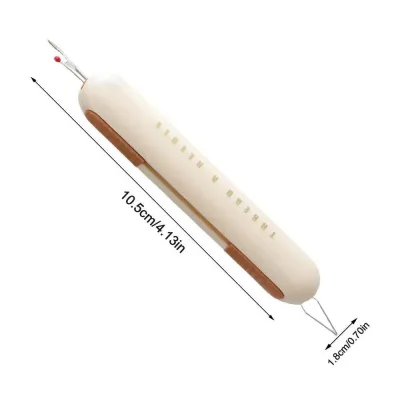
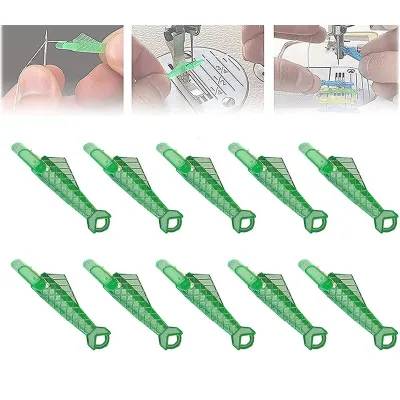
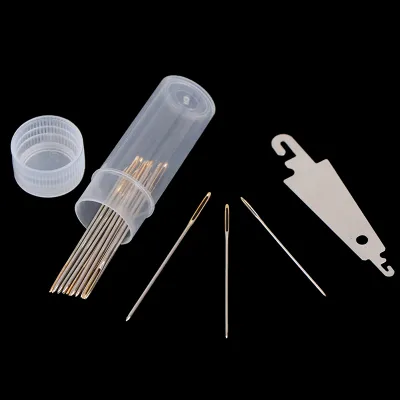
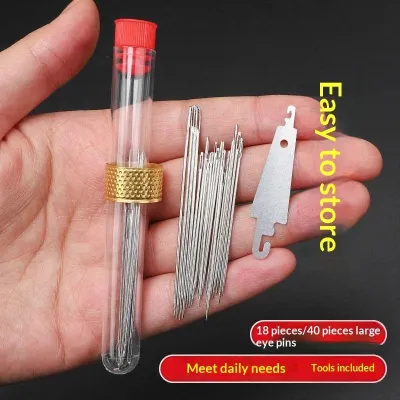
Prices are valid at publication and may change. Please refer to the product page for the latest price.
Wire-loop threaders are the most common and recognizable design, featuring a thin, diamond-shaped steel wire attached to a flat metal or plastic handle. The flexibility of the wire allows it to compress as it passes through tiny needle eyes and then spring open to receive the thread. While highly versatile for fine embroidery needles, these wires are delicate and prone to pulling out of their handles if subjected to excessive force. They are excellent for light-duty work but require a gentle touch.
Automatic or desktop threaders offer a mechanical solution for those who find manual threading difficult due to hand fatigue or vision limitations. These devices feature a small chamber where you insert the needle eye-down, lay the thread across a designated slot, and press a lever to push a tiny internal hook through the eye. While they save significant time during high-volume projects, they are generally limited to specific needle sizes and shapes, and they cannot accommodate very thick embroidery floss or specialty yarns.
Hook-style or rigid threaders utilize a solid, flat piece of metal with a small hook cut into one or both ends. Because they lack flexible wires, these threaders are incredibly durable and virtually impossible to break under normal crafting conditions. However, the rigid metal hook must physically fit through the needle eye, making them unsuitable for fine crewel needles. They are best reserved for larger tapestry needles, heavy chenille needles, or thick wool threads.
Built-in threaders on multi-tools integrate a threading mechanism directly into other sewing accessories, such as needle minders, seam rippers, or magnetic cases. These integrated designs ensure you always have a threader nearby during your embroidery sessions. The primary limitation is that if the delicate threading component breaks, the entire multi-tool loses part of its utility, and the ergonomics may not be as comfortable as a dedicated, single-purpose threader.
What to Check Before Buying a Needle Threader
Before purchasing a threader from a local haberdashery or ordering online, you should evaluate several key specifications to ensure compatibility with your embroidery kit.

First, compare the wire thickness or hook size against the eye of your needles. Embroidery needles, such as crewel needles, have long, narrow eyes designed to hold multiple strands of floss, but the physical opening remains quite tight. If you use a wire threader that is too thick, forcing it through the eye will stretch the wire, bend the needle, or snap the threader entirely. Look for packaging that explicitly states compatibility with fine embroidery or crewel needles rather than generic “universal” claims.
Second, consider thread capacity and friction management. Embroidery floss is typically made of six individual cotton strands that you separate based on your project’s requirements. When you pull these strands through a needle eye using a threader, the thread is folded in half, doubling its thickness at the transition point. Your threader must have enough internal clearance to hold this doubled thread without causing excessive friction, which can fray delicate cotton, silk, or metallic threads.
Third, assess the build quality and ergonomics of the handle. A tiny, flat metal tab can be difficult to grip comfortably during long crafting sessions, especially if your hands tend to slip in Singapore’s humid weather. Threaders with larger, textured plastic handles or ergonomic rubber grips provide better control and reduce hand strain. Additionally, inspect the connection point where the wire meets the handle; a reinforced or glued sleeve generally lasts much longer than a simple crimped metal connection.
Finally, think about your portability needs. If you enjoy stitching during your daily commute on the MRT, at local cafes, or during community crafting meetups, a compact, covered threader is ideal. Look for designs with protective caps or folding mechanisms that shield the delicate wire from getting bent or crushed inside your travel sewing kit. For home-based setups, a heavier desktop threader or a magnetic needle minder with an integrated threader provides a stable, easy-to-find option on your work table.
Matching the Threader to Your Embroidery Project
Different embroidery techniques demand different combinations of needles and threads, which directly influences the type of threader you should use.
For cross-stitch and counted thread work, you will frequently use tapestry needles, which have blunt tips and relatively large eyes, alongside two or three strands of standard cotton floss. Because you thread the needle repeatedly as you change colors, efficiency is key. A sturdy, medium-gauge wire-loop threader or a high-quality double-ended hook threader works beautifully here, offering a balance of speed and durability without damaging the tapestry needle’s eye.
In surface embroidery and crewelwork, you will encounter a wider variety of thread types, including highly textured wool, metallic threads, and delicate silk. Crewel needles have sharp points and narrow eyes to pierce tightly woven fabrics. Because metallic and silk threads are highly susceptible to snagging and fraying, you need an ultra-fine, smooth wire threader. Avoid rigid hook threaders for these projects, as they can easily scratch the inner surface of the needle eye, creating sharp burrs that shred expensive specialty threads.
If you are exploring ribbon embroidery or punch needle projects, your materials will be significantly thicker. Ribbon embroidery uses wide chenille needles to accommodate silk ribbons, while punch needles require long, specialized threading wires to pull yarn through the entire length of the tool’s barrel. For these applications, standard sewing threaders are completely inadequate. You will need heavy-duty, long-reach wire threaders or specialized flexible nylon loops designed specifically to handle the bulk of ribbons and heavy yarns.
How to Use and Maintain Delicate Threaders
Even the most durable needle threader can break quickly if used incorrectly. Developing proper habits will extend the lifespan of your tools and prevent damage to your embroidery materials.
When inserting a wire-loop threader, always approach the needle eye at a straight, perpendicular angle. Avoid twisting or bending the wire as you push it through, as this weakens the metal at the solder point. Once the loop is fully through the eye, insert your embroidery floss through the center of the wire loop, leaving a short tail.
To pull the thread through, gently slide the needle away from the threader handle. If you feel significant resistance, do not force it. Forcing a tight fit is the primary cause of snapped wires and frayed thread. Instead, back the threader out, verify that the thread is not tangled or knotted, and ensure you are not trying to pull too many strands through a needle eye that is simply too small.
Proper maintenance is especially important in Singapore, where high humidity can accelerate the rusting of metal components. Store your threaders in a dry, airtight container, perhaps with a small silica gel packet to absorb excess moisture. Keep the wire loops clean by wiping them occasionally with a dry microfiber cloth to remove skin oils and lint buildup. Avoid storing them loose in a drawer or sewing basket where heavier tools like scissors can crush the delicate wires.
Regularly inspect your threaders for signs of wear, such as bent wires, loose handles, or rough edges on metal hooks. If you notice a wire starting to fray or pull away from the base, replace the tool immediately. Using a damaged threader can snag your embroidery floss, scratch the inside of your needle eyes, or even result in a sharp wire poke to your fingers.
Where to Source and Verify Options in Singapore
When shopping for embroidery supplies in Singapore, you have access to both local brick-and-mortar craft shops and global online marketplaces. Knowing how to verify product quality before buying will save you time and money.
If you prefer to shop in person, visit specialty craft stores in areas like Chinatown, Plaza Singapura, or neighborhood haberdasheries. Shopping in person allows you to physically inspect the packaging and, in some cases, feel the weight and grip of the threader. Look for reputable stationery and sewing brands that print clear specifications on their packaging, including recommended needle sizes. Do not hesitate to ask the shop staff for recommendations tailored to the specific embroidery needles you are purchasing.
When browsing online marketplaces or e-commerce platforms, avoid listings that rely on generic “one-size-fits-all” descriptions. Instead, look for detailed product listings that specify the wire gauge or hook dimensions. Read through customer reviews, paying close attention to feedback from users who specifically mention using the tool for hand embroidery, cross-stitch, or multi-strand floss. Reviews that highlight durability, ease of use, and compatibility with fine needles are far more valuable than generic star ratings.
While budget-friendly multi-packs of simple wire threaders are widely available online, they often suffer from inconsistent quality control. If you choose these options, treat them as semi-disposable items and keep several spares in your kit. For a more sustainable and frustration-free experience, consider investing a few dollars more (typically between S$5 and S$15) in a single, high-quality ergonomic threader from an established sewing brand, which will offer excellent longevity and protect your delicate embroidery threads.
Frequently Asked Questions (FAQ)
Can I use a standard sewing needle threader for embroidery?
Yes, but with limitations. Standard sewing threaders are designed for thin, single-strand sewing threads and may have wires that are too delicate or loops that are too small to accommodate multi-strand embroidery floss. If you use a standard threader, ensure you do not overload the loop, and only use it with needles that have a sufficiently large eye to prevent friction damage.
Why does my needle threader wire keep breaking?
The most common cause of breakage is pulling too much thread through a needle eye that is too small, which puts immense tension on the wire’s anchor point. Other causes include inserting the threader at an angle, twisting the wire during use, or using a low-quality tool with poor solder joints. Ensuring your needle eye is compatible with your thread thickness will dramatically reduce breakage.
Are automatic needle threaders worth the investment for beginners?
Automatic desktop threaders can be highly beneficial if you struggle with hand fatigue, joint pain, or low vision, as they automate the most tedious part of the process. However, they are less portable than manual threaders and are often limited to specific needle sizes. For most beginners, starting with a high-quality manual wire or hook threader is more versatile and cost-effective.

Community discussion
Share your experience or ask a question. Comments are reviewed before publication.