
Choosing the right kids magnetic board for early literacy in Singapore involves balancing educational utility, physical safety, and the practical constraints of local living spaces. A high-quality magnetic board serves as an interactive canvas where young learners transition from abstract sounds to concrete letters and words. By engaging both visual and tactile senses, these boards help children internalize letter shapes and phonics patterns far more effectively than digital screens or passive worksheets.
While a simple office whiteboard might seem like a budget-friendly alternative, these products rarely meet the specific needs of early childhood education. Standard office boards often feature sharp metal frames, industrial-strength magnets that can pinch small fingers, and chemical surface coatings not certified for child safety. Dedicated educational boards, by contrast, are designed with rounded corners, lightweight materials, and surfaces optimized for frequent, heavy use by young children.
When selecting a board to support early reading and writing, parents must evaluate several physical and functional characteristics. The right combination of board surface, magnetic strength, and letter design ensures that learning sessions remain engaging and frustration-free.
Products mentioned in this guide
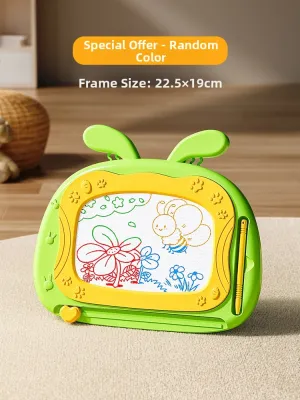
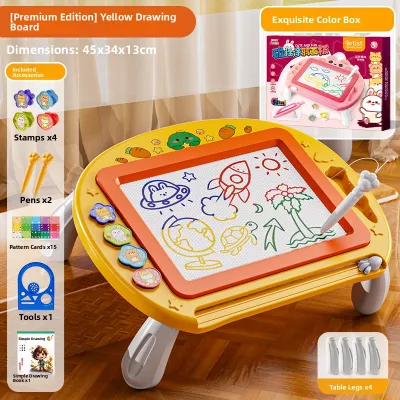
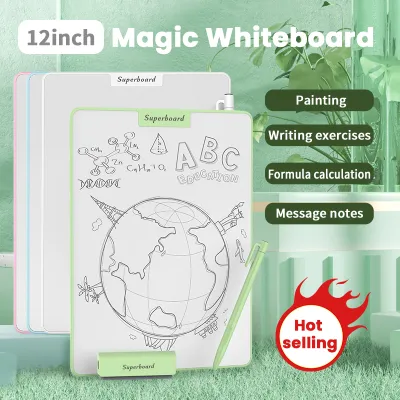
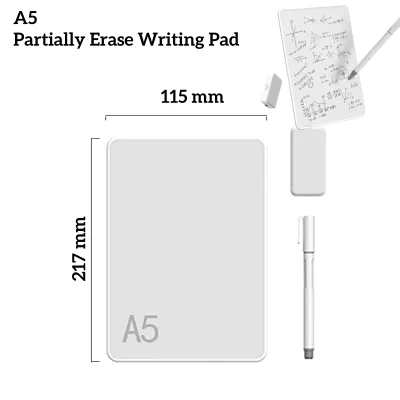
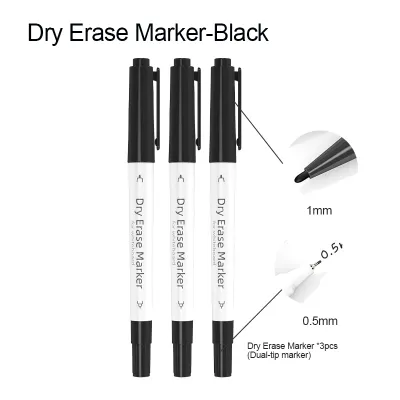
Prices are valid at publication and may change. Please refer to the product page for the latest price.
Core Selection Criteria for Early Literacy Boards
The primary goal of an educational magnetic board is to facilitate letter recognition, word building, and phonics practice. To achieve this, the board must offer a smooth, high-contrast surface where letters can be arranged and rearranged easily. Children learn best when they can manipulate physical objects, making the tactile feedback of moving magnetic letters a core component of early literacy development.
Safety and durability are the most critical baselines for any children’s stationery item. Look for boards that carry recognized toy safety certifications, which ensure that the plastics, paints, and adhesives used are non-toxic and lead-free. Because young children frequently touch their faces or put hands in their mouths during play, verifying these safety standards is essential before introducing any new tool to the study room.
Durability is equally important, as a literacy board will undergo constant handling, dropping, and drawing. A flimsy board with a cardboard backing can warp quickly, especially in humid environments, causing the magnetic surface to bubble or peel away from the frame. Investing in a sturdy, rigid board with a reinforced backing ensures the tool remains flat and usable for years.
Finally, the board must be highly responsive to dry-erase markers. Early literacy instruction often combines magnetic letters with handwriting practice, requiring children to trace letters or write words directly next to the magnets. A surface that resists ghosting and wipes clean with minimal effort prevents frustration and keeps the focus entirely on learning.
Essential Features to Evaluate for Letter and Word Learning
Before purchasing a magnetic board, it is helpful to understand how its physical design directly influences educational outcomes. A board that is too small limits word-building exercises, while weak magnets can cause letters to slide down, disrupting a child’s train of thought. Evaluating these features systematically helps you choose a setup that supports your child’s learning goals.

By focusing on letter design, phonics compatibility, and physical build quality, you can select a board that transitions smoothly from basic letter recognition to advanced spelling exercises.
Assessing Letter Design and Phonics Compatibility
The design of the magnetic letters is just as important as the board itself. For early learners, standard educational fonts are crucial. Avoid decorative, stylized, or highly stylized letters that depart from the print styles taught in local preschools and primary schools. Simple, clean sans-serif fonts help children recognize letters quickly and prevent confusion between similar characters, such as the lowercase “l” and uppercase “I”.
Phonics compatibility is another key consideration. Many modern reading curricula rely on color-coded letter sets to help children distinguish between vowels and consonants. Typically, these sets feature red vowels and blue consonants, allowing children to visually identify word patterns, such as consonant-vowel-consonant (CVC) structures. Verify whether the letter set you are considering follows this standard, as it greatly simplifies early phonics lessons.
Additionally, check the variety and quantity of letters included in the set. Basic sets often contain only one of each letter, which makes it impossible to build simple words like “look” or “mamma.” Look for sets that include multiple duplicates of high-frequency letters, particularly vowels (a, e, i, o, u) and common consonants (t, s, r, n, l). If your child’s curriculum introduces digraphs (such as “ch”, “sh”, “th”) or consonant blends, check if specialized multi-letter tiles are available to support these lessons.
Piece size must also be carefully matched to your child’s developmental stage. For toddlers, letters must be large enough to eliminate any choking hazards while remaining easy for small hands to grasp. For older children, slightly smaller letters allow for more complex word building and sentence construction on the same board surface.
Evaluating Board Quality and Magnetic Strength
A reliable magnetic board must feature a balanced magnetic pull. To test this, place several magnetic letters on the board while holding it vertically. The letters should remain firmly in place without sliding, tilting, or rotating. However, the magnetic hold should not be so strong that a young child struggles to pull the pieces off the board, which can lead to pinched fingers and frustration.
Inspect the frame and corners of the board thoroughly. High-quality educational boards feature smooth, rounded plastic or finely sanded wooden frames. Avoid boards with exposed metal joints, sharp aluminum edges, or visible screws, as these can cause scratches during active play. If you choose a frameless magnetic board or a magnetic wall decal, ensure the edges are completely flush with the wall to prevent peeling.
Surface erasability is a critical factor that depends on the specific material combination of the board and the markers used. High-pressure laminate or porcelain-on-steel surfaces offer the best resistance to staining and ghosting. To verify erasability, write a few letters on the board, leave the ink to dry completely for five minutes, and then wipe it away with a dry cloth. The surface should return to its original clean state without leaving faint grey or colored outlines behind.
Adapting the Setup to Your Child's Learning Stage
As children progress through different stages of literacy, their physical and educational requirements change. Adapting your magnetic board setup ensures that the tool remains challenging and relevant to their developmental needs.
For toddlers and beginners (typically ages 1.5 to 3), the focus is on sensory exploration and basic letter recognition. At this stage, choose large, chunky magnetic letters made of soft foam or solid wood with fully embedded magnets. Pair these with a small, lightweight, portable magnetic board that can be used flat on the floor or on a lap. The primary activities here involve sorting letters by color, matching shapes, and singing the alphabet song while pointing to each letter.
For early readers (ages 3 to 5), the learning goals shift to phonics, letter-sound correspondence, and building simple words. Transition to a medium-sized board (approximately A3 size or larger) that can be propped up on an easel or mounted to a wall. This allows the child to stand or sit comfortably while arranging letters in straight lines. Use standard-sized, color-coded letter sets to practice building CVC words, identifying beginning and ending sounds, and tracing letters directly on the board with dry-erase markers.
For advanced spelling and early writing (ages 5 and up), a large, dedicated wall-mounted board is ideal. This stage requires a significant number of duplicate letters to build full sentences, practice sight words, and explore punctuation. A larger board surface provides ample space for side-by-side activities, such as writing a sentence with a marker on one side and building it with magnetic letters on the other. This dual approach reinforces the connection between reading physical letters and writing them by hand.
What to Verify When Buying in Singapore
When shopping for a kids magnetic board in Singapore, local environmental factors, housing layouts, and educational standards should guide your purchasing decisions.
First, consider the local school curriculum. Singapore’s education system generally follows British English spelling standards. If you are purchasing magnetic word cards, sight word sets, or phonics kits to accompany your board, verify whether they use UK spelling (such as “colour” or “centre”) rather than US spelling (“color” or “center”). Aligning your home learning materials with the spelling conventions taught in local schools prevents confusion for your child.
Second, account for local housing and space constraints. Many families live in HDB flats or condominiums where floor space is highly optimized. A massive, freestanding easel board may clutter a small living room or bedroom. Instead, consider space-saving alternatives such as magnetic wall decals that adhere directly to flat walls, or compact, double-sided tabletop boards that can be folded flat and stored in a closet when not in use.
Third, Singapore’s high humidity can impact the lifespan of certain materials. Avoid magnetic letters with cheap paper backings, as the moisture in the air can cause the paper to warp, peel, or grow mold over time. Instead, opt for letters made of fully sealed plastic, high-density EVA foam, or varnished wood with secure, rubberized magnetic backings. Similarly, ensure that any adhesive wall-mounted boards use high-quality, humidity-resistant adhesives to prevent the board from peeling away from the wall.
Finally, when browsing online marketplaces or local stationery shops, look closely at product reviews and seller ratings. Verify that the product descriptions explicitly state compliance with international toy safety standards, such as the European EN71 or American ASTM certifications. While budget-friendly unbranded boards are widely available, investing in a certified product ensures that the materials are safe for daily, close-contact use by your child.
Practical Routines for Early Literacy Practice
Integrating a magnetic board into your child’s daily routine does not require structured, hours-long lessons. Short, consistent, and playful interactions are far more effective for maintaining interest and building long-term literacy skills.
Start by setting up a dedicated, well-lit learning zone. Position the magnetic board at your child’s eye level, whether it is mounted on a wall or placed on a low table. Ensure they can comfortably reach the entire surface without straining. Keep a small basket or sorting tray nearby to hold the magnetic letters, making it easy for your child to access the tools independently whenever inspiration strikes.
Establish a simple daily routine, such as a “Word of the Day” game. Before your child wakes up, place a simple three-letter word on the board with one letter missing (for example, “b_t”). Ask your child to find the correct magnetic letter to complete the word, practicing the different sounds it makes (such as “bat,” “bet,” or “bit”). This quick, five-minute activity keeps learning playful and builds anticipation for daily challenges.
Finally, involve your child in a quick cleanup routine at the end of each session. Teach them to wipe down the board surface to prevent marker ink from drying and staining, and have them return the magnetic letters to their storage compartments. Sorting the letters alphabetically or by color during cleanup serves as an excellent, low-pressure way to reinforce categorization and letter recognition skills.
Frequently Asked Questions (FAQ)
How do I clean stubborn marker stains from the magnetic board?
To clean stubborn dry-erase marker stains or ghosting, start by wiping the surface with a damp microfiber cloth. If the stains persist, apply a few drops of specialized whiteboard cleaner or isopropyl alcohol to a soft cloth and gently wipe the affected area. Avoid using abrasive sponges, steel wool, or harsh household solvents like acetone, as these will permanently strip the protective dry-erase coating from the board. Always check the manufacturer’s care label before applying any liquid cleaning solutions to ensure compatibility with the surface material.
What should I do if the magnetic letters lose their grip?
If your magnetic letters begin to slide or fall off the board, the issue is often caused by a buildup of dust, oils, or dry-erase marker residue on the backs of the magnets or the board surface. Wipe the back of each letter and the entire board surface with a slightly damp, lint-free cloth, then dry them thoroughly with a clean towel. If the board is mounted on a highly textured wall or near a strong electromagnetic source, try moving it to a flat, neutral surface. If the magnetic backing on the letters is cracked, peeling, or physically degraded, replace the affected pieces immediately to maintain safety.
Are magnetic letters safe for toddlers?
Magnetic letters can be safe for toddlers, provided you select products specifically designed for their age group and maintain close supervision. Always check the manufacturer’s recommended age grade on the packaging before purchasing. For children under three, avoid standard letter sets that contain small, exposed, or easily dislodged magnets, as these pose severe choking and ingestion hazards. Instead, choose oversized, single-piece magnetic letters made of solid wood or thick foam where the magnetic material is fully sealed or embedded within the structure, and inspect the pieces regularly for any signs of wear or damage.

Community discussion
Share your experience or ask a question. Comments are reviewed before publication.