
Selecting a cute hot glue gun for your child’s school projects involves balancing visual appeal with essential safety features. While a pastel-colored or animal-themed tool can make crafting more engaging, the primary consideration must always be the child’s developmental stage and physical capability. Primary school students undergo rapid changes in motor skills, hand size, and safety awareness between Primary 1 and Primary 6. Matching the tool to these milestones ensures that creative sessions remain both enjoyable and injury-free.
When browsing online marketplaces or local stationery shops in Singapore, parents are often confronted with a vast array of designs. From miniature models shaped like cartoon characters to sleek, minimalist pastel tools, the options are highly appealing to young crafters. However, a cute exterior should never overshadow functional safety. A tool that is too hot, too heavy, or difficult to squeeze can lead to frustration, poor crafting results, or painful burns.
To make an informed decision, parents need to evaluate technical specifications alongside aesthetic design. This guide breaks down how to choose the right cute hot glue gun based on your child’s grade level, physical development, and the complexity of their school projects. By understanding the differences in temperature settings, grip sizes, and safety mechanisms, you can select a tool that supports your child’s creativity while keeping safety at the forefront.
Products mentioned in this guide
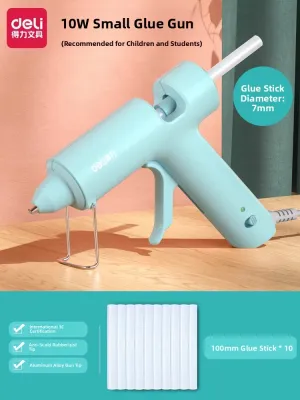
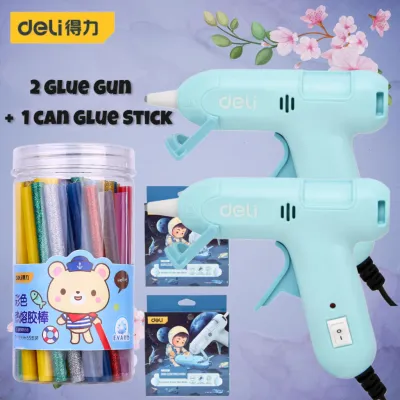
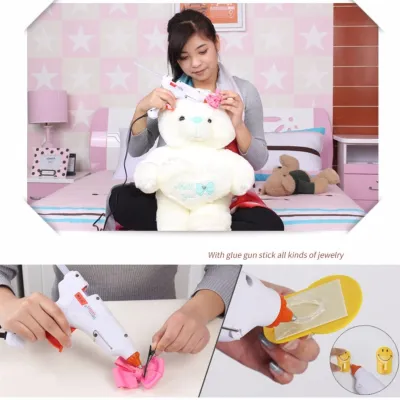
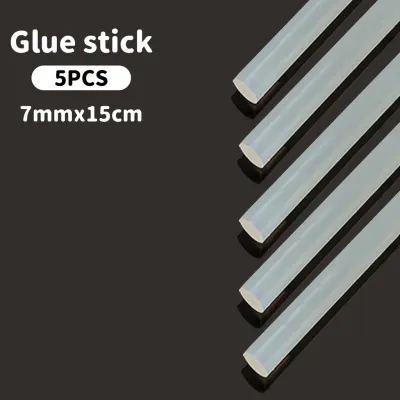
Prices are valid at publication and may change. Please refer to the product page for the latest price.
Understanding Temperature and Safety Basics Before You Buy
Before focusing on the visual design of a cute hot glue gun, it is crucial to understand how these tools operate and the safety features they require. Hot glue guns generally fall into three categories based on their operating temperatures: low-temperature, high-temperature, and dual-temperature models. Each category serves distinct crafting purposes and carries different levels of risk.
Low-temperature models typically operate at around 120°C. This temperature is sufficient to melt specialized low-melt glue sticks, making them ideal for bonding delicate materials such as paper, thin cardboard, felt, and lightweight fabrics. Because the operating temperature is lower, the risk of severe skin burns is significantly reduced, though caution is still required. These models are the standard recommendation for younger children who are still developing their coordination.
High-temperature models, on the other hand, reach temperatures of approximately 190°C or higher. This intense heat is necessary for melting standard glue sticks to bond denser materials like wood, metal, thick plastics, and heavy ceramics. While high-temperature guns create a much stronger and faster bond, they pose a substantial burn risk. A single drop of high-temperature glue can cause painful blisters on young skin, making these models unsuitable for unsupervised use by primary school students.
Dual-temperature models offer a switch that allows users to toggle between low and high heat settings. This versatility is highly beneficial for older primary students who work on a variety of school projects, ranging from delicate paper dioramas to sturdy wooden models. When using a dual-temperature gun, parents must ensure their child understands which setting is appropriate for the material they are bonding and the safety precautions required for each mode.
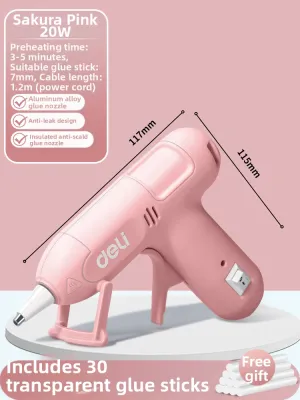
Beyond temperature settings, built-in safety features are non-negotiable when selecting a tool for a child. Look for models equipped with an insulated nozzle, which is typically covered in a heat-resistant silicone sleeve. This sleeve leaves only the very tip of the metal nozzle exposed, minimizing the chance of accidental skin contact. Additionally, an anti-drip chamber design helps prevent hot glue from continuously oozing out when the tool is resting, reducing both mess and burn hazards.
The stability of the built-in stand is another critical safety factor to verify. A reliable hot glue gun should have a wide, sturdy fold-out stand or a weighted base that keeps the hot nozzle elevated off the work surface when not in use. If a cute design makes the gun top-heavy, it may tip over easily, potentially damaging the work surface or coming into contact with the child’s hands.
Regardless of the safety features built into a cute hot glue gun, adult supervision remains essential for primary school students. Establishing a designated crafting area with clear safety rules is the best way to prevent accidents. Children should be taught to treat the tool with respect, keep their fingers away from the nozzle, and always place the gun back on its stand immediately after applying glue.
Lower Primary (Grades 1–3): Prioritizing Low Heat and Small Grips
For children in lower primary school, typically aged seven to nine, physical size and safety are the most critical factors when choosing a cute hot glue gun. At this developmental stage, children are still refining their fine motor skills and hand-eye coordination. Their hands are significantly smaller than an adult’s, meaning a standard-sized glue gun will be difficult and tiring for them to hold and operate.

To accommodate smaller hands, parents should focus exclusively on mini or compact glue guns. These models are designed with a shorter distance between the handle and the trigger, allowing small fingers to wrap around the grip comfortably. A compact tool gives the child better control over the direction of the nozzle, which is essential for precise glue application and preventing accidental slips that could lead to contact with hot adhesive.
For this age group, strict low-temperature-only models are mandatory. Lower primary school crafts usually involve lightweight materials such as construction paper, felt sheets, foam shapes, and pipe cleaners. These materials do not require high heat to bond securely. By restricting the tool to a low-temperature setting, parents can significantly minimize the risk of serious burns, turning what could be a painful accident into a minor, easily manageable teaching moment.
The weight of the glue gun is another important consideration for younger students. A heavy tool can quickly cause hand fatigue, leading to a loss of control and increased frustration during extended crafting sessions. Look for lightweight plastic bodies that feel balanced in the hand. The trigger mechanism should also be easy to squeeze; a stiff trigger requires excessive force, which can cause the child’s hand to shake and compromise their accuracy and safety.
When selecting a cute design for a lower primary student, look for models that incorporate ergonomic grips. Some cute designs feature soft silicone sleeves shaped like animals or textured patterns that provide extra traction for small hands. These textured grips help prevent the tool from slipping out of the child’s hand during use. Ensure that any decorative elements do not interfere with the child’s ability to maintain a firm, comfortable hold on the handle.
Ultimately, the goal for lower primary students is to build confidence and motor skills in a safe environment. A small, lightweight, low-temperature cute hot glue gun allows them to participate fully in school art projects and home crafts without the physical strain or high burn risks associated with larger, hotter tools.
Upper Primary (Grades 4–6): Transitioning to Dual Temperature and Standard Sizes
As children enter upper primary school, typically aged ten to twelve, their crafting needs and physical capabilities evolve. Students in these grades are often tasked with more complex school projects, such as building detailed historical dioramas, constructing science models, or assembling sturdy cardboard structures. These projects frequently require bonding heavier materials like balsa wood, thick plastics, and heavy-duty cardboard.
To meet these demands, parents can consider transitioning their child to a dual-temperature hot glue gun. A dual-temperature model provides the flexibility to use low heat for delicate materials like ribbon or thin plastic film, and high heat for materials that require a stronger, more durable bond. This transition allows the student to learn how different temperatures affect adhesive properties and bond strength, which is a valuable practical skill for advanced crafting.
Before introducing a dual-temperature gun, parents must evaluate their child’s safety awareness and maturity level. The child should demonstrate a consistent ability to follow safety rules, handle tools responsibly, and understand the dangers of high-heat settings. If a child is prone to distraction or struggles to follow instructions, it is safer to stick with a low-temperature model until they show greater readiness.
Grip strength and hand size also increase during these years, making standard-sized glue guns a viable option. A standard-sized tool holds more glue and can accommodate larger glue sticks, which means fewer interruptions to reload during big projects. However, parents should still check that the handle is comfortable for the child to hold. The tool should not feel overly bulky or heavy, as this can still cause fatigue during long crafting sessions.
Ergonomic handles become increasingly important as projects grow in scale. Look for models with contoured grips that distribute pressure evenly across the hand. Additionally, pay close attention to the cord length and flexibility. A stiff, short cord can pull on the back of the glue gun, making it difficult to maneuver and potentially dragging the hot tool off the edge of the desk. A flexible cord of adequate length allows for smooth movement around larger 3D models.
Transitioning to more advanced tools should always be accompanied by updated safety training. Parents should teach their upper primary students how to safely switch between temperature settings, how to handle the stronger bond of high-temperature glue, and how to identify when the tool has fully heated up. This gradual increase in responsibility helps prepare them for more complex design and technology projects in secondary school.
Evaluating Cute Designs Without Compromising Safety or Ergonomics
The market for cute hot glue guns is filled with appealing designs, featuring pastel color palettes, animal-shaped bodies, decorative bows, and whimsical silicone sleeves. While these aesthetic features can make the tool feel more personalized and fun to use, they must never compromise the tool’s safety or ergonomic functionality. Parents must carefully evaluate how a cute design affects the physical operation of the glue gun before making a purchase.
One of the primary concerns with decorative elements is heat dissipation. Hot glue guns generate significant internal heat, which must be allowed to escape through ventilation slots in the plastic casing. If a cute silicone sleeve or decorative plastic shell covers these vents, the tool can overheat. This overheating can damage the internal heating element, melt the plastic casing, or cause the handle to become uncomfortably hot to hold. Always verify that ventilation slots remain completely unobstructed by any decorative features.
Another critical area to inspect is the trigger and handle mechanism. Some cute designs add decorative elements, such as animal ears or bows, near the trigger or on the handle. These additions can obstruct the child’s fingers, preventing them from pulling the trigger fully or maintaining a secure grip. The handle should remain smooth and contoured, with no sharp edges or bulky decorations that could pinch the hand or cause discomfort during use.
The stability of the stand is often compromised in highly stylized glue guns. A cute design might feature a rounded base or a small, decorative stand that does not provide sufficient support. When a glue gun is top-heavy due to decorative elements on the upper body, it can easily tip over onto its side. This poses a fire hazard and can damage the work surface. Ensure the tool has a wide, stable fold-out wire stand or a heavy, flat base that keeps the hot nozzle securely elevated.
Nozzle visibility is another safety factor that can be affected by cute designs. Some models feature bulky decorative covers that extend close to the tip of the nozzle. While these covers are intended to prevent burns, they can sometimes block the user’s line of sight. If a child cannot clearly see where the nozzle is pointing, they are more likely to make mistakes, apply glue in the wrong spot, or accidentally touch the hot tip. The nozzle must remain clearly visible during operation.
When shopping, look for cute designs that integrate their aesthetic features into the functional parts of the tool. For example, a pastel-colored body with a contrasting, ergonomically shaped trigger is both cute and highly functional. A soft silicone grip that features a subtle, cute texture can actually improve the child’s hold on the tool. By prioritizing functional design, you can find a tool that is both adorable and safe to use.
Matching the Right Glue Sticks to the Gun and the Project
Choosing the right cute hot glue gun is only half the equation; selecting the correct glue sticks is equally important for safety and performance. Using incompatible glue sticks can lead to poor bonding, excessive dripping, internal clogging, or even damage to the heating element. Parents must understand how to match glue sticks to both the physical specifications of the gun and the requirements of the project.
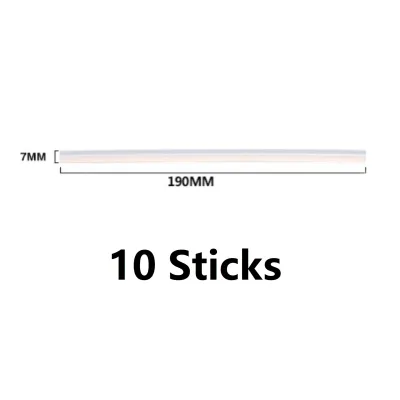
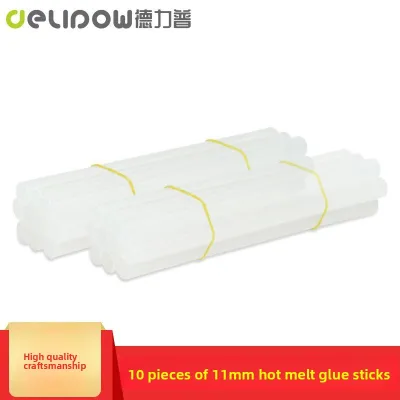
The first step is to match the physical diameter of the glue stick to the gun’s chamber. Most mini glue guns require sticks with a diameter of approximately 7mm, while standard-sized guns typically use 11mm sticks. Attempting to force an incorrect size into the gun will cause issues. A stick that is too small will not feed properly, leading to glue leaking backward into the mechanism, while a stick that is too large simply will not fit.
Operating temperature is the next critical factor. Glue sticks are formulated to melt at specific temperatures. Low-temperature glue sticks are designed to melt quickly and flow smoothly at around 120°C. If you use a high-temperature glue stick in a low-temperature gun, the heating element will not be hot enough to melt the adhesive completely. This results in a thick, sluggish flow that requires excessive trigger force, which can strip the feeding mechanism or cause the child to strain their hand.
Conversely, using a low-temperature glue stick in a high-temperature gun can cause the adhesive to become extremely runny and watery. This leads to excessive dripping from the nozzle, creating a mess and increasing the risk of accidental burns. It can also cause the melted glue to backflow into the cool zone of the gun, leading to a permanent jam once it cools. Always check the packaging of both the gun and the glue sticks to ensure their temperature ratings match.
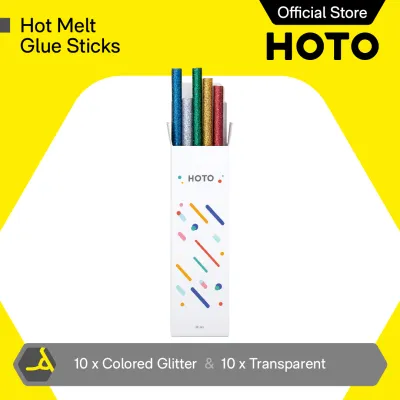
Specialty glue sticks, such as those containing glitter or vibrant colors, are highly popular for school projects and creative crafts. These specialty sticks can add a fun, decorative element to card-making, diorama building, and holiday decorations. However, parents must verify that these specialty sticks are explicitly rated for the temperature of their child’s glue gun. Many glitter sticks are formulated for low-temperature use, but it is essential to double-check the label before purchasing.
When stocking up on glue supplies, it is wise to purchase high-quality, acid-free glue sticks. Acid-free adhesives are safer for paper crafts as they will not yellow or degrade the paper over time. Keeping a steady supply of the correct size and temperature rating on hand ensures that your child’s crafting sessions are never interrupted by frustrating jams or poor bonding performance.
Setting Up a Safe Crafting Station and Storage Routine
A safe crafting experience extends beyond the tool itself; it requires a well-organized workspace and a consistent routine for setup, use, and storage. By establishing clear guidelines and preparing the environment beforehand, parents can prevent accidents and teach their children responsible tool maintenance.
The foundation of a safe crafting station is a dedicated, heat-resistant work surface. Hot glue can easily ruin wooden dining tables, plastic desks, or tablecloths. Placing a silicone crafting mat on the workspace is an excellent solution. Silicone is highly heat-resistant, and any spilled hot glue can be easily peeled off once it cools, leaving the mat clean and ready for the next project. If a silicone mat is not available, a thick sheet of cardboard or a ceramic tile can serve as a temporary protective barrier.
The crafting station should be set up near an electrical outlet to avoid stretching the cord across walkways. A taut cord is a major tripping hazard and can easily pull a hot glue gun off the table, potentially landing on a child or a pet. Ensure the cord hangs loosely and is positioned where it cannot be accidentally snagged. If using an extension cord, secure it to the table leg or floor with tape to prevent movement.
Once the crafting session is complete, establishing a strict cool-down routine is essential. The glue gun must be unplugged immediately. It should be left to cool completely on its stand or on the heat-resistant mat for at least 15 to 20 minutes before anyone attempts to handle or store it. During this cooling period, the tool must remain out of reach of younger siblings or pets who might be attracted to its cute design.
Proper storage is key to extending the lifespan of the tool and maintaining safety. Store the cooled glue gun and its power cord in a dedicated container, such as a plastic bin or a zippered pouch, away from dust and moisture. The cord should be coiled loosely; wrapping it tightly around the body of the gun can damage the internal wiring over time, creating an electrical hazard.
Finally, children should be taught how to handle common issues, such as glue jams, safely. If the glue stops flowing, the child must never attempt to pull the glue stick backward out of the rear entry port. Pulling a stick backward can tear the internal silicone sleeve, causing melted glue to leak into the electrical components and permanently ruining the tool. Instead, they should seek adult help to gently feed a new stick forward or allow the tool to heat up fully to melt any blockages.
Frequently Asked Questions (FAQ)
Can my child bring a hot glue gun to school for class projects?
Before allowing your child to pack a hot glue gun in their school bag, you must check the specific safety policies of their school or classroom. Many primary schools in Singapore have strict regulations regarding the use of electrical heating tools by students. If hot glue guns are permitted, discuss transport safety with your child, ensuring the tool is packed securely in a protective case. If electrical tools are prohibited, consider alternative adhesive options such as low-temperature battery-operated models, double-sided craft tape, or high-tack liquid craft glues that do not require heat.
What should I do if the glue gun starts leaking from the back?
If you notice glue oozing from the rear entry port of the glue gun, unplug the device immediately and place it on a heat-resistant surface to cool completely. Rear leakage, also known as backflow, typically occurs when a glue stick of the incorrect diameter is used, or when a stick is forcibly pulled backward out of the gun. It can also happen if the trigger is squeezed repeatedly before the heating element has reached its operating temperature. Once the tool is completely cool, inspect the entry port; if glue has entered the electrical housing, the tool should be discarded for safety.
Are cordless cute hot glue guns safe for primary schoolers?
Cordless hot glue guns offer excellent maneuverability and eliminate the risk of tripping over cords, but they require careful evaluation before use by primary schoolers. Parents should inspect the battery compartment to ensure it is securely closed, preferably requiring a tool to open, to prevent accidental access to rechargeable batteries. Additionally, check if the model features an automatic shutoff timer, which turns the heating element off after a period of inactivity. Finally, consider the weight; built-in rechargeable batteries can make the tool significantly heavier, which may cause hand fatigue for younger children.

Community discussion
Share your experience or ask a question. Comments are reviewed before publication.