
To start your crafting journey smoothly, a complete beginner crochet set must balance comfortable tools, highly visible yarn, and essential finishing accessories. For aspiring crafters in Singapore, selecting a kit with breathable cotton-blend yarns and ergonomic, heat-resistant grips is the most reliable way to ensure a frustration-free learning experience. By focusing on quality components rather than the sheer quantity of items in a bundle, you can avoid early hand strain and master the basic stitches with ease.
Choosing your first kit requires looking past flashy packaging to evaluate the physical properties of the tools and materials. A well-designed starter set acts as a roadmap for your hands, allowing you to focus on coordination and stitch muscle memory without fighting your equipment.
What Defines a Complete Beginner Crochet Set
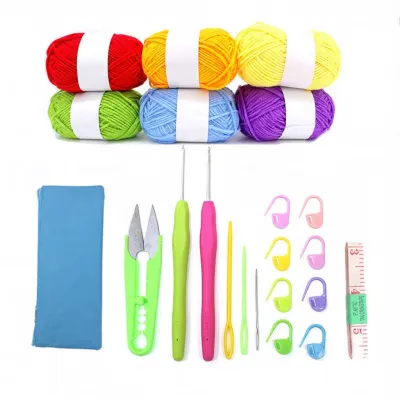
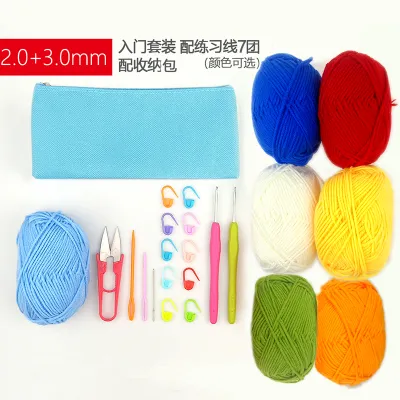
A true beginner crochet set should provide a streamlined selection of high-quality tools rather than a massive box of confusing gadgets. At its core, a functional starter kit must include a small selection of mid-sized hooks, at least two skeins of high-visibility yarn, locking stitch markers, a blunt tapestry needle, and a compact storage case. This curated selection ensures you have everything needed to complete basic practice swatches and simple projects without feeling overwhelmed.
Products mentioned in this guide
![🇸🇬 [In Stock]Adult Beginner Crochet Kits Knitting Starter Kits Kids Crochet Kits Wool Hooks and Knitting Accessories DIY Knitting Tools](https://img.lazcdn.com/g/p/985580b5e00451665da443451887f5a9.png_400x400q80.png_.webp)
Prices are valid at publication and may change. Please refer to the product page for the latest price.
Many products marketed online are actually advanced, specialized, or novelty bundles disguised as beginner kits. Advanced kits often contain dozens of tiny steel lace hooks and ultra-thin threads that are incredibly difficult for a novice to hold and see. Novelty bundles, on the other hand, might focus on a single complex pattern, providing only a tiny amount of low-grade yarn and a single flimsy hook, leaving you with no room for mistakes or extra practice.
When evaluating potential kits, look out for common warning signs of poor quality. Avoid bundles that feature unlabelled yarn skeins, as these lack crucial information regarding fiber content, weight, and care instructions. Additionally, steer clear of kits that do not include a clear hook sizing chart or those that package their tools in flimsy plastic bags that tear after a single use. A quality kit respects the learning process by providing organized, clearly labeled tools that last.
Evaluating Ergonomic Crochet Hooks for Comfort and Control
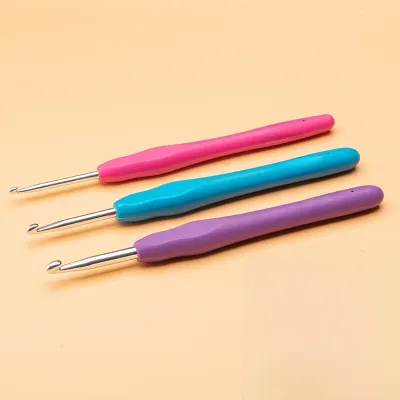
The hook is the direct extension of your hand, making its design critical to your comfort and stamina. Standard straight aluminum shafts can quickly cause hand cramping and fatigue, especially for beginners who tend to hold their tools with a tight, tense grip. Ergonomic hooks feature contoured rubber, silicone, or wide plastic handles that distribute pressure evenly across your palm, allowing you to practice for longer periods without physical strain.

Different hook materials offer distinct advantages depending on your personal grip and the yarn you use. Aluminum hooks are highly favored for their polished, ultra-smooth surface, which allows yarn to glide effortlessly without snagging. Plastic hooks are incredibly lightweight and budget-friendly, though they can sometimes create a slight drag on certain synthetic fibers. Bamboo hooks provide a warm, natural feel and a subtle texture that offers excellent grip, making them ideal for beginners who struggle with stitches slipping off the hook too quickly.
Understanding hook sizing standards is essential for matching your tools to your project. While some regions use letter or number systems, metric sizing in millimeters is the global standard and the most reliable system to follow in Singapore. A beginner-friendly kit should focus on mid-range sizes, specifically between 4.0mm and 6.0mm, as these sizes are large enough to hold comfortably and work beautifully with standard medium-weight yarns.
Before purchasing, perform a quick visual verification of the hook construction. Ensure that the millimeter sizes are deeply engraved or molded directly into the ergonomic handle rather than simply printed on the surface. Painted-on measurements frequently rub off after a few weeks of friction and hand warmth, leaving you with an unlabelled set of tools that makes following patterns incredibly difficult.
Selecting Beginner-Friendly Yarn: Weight, Fiber, and Visibility
The physical characteristics of your yarn play a massive role in how quickly you learn to recognize and count your stitches. For your first projects, prioritize worsted weight (often labeled as medium or Aran) or chunky weight yarns. These thicker profiles create large, distinct loops that make it easy to see exactly where to insert your hook for the next stitch, accelerating your learning curve.
Fiber content affects both the elasticity of the yarn and how it behaves in Singapore’s warm, humid climate. Acrylic yarn is highly popular for beginners because it is inexpensive, widely available, and has excellent stretch, making it very forgiving when you need to unravel and redo your work. Cotton yarn offers outstanding stitch definition and a cool, breathable feel, though its lack of elasticity can make it slightly tougher on tense hands. A cotton-acrylic blend is often the perfect compromise, combining the crisp stitch definition of cotton with the soft flexibility of acrylic.
Color and texture choices can make or break your early practice sessions. Always choose light, solid colors such as cream, pastel blue, mint green, or soft yellow, as these shades reflect light and highlight the structure of your stitches. Dark colors like black, navy, or deep forest green absorb light and obscure stitch details, making it nearly impossible to see your mistakes. Furthermore, avoid fuzzy, textured, or multi-colored novelty yarns, which split easily and hide the very loops you need to find.
Always check the paper band wrapped around each yarn skein for essential manufacturer specifications. A reliable yarn label will clearly state the total yardage, the fiber composition, and a small diagram showing the recommended hook size. Verifying these details ensures that the yarn provided in your kit is perfectly matched to the hook sizes included in the same box.
Essential Accessories and Kit Completeness
While hooks and yarn do the heavy lifting, a small selection of supplementary accessories is necessary to prevent project abandonment. Locking stitch markers are indispensable tools that clip directly onto your active loops, preventing your work from unraveling when you set it down. They also help you mark the beginning of rounds and keep track of your stitch counts, saving you from the frustration of constantly restarting your rows.
Your kit should also include a pair of compact scissors and a set of dedicated yarn needles. Unlike sharp sewing needles, yarn needles (also called tapestry needles) feature blunt tips and extra-large eyes designed to accommodate thick fibers. These needles allow you to weave your loose yarn tails securely into the finished fabric, giving your projects a neat, professional appearance.
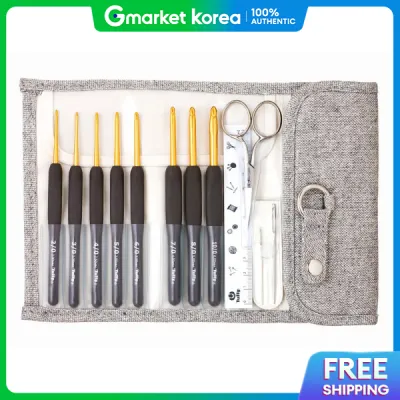
Keeping these small parts organized is crucial for maintaining a stress-free workspace. A practical starter kit should include a dedicated storage solution, such as a zippered canvas pouch or a structured roll-up case. This keeps your hooks protected from dust and humidity while ensuring that tiny accessories like stitch markers do not get lost in your home.
Be wary of kits that inflate their item counts with unnecessary filler gadgets. Items like knitting needle point protectors, complex plastic row counters, or circular stitch holders are completely useless for crochet and are often added simply to make a cheap kit look more valuable. Focus on kits that prioritize the quality of the essential tools over the sheer quantity of plastic extras.
How to Build and Verify Your Shortlist Online
Shopping for a crochet set on local e-commerce platforms requires a strategic approach to filter out low-quality listings. Start by using highly specific search terms such as “ergonomic crochet hook set” or “beginner crochet kit with yarn” rather than broad categories like “craft supplies.” This helps bypass irrelevant wholesale listings and focuses your results on complete, user-friendly packages.
Once you find a promising listing, closely inspect the product images provided by the seller. Zoom in on the hook handles to check for a smooth, matte finish on the ergonomic grips, and look for clear, molded millimeter markings. Examine the yarn photos to ensure the skeins are neatly wound and feature professional paper bands rather than arriving as loose, unlabelled bundles of string.
Cross-reference the technical specifications listed in the product description to ensure compatibility. Check that the millimeter sizes of the included hooks align with the recommended hook sizes for the provided yarn. If a kit includes a 5.0mm hook, the yarn should ideally be a medium worsted weight that pairs perfectly with that specific size.
Finally, watch out for common red flags that indicate a risky purchase. Avoid listings that rely entirely on generic stock photos without showing the actual contents of the kit in detail. Be cautious of sellers who do not specify the exact materials used for the hooks or those who offer unbranded yarn without any fiber content or care instructions. Choosing a seller with transparent specifications ensures you receive a reliable set of tools.
Frequently Asked Questions (FAQ)
Can I use a standard beginner crochet set for amigurumi projects?
Standard beginner crochet sets are generally designed for flat projects like scarves, dishcloths, or simple blankets, which utilize medium-weight yarn and larger hooks. Amigurumi, the craft of making stuffed yarn toys, requires very tight, dense stitches to prevent the polyester stuffing from leaking out. To transition to amigurumi, you will eventually need to supplement your starter kit with smaller hook sizes, typically between 2.0mm and 3.5mm, and pair them with finer sport or DK weight yarns.
Do I need to buy extra yarn immediately with a starter kit?
Most starter kits provide just enough yarn to complete one or two small practice projects or a few basic swatches. If you plan to dive straight into a larger project like a full-sized scarf or a baby blanket, you should purchase additional yarn immediately. When buying extra yarn, ensure you select skeins from the same manufacturer and, if possible, the same dye lot number printed on the label to avoid subtle color variations in your finished work.

Community discussion
Share your experience or ask a question. Comments are reviewed before publication.