
Selecting the right paper for a customized notebook requires balancing two distinct functions: how well the surface displays your printed branding and how comfortably it accepts a pen. If you prioritize vibrant, high-contrast logos, you might lean toward smooth, treated surfaces. However, if your users expect a reliable writing experience with fountain pens or gel inks, those same treated surfaces can cause slow drying times and smudging. Finding a balanced middle ground involves evaluating surface coatings, paper weight, and texture against your specific design and writing requirements.
Understanding Paper Surfaces for Custom Printing Results
The choice between coated and uncoated paper is the first major decision when designing a customized notebook. Coated papers feature a surface sealant that prevents ink from sinking deep into the fibers. This treatment keeps printed colors vibrant, lines sharp, and details crisp, making it a practical choice for full-color cover inserts, highly detailed logos, or photographic pages. However, this barrier also prevents liquid writing inks from absorbing quickly, which can lead to smearing during daily use.
Uncoated paper, on the other hand, allows ink to penetrate the fibers directly. While this provides a highly tactile, natural feel that is well-suited for writing, it also causes printed graphics to spread slightly, a phenomenon known as dot gain. As a result, intricate custom designs or small text printed on uncoated pages may appear slightly softer and less vibrant than they would on a coated surface.
Products mentioned in this guide
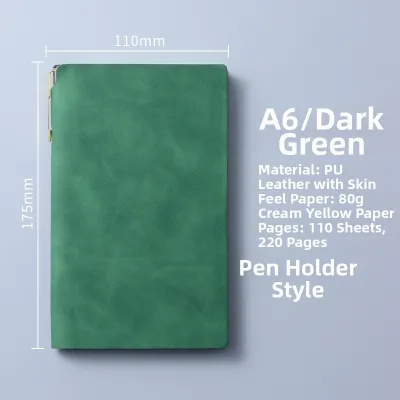
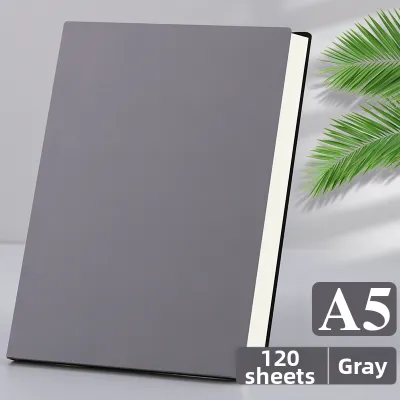
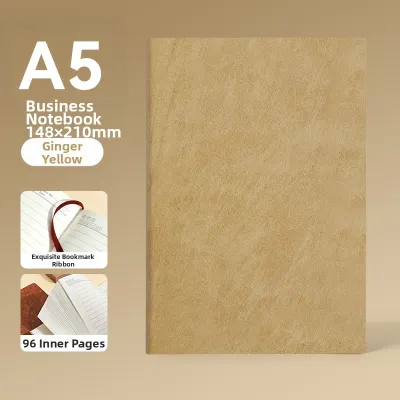
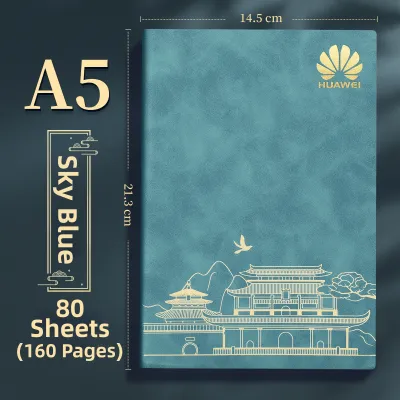
Prices are valid at publication and may change. Please refer to the product page for the latest price.
When planning complex double-sided designs, you must also evaluate paper brightness and opacity. High-brightness papers reflect more light, which enhances color contrast but can make show-through more noticeable if the paper is too thin. Checking the manufacturer’s opacity specifications helps ensure that printed elements on one side of the page do not bleed visually through to the other, preserving a clean look for your custom layout.
For designs featuring heavy ink coverage, such as solid dark backgrounds or large colored blocks, highly porous uncoated papers can oversaturate and warp. If your custom design requires extensive ink coverage, it is wise to consult your printing partner early. They can recommend adjustments to your digital files or suggest specific paper treatments to prevent the sheets from buckling during the printing process.
Matching Paper Texture and Weight to Your Writing Tools
The tactile feel of paper, often referred to as its “tooth,” directly influences how different writing instruments perform. Paper with a prominent tooth has a slightly rough, textured surface that provides satisfying feedback for pencils and sketch pens, as the texture helps shave off graphite or hold dry pigments. Conversely, gel pens and fountain pens perform best on smoother surfaces where the tip can glide without catching or skipping.

Ink bleed and feathering are common frustrations that occur when paper fibers draw liquid ink outward in a spiderweb pattern. This issue is particularly common with wet-ink pens on low-quality, highly absorbent paper. While paper weight, measured in grams per square meter (GSM), serves as a helpful baseline for thickness, a heavier weight alone does not guarantee ink compatibility. A 100 GSM paper with poor surface sizing can still feather badly, while a well-sized 80 GSM paper might handle fountain pen ink cleanly.
To avoid costly mistakes on bulk orders, you should establish a hands-on testing protocol before finalizing your customized notebook specifications. Request physical paper swatches or sample notebooks from your supplier. Test these samples using the exact pens, markers, and pencils your target audience is likely to use, checking specifically for drying speed, line sharpness, and any signs of ink bleeding through to the reverse side.
Evaluating Recycled and Specialty Paper Trade-Offs
Choosing eco-friendly or specialty papers introduces unique aesthetic and functional characteristics to your customized notebook. Recycled paper is highly valued for its sustainability, but it often contains shorter wood fibers and tiny natural inclusions. These shorter fibers can make the paper surface slightly more textured and absorbent, which may cause liquid inks to feather more easily and can reduce the overall tensile strength of the pages.
Specialty options like ivory or cream-tinted papers offer a warm, classic aesthetic that reduces eye strain during long writing sessions. However, the underlying warm tone of the paper will shift the color profile of your printed custom designs. Cool tones, blues, and light pastels can appear slightly muted or yellowed when printed on ivory stock, meaning your brand colors may not match your digital proofs exactly.
To ensure your chosen material meets both functional and aesthetic standards, avoid relying solely on marketing terms like “premium” or “eco-friendly.” Instead, request the supplier’s technical material data sheets to verify the exact fiber composition, brightness rating, and sizing methods. Combining these specifications with physical sample testing ensures that your sustainable or tinted notebook remains highly functional for the end user.
Building Your Paper Selection Strategy for Customized Notebooks
A successful customized notebook project begins with a clear understanding of how the product will be used. If the notebooks are intended as high-end corporate gifts featuring full-color brand artwork and minimal writing space, prioritizing coated, high-opacity paper is logical. If the goal is to provide a functional daily journal for writers, artists, or students, prioritizing uncoated, fountain-pen-friendly paper with minimal branding on the inner pages is a better approach.
To simplify the decision-making process, create a simple selection matrix that balances design complexity against writing needs. For example, if your design features simple line art and users prefer gel pens, a smooth, uncoated paper of 80 to 100 GSM is often a suitable option. If your design includes heavy color blocks and users write with ballpoint pens, a slightly coated or highly calendered uncoated paper will deliver reliable results.
Before committing to a final production run, establish clear pre-production checks and stop conditions with your manufacturer. Confirm the exact paper specifications in writing, including the GSM, surface treatment, and country of origin if applicable. Request a physical, printed proof of a single notebook to verify color accuracy and binding strength, and do not proceed to bulk printing until you have personally tested the proof with your preferred writing tools.
Frequently Asked Questions (FAQ)
Does a higher paper weight always mean better writing quality?
No, a higher paper weight does not automatically guarantee a better writing experience. While a heavier paper (such as 120 GSM) is thicker and more effective at preventing ink from showing through to the other side, it can still suffer from feathering and bleeding if the surface is not properly sized or treated. The chemical sizing applied during manufacturing is what controls ink absorption, making surface treatment just as important as thickness for preventing ink spread.
Can I use the same paper for full-color photo printing and fountain pens?
Using the same paper for both full-color photos and fountain pens requires a careful compromise. Coated paper is ideal for vibrant, sharp photo printing because it keeps the ink on the surface, but this same barrier prevents wet fountain pen ink from drying, leading to smudges. For a balanced result, look for highly calendered, smooth uncoated paper or lightly sized premium paper, which allows photos to print with reasonable clarity while still absorbing fountain pen ink quickly enough to prevent smearing.

Community discussion
Share your experience or ask a question. Comments are reviewed before publication.