
Finding the right hard cover notebook is a highly personal decision that depends entirely on how your favorite pen interacts with the page. While one notebook might feel like a luxurious canvas for a fountain pen, another might cause wet inks to feather and bleed through to the next page. The writing experience is not determined by brand prestige alone, but by a combination of paper weight, surface texture, and manufacturing treatments.
To find the right fit, you must look past the cover design and examine the technical specifications of the paper inside. Understanding how paper weight, sizing, and color affect your writing will help you avoid the frustration of ghosting or skipping. By matching your daily writing tools to the correct paper profile, you can ensure a smooth, consistent, and enjoyable writing experience every time you open your journal.
Key Factors That Define Paper Quality and Writing Feel
Paper weight, measured in grams per square meter (GSM), is the most common specification you will encounter when comparing notebooks. Generally, a higher GSM indicates thicker, heavier paper that offers greater resistance to ink penetration. Standard office paper typically ranges from 70 GSM to 80 GSM, while premium notebooks often feature paper between 100 GSM and 120 GSM. Thicker paper reduces ghosting—where writing is visible on the reverse side of the page—and prevents bleed-through, where ink actually leaks through the fibers.
Products mentioned in this guide
![[SG] Notebook | Loose Leaf Notebooks | Exercise Book | Notepad | Journal Hardcover](https://img.lazcdn.com/g/p/6c2f2274833a0e99484c77e310fa6780.jpg_400x400q80.jpg_.webp)
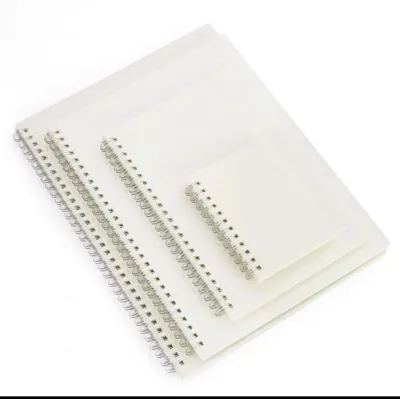
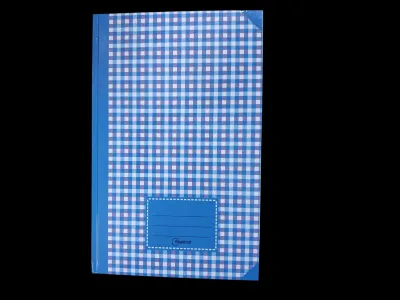
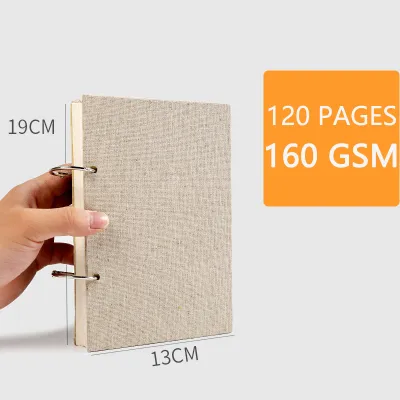
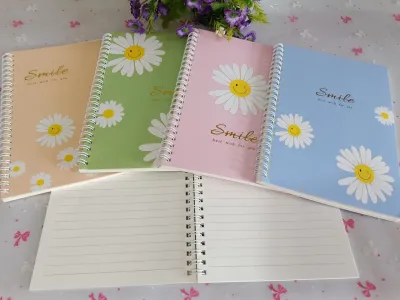
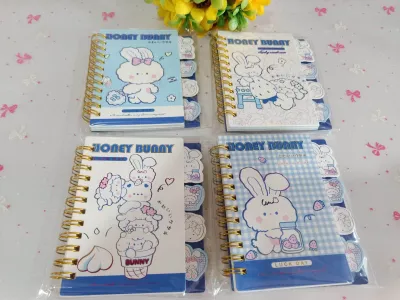
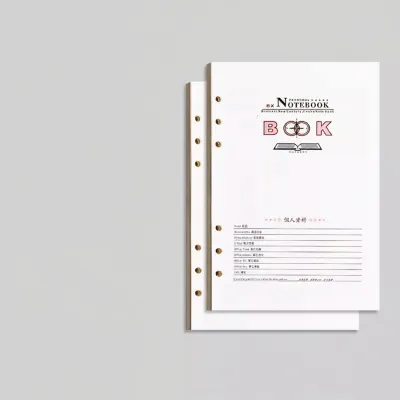
Prices are valid at publication and may change. Please refer to the product page for the latest price.
However, paper weight is only one part of the equation; the surface treatment, or sizing, plays an equally critical role. Sizing refers to chemicals added during manufacturing to control how much liquid the paper absorbs. Highly sized paper resists water, allowing wet inks to sit on the surface and dry slowly, which preserves crisp lines and vibrant ink colors. Conversely, paper with minimal sizing absorbs ink quickly, which prevents smudging but can lead to feathering, where the ink spreads outward along the paper fibers like a spiderweb.
The texture of the paper, often described as its “tooth,” dictates the tactile feedback you feel while writing. Smooth, coated papers allow pens to glide effortlessly across the surface, making them ideal for fine-tip gel pens and fountain pens. Textured papers have more tooth, providing a satisfying resistance that grips graphite and ballpoint ink. Additionally, the color of the paper—ranging from bright white to warm cream—affects visual comfort. Bright white paper offers high contrast for colorful inks, while cream or ivory tones reduce eye strain during long writing sessions under bright lights.
How to Evaluate Notebooks Before You Buy
When shopping for a hard cover notebook, you can use several indicators to assess its quality before making a purchase. Start by checking the manufacturer’s specifications for the exact GSM and paper type. Look for terms like “acid-free” or “archival-grade,” which indicate that the paper will not yellow or deteriorate over time. If the manufacturer does not disclose the paper weight or origin, it is often a sign of standard, utility-grade paper that may not perform well with wet inks.

The structural integrity of the notebook is just as important as the paper itself. Examine the binding to ensure it allows the notebook to lay completely flat when opened. A true lay-flat binding, usually achieved through sewn sections rather than glued pages, prevents you from having to fight the cover while writing near the margins. Additionally, observe the margin placements and the thickness of the page block relative to the hard cover; a sturdy cover should extend slightly past the pages to protect the edges from bending during transit.
If purchasing online, look for customer feedback regarding ink compatibility or check if the seller offers sample pages. Many specialty stationery shops provide physical swatches or allow you to test display models in-store. If you are buying in bulk for journaling or sketching, it is wise to purchase a single notebook first to run your own writing tests. Checking the return policy is also essential, as some retailers allow returns only if the plastic wrap remains intact, preventing you from testing the paper beforehand.
Comparing Paper Profiles Across Notebook Categories
Notebook manufacturers design their products for different audiences, and these target markets dictate the paper selection and manufacturing priorities. A notebook designed for professional sketching will have vastly different paper properties than one intended for quick lecture notes. Understanding these categories helps you narrow down your options based on your primary writing activities.
Premium and Archival Notebooks
Premium and archival notebooks are engineered for writers who demand high performance from their paper. These notebooks typically feature paper weights ranging from 100 GSM to 120 GSM, combined with specialized surface sizing that prevents feathering and bleed-through. The paper is often exceptionally smooth, allowing fountain pens and wet rollerballs to glide without catching on the fibers.
However, these characteristics come with trade-offs. Premium paper is heavier, which increases the overall carry weight of the notebook in your bag. Because the paper is thicker, these notebooks often contain fewer total pages than their everyday counterparts to maintain a portable thickness. Additionally, the specialized coatings that prevent bleed-through also extend ink drying times, which can lead to accidental smudging if you close the notebook too quickly.
Everyday and Student Notebooks
Everyday notebooks prioritize utility, high page counts, and rapid drying times. The paper in these notebooks usually ranges from 70 GSM to 90 GSM, making the pages thinner and lighter. This allows manufacturers to pack more pages into a single hard cover without creating an excessively bulky book, which is ideal for daily journaling, meeting notes, or lecture tracking.
The primary advantage of everyday paper is its fast absorption rate, allowing gel pens and ballpoints to dry almost instantly. This makes them highly practical for left-handed writers or anyone taking quick notes on the go. The trade-off, however, is a higher susceptibility to ghosting and bleed-through when used with wet inks, fountain pens, or heavy markers. If you write on both sides of the page, you may find the ghosting distracting on thinner paper.
Mixed Media and Sketch Notebooks
Mixed media notebooks are designed for creators who use pencils, markers, ink washes, and light watercolors. The paper in these notebooks is significantly heavier, often starting at 140 GSM and exceeding 200 GSM. This thickness provides the structural strength needed to absorb wet media without warping, buckling, or tearing.
The surface typically features a distinct texture or tooth that grips dry media like graphite, charcoal, and colored pencils. While this texture is excellent for drawing, it can feel scratchy or inconsistent when writing with fine-tip gel pens or fountain pens. These notebooks are highly versatile for cross-disciplinary artists, but they are generally less suited for dedicated, long-form daily writing due to their bulk and textured surface.
Matching Your Pen and Ink to the Paper
Achieving a satisfying writing experience requires matching your pen to the properties of the paper. Fountain pens and wet rollerballs deposit a significant amount of liquid ink onto the page, requiring paper that can handle moisture without failing. For these instruments, you should look for coated, high-GSM paper that keeps the ink on the surface, preserving crisp line edges and showcasing the ink’s shading or sheen.
Gel and rollerball pens use water-based inks that flow easily but dry faster than fountain pen inks. These pens perform optimally on smooth, moderately absorbent paper. If the paper is too smooth or heavily coated, the rollerball may skip or slide without rotating properly, leading to broken lines. A balanced 80 GSM to 100 GSM paper provides just enough friction for the ball to rotate while absorbing the ink quickly enough to prevent smearing.
Ballpoint pens and pencils are highly forgiving, working well on almost any paper surface. Because ballpoint ink is oil-based and viscous, it rarely bleeds or ghosts, even on very thin paper. Pencils rely on the paper’s texture to shave off microscopic particles of graphite, meaning they perform exceptionally well on paper with a slight tooth. If you prefer a tactile, feedback-rich writing experience, pairing a pencil or ballpoint with a slightly textured, uncoated paper will feel much more satisfying than writing on a slick, coated surface.
Decision Framework: Which Notebook Profile Fits You?
To finalize your choice, consider how your writing habits, preferred pens, and daily routine align with the different notebook profiles available.
Choose a Premium or Archival notebook if you write with fountain pens, wet rollerballs, or heavy gel pens. This profile is ideal if you value clean pages with zero bleed-through, appreciate a smooth writing feel, and want your journals to last for decades without yellowing. Keep in mind that you will pay a higher price per page and may need to wait a few seconds for your ink to dry before turning the page.
Choose an Everyday notebook if you rely on standard ballpoint pens, pencils, or quick-drying gel pens. This option is best if you need a lightweight, high-capacity notebook for rapid note-taking, prioritize portability, and want to maximize the number of pages for your budget. Be prepared for some ghosting if you occasionally switch to wetter pens, and consider writing on only one side of the page if the show-through bothers you.
Choose a Mixed Media notebook if your routine involves writing, sketching, and light painting. This profile is highly suitable if you use heavy markers, brush pens, or light watercolor washes alongside your notes. The thick, textured pages will prevent warping, though the notebook will be heavier to carry and will contain fewer pages overall.
Verify first if you require a true 180-degree lay-flat binding for comfortable writing near the center seam. If you apply heavy writing pressure, look for thicker paper to prevent deep embossing on the reverse side of the page. Always check the manufacturer’s specifications for acid-free certification if you are archiving important records or personal journals.
Frequently Asked Questions (FAQ)
Does a higher GSM always mean better writing quality?
No, a higher GSM does not automatically guarantee a more consistent writing experience. While a higher GSM indicates thicker paper that resists bleed-through, the writing quality depends heavily on the paper’s surface treatment and fiber composition. An uncoated 120 GSM paper may still cause fountain pen ink to feather and spread, whereas a highly sized, coated 80 GSM paper can handle wet inks beautifully with crisp lines. The ideal paper is a combination of the right weight for your opacity needs and the right surface texture for your preferred pen.
How can I test a notebook's paper quality without ruining it?
To test a notebook’s paper quality without spoiling your new journal, use the very last page or a discrete corner near the back binding. Apply a small stroke of your wettest pen, a heavy gel pen, and a highlighter, then wait for them to dry completely. Check the reverse side of the page to evaluate the level of ghosting and bleed-through. You can also observe how quickly the ink dries and whether the edges of the lines remain sharp or begin to feather into the paper fibers.

Community discussion
Share your experience or ask a question. Comments are reviewed before publication.