
Selecting a premium notebook is a highly personal decision where tactile feel, design, and paper performance must align with your daily writing tools. The classic hard cover Moleskine is widely recognized for its iconic design, durable binding, and travel-ready construction, but its standard paper is not a universal solution for every type of ink. For writers who rely on standard ballpoint pens, gel pens, or pencils, the smooth, cream-colored paper of a Moleskine offers a comfortable and reliable surface. However, those who prefer wet inks, such as fountain pens or heavy rollerballs, often find that alternative premium notebooks with higher paper weights or specialized sizing treatments provide better resistance to feathering and bleed-through. Understanding the technical specifications of paper—such as weight, texture, and sizing—is the key to determining whether a Moleskine or an alternative brand will deliver the best writing experience for your specific needs.
Defining the Comparison: Moleskine and Premium Alternatives
To evaluate a hard cover Moleskine against other premium notebooks, it is essential to establish what defines a “premium” stationery product. In this category, premium status is determined by a combination of structural durability, binding integrity, and paper consistency. A high-quality hard cover notebook must feature a robust exterior that protects the pages from bending or moisture, especially when carried daily in a bag. The binding should ideally be thread-bound, allowing the notebook to lie flat when open without the spine cracking or pages detaching over time.
Beyond the cover and binding, the core of any notebook is its paper. When comparing brands, stationery enthusiasts focus on three primary criteria: paper weight, surface texture, and ink handling. Paper weight is measured in grams per square meter (GSM), which indicates the density and thickness of the sheets. Surface texture, often referred to as “tooth,” describes how smooth or rough the paper feels against a pen tip. Ink handling properties determine how the paper fibers react to different liquid mediums, controlling whether the ink stays crisp on the surface or spreads uncontrollably. Before purchasing any premium notebook, you can typically find these exact specifications printed on the paper band wrapping the cover, or detailed within the technical specifications on the manufacturer’s official website.
Products mentioned in this guide
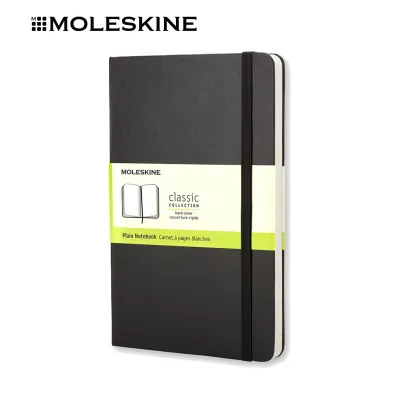
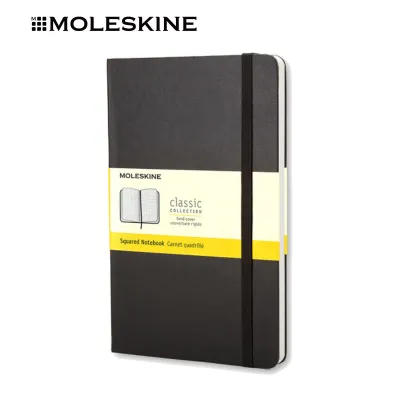
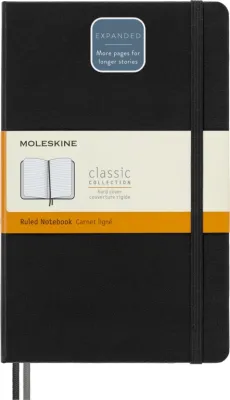
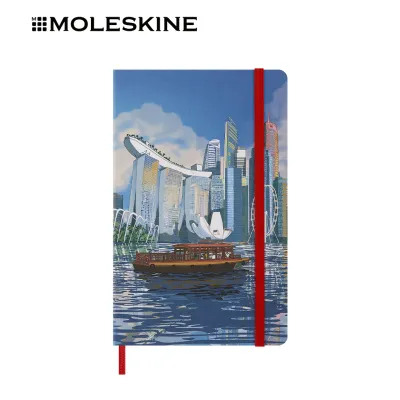
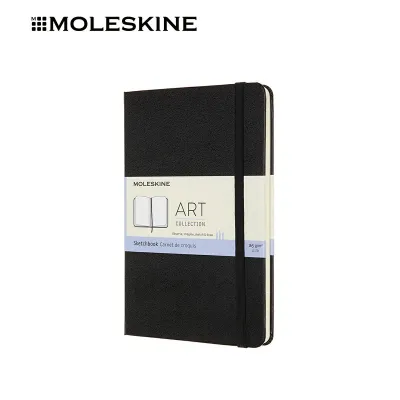
Prices are valid at publication and may change. Please refer to the product page for the latest price.
Paper Weight and Texture: Evaluating the Hard Cover Moleskine
The standard hard cover Moleskine typically features acid-free, ivory-colored paper with a weight of approximately 70 GSM. This weight is relatively light compared to other premium notebooks on the market, which often start at 80 GSM and can go up to 120 GSM or higher. The lower GSM of standard Moleskine paper allows the notebook to remain relatively slim and lightweight, accommodating a high page count without becoming excessively bulky. The surface finish is exceptionally smooth with very little tooth, meaning there is minimal friction when writing. This smooth, low-friction surface is highly compatible with ballpoint pens, fine-liner gel pens, and hard-lead pencils, allowing the writing instrument to glide effortlessly across the page.

However, it is important to distinguish between standard Moleskine editions and their specialized professional or artist lines. The brand offers dedicated sketchbooks, watercolor notebooks, and professional planners that utilize significantly heavier paper, ranging from 120 GSM to 200 GSM or more. These artist-grade papers feature different surface treatments, such as cold-pressed textures designed to absorb water or heavy pigments without warping. When shopping online or in-store, always check the product description for the specific collection name and GSM rating, as a classic ruled notebook will perform very differently from an art-focused edition.
If you are shopping in a physical stationery store, you can often evaluate paper quality even if a tester notebook is not readily available. Gently pinch a single page of a display model between your thumb and forefinger to gauge its thickness and stiffness. Hold the page up to the store’s overhead lighting to observe its opacity; paper that allows a high amount of light to pass through is more likely to show “ghosting” when written on with darker inks. When browsing online, look for specific keywords in the product specifications such as “acid-free,” “vellum finish,” or “hot-pressed” to understand the paper’s manufacturing style and expected texture.
Ink Performance: Managing Bleed-Through and Feathering
The interaction between ink and paper is governed by chemistry and physics, specifically how the paper fibers are bound and treated. When liquid ink is applied to paper, three common issues can occur: feathering, bleed-through, and ghosting. Feathering happens when the ink spreads horizontally along the paper fibers, causing sharp lines to look fuzzy or blurry. Bleed-through occurs when the ink penetrates entirely through the sheet, appearing as wet spots on the reverse side of the page. Ghosting, or shadowing, is when the writing is visible as a dark shadow on the back of the page, even though the ink has not physically broken through the paper surface.
These issues are heavily influenced by paper weight and “sizing”—a manufacturing process where chemical agents are added to the paper pulp to regulate its absorbency. Highly sized papers resist liquid absorption, keeping the ink on the surface where it can dry slowly and maintain sharp edges. Standard Moleskine paper has relatively light sizing and a lower GSM, making it highly absorbent. While this absorbency allows standard gel and ballpoint inks to dry almost instantly—preventing smudges—it also makes the paper more susceptible to feathering and bleed-through when paired with wet fountain pen inks or heavy rollerballs.
To manage these characteristics, you can perform a simple, controlled ink test at home whenever you start a new notebook. Turn to the very last page or an index page and draw small lines or color swatches using your favorite writing instruments. Observe how long the ink takes to dry, whether the edges of the lines remain sharp, and if any ink bleeds through to the other side. If you prefer using wet inks but want to maintain a slim notebook profile, you must accept the trade-off of potential ghosting. Conversely, choosing a notebook with thicker, heavily sized paper will eliminate bleed-through but will result in a heavier, thicker book with fewer total pages.
Price and Value: Weighing the Premium Experience
When evaluating a hard cover Moleskine, which typically retails in Singapore for around S$30 to S$45 depending on the size and edition, it is important to look at the overall package rather than just the paper specifications. The premium price point of these notebooks is driven by several design and structural elements that go beyond the raw paper cost. Moleskine notebooks are highly regarded for their classic, minimalist aesthetic, rounded corners, reliable elastic closure band, and the expandable inner pocket at the back for storing loose notes or receipts. The durable hard cover, traditionally wrapped in a coated oilcloth material, provides a rigid writing surface that allows you to write comfortably on your lap or while standing.
To determine the true value of a notebook, calculate its cost-per-page by dividing the retail price by the total number of pages. A standard medium-sized Moleskine often contains 240 pages, which offers a relatively low cost-per-page compared to thicker, specialized art journals that may only contain 80 to 100 pages of heavy paper. You should also consider the expected lifespan of the notebook. If you use a notebook daily for rapid journaling, quick task lists, or professional meeting notes with a standard ballpoint pen, the structural durability of the cover and binding ensures the book will survive months of being tossed into a backpack or briefcase without falling apart.
Ultimately, the value proposition is conditional. The investment in a hard cover Moleskine is highly justified if you value a lightweight, durable, and beautifully designed notebook for everyday carry, and primarily write with ballpoints, pencils, or fine gel pens. However, if your writing routine revolves around fountain pens, calligraphy, or heavy ink washes, prioritizing pure paper performance over brand heritage is a more cost-effective path. In those cases, seeking alternative brands that allocate more of their manufacturing cost to high-GSM, fountain-pen-friendly paper will yield a more satisfying writing experience.
How to Choose: Decision Framework for Your Writing Needs
To simplify your next stationery purchase, use this structured decision framework to match your writing habits with the ideal notebook type.
Choose the hard cover Moleskine if:
- You primarily write with ballpoint pens, fine-point gel pens, or pencils.
- You require a highly durable, rigid cover that allows you to write comfortably without a desk.
- You value classic design details like the expandable back pocket, elastic closure, and a slim, travel-friendly profile.
- You prefer a high page count in a compact form factor.
Choose an alternative premium brand if:
- Your primary writing instruments are fountain pens, broad-nib rollerballs, or wet gel pens.
- You dislike "ghosting" and want to use both sides of every page with dark or heavy inks.
- You require specialized paper weights (100 GSM to 120 GSM) for sketching, light watercolor, or heavy ink swatching.
- You prioritize paper specifications and ink-handling performance over brand recognition.
Verify first if:
- The specific notebook edition you are buying matches your intended use (e.g., do not buy a classic ruled notebook if you need a sketchbook).
- The retailer's return policy allows for exchanges if you discover a manufacturing defect, as many stationery stores do not accept returns once the protective plastic wrap is removed.
- You can find user reviews or writing samples online that specifically pair your exact pen and ink combination with the notebook model you are considering.
Frequently Asked Questions (FAQ)
Is standard Moleskine paper suitable for fountain pens?
Standard Moleskine paper, which typically features a weight of 70 GSM and light sizing, is generally not optimized for fountain pens. The highly absorbent nature of the paper can cause wet fountain pen inks to feather across the page and bleed through to the reverse side. If you want to use a fountain pen in a Moleskine, it is recommended to use an extra-fine or fine nib paired with a dry-flowing ink formulation. Alternatively, look for specialized editions within the brand’s lineup, such as their heavier-weight art or professional collections, which are designed to handle wetter mediums.
How can I prevent ink from bleeding through my hard cover notebook?
If you are experiencing ink bleed-through in your notebook, you can use a few practical techniques to protect your pages. Place a sheet of heavy blotter paper or a thick index card directly underneath the page you are writing on to absorb any excess ink and prevent it from marking the subsequent sheets. Additionally, try switching to faster-drying, water-based inks or fine-tip pens that deposit less liquid onto the paper surface. Always allow the ink to dry completely before closing the notebook to prevent the wet ink from transferring to the opposite page.
What should I look for in a premium notebook if I use gel pens?
When choosing a premium notebook for gel pen use, the primary goal is to balance ink absorption with drying speed to prevent smudging. Look for paper with a smooth finish that allows the gel ink to glide without skipping, but with enough absorbency to let the ink dry quickly. A paper weight of 80 GSM to 100 GSM is often ideal for gel pens, providing enough thickness to prevent ghosting while maintaining a reasonable drying time. Reading user reviews that specifically mention gel pen performance can help you verify how a particular paper handles the unique flow of gel-based inks.

Community discussion
Share your experience or ask a question. Comments are reviewed before publication.