
Selecting suitable Children’s Day gifts for primary school students in Singapore requires balancing a child’s excitement with the practical demands of their daily school environment. Highly practical stationery gifts are those tailored to a student’s specific developmental stage, cognitive load, and classroom requirements.
While a Primary 1 student needs tactile, grip-correcting tools to build foundational writing habits, a Primary 6 student preparing for major national examinations requires high-efficiency, exam-compliant gear that minimizes physical fatigue. By aligning your gifts with these academic milestones, you ensure that your gesture is both highly appreciated and actively used throughout the school year.
Core Criteria for Choosing School-Ready Stationery Gifts
Before purchasing any stationery items, it is essential to establish a clear evaluation framework based on safety, school compliance, ergonomics, and long-term utility. Singapore primary schools maintain specific guidelines regarding classroom materials to minimize distractions and ensure a safe learning environment.
Products mentioned in this guide
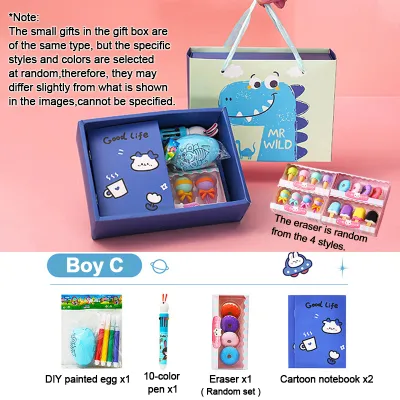
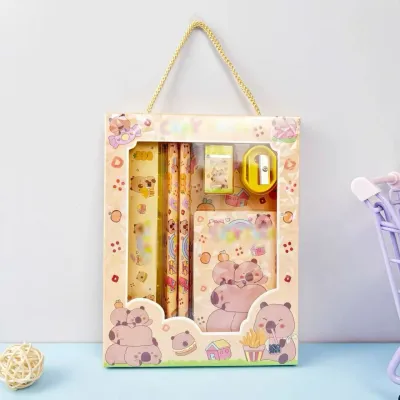
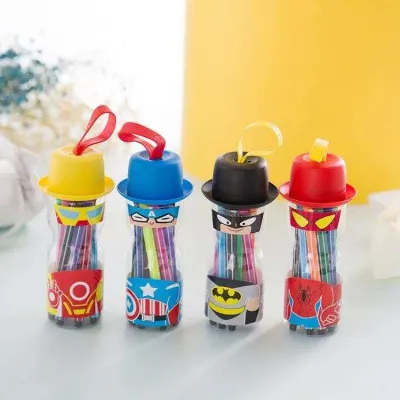
![[SG Stock] Wooden Slim Bookmark Stationary Birthday Party Gift Set | Childrens Day](https://img.lazcdn.com/g/p/da3302a4426a16bac428c039dbb057fc.jpg_400x400q80.jpg_.webp)
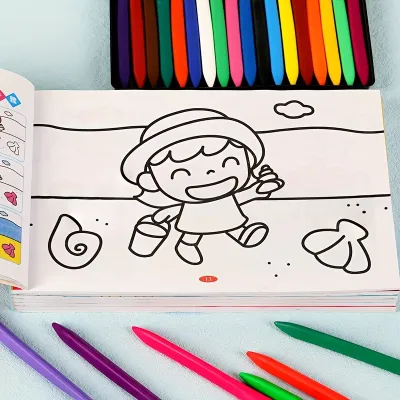
Prices are valid at publication and may change. Please refer to the product page for the latest price.
Safety remains a key consideration, especially for younger children who frequently handle art supplies and writing tools. When selecting items like colored markers, gel inks, or plastic rulers, look for clear non-toxicity certifications on the packaging. Standard labels such as the “AP Non-Toxic” seal or the “CE” mark indicate that the materials have undergone safety testing. Avoid products with strong chemical odors, solvent-based inks, or loose, small components that could pose choking hazards.
School-specific regulations must also guide your choices. Many primary schools in Singapore enforce rules regarding the size, color, and complexity of stationery items allowed in the classroom. For instance, overly bright, noisy, or multi-functional pencil cases that double as toys are often restricted because they distract students during lessons. Checking typical school bookshop lists or general school handbooks can provide valuable insights into what is permitted.
Ergonomic design is another critical factor that directly impacts a child’s physical development. Primary school students spend hours writing every day, making comfortable grips essential for preventing hand fatigue and promoting proper posture. Stationery gifts should match the physical size and grip strength of the target age group. Younger children benefit from thicker, triangular barrels that naturally guide finger placement, while older students require balanced, lightweight instruments that support rapid note-taking.
Finally, consider the long-term sustainability of the gift. High-quality stationery should not become useless once the initial ink or lead runs out. Prioritize items that utilize standard, widely available refills and replacement parts. This not only extends the lifespan of the gift but also teaches children the value of maintaining and caring for their personal belongings.
Lower Primary (P1–P3): Tools for Foundational Writing and Organization
The transition into Primary 1 marks a significant shift in a child’s daily routine, requiring them to manage their own belongings and develop fine motor skills. Stationery gifts for students in Primary 1 to Primary 3 should focus on simplicity, ease of use, and physical support for handwriting development.

During these early years, children are still refining their pencil grip and hand-eye coordination. Thick-barrel wooden pencils or triangular mechanical pencils with thick leads (such as 1.3mm or 2.0mm) are practical choices. These designs prevent the lead from snapping easily under the heavy pressure typical of early writers, reducing frustration. Accompanying these with large, soft, dust-free erasers that require minimal physical effort to clean up mistakes helps keep worksheets neat without tearing the paper.
Pencil cases for lower primary students should be straightforward and distraction-free. Single-compartment zippered pouches made of durable canvas or soft silicone are ideal. These simple designs allow children to see all their tools at a glance, encouraging independent packing and unpacking habits. Avoid hard plastic cases with multiple spring-loaded buttons, hidden drawers, or built-in games, as these frequently lead to classroom distractions and are prone to breaking when dropped.
Item loss is a common challenge in lower primary classrooms, where identical stationery items are easily mixed up. Including a set of durable, waterproof name labels as part of a Children’s Day gift bundle is a highly practical addition. These labels can be customized with the child’s name and class, allowing them to identify their rulers, scissors, and pencil cases easily. This simple tool fosters a sense of ownership and responsibility over their personal property.
At this stage, it is best to avoid complex mechanical tools such as advanced pencil sharpeners with intricate gears, or multi-functional pens with numerous color switches. These items can be difficult for small hands to operate safely and often divert attention away from the teacher’s instructions. Stick to reliable, manual tools that perform a single function exceptionally well.
Middle Primary (P4–P5): Upgrades for Heavier Workloads and Note-Taking
As students progress to Primary 4 and Primary 5, their academic workload increases significantly with the introduction of more complex science experiments, mathematical concepts, and structured composition writing. Stationery gifts for this age group should support organized note-taking and efficient document management.
With the transition to heavier writing tasks, students can begin using standard mechanical pencils (typically 0.5mm or 0.7mm) and multi-color ballpoint or gel pens. Multi-color pens—featuring black, blue, red, and green inks in a single barrel—are incredibly useful for active reading and textbook annotation. Students can use different colors to highlight key vocabulary, mark corrections, or separate main ideas from supporting details, which enhances active learning and revision.
The volume of worksheets, practice papers, and notes increases dramatically in middle primary. To prevent loose sheets from cluttering school bags, gift items that facilitate systematic organization. Expandable file folders, multi-compartment accordion files, or color-coded subject folders are highly effective. These tools help students categorize their materials by subject, making it easier to locate homework and revision notes quickly.
While aesthetic appeal becomes more important to children in this age bracket, it must be balanced with functional durability. Middle primary students often commute independently or participate in co-curricular activities, meaning their school bags undergo significant wear and tear. Choose stationery items made from robust, lightweight materials that can withstand daily transit without adding unnecessary weight to their backpacks.
This is also the ideal time to transition from basic, single-compartment pouches to structured pencil cases with dedicated tool slots. These cases feature elastic loops for individual pens, mesh pockets for erasers and correction tape, and separate compartments for geometry sets. This level of organization helps students keep track of their expanding toolkits and ensures they can retrieve the exact instrument they need without rummaging.
Upper Primary (P6): Efficiency Gear for Exam Preparation
Primary 6 is a crucial year dominated by intensive preparation for national examinations, such as the Primary School Leaving Examination (PSLE). Stationery gifts for these students should focus entirely on efficiency, reliability, and compliance with strict examination board guidelines.
During examinations, speed and clarity are paramount. Gift sets for P6 students should feature high-quality, quick-drying gel pens that glide smoothly across the paper. Quick-drying ink is essential to prevent smudging, especially for left-handed writers or during fast-paced writing sections. Additionally, exam regulations in Singapore typically require stationery to be brought into the exam hall in clear, transparent pencil cases. A high-quality, transparent mesh or vinyl pouch makes a highly practical gift that ensures compliance with these rules.
Efficient error correction is another key requirement for upper primary students. High-quality correction tape that applies smoothly and allows for immediate rewriting without tearing is a staple. Gifting correction tape dispensers along with a supply of modular refills ensures that students do not run out of correction tools during critical study sessions or mock exams.
Time management is a vital skill during major examinations, where students must pace themselves carefully. Silent, digital desk timers or simple analog wristwatches that comply with exam hall rules (which strictly prohibit smartwatches and devices with audible alarms) are incredibly valuable accessories. These tools help students practice timed papers at home and maintain a steady pace during actual assessments.
Finally, upper primary students carry a vast amount of study material daily. High-capacity, lightweight organizers, such as slim ring binders or heavy-duty clipboards, help manage exam papers without adding bulk. Look for organizers that feature secure closures to prevent important revision notes from falling out during travel.
Stationery Gifts to Avoid for Daily School Use
While the variety of stationery available in retail stores is vast, many items are unsuitable for daily school use and can create unnecessary challenges for both students and teachers.
First, avoid toy-like stationery items that feature excessive moving parts, flashing lights, or sound effects. Items like puzzle erasers, maze pens, or scented markers often distract students from their work and can become a source of conflict in the classroom. Furthermore, small detachable parts on novelty erasers or pencil toppers can easily be lost or present choking hazards for younger siblings at home.
Second, steer clear of stationery that requires specialized or proprietary refills. If a pen or mechanical pencil can only use a specific, hard-to-find brand of ink or lead, it will likely be discarded once the initial supply is exhausted. Stick to standard sizes and configurations that can be easily purchased at local neighborhood bookshops or major stationery chains.
Third, filter out items with inappropriate graphics, aggressive themes, or designs that violate standard school uniform and grooming policies. Many schools maintain strict codes regarding the visual appearance of personal items brought onto campus. Minimalist, classic, or subtly patterned designs are always a safer and more versatile choice.
Lastly, avoid heavy, oversized novelty items. Giant wooden pencils, heavy metal pencil cases, and thick, hardbound journals add unnecessary physical strain to a child’s daily commute. A student’s backpack is already heavy with textbooks and files; stationery gifts should always prioritize lightweight materials and compact designs to protect the child’s physical well-being.
Frequently Asked Questions (FAQ)
Can I gift stationery sets with licensed cartoon characters?
Yes, but it is important to choose designs that strike a balance between the child’s personal interests and school appropriateness. Many primary schools discourage highly commercialized or flashy merchandise because it can cause distractions or social comparison among students. If you wish to gift character-themed stationery, opt for subtle, minimalist designs—such as a small character emblem on a solid-colored notebook—rather than full-cover, high-contrast novelty prints. Alternatively, customizable stationery sets that allow children to add their own name labels or simple stickers offer a personalized touch that can grow with the child as their tastes change.
What is a reasonable budget for a Children's Day stationery gift?
A practical budget for a Children’s Day stationery gift typically ranges from S$5 to S$20, depending on the grade level and the items included. For a basic gift tier of S$5 to S$10, you can assemble a highly useful bundle consisting of high-quality consumables, such as a pack of ergonomic wooden pencils, a dust-free eraser, and a simple zippered pouch. In the mid-range tier of S$10 to S$20, you can include more durable items like a structured multi-compartment pencil case, a set of multi-color gel pens, or an expandable subject organizer. Prioritizing the practical utility and physical comfort of the items over expensive, elaborate packaging ensures that your budget is spent on tools that genuinely support the child’s daily learning journey.

Community discussion
Share your experience or ask a question. Comments are reviewed before publication.