
When comparing glow in the dark paint brands for brightness and longevity, the true deciding factor is typically the type of photoluminescent pigment used—such as strontium aluminate versus zinc sulfide—and its concentration within the medium, rather than the brand name alone. Because there is no universal, standardized laboratory testing protocol across the consumer art supply market, declaring a single “brightest” or “longest-lasting” winner based on marketing claims is inaccurate. Instead of relying on vague promises, you can make the best choice for your specific project by verifying the chemical composition on product labels, understanding how application variables alter performance, and conducting controlled test swatches before committing to a full application.
Understanding Core Pigments: Strontium Aluminate vs. Zinc Sulfide
To make an informed comparison between different brands of glow in the dark paint, you must first look past the branding and examine the active photoluminescent pigments inside the bottle. Almost all consumer glow paints rely on one of two primary chemical compounds: strontium aluminate or zinc sulfide. These materials absorb electromagnetic radiation—usually in the form of ultraviolet or visible light—and slowly release that stored energy as visible light over time. The chemical structure of these compounds dictates their baseline performance, setting a hard physical limit on how bright they can glow and how long that glow will last.
Strontium aluminate is the modern standard for high-performance photoluminescent applications. This compound is highly efficient at storing and releasing light energy, typically providing an initial brightness that is significantly higher than older technologies. More importantly, its afterglow duration is exceptionally long, often remaining visible to dark-adapted eyes for several hours after a full charge. Because of these superior physical properties, strontium aluminate is the pigment of choice for premium craft paints, professional art supplies, and safety markings. However, this high performance comes with a higher manufacturing cost, which is reflected in the retail price of these premium brands.
Products mentioned in this guide
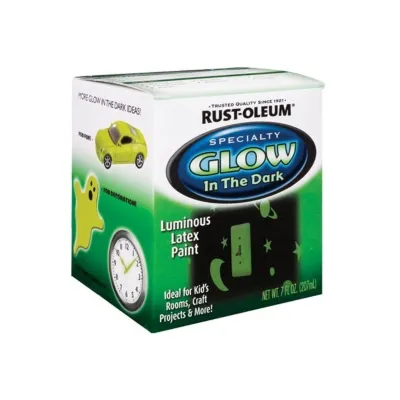
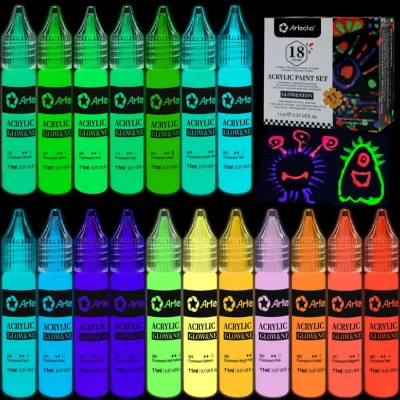
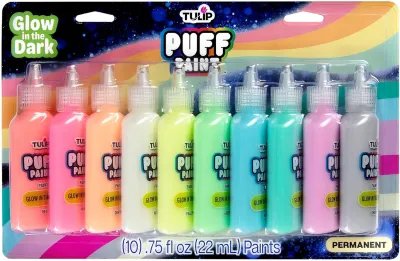
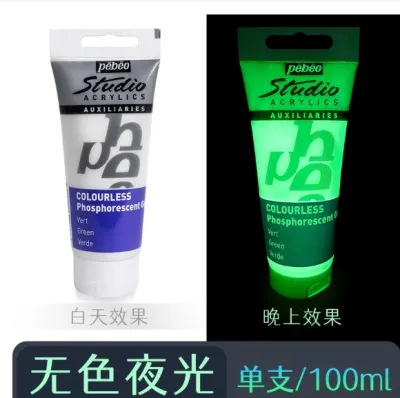
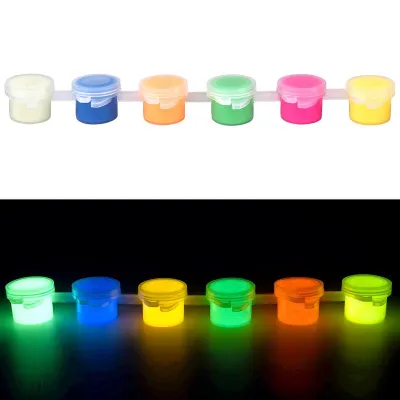
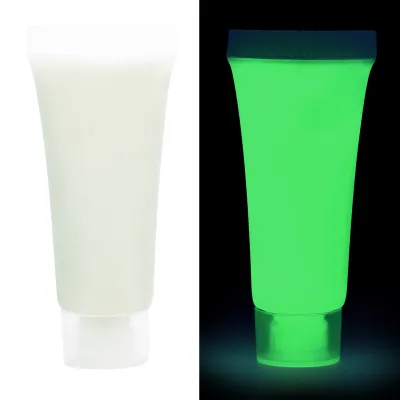
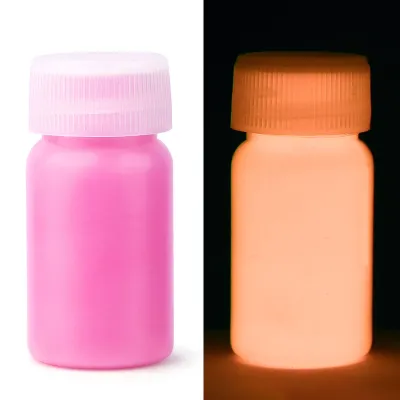
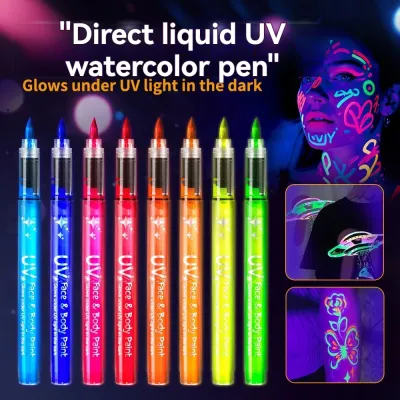
Prices are valid at publication and may change. Please refer to the product page for the latest price.
In contrast, zinc sulfide is the traditional, older pigment technology that has been used in glow-in-the-dark products for decades. While it is highly effective for quick charging and offers a bright initial flash of light, its energy storage capacity is limited. The glow from zinc sulfide paints typically decays rapidly, often fading to near-invisibility within thirty minutes to an hour. Because zinc sulfide is inexpensive to produce, it remains highly popular in budget-friendly craft paints, children’s art kits, and temporary novelty items.
When shopping for glow in the dark paint, you should not rely solely on front-of-box marketing terms like “extreme glow” or “professional grade.” Instead, look closely at the product label, the manufacturer’s technical data sheets, or the Safety Data Sheet (SDS) to verify the specific pigment type. A reputable brand will clearly state whether their product uses strontium aluminate or zinc sulfide. If a brand hides this information behind vague proprietary names, it is often safer to assume it contains the less expensive zinc sulfide pigment, especially if the price point is unusually low.
Key Metrics for Evaluating Brightness and Longevity
Evaluating the performance of different glow in the dark paint brands requires a clear understanding of two distinct metrics: initial brightness and afterglow duration. Initial brightness refers to the peak luminance emitted by the paint immediately after the charging light source is removed. This is the striking, intense glow that catches your eye right away. Afterglow duration, on the other hand, is the measure of how long the paint continues to emit a usable, visible glow as the stored energy gradually decays. A paint that has a high initial brightness does not guarantee a long afterglow duration, as some lower-quality formulations release their stored energy quickly in a short, bright burst.

Another critical factor that determines both brightness and longevity is the pigment concentration and particle size within the paint medium. Photoluminescent pigments are suspended as solid particles within an acrylic or polyurethane binder. The ratio of pigment to binder—often referred to as the loading density—directly impacts how much light the paint can absorb and emit. A brand that uses a high concentration of pigment will naturally outperform a brand that dilutes its pigment to save on manufacturing costs. Additionally, larger pigment particles (often measured by mesh size) have a larger crystal structure, allowing them to store more energy and glow brighter for longer. However, larger particles can result in a rough, textured finish when dry, whereas smaller particles offer a smoother application but may sacrifice some glow intensity.
Because there are no mandatory, standardized testing ratings printed on consumer paint bottles, manufacturers frequently use subjective marketing claims to describe their products. Phrases like “super bright,” “ultra-glow,” or “glows all night” are highly common but carry no technical weight. To translate these claims into realistic expectations, you must cross-reference them with the pigment type and concentration. A strontium aluminate paint with a high pigment loading is the only formulation physically capable of glowing throughout the night, whereas a zinc sulfide paint will always be limited to short-term illumination, regardless of the superlatives used on the packaging.
Application Variables That Affect Glow Performance
Even the highest-quality glow in the dark paint can underperform if the application environment and techniques are not optimized. One of the most critical variables is the color of the base coat or primer applied beneath the glow paint. Photoluminescent paints are inherently translucent because the light must be able to penetrate through the layers to charge the pigment particles throughout the film. If you apply glow paint directly over a dark or black surface, the dark background will absorb both the charging light and the emitted glow, severely dampening the visual effect. Applying a solid white or very light-colored primer first is essential, as it acts as a reflective mirror, bouncing the emitted light back toward the viewer and maximizing the perceived brightness.
The thickness of the paint application and the number of layers applied also play a vital role in the final performance. Because the pigment particles are suspended in a clear binder, a single thin coat of paint will have sparse pigment coverage, leaving gaps where no glow occurs. To achieve a solid, even glow, you must build up the pigment density by applying multiple thin coats. Applying several thin layers is far more effective than applying one thick, heavy coat, which can trap moisture, lead to uneven drying, and cause the paint to crack or peel. In humid climates, allowing adequate drying time between these thin layers is crucial to ensure the binder cures properly and maintains its clarity.
Finally, the type of light source used to charge the paint heavily influences its excitation efficiency. Photoluminescent pigments require specific wavelengths of light to charge effectively. Ultraviolet (UV) light, such as that from a UV blacklight or direct sunlight, is highly efficient and will charge the paint to its maximum capacity in just a few minutes. Standard indoor LED lights and fluorescent bulbs will also charge the paint, but they require longer exposure times and may not excite the pigments to their absolute peak brightness. Standard warm incandescent bulbs are the least effective charging source because they emit very little UV or blue-spectrum light.
How to Test and Verify Paint Performance Before Full Application
To avoid disappointment on a major project, you should always conduct a controlled test of your chosen glow in the dark paint brand before applying it to your final piece. Creating test swatches allows you to verify the paint’s drying speed, smoothness, and actual glow performance in your specific environment. Start by preparing a test card using a piece of heavy cardstock or a scrap piece of the material you plan to paint. Divide the test card into sections to compare different application methods: paint one section directly on the bare material, paint another section over a white primer, and apply varying numbers of coats (one, two, and three layers) across different zones.
Once the test swatches are completely dry, you can simulate your actual usage environment to evaluate the paint’s performance. Place the test card under your intended charging light source—whether that is a UV lamp, a household LED bulb, or natural sunlight—for a set period, such as ten minutes. This ensures that all swatches receive an equal and controlled charge, allowing for an accurate comparison of how the different layers and base coats affect the light absorption.
After charging, immediately move the test card into a completely dark room to observe the results. Note the initial brightness of each section; you will likely observe a dramatic difference between the section with a white primer and the section painted directly on a dark or bare surface. To evaluate the longevity and decay rate, check the swatches at regular intervals, such as fifteen minutes, one hour, and three hours. This simple tracking method will give you a realistic expectation of how long the glow remains functional for your specific project, helping you decide if you need to apply additional coats or switch to a higher-grade pigment.
Choosing the Right Paint for Your Specific Project
Selecting the right glow in the dark paint comes down to matching the technical specifications of the pigment to the practical demands of your project. If your project requires high initial brightness and a long-lasting afterglow that remains visible for hours, you should invest in premium, high-concentration strontium aluminate-based paints. These formulations are ideal for safety signage, emergency exit paths, starry ceiling murals, and outdoor markers where visibility throughout the night is essential. While these paints represent a larger initial investment, their superior performance and durability make them the only viable option for long-duration needs.
For projects that only require a short-term glow or are subject to strict budget constraints, zinc sulfide-based paints are highly suitable. These budget-friendly options are perfect for temporary party decorations, Halloween crafts, theatrical props that only need to glow during a specific scene, or children’s school projects. Because these items are typically used in environments with constant ambient light changes or for brief periods, paying a premium for strontium aluminate is unnecessary.
Before finalizing your purchase, you must also verify the environmental conditions your project will face. If the painted object will be exposed to outdoor elements, high humidity, or frequent handling, check the manufacturer’s specifications for weather and water resistance. In tropical climates with high moisture levels, standard water-based acrylic binders can degrade if left unprotected. You may need to choose a solvent-based glow paint or apply a clear, protective topcoat over the dried acrylic glow paint. If you use a topcoat, ensure it does not contain UV blockers, as these will prevent the underlying glow pigment from charging when exposed to sunlight or UV light.
Frequently Asked Questions (FAQ)
Does glow in the dark paint expire or lose its ability to glow over time?
The inorganic photoluminescent pigments themselves, such as strontium aluminate and zinc sulfide, are extremely stable and do not wear out or lose their ability to charge and glow, even after thousands of cycles. However, the paint medium—the liquid acrylic or polyurethane binder that holds the pigment—does have a limited shelf life. Over time, the binder can dry out, separate, or spoil inside the bottle. To maximize the lifespan of your paint, always seal the container tightly after use, store it in a cool, dry place away from direct sunlight, and check the manufacturer’s printed expiration date before starting a new project.
Can I mix glow in the dark paint with regular acrylic paint?
Mixing regular opaque acrylic paint directly into glow in the dark paint is not recommended, as it will severely degrade the glow performance. Opaque pigments block the light, preventing it from reaching the photoluminescent particles to charge them, and blocking any emitted light from escaping the paint layer. If you want to add color to your glow project, it is much more effective to use a layered approach. Apply your glow paint over a white base coat first, let it dry completely, and then apply an extremely thin, translucent layer of colored glaze or transparent ink over the top to tint the surface without blocking the light.

Community discussion
Share your experience or ask a question. Comments are reviewed before publication.