
When selecting a leather patch for a sewing project, there is no single best material; the right choice depends entirely on your specific needs for durability, workability, and budget. Genuine leather offers long-lasting durability and a unique aging process, making it ideal for heirloom or high-wear items, while faux leather provides a cost-effective, uniform, and often easier-to-sew alternative for temporary or fashion-forward crafts. This guide compares the core traits of both materials to help you evaluate which patch best aligns with your project goals, sewing equipment, and maintenance preferences.
Understanding the Core Differences
Genuine leather patches are derived from animal hides, typically cowhide or sheepskin. This organic origin gives each patch unique characteristics, such as natural grain variations, minor surface marks, and subtle color shifts. Structurally, genuine leather consists of dense, interlocking collagen fibers that provide inherent strength and flexibility. The edges of a genuine leather patch are naturally fibrous and can be left raw, burnished, or painted, depending on the desired aesthetic.
Faux leather patches, often referred to as synthetic or vegan leather, are manufactured materials. They generally consist of a fabric backing—such as woven polyester, cotton, or non-woven microfiber—coated with a plastic polymer layer, most commonly polyurethane (PU) or polyvinyl chloride (PVC). This manufacturing process ensures a highly uniform texture, consistent thickness, and repeatable grain patterns across every patch. However, the edges of synthetic patches can fray if the textile backing is exposed, often requiring folded hems, heat sealing, or pre-finished borders to prevent unraveling.
Products mentioned in this guide
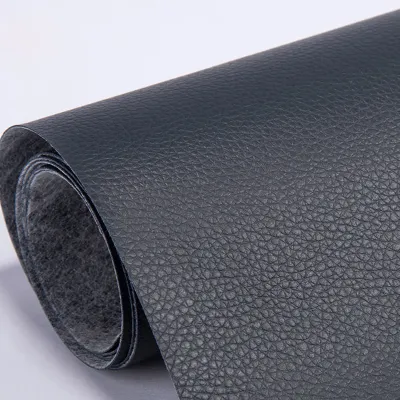
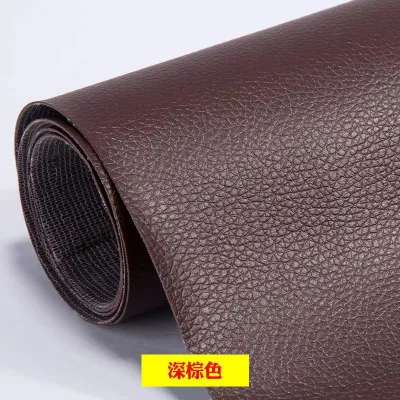
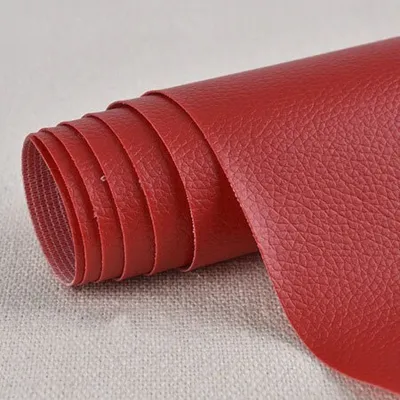
Prices are valid at publication and may change. Please refer to the product page for the latest price.
When planning a sewing project, the thickness and backing of the patch significantly influence how it drapes on the base fabric. Genuine leather patches can range from thin garment weight (around 0.8 mm) to thick, rigid tooling leather (over 2.5 mm). Synthetic patches are typically more uniform, often falling between 0.6 mm and 1.2 mm. A stiff, heavy patch sewn onto a lightweight cotton t-shirt will cause the fabric to sag and pucker, whereas a flexible, thin synthetic patch will move more naturally with the garment. Checking the weight and flexibility of both the patch and the base fabric is a critical first step before starting your project.
Comparing Durability and Aging
The long-term performance of a leather patch is heavily dictated by how its material structure responds to wear and environmental exposure. Genuine leather is celebrated for its ability to age gracefully. Over time, exposure to body oils, sunlight, and physical handling causes genuine leather to develop a rich patina—a darkening and softening of the surface that enhances its character. Because it is a breathable, organic material, it resists cracking when properly conditioned, allowing it to endure decades of use on high-wear items like backpacks and workwear.

In contrast, faux leather patches do not develop a patina; instead, they gradually degrade. The polymer coating on synthetic patches is susceptible to hydrolysis—a chemical breakdown caused by moisture—and UV damage from sunlight. In warm, humid environments like Singapore, this degradation can accelerate, leading to a dry, brittle surface that eventually cracks, flakes, or peels away from the fabric backing. Once the plastic layer begins to peel, the damage is irreversible, and the patch must be replaced to restore the item’s appearance.
Before purchasing patches for a project, you can perform a few simple visual and tactile inspections to assess their quality. For genuine leather, look for a tight fiber structure on the underside (flesh side) and check that the surface does not feel overly dry or papery. For faux leather, inspect the bond between the synthetic coating and the backing material; a high-quality synthetic patch should not show any signs of delamination or bubbling along the cut edges. Pressing your fingernail gently into the surface can also reveal elasticity; a quality patch should recover its shape quickly without leaving a permanent crease.
Workability and Sewing Considerations
Integrating a leather patch into your sewing project requires careful consideration of your tools and techniques. Genuine leather is dense and offers high resistance to needle penetration. Standard sewing machines can easily struggle with thick leather, leading to skipped stitches, broken threads, or even bent needle bars. To sew genuine leather successfully, you must use a specialized leather needle, which features a wedge-shaped cutting point designed to slice a clean hole through the fibers rather than punching through them. Heavy-duty polyester or nylon thread is also essential to match the strength of the material.
Faux leather is generally easier to penetrate, making it highly compatible with standard domestic sewing machines. However, the synthetic polymer coating can create significant friction against the machine’s presser foot and needle plate. This friction often causes the material to stick, resulting in uneven stitch lengths or fabric bunching. To prevent this feeding issue, you can use a Teflon (non-stick) presser foot, a walking foot, or place a strip of matte tissue paper over the seam line, which can be easily torn away after sewing.
Edge treatments also differ significantly between the two materials. Genuine leather patches can be left with raw, cut edges for a rugged, rustic look, as the dense fiber network will not fray. If a cleaner look is desired, the edges can be burnished with a slicking tool or sealed with specialized edge paint. Faux leather patches, however, often expose their textile backing when cut. If the backing is a woven fabric, the edges must be turned under, satin-stitched, or pre-finished with a border to prevent the threads from fraying over time. Hand-sewing is highly feasible for both materials, but genuine leather patches usually require pre-punched stitching holes using a pricking iron or awl to guide the needle safely.
Cost and Value Assessment
When budgeting for a sewing project, evaluating the initial cost of materials against their expected lifespan is key to determining true value. When budgeting in S$, a genuine leather patch represents a higher upfront investment compared to synthetic alternatives. This premium reflects the cost of sourcing animal hides, the complex tanning process, and the labor required to prepare the material. However, because a genuine leather patch can outlast the garment itself, the long-term cost per use is exceptionally low, making it a highly cost-effective choice for heirloom pieces or heavy-use gear.
Faux leather patches offer an accessible, low-cost entry point, making them ideal for large-scale projects, school crafts, or fast-fashion items that are only intended to be worn for a few seasons. For example, if you are creating promotional merchandise or temporary event uniforms, synthetic patches keep production costs low without sacrificing the initial visual appeal. However, if these items are subjected to frequent washing or heavy friction, the cost of replacing peeled or damaged patches can quickly surpass the initial savings.
It is important to note that price alone does not guarantee quality in either category. Some low-grade genuine leather patches (such as heavily finished bonded leather, which is made from shredded leather scraps glued together) can perform worse than high-quality polyurethane (PU) synthetics. When sourcing patches, always look past the price tag and verify the supplier’s specifications. Check the exact thickness in millimeters, ask about the backing material, and read user reviews to confirm how the patches hold up under real-world sewing and washing conditions.
Decision Framework: Which Patch Should You Choose?
To help you finalize your material selection, consider the specific demands of your sewing project. Your choice should align with how the finished item will be used, washed, and maintained over its lifespan.
Choose Genuine Leather Patches if:
- The project is an heirloom item, high-end accessory, or heavy-duty outdoor gear (such as denim jackets, canvas backpacks, or tool aprons) that needs to last for years.
- You appreciate the natural, evolving aesthetic of a patina and want a unique, organic look for each patch.
- The item will not be subjected to frequent, harsh machine washing, as genuine leather requires specialized care or gentle hand-washing to prevent drying and shrinking.
Choose Faux Leather Patches if:
- You are working on a tight budget, creating bulk items, or designing temporary fashion pieces.
- You require absolute uniformity in color, texture, and thickness across multiple patches.
- The project demands a vegan or animal-free material composition.
- The finished item needs to be machine-washed regularly, as synthetic patches generally tolerate standard laundry cycles better than untreated genuine leather.
Verify First if:
- The patch will be placed in a high-friction area (like elbow patches or seat reinforcements). In these cases, verify that the synthetic patch has a high-durability rating, or opt for genuine leather to prevent premature peeling.
- You are using a standard domestic sewing machine. Verify the maximum thickness your machine can handle before attempting to sew thick genuine leather patches.
| Project Requirement | Genuine Leather Patches | Faux Leather Patches |
|---|---|---|
| Durability & Lifespan | Extremely high; develops a natural patina over time | Moderate; prone to cracking or peeling after extended use |
| Sewing Difficulty | High; requires specialized needles and high-torque machines | Low to moderate; may require non-stick feet to prevent dragging |
| Edge Finishing | Can be left raw, burnished, or painted without fraying | Often requires folded hems or sealed borders to prevent fraying |
| Maintenance | Requires specialized leather conditioners; avoid frequent washing | Easy to clean; can tolerate gentle machine washing |
| Initial Cost | Higher investment (typically priced in premium ranges) | Highly economical; ideal for budget-conscious or bulk projects |
Frequently Asked Questions (FAQ)
Can I use a standard sewing machine needle for leather patches?
Using a standard universal sewing machine needle on thick or dense leather patches is highly discouraged. Universal needles have a slightly rounded point designed to slip between fabric threads, which can cause them to deflect, skip stitches, or even bend and break when hitting dense leather fibers. For genuine leather patches, always check your sewing machine manual and select a specialized leather needle (often designated as wedge-point or cutting-point needles). These needles feature a sharp, chisel-like tip that cuts a tiny slit through the leather, allowing the thread to pass through smoothly without straining your machine’s motor. For thin faux leather patches, a sharp microtex or denim needle is often sufficient to pierce the synthetic layer cleanly.
How do I prevent faux leather patches from peeling over time?
Faux leather patches peel primarily due to the breakdown of their synthetic polymer coating, which is accelerated by heat, moisture, and friction. To extend the life of synthetic patches, avoid exposing them to direct heat; never iron directly over a faux leather patch, as the high temperature can melt or delaminate the plastic layer. Instead, use a pressing cloth and low heat if ironing is absolutely necessary. When washing the finished item, use cold water, a gentle cycle, and mild detergents, and always air-dry the garment rather than placing it in a hot clothes dryer. Additionally, storing the item in a cool, dry place away from direct sunlight will minimize UV degradation and hydrolysis, keeping the patch looking pristine for longer.

Community discussion
Share your experience or ask a question. Comments are reviewed before publication.