
Finding the perfect weekly planner is a highly personal journey that depends entirely on how your brain processes tasks, time, and goals. A planner that works beautifully for a project manager juggling back-to-back meetings might feel restrictive and discouraging to a creative professional who needs open space for brainstorming. Instead of choosing a planner based solely on its cover design or popularity, matching the layout and paper specifications to your daily habits ensures that your planning system remains sustainable throughout the year.
In Singapore’s fast-paced work and study environments, a weekly planner serves as a physical anchor amidst a sea of digital notifications. Whether you are commuting on the MRT, working in a humid tropical climate that affects paper moisture absorption, or setting up your desk in a cozy home office, the physical properties of your stationery matter. By understanding your planning style and learning how to evaluate paper weight, binding durability, and layout structures, you can select a planner brand that seamlessly integrates into your daily routine.
Identify Your Core Planning Style and Layout Needs
Before browsing online marketplaces or visiting local stationery boutiques, you must diagnose how you naturally organize your thoughts and time. Planning styles generally fall into three primary categories: time-blocking, task-based, and freeform. Each style requires a fundamentally different structural layout to be effective, and choosing the wrong one often leads to an abandoned planner by February.
Products mentioned in this guide
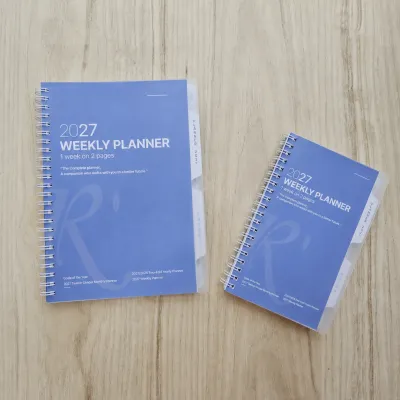
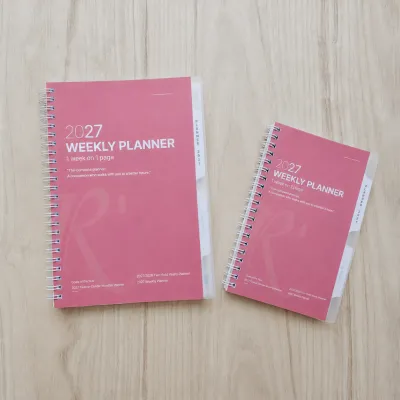
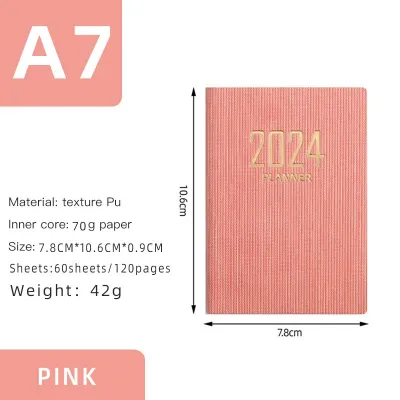
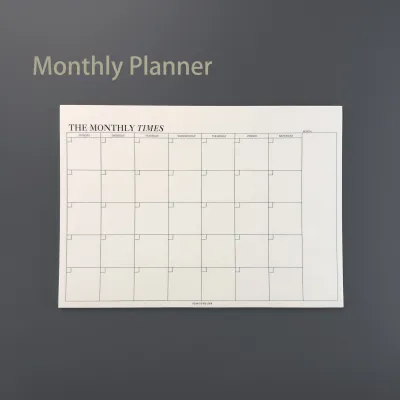
![[SG Ready Stock] Cute Daily Planner Weekly Day Plan Organizer Stuff Cute Notebook - Best for Students and Teachers](https://img.lazcdn.com/g/p/15071e4962dd4bd7fec7969a1533c262.jpg_400x400q80.jpg_.webp)
Prices are valid at publication and may change. Please refer to the product page for the latest price.
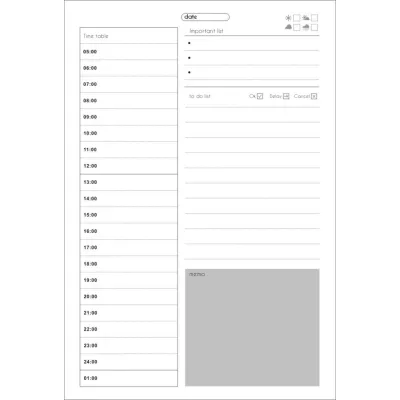
Time-blocking is ideal for individuals with highly structured days, dense meeting schedules, or strict hourly commitments. If your day is dictated by appointments, classes, or specific time slots, you need a layout that offers vertical columns divided into hourly or half-hourly increments. This visual representation of time helps you see exactly when you are busy and where open gaps exist, preventing overcommitment and helping you allocate dedicated focus blocks for deep work.
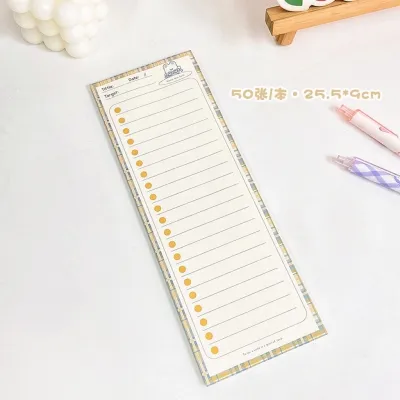
Task-based planning, on the other hand, prioritizes what needs to get done over exactly when it happens. If your daily schedule is relatively open but your to-do list is long, a horizontal weekly layout or a dashboard format is much more suitable. These layouts typically present the days of the week on one side of the spread and a dedicated task list, habit tracker, or notes section on the other, allowing you to manage your weekly deliverables without feeling pressured by hourly grids.
Freeform planning is the most flexible approach, catering to those who use their planner as a hybrid journal, sketchbook, and task tracker. If you prefer to design your own layouts, track habits visually, or write reflective journal entries alongside your daily tasks, you should look for brands that offer blank, dotted, or grid pages. This style relies heavily on your own creativity and structure, making rigid pre-printed templates feel more like a constraint than a helpful tool.
Portability is another critical factor that dictates your planner’s size and form factor. If you carry your planner daily in a commuter bag, lightweight and compact sizes like A5 or B6 with flexible softcovers are highly practical. Conversely, if your planner rarely leaves your desk, a larger A4 or executive-sized book with a sturdy hardcover provides a spacious canvas that can remain open next to your keyboard all day.
What to Look for in Brands for Detailed Hourly Planning
When evaluating planner brands for detailed hourly scheduling, the precision of the layout is paramount. You want to look for brands that offer vertical weekly spreads where each day is represented by a column running from early morning to late evening. Check the product specifications to ensure the hourly increments match your active hours, as some planners only cover a standard 9-to-5 workday, while others extend from 6:00 AM to 10:00 PM.

Line spacing within these hourly columns is a crucial detail that is often overlooked. If the lines are too narrow, writing legibly with a standard gel pen becomes difficult, leading to cramped, messy entries. Look for brands that provide at least 5mm of spacing between hourly lines, or those that use a subtle dot-grid pattern within the columns to allow for flexible writing sizes.
The format of the weekly spread also determines how much detail you can record. A two-page weekly spread is the standard for hourly planning, giving you a complete view of your week across two facing pages. Some brands offer a single-page-per-week format with an adjacent notes page, which works well if you have fewer daily appointments but require ample space for weekly goals, action items, and meeting notes.
Long-term alignment is another feature to verify when choosing a structured planner brand. High-quality hourly planners should include monthly overview pages at the beginning of each month or grouped at the front of the book. These overviews allow you to map out major deadlines, travel plans, and recurring events, which you can then break down into specific hourly blocks on your weekly pages.
Because an hourly planner is referenced multiple times throughout the day, the physical binding must be exceptionally durable. Look for brands that utilize thread-sewn binding, often referred to as Smyth-sewn, which allows the book to lie completely flat on your desk without the spine cracking or pages falling out over time. A planner that refuses to stay open on its own quickly becomes frustrating to use during busy work sessions.
How to Choose Brands for Flexible and Customizable Spreads
For those who find pre-printed hourly columns too restrictive, flexible and customizable layouts offer the freedom to adapt your planning system week by week. When searching for brands in this category, prioritize those that offer dotted or light grid patterns rather than solid lines. These subtle guides provide enough structure to keep your handwriting straight while remaining faint enough to be ignored when you want to draw diagrams, mind maps, or custom trackers.
Undated or modular planners are particularly valuable for individuals with fluctuating workloads or irregular schedules. If you have weeks where you have very few tasks, or if you take a vacation, an undated planner ensures that no paper is wasted. You simply fill in the dates as you go, allowing you to pause and resume your planning practice without leaving large gaps of empty pages in your book.
Paper compatibility is a major consideration if your flexible planning style involves color-coding, hand lettering, or creative layouts. If you plan to use brush pens, highlighters, or light watercolor washes, you must verify that the brand uses high-density paper that can handle wet mediums. Look for paper that is specifically rated for mixed media or has a high weight, typically above 100 GSM, to prevent the ink from warping the page or bleeding through to the other side.
Additionally, check if the brand offers supplementary inserts, adhesive pockets, or expandable sections. Many customizable planner systems allow you to add specialized pages for project management, financial tracking, or blank brainstorming sheets. This modularity ensures that your planner can grow and change alongside your personal and professional projects throughout the year.
Finding Brands for Minimalist and Distraction-Free Designs
Minimalist planners are designed to strip away the visual noise, allowing you to focus entirely on your tasks and thoughts. When evaluating brands that specialize in minimalist aesthetics, look for layouts that feature clean typography, generous white space, and an absence of decorative elements, motivational quotes, or complex goal-tracking worksheets. The goal is to provide a calm, uncluttered canvas that does not compete with your own writing.
The color of the paper plays a significant role in reducing eye strain, especially during long planning sessions under office fluorescent lights or late at night. Many minimalist brands opt for off-white, cream, or ivory-toned paper rather than bright white. These softer tones are gentler on the eyes and provide a sophisticated background for black or dark blue inks.
A balanced layout in a minimalist planner typically combines structured daily columns with open, unlined notes sections. For example, a popular minimalist format allocates the top half of the weekly spread to simple daily blocks for essential appointments, while the bottom half remains completely open for unstructured notes, phone numbers, or spontaneous ideas. This layout provides just enough structure to keep you organized without forcing you into a rigid system.
To maintain a lightweight and highly portable profile, minimalist brands often omit non-essential reference pages, such as world maps, time zone charts, and extensive contact lists. This design choice keeps the physical book slim and easy to slip into a laptop sleeve or small bag. If you prefer a streamlined carry, look for brands that focus strictly on the calendar pages and a few blank sheets at the back.
Essential Specifications to Verify Before You Buy
To ensure your chosen weekly planner brand performs well under daily use, you should carefully verify several physical and material specifications before making a purchase. The table below outlines the key physical attributes to compare across different planner options.
| Specification | Options to Consider | Best Suited For | Key Verification Check |
|---|---|---|---|
| Paper Weight | 52 GSM to 160 GSM | Low GSM for thin books; High GSM for heavy ink | Check for fountain pen compatibility or bleed resistance |
| Binding Type | Thread-sewn, Spiral, Disc-bound | Thread-sewn for flat-lay; Spiral for folding back | Ensure the spine allows 180-degree flat opening |
| Cover Material | Hardcover, Softcover, Synthetic Leather | Hardcover for desk use; Softcover for light travel | Verify water resistance and corner durability |
| Date Range | 12-Month, 18-Month, Academic | 12-Month for standard year; Academic for school | Confirm start and end months match your cycle |
Paper weight, measured in grams per square meter (GSM), is the primary indicator of how well the pages will handle different writing instruments. While lightweight paper (around 52 to 70 GSM) allows for a very slim, high-capacity book, it is more prone to ghosting, where the shadow of your writing is visible on the reverse side. Heavier paper (80 to 120 GSM or higher) offers much better opacity and resistance to ink bleed-through, making it ideal for gel pens and rollerballs.
The binding type directly impacts how comfortable the planner is to write in, especially when you are working near the center margin. Thread-sewn binding is highly recommended for a premium, seamless writing experience because it allows the planner to lie completely flat on any surface. Spiral or wire-bound planners offer the unique advantage of being able to fold completely back on themselves, saving valuable desk space in tight working environments.
Cover materials should be selected based on where and how you plan to use your planner. A sturdy hardcover protects the edges of the pages from getting bent or torn inside a crowded backpack, making it excellent for students and commuters. A flexible softcover or a synthetic leather cover offers a lighter weight and a more tactile, comfortable feel in the hand, though it may show wear and tear more quickly if not handled with care.
Finally, double-check the date range of the planner to ensure it aligns with your scheduling cycle. Standard calendar-year planners run from January to December, which is ideal for most professionals. However, if you are a student, educator, or parent, an academic planner running from July or August through the following summer may be far more practical for tracking school terms and academic deadlines.
Frequently Asked Questions (FAQ)
Do I need a specific paper weight to prevent ink bleeding? (H3)
Yes, paper weight is a major factor in preventing ink from bleeding through to the back of the page, but the paper’s coating and fiber density are equally important. For standard ballpoint pens, a paper weight of 70 to 80 GSM is usually sufficient to prevent bleeding, though you may experience minor ghosting. If you prefer using dark gel pens, liquid ink rollerballs, or felt-tip markers, look for planners with a paper weight of 100 GSM or higher.
To verify compatibility before committing to daily use, it is always best to perform a small ink test on an inconspicuous page at the very back of the planner. Write a few words using your favorite pens, applying normal writing pressure, and wait for the ink to dry completely. Check the reverse side of the page for any signs of feathering (where the ink spreads sideways along the paper fibers) or bleed-through to determine if the paper can handle your writing style.
Can I use fountain pens in standard weekly planners? (H3)
Using fountain pens in standard weekly planners requires careful selection, as many mass-market planners use highly absorbent paper that causes fountain pen ink to feather and bleed excessively. To enjoy a smooth writing experience without ruining the reverse side of your pages, you should look for planner brands that explicitly advertise fountain-pen-friendly paper or utilize specialized, hard-sized papers. These papers are treated to resist ink absorption, allowing the ink to dry on the surface and preserving crisp line edges.
If you must use a standard planner that is not optimized for fountain pens, you can mitigate bleed-through by adjusting your writing tools. Opt for an extra-fine or fine nib, which deposits less ink onto the page, and use well-behaved, drier inks formulated specifically for standard paper. Additionally, placing a sheet of blotter paper or a plastic page protector directly behind the active page can prevent any accidental ink transfer or indentation onto the subsequent pages of your planner.

Community discussion
Share your experience or ask a question. Comments are reviewed before publication.