
To start painting with watercolours in Singapore, you do not need to spend a fortune on professional-grade supplies. A budget-friendly student-grade watercolour paint set provides the ideal balance of affordability and performance, allowing you to learn essential techniques like colour mixing, glazing, and wet-on-wet washes without worrying about wasting expensive materials. By focusing on reputable student-grade brands and choosing the right format, you can easily find a high-quality starter setup for under S$30 to S$50.
In Singapore’s warm and humid climate, choosing the right art supplies also involves practical considerations like storage and drying times. High relative humidity can affect how paints dry in the pan and how paper behaves when wet. Understanding these environmental factors, along with basic paint specifications, will help you make an informed purchase that supports your creative journey without stretching your wallet.
Defining Your Budget and Priorities for Watercolours
When entering the world of watercolours, the first major decision is choosing between student-grade and artist-grade paints. Student-grade paints are specifically formulated for beginners and hobbyists, utilizing cost-effective binders and alternative pigments to keep prices low. While they may contain slightly more fillers than their professional counterparts, high-quality student paints still offer excellent transparency and blendability, making them the standard starting point for anyone learning the craft. Artist-grade paints, which feature pure pigments and natural gum arabic binders, are beautiful but carry a premium price tag that is unnecessary for foundational practice.
Products mentioned in this guide
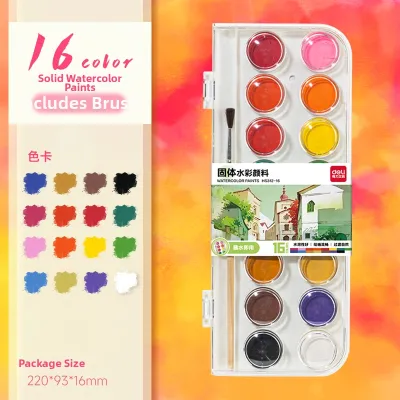
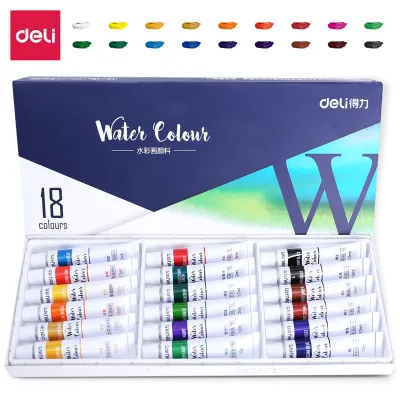
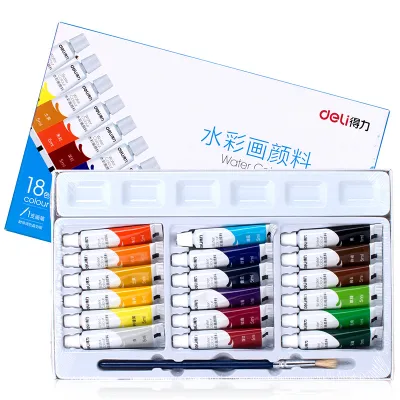
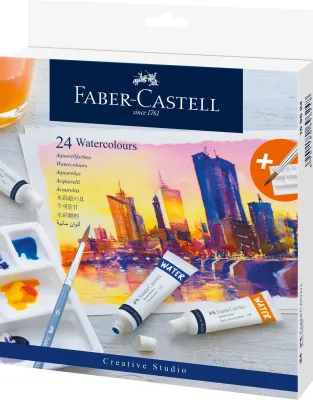
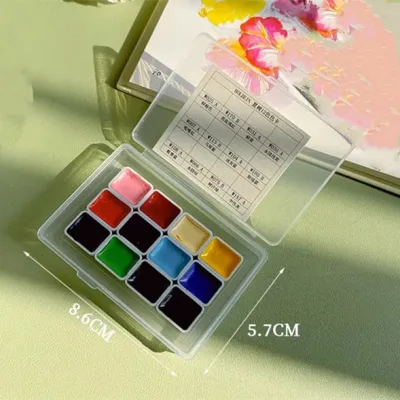
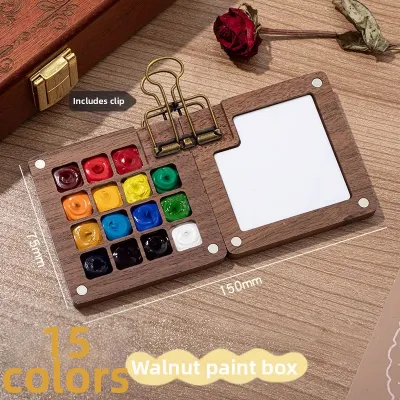
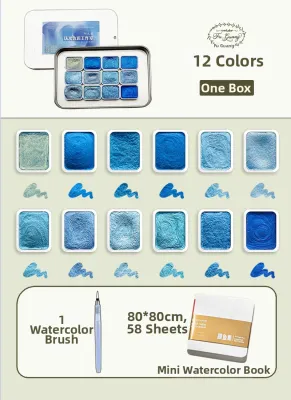
Prices are valid at publication and may change. Please refer to the product page for the latest price.
Another critical choice is the format of the paint: solid pans versus liquid tubes. Solid pans are dry blocks of concentrated paint housed in small plastic cups, which rewet instantly when touched with a wet brush. They are highly portable, easy to clean, and dry quickly after use, making them exceptionally well-suited for Singapore’s humid environment where open tubes might leak or attract excess moisture if not sealed perfectly. Liquid tubes, on the other hand, offer rich, pre-moistened paint that is easier to mix into large, consistent washes, though beginners often struggle with squeezing out too much paint and wasting it.
To keep your initial costs low, resist the temptation to buy massive sets containing dozens of different shades. A starter set with 12 to 18 essential colours is more than enough to create a full spectrum of hues. Opting for a smaller palette forces you to learn the art of colour mixing, which is a fundamental skill for any watercolourist. A well-curated 12-colour set typically includes warm and cool variations of the primary colours (red, yellow, and blue), along with a few versatile earth tones like Burnt Sienna and Yellow Ochre.
Key Specifications to Check Before Buying
Before purchasing a watercolour set, you can evaluate its potential quality by reading the manufacturer’s labels and packaging details. Reliable student-grade brands often print pigment codes directly on the packaging or the individual paint wrappers. These codes, such as PB29 for Ultramarine or PY150 for Nickel Azo Yellow, indicate the specific chemical pigments used in the paint. If a set completely lacks these codes and only uses generic names like “sky blue” or “deep yellow,” it is highly likely a low-grade toy set that will perform poorly.

Lightfastness is another crucial specification to check on the label, usually represented by asterisks, plus signs, or ASTM international ratings (such as ASTM I or II). Lightfastness measures how resistant a pigment is to fading when exposed to light over time. While absolute permanence is less critical for practice sketches, choosing paints with decent lightfastness ensures your hard work won’t disappear from the page within a few months. Additionally, look for transparency markers on the packaging—often depicted as open, half-filled, or solid squares—which tell you whether a paint is transparent, semi-opaque, or opaque.
Do not let bundled accessories distract you from the quality of the paint itself. Many budget-friendly sets come packed with plastic brushes, tiny water cups, or built-in mixing trays. While a built-in palette in the lid of a metal tin is highly useful, cheap plastic brushes with stiff, splitting synthetic bristles are often unusable and will only cause frustration. It is generally wiser to buy a paint-only set and purchase a single, high-quality round synthetic brush separately. Finally, verify the physical volume of the paint; compare whether the set offers standard half-pans (about 1.5ml to 2ml) or full pans (about 3ml to 4ml) to ensure you are getting a fair amount of product for your money.
Navigating Online and Local Stationery Stores
Finding affordable art supplies in Singapore involves balancing the convenience of online shopping with the tactile benefits of physical retail. Visiting physical art supply shops, particularly those located in historic creative hubs like Bras Basah Complex, allows you to physically inspect the packaging and seek advice from experienced staff. Many physical stores also display painted swatch cards, giving you an accurate look at how the colours appear on paper before you spend any money.
Online marketplaces and local e-commerce platforms offer a much broader selection and the convenience of home delivery, but they require extra vigilance. When browsing online listings, watch out for red flags such as unbranded sets advertised with exaggerated claims like “professional grade” at suspiciously low prices. If a listing lacks a clear brand name, manufacturer details, or a list of included colours, it is safest to assume it is a low-quality product intended for children’s crafts rather than artistic learning.
Always calculate the total cost of your purchase, including any hidden fees, before checking out online. A paint set that appears to be a bargain at S$15 might carry a S$5 shipping fee, bringing the total cost close to what you would pay at a local physical store. Be mindful of minimum spend thresholds required to qualify for free local shipping, and keep an eye on cross-border shipping regulations and local taxes if you are ordering from overseas sellers. Sometimes, bundling your paint, paper, and brushes into a single order from a local online retailer is the most cost-effective strategy.
Building a Starter Kit on a Budget
To get the best results without overspending, you must allocate your budget strategically across your entire setup. A common mistake is spending almost the entire budget on an expensive paint set, leaving only enough for cheap, thin drawing paper. In watercolour painting, the paper is actually the most critical component of your kit. Even high-quality paint will pool, bleed, and warp on standard drawing paper, whereas budget-friendly student paint can perform beautifully on proper watercolour paper. Aim to spend roughly half of your budget on a decent watercolour paper pad and the other half on your paint set and a single versatile brush.
A modular buying plan is an excellent way to spread out your costs over time. Instead of buying a massive, expensive set upfront, start with a basic, high-quality 12-colour pan set. As you practice and develop your style, you will naturally find yourself running out of certain colours faster than others. When a specific pan is empty, you can purchase an individual open-stock tube or pan to replace or refill it, rather than buying a whole new set. This approach allows you to gradually upgrade your palette to artist-grade pigments one colour at a time as your budget permits.
Before finalizing your purchase, compile your complete starter kit in your shopping cart to review the final checkout total. A basic budget setup should consist of a 12-colour student pan set, a cold-press watercolour paper pad (preferably 300 gsm), and a size 6 or 8 round synthetic watercolour brush. Checking the combined total helps you ensure you stay within your personal spending limit while maximizing any available bundle discounts or free shipping promotions offered by local retailers.
Common Quality Traps to Avoid
As a beginner, it is easy to fall for marketing traps that promise professional results at impossibly low prices. One of the most common quality issues with ultra-cheap watercolour sets is a chalky or overly opaque texture. These low-grade paints rely heavily on cheap white fillers rather than actual pigments. When applied to paper, they dry with a dusty, matte finish that easily scratches off, and they quickly turn into a muddy, grey mess when you attempt to layer or mix them. True watercolours should be transparent, allowing light to pass through the paint layer and reflect off the white paper underneath.
Another trap is choosing sets that feature a high proportion of neon, pastel, or glittery colours. While these novelty shades look appealing in the package, they have very limited practical use for learning traditional watercolour techniques. They are often highly fugitive, meaning they fade rapidly when exposed to light, and they cannot be mixed to create natural, realistic tones. Stick to a classic palette of primary and earth tones, which will teach you how to mix any colour you need and build a solid technical foundation.
The smoothness, drying speed, and bleed resistance of your washes depend heavily on the exact combination of your paint and paper. Since budget sets rarely provide detailed laboratory specifications for these interactions, you should perform simple observable trials. Create a swatch card to test how smoothly the paint flows, how quickly it dries in Singapore’s humid air, and whether it bleeds uncontrollably or holds its edge on your chosen paper. You can also test the paint’s rewetting capability by letting a swatch dry completely, then attempting to lift the colour with a damp brush.
Frequently Asked Questions (FAQ)
Can I use regular drawing paper for budget watercolour sets?
No, regular drawing paper is not suitable for watercolour painting, regardless of the quality of your paint set. Standard drawing paper lacks the thickness and the specialized sizing—a starch-like treatment—needed to resist water absorption. When exposed to wet washes, regular paper will instantly buckle, warp, and eventually pill or tear under the friction of your brush. To achieve proper washes and clean colour blending, you must use dedicated watercolour paper with a weight of at least 300 gsm (grams per square metre). Budget-friendly cold-press watercolour pads or blocks are widely available and provide the textured, absorbent surface necessary for successful painting.
How long do student-grade watercolour pans last?
A standard half-pan watercolour set can easily last a beginner between six months to over a year of regular, weekly painting sessions. Because watercolour paint is highly concentrated and designed to be rewet with just a drop of water, a very small amount of pigment goes a long way. Your actual consumption rate will depend on your painting style; large, wet-on-wet washes will deplete your pans much faster than detailed, dry-brush illustrations. Once you empty a specific colour, you do not need to buy a new set; you can simply purchase a budget-friendly individual tube of that colour and squeeze it into the empty pan to refill it.

Community discussion
Share your experience or ask a question. Comments are reviewed before publication.