
Selecting your first watercolor set can feel overwhelming with the sheer variety of options available on the market. For beginners in Singapore, the ideal starter kit balances affordability with reliable pigment quality, offering an accessible entry point without the frustration of low-grade materials. A successful setup requires a thoughtful combination of student-grade paints, a functional mixing palette, and a versatile synthetic brush that can withstand regular practice. By focusing on these essential components, you can avoid the common pitfalls of toy-grade art supplies and build a solid foundation for your painting journey.
What to Look for in a Beginner Watercolor Set
When entering the world of watercolor painting, understanding the distinction between student-grade and professional-grade pigments is the first step toward making an informed purchase. Student-grade watercolors, often labeled as “academic” or “studio” lines, are designed specifically for learners. They utilize cost-effective alternative binders or lower concentrations of pure pigments, which makes them highly affordable and forgiving for those experimenting with water control. In contrast, professional-grade paints feature high concentrations of pure, single pigments bound with premium gum arabic. While professional paints offer unmatched vibrancy, they are significantly more expensive and can be challenging for beginners to control, making student-grade sets the logical and economical starting point.
Color selection is another critical factor that influences your learning curve. A beginner-friendly watercolor set should ideally feature between 12 and 24 colors. A 12-color palette typically includes a warm and cool version of each primary color (red, yellow, and blue), alongside a few essential earth tones like burnt sienna and ochre. This limited selection is highly recommended because it forces you to learn the fundamentals of color mixing, helping you understand how to create clean secondary and tertiary tones. Selecting a set with too many pre-mixed colors (such as 36 or 48 shades) can easily overwhelm a beginner and lead to muddy, unappealing mixtures because you bypass the essential practice of manual blending.
Products mentioned in this guide
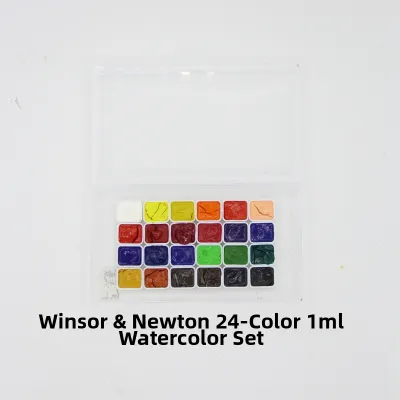
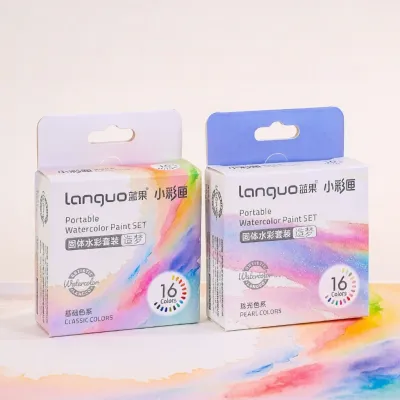
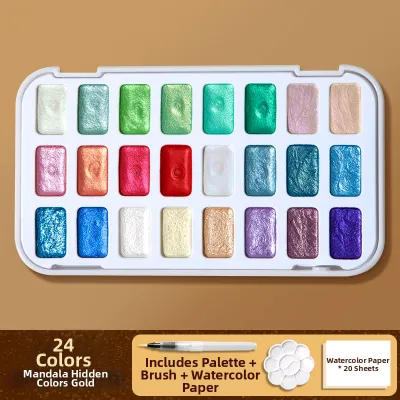
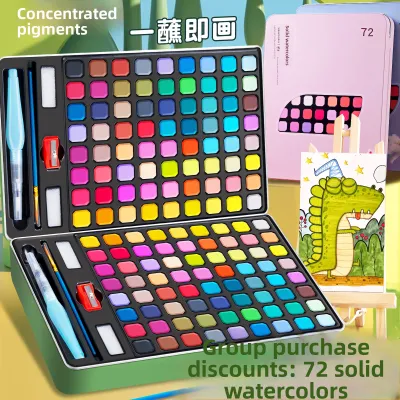
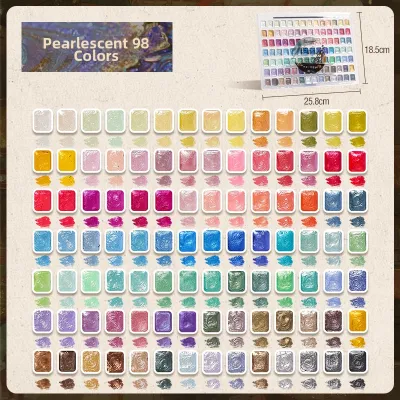
Prices are valid at publication and may change. Please refer to the product page for the latest price.
Beyond the paint itself, the functional design of the set’s accessories plays a major role in your daily painting experience. A high-quality starter set should feature a built-in mixing palette with deep, distinct wells rather than a flat, shallow surface. Deep wells prevent different paint mixtures from running into one another, keeping your workspace clean and organized. Additionally, many starter kits include a brush. For beginners, a reliable synthetic round brush (typically in size 6 or 8) is far superior to cheap natural hair alternatives. Synthetic fibers maintain their shape, offer a predictable spring, and resist shedding, providing the consistency you need when practicing basic washes and fine lines.
Pan vs. Tube Watercolors: Choosing the Right Format
Watercolor paints are primarily packaged in two formats: solid pans (dry half-pans or full pans) and liquid tubes. Solid pans are dry blocks of paint housed in small plastic cups that activate instantly when touched with a wet brush. This format is highly favored for its exceptional portability, ease of use, and minimal waste. Pans are ideal for small sketches, urban journaling, or painting in compact spaces like local cafes. On the other hand, tube watercolors contain moist, paste-like paint that can be squeezed directly onto a palette. Tubes offer immediate, high-intensity color and make it incredibly easy to mix large volumes of paint for broad washes, making them the preferred choice for larger studio works.

In Singapore’s tropical climate, environmental factors heavily influence how you choose and maintain your paint format. The consistently high relative humidity in Singapore, which frequently exceeds 80 percent, affects how watercolors dry and behave over time. Solid pans are highly practical in this environment because they are designed to dry quickly after use, but they still require careful handling. If you close a pan set while the paints are still wet, the trapped moisture can attract mold or cause the paint surfaces to become sticky and soft. Conversely, tubes must be sealed tightly after every use; otherwise, the humid air can degrade the binder over time, or the paint inside the nozzle can dry out and clog the opening.
To ensure you are buying a quality product, it is helpful to understand how to test the re-wetting speed of pans. If you are testing a set in-store or using it for the first time at home, touch a damp brush gently to the surface of the dry pan. A high-quality student-grade paint should release rich, vibrant pigment almost instantly with minimal friction. If you find yourself having to scrub the pan aggressively with your brush to lift any color, the paint likely contains excessive fillers or low-quality binders. This scrubbing action not only dilutes your paint quality but also quickly ruins the delicate tips of your paintbrushes.
Pre-Purchase Checklist: Verifying Quality and Specs
Before finalizing your purchase, running through a practical verification checklist will ensure you are investing in a set that supports your skill development rather than hindering it. The first item to inspect is the pigment information and lightfastness ratings printed on the packaging. Reputable manufacturers list the specific pigment codes (such as PB29 for Ultramarine or PY150 for Nickel Azo Yellow) and use standard rating scales like the ASTM (American Society for Testing and Materials) or the Blue Wool scale. Look for ratings indicating excellent or very good lightfastness (typically ASTM I or II). Avoiding unlabelled, cheap sets ensures your artwork will not fade rapidly when exposed to ambient light.
Next, evaluate the quality of any included brushes. Many budget-friendly kits bundle cheap natural hair brushes that shed bristles onto your wet paper, ruining your washes. Instead, look for sets that specify synthetic fibers, such as golden synthetic or nylon. A quality synthetic brush should have a fine, sharp point when wet and spring back to its original shape immediately after a stroke. If the brush tip remains splayed or bent during a simple stroke test on dry paper, it will not provide the control necessary for clean edges and detailed work.
Additionally, examine the mixing area provided by the set. A functional mixing palette should be made of a smooth, non-porous material. Plastic palettes in cheap sets often cause water to bead up into tight droplets, making it difficult to see the actual color and consistency of your mix. Look for palettes that have a slightly textured matte finish or those made of treated plastic that allows the paint to lay flat. The mixing wells should also be deep enough to hold a reasonable amount of water without overflowing into adjacent colors.
Finally, verify the durability and structural integrity of the outer packaging. If you plan to carry your watercolor set in a bag to classes, parks, or cafes around Singapore, the casing must be robust. Metal tin cases with secure metal clasps are highly durable and often feature a thumb ring on the bottom for easy holding while standing. If choosing a plastic case, ensure the hinges are sturdy and the latch snaps shut firmly to prevent the box from accidentally opening and damaging your other belongings during transit.
Reliable Watercolor Starter Categories to Consider
To help you navigate the retail landscape, beginner watercolor sets can be grouped into three reliable categories, each catering to different painting styles, budgets, and spatial needs.
Premium Student-Grade Sets from Heritage Brands
Premium student-grade sets produced by established heritage brands are widely considered the gold standard for beginners. These lines, developed by manufacturers with centuries of paint-making experience, maintain consistent binder-to-pigment ratios and use standard half-pan sizes. Because their formulation closely mimics that of professional lines, the colors mix predictably and behave reliably on paper. This consistency is incredibly valuable for beginners, as the techniques you master with these sets will translate seamlessly when you eventually upgrade to professional-grade paints.
Another significant advantage of heritage brand sets is their modular design. Most of these tins or plastic cases utilize standard-sized, removable half-pans. This means that when you run out of a popular color like Ultramarine or Burnt Sienna, you do not need to purchase an entirely new set. You can simply buy an individual replacement half-pan or fill the empty plastic cup with paint from a tube. This modularity also allows you to gradually customize your palette over time, swapping out student-grade colors for professional-grade pans as your budget and skills grow.
Portable and Travel-Friendly Pocket Sets
For those who enjoy urban sketching, travel journaling, or painting outdoors, portable pocket sets offer unmatched convenience. These compact kits are designed to fit easily into a small bag or even a pocket, prioritizing space-saving features without sacrificing paint quality. They often include innovative accessories such as built-in water brushes—which hold water directly inside the pen barrel, eliminating the need for a separate water cup—and integrated, fold-out mixing trays that snap securely shut when not in use.
When choosing a travel pocket set, pay close attention to the seal tightness of both the water brush and the outer casing. In air-conditioned environments common in Singapore’s offices, libraries, and cafes, dry air can quickly evaporate moisture from poorly sealed brush barrels. Ensure the water brush has a secure screw thread and a leak-proof valve. While these sets are incredibly convenient for quick sketches on the go, keep in mind that their small mixing areas are not designed for large-scale washes, making them a specialized tool for small-format work.
Comprehensive All-in-One Kits with Accessories
Comprehensive all-in-One kits are designed for absolute beginners who want a complete, ready-to-use setup without the hassle of sourcing individual tools. These bundles typically include a watercolor pan set, a selection of brushes, a small paper pad, and occasionally extra accessories like sketching pencils, sponges, or masking fluid. They offer excellent convenience and allow you to start painting immediately after opening the box.
However, when purchasing an all-in-one kit, you must critically examine the technical specifications of the included paper. Watercolor paper is the most crucial component of your setup; if the paper is too thin, it will buckle, warp, and pill under wet washes. Ensure the bundled paper pad has a weight of at least 200gsm to 300gsm, and features a cold-pressed (textured) surface. Be aware that the accessories in these comprehensive kits are often entry-level quality, meaning you may want to upgrade your brushes and paper pad as your techniques become more advanced.
Where to Buy Authentic Art Supplies in Singapore
Finding genuine, high-quality watercolor sets in Singapore is straightforward if you know where to shop. To avoid counterfeit products or poorly stored paints that may have degraded, it is best to visit established local art supply stores. The Bras Basah Complex is Singapore’s premier heritage hub for art supplies, housing legendary shops like Art Friend, alongside other dedicated retailers such as Overjoyed. Visiting these physical stores allows you to physically inspect the packaging, check the expiration or batch codes, feel the weight of the paper pads, and ask knowledgeable staff for tailored advice.
If you prefer the convenience of online shopping, stick to official brand flagship stores or authorized distributors on major e-commerce platforms. Many reputable local art stores run highly reliable online storefronts, ensuring that the products are stored in climate-controlled warehouses before delivery. When shopping online, always verify the seller’s ratings, read recent customer reviews focusing on packaging condition during transit, and avoid suspiciously cheap, unbranded watercolor sets. These ultra-cheap sets often use non-archival dyes instead of pigments, which fade rapidly and may contain unsafe chemicals or heavy metals.
Maintaining Your Watercolor Set in a Tropical Climate
Proper maintenance is essential to extend the lifespan of your watercolor materials, especially when dealing with Singapore’s high humidity. Cleaning your mixing palette regularly prevents old paint residues from contaminating your fresh mixtures. To clean the palette, wipe the mixing wells gently using a soft, damp microfiber cloth. Avoid using abrasive scrubbing sponges or harsh household detergents, which can scratch the plastic or ceramic surface. Scratches create microscopic grooves that cause future paint mixtures to bead up and pool unevenly, making color mixing much more difficult.
Caring for your synthetic brushes ensures they maintain their shape and performance for years. After each painting session, wash the bristles gently with lukewarm water and a mild, brush-safe soap, making sure to remove any pigment trapped near the metal ferrule. Gently reshape the damp bristles into a sharp point using your fingers, and lay the brushes flat on a clean towel to dry. Never store wet brushes upright in a cup; water can seep down into the wooden handle and dissolve the glue holding the bristles, leading to premature shedding and handle cracking.
Managing moisture is the single most critical step in preventing mold growth on your watercolor pans in Singapore. After you finish painting, do not immediately snap your watercolor box shut and store it in a dark drawer. Instead, leave the palette open in a well-ventilated, dry room—or an air-conditioned space—for several hours until the paint surfaces are completely dry to the touch. Once dry, you can close the box and store it in a cool, dry place. If you notice any signs of mold, gently scrape off the affected surface layer with a clean palette knife and wipe the area with a tiny drop of diluted isopropyl alcohol before letting it dry completely.
Frequently Asked Questions (FAQ)
Do I need to buy watercolor paper separately if the set includes a pad?
Yes, in most cases, it is highly recommended to purchase a separate, high-quality watercolor paper pad. The paper pads included in budget starter kits are often lightweight (under 200gsm) or made of wood pulp mixed-media paper, which warps, pills, and tears easily when wet. For proper water control, smooth blending, and advanced lifting techniques, you should upgrade to a dedicated pad of 100% cotton, 300gsm cold-pressed paper. Cotton fibers absorb water evenly, allowing you to work slowly and achieve beautiful, professional-looking washes without the paper buckling.
How long do student-grade watercolors last before expiring?
Solid watercolor pans can last for many years, even decades, if they are kept clean, dry, and free of mold between painting sessions. Because they are dry, they do not support bacterial growth as long as they are allowed to air-dry completely before storage. Tube watercolors have a shorter shelf life, typically lasting between two to five years. Over time, the paint inside tubes can dry out, harden, or separate from the liquid binder. Observable signs of paint degradation include severe cracking that prevents re-wetting, a rancid or sour smell, or visible mold growth on the paint surface.
Can I mix student-grade and professional-grade watercolors later on?
Yes, you can absolutely mix student-grade and professional-grade watercolors together on your palette. Both grades typically use compatible binders, such as gum arabic or dextrin, which allows them to blend smoothly without any chemical reactions. However, keep in mind that the overall performance of the mixed wash will be limited by the student-grade paint. The final mixture will have lower lightfastness, reduced transparency, and less color vibrancy compared to a pure blend of professional-grade pigments. Mixing them is an excellent, cost-effective way to gradually transition your palette to professional quality.
Community discussion
Share your experience or ask a question. Comments are reviewed before publication.