
Selecting the ideal 2026 monthly planner brand requires looking past aesthetic covers to evaluate how a layout supports your daily cognitive load. The right planner acts as an external hard drive for your schedule, helping you visualize time, manage commitments, and reduce mental clutter. Rather than searching for a single universal winner, the key is matching your specific organizational habits with a brand’s design philosophy, paper specifications, and structural durability. By focusing on observable quality indicators—such as paper weight, binding style, and grid layouts—you can confidently select a tool that remains functional from the first week of January through the end of December.
Defining Your Planning Style and Needs
Before browsing specific brands, you must analyze how you naturally process tasks and time. Some individuals think in broad, monthly arcs, while others require granular, hour-by-hour breakdowns to prevent scheduling conflicts. If your daily routine involves back-to-back appointments, client meetings, or strict time-blocking, a monthly overview alone may serve only as a high-level index, requiring a hybrid layout that pairs monthly grids with detailed weekly or daily spreads. Conversely, if your goals are project-based or your schedule is relatively open, a minimalist monthly-only planner provides a clean, bird’s-eye view of your commitments without the burden of unused daily pages.
Portability is another critical factor that dictates the physical format of your planner. A heavy, hardbound planner with thick paper is excellent for a permanent spot on your home office desk, but it can quickly become a burden if you commute daily. For those who carry their planners in a backpack or tote bag, lightweight softcovers, slim profiles, or smaller dimensions like B6 are far more practical. Consider whether you need a planner that can withstand the friction of being tossed into a bag repeatedly, or if a delicate, fabric-covered journal is acceptable for a controlled desk environment.
Products mentioned in this guide
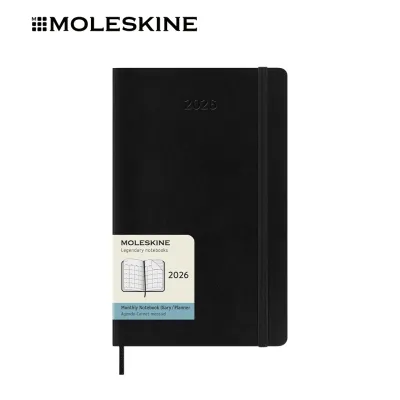
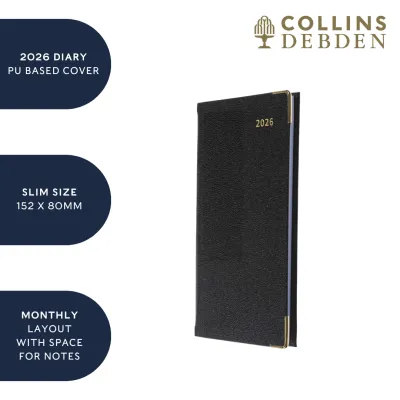
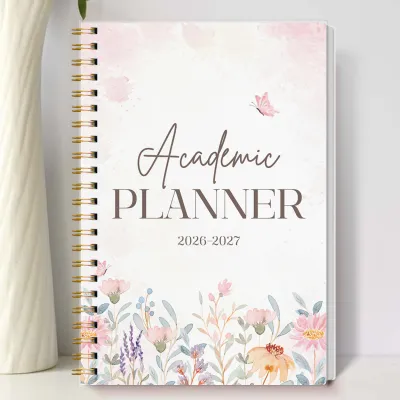
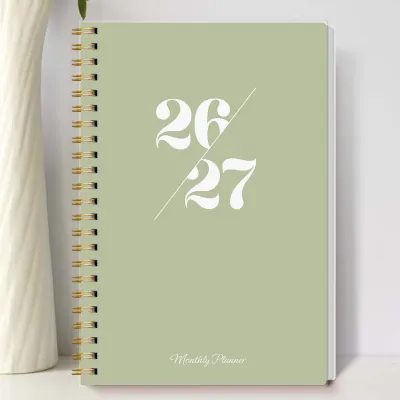
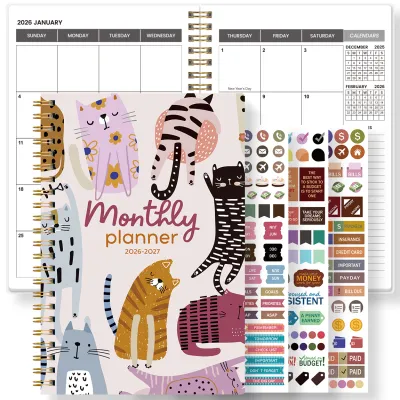
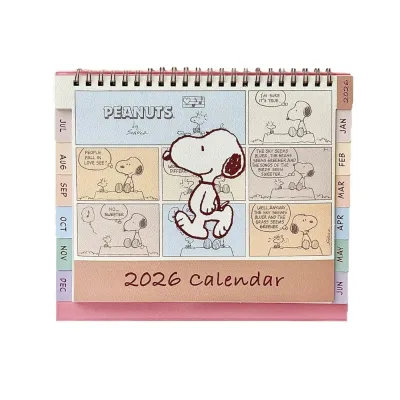
Prices are valid at publication and may change. Please refer to the product page for the latest price.
Finally, evaluate how your analog planner will interact with your digital tools. Many modern professionals use digital calendars for real-time notifications and shared team schedules, while relying on paper for deep focus, goal-setting, and personal reflection. If you use a hybrid system, look for planners that offer clean, structured layouts that are easy to scan and transcribe into digital formats, or brands that provide companion apps to digitize your handwritten pages. Deciding on this relationship early prevents you from buying a planner that duplicates your digital efforts or sits unused.
Matching Planner Brands to Organizational Styles
Different planner brands design their products with specific user behaviors in mind, ranging from strict corporate productivity to open-ended artistic expression. Understanding these design philosophies allows you to filter out options that do not align with your daily workflow.

Minimalist and Structured Planners
For those who thrive on order and clean lines, minimalist planners strip away visual noise to keep your schedule the focal point. When evaluating brands in this category, look for precise grid, dot-grid, or lined monthly blocks that allow you to write neatly. High-quality minimalist brands often use subtle, low-contrast ink for their grids—such as light grey or pale blue—which guides your handwriting without competing with your ink. Hourly or half-hourly increments within the daily blocks are highly beneficial if you need to manage tight schedules, ensuring that appointments do not overlap.
A key indicator of a well-designed minimalist planner is the complete absence of decorative elements, motivational quotes, or colorful illustrations. These features can distract from your tasks and limit how you customize your space. Instead, look for layouts that prioritize functional white space, allowing your color-coding or handwriting to define the visual hierarchy. The typography should be clean, modern, and unobtrusive, using small, elegant fonts for dates and month names.
Additionally, check for dedicated, unlined or lightly ruled margins alongside the main monthly grid. These sidebars are invaluable for capturing running task lists, monthly goals, or quick reminders that do not correspond to a specific date. A spacious margin ensures that your main calendar blocks remain uncluttered, preserving the readability of your monthly overview even during your busiest weeks.
Creative and Journaling-Friendly Planners
If you view your planner as a creative outlet, a memory keeper, or a space for self-reflection, you require a brand that accommodates artistic customization. Look for brands that offer dot-grid or completely blank pages adjacent to the monthly spreads. These open formats give you the freedom to sketch, paint, use stickers, or design custom trackers without being constrained by rigid lines. Creative planners often serve as a hybrid between a calendar and a bullet journal, offering the structure of pre-dated months alongside the flexibility of blank canvas pages.
Supplementary tracking pages are another hallmark of creative planner brands. Before purchasing, verify if the planner includes dedicated layouts for habit tracking, mood logs, gratitude lists, or monthly reflection prompts. These structured yet open-ended pages encourage you to check in with yourself regularly, turning your planner into a holistic record of your year. The design of these pages should feel inviting, with enough space to write comfortably or add decorative elements like washi tape and stamps.
The paper quality in creative planners is paramount, as it must withstand a wide variety of stationery. Ensure the brand explicitly designs its paper to handle wet inks, heavy gel pens, fine liners, and mild highlighters without feathering or bleeding through to the other side. Brands that cater to the creative community often use specialized paper finishes, such as smooth, coated surfaces that prevent ink from spreading, or slightly textured paper that provides satisfying feedback when writing with pencils or fountain pens.
Professional and Productivity-Focused Planners
Professionals and project managers require planners that act as strategic tools for execution, goal tracking, and task delegation. Look for brands that integrate proven productivity frameworks directly into their layouts. These frameworks often include dedicated sections for setting monthly objectives, breaking down projects into actionable milestones, and organizing tasks using priority matrices. A productivity-focused planner should help you bridge the gap between long-term goals and daily actions.
In a corporate or client-facing environment, the utility of your planner extends to how easily you can document meetings and track responsibilities. Check if the brand includes dedicated sections for meeting notes, action items, and delegation lists. Having these pages bound within your monthly planner keeps all your professional information in one centralized location, preventing important details from being lost on loose sticky notes or scattered digital files. End-of-month performance reviews or reflection sections are also highly valuable for assessing your efficiency and adjusting your strategies for the coming month.
The physical presentation of a professional planner must match its functional utility. Prioritize brands that offer durable, sophisticated covers made from high-quality materials like vegan leather, bookcloth, or heavy-duty matte cardstock. Neutral color palettes—such as deep navy, charcoal, forest green, or classic black—are ideal for maintaining a professional appearance during board meetings or client consultations. The binding should be exceptionally sturdy, ensuring the planner can be opened and closed dozens of times a day without fraying or losing pages.
Essential Quality Checks: Paper, Binding, and Sizing
The physical construction of a planner directly impacts how often you will use it and how well it survives the year. Conducting a few essential quality checks before buying ensures you do not end up with a frustrating tool.
Paper and Ink Compatibility: The weight of the paper, measured in grams per square meter (GSM), is a primary indicator of thickness, but it does not tell the whole story. While a higher GSM (such as 100 GSM to 120 GSM) generally offers better resistance to ink bleed-through, the paper’s coating and fiber density are equally important. For example, some specialized papers are incredibly thin yet highly resistant to fountain pen ink bleeding due to their unique manufacturing process. Check the manufacturer’s specifications for details on paper finish—such as “coated,” “smooth,” or “textured”—and look for user feedback regarding how the paper handles your preferred writing instruments, whether they are fine-point gel pens, fountain pens, or heavy markers.
Binding and Lay-Flat Ability: A planner that constantly tries to spring shut while you are writing is a major source of daily frustration. For monthly planners, where you frequently write across a two-page spread, a true lay-flat binding is essential. Thread-sewn binding is the gold standard for book-bound planners, as it allows the pages to lie completely flat without damaging the spine. Spiral or wire-o binding also offers excellent lay-flat performance and allows you to fold the planner back on itself to save desk space, though the central rings can sometimes interfere with your hand while writing. Disc-bound systems offer the ultimate flexibility, allowing you to add, remove, and rearrange pages, but they require specialized paper punches and can feel less stable than bound books.
Size and Format Standards: Planners come in a wide range of sizes, and choosing the right one depends on your handwriting size and portability needs. Standard sizes like A5 offer an ideal balance, providing ample writing space for daily entries while remaining highly portable. If you have large handwriting or need to track multiple schedules (such as work, family, and personal), a larger B5 or Letter-sized planner is more appropriate. For those who prioritize maximum portability, a compact B6 or A6 planner fits easily into small bags, though you will need to write smaller and more concisely to fit your schedule into the compact monthly blocks.
Where to Buy and What to Verify Before Checkout
To ensure you receive an authentic, high-quality 2026 planner, you must be selective about where you shop and careful during the checkout process. Purchasing directly from official brand websites or authorized brick-and-mortar stationery boutiques is the safest way to guarantee product authenticity and access the brand’s full range of covers and layouts. If you prefer shopping on large online marketplaces, always verify that the seller is the official brand flagship store or an authorized distributor to avoid counterfeit products with inferior paper quality.
Before finalizing your purchase, carefully read the product title, specifications, and description. It is incredibly common to accidentally purchase the wrong calendar year, especially during transitional seasons, so double-check that you are buying the specific 2026 edition. Additionally, verify the start month of the planner; some brands offer academic year planners starting in July or August, while others offer standard calendar year planners starting in January. Ensure the start date aligns with your planning cycle so you do not lose several months of usability.
Finally, review the retailer’s return and exchange policies, particularly concerning manufacturing defects. Inspect your planner immediately upon arrival, checking for misaligned printing, upside-down pages, broken bindings, or damaged corners. A reputable retailer or brand should offer a straightforward exchange process for any defects, ensuring your planning companion for 2026 arrives in pristine condition.
Frequently Asked Questions (FAQ)
Can I use an undated planner for 2026 instead of a pre-dated one?
Using an undated planner for 2026 offers distinct advantages, particularly if your planning habits are inconsistent. The primary benefit of an undated layout is the elimination of wasted paper; if you skip a week or a month due to vacation or a light workload, you can simply resume on the next page without leaving blank, unused spreads. This flexibility makes undated planners highly cost-effective and customizable.
However, this flexibility comes with a trade-off in terms of time and effort. You must manually write in every date, month name, and day of the week, which can be time-consuming and increases the risk of numbering errors. Additionally, undated planners lack pre-printed holidays, lunar phases, or year-at-a-glance calendars, requiring you to reference a digital calendar during setup. If you want to speed up this process, check if the brand offers compatible date sticker sets or stencils to make formatting quicker and more uniform.
What paper weight should I look for to prevent ink bleeding?
To prevent ink from bleeding through to the reverse side of your planner pages, look for a paper weight of at least 80 GSM to 100 GSM for standard gel and ballpoint pens. If you prefer using wetter writing instruments, such as fountain pens, rollerballs, or heavy water-based markers, prioritizing paper between 100 GSM and 120 GSM is highly recommended. Thicker paper provides a physical barrier that absorbs ink without allowing it to saturate through the fibers.
However, paper weight is not the sole factor in ink performance; the paper’s sizing (surface treatment) and coating play a massive role. Highly coated, smooth papers can handle fountain pen ink beautifully even at lower weights, whereas rough, absorbent papers may bleed even at 100 GSM. To avoid ruining your planner, always perform a pen test on an inconspicuous back page or a designated notes page using your favorite writing tools before filling out your 2026 schedule.

Community discussion
Share your experience or ask a question. Comments are reviewed before publication.