
The Short Answer: Which Transit Card Should You Get?
For daily commuting across Singapore’s public transport network, both EZ-Link and NETS FlashPay offer identical core functionality. Whether you are boarding the Mass Rapid Transit (MRT), the Light Rail Transit (LRT), or a public bus, tapping either card at the gantry results in the exact same fare deduction, processing speed, and distance-based transfer discounts. The choice between them does not depend on transit performance, as both systems are fully integrated into Singapore’s unified ticketing infrastructure.
Instead, the decision rests on how you plan to use the card outside the transit gates. You should evaluate secondary factors such as your preferred mobile app ecosystem, specific banking partnerships for automated top-ups, compatibility with motoring payment units, and exclusive retail rewards. By aligning these features with your daily routine, you can select the card that integrates most seamlessly into your lifestyle.
This guide breaks down these subtle but important differences. We analyze how each card handles physical and digital top-ups, where they are accepted for retail payments, and how their respective mobile applications compare. By the end of this comparison, you will be able to choose the ideal card for your daily travels and transactions.
Products mentioned in this guide
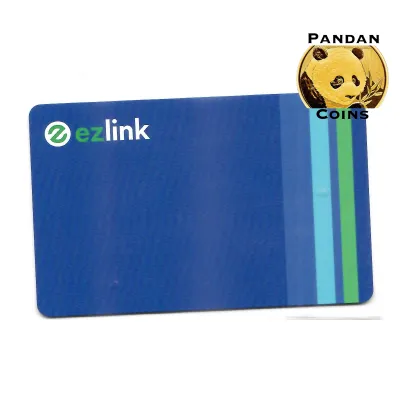

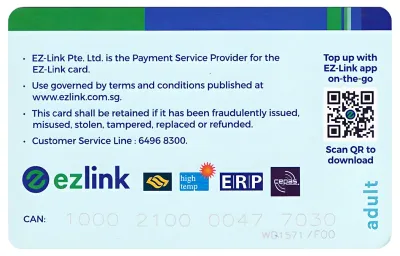
Prices are valid at publication and may change. Please refer to the product page for the latest price.
Core Differences: EZ-Link vs NETS FlashPay at a Glance
To understand how these two payment systems compare, it is helpful to look at their physical specifications and administrative frameworks. Both cards are built on the Contactless e-Purse Application Standard (CEPAS) technology, which was introduced to establish a unified multi-purpose contactless card standard in Singapore. This shared standard ensures that both brands operate reliably across the island’s payment terminals.

Physically, both cards conform to the standard ISO/IEC 7810 ID-1 dimensions, measuring 85.60 mm by 53.98 mm with a thickness of 0.76 mm. This standard size ensures that either card fits perfectly into standard wallet slots, cardholders, badge reels, and lanyard sleeves. They communicate wirelessly using Near Field Communication (NFC) technology at a standard frequency of 13.56 MHz, allowing for swift, contactless transactions when placed within close proximity of a compatible reader.
While their physical dimensions and communication protocols are identical, their administrative policies differ. Card issuance fees, non-refundable card costs, and starting stored values vary depending on where you purchase the card. Additionally, both card types have a limited validity period from the date of manufacture. Because these administrative fees, promotional card designs, and exact validity lifespans are subject to change by their respective operators, you should verify the current rates and expiry terms on the official EZ-Link and NETS websites.
| Feature | EZ-Link Card | NETS FlashPay Card |
|---|---|---|
| Primary Issuer | EZ-Link Pte Ltd | Network for Electronic Transfers (NETS) |
| Underlying Standard | CEPAS (ISO/IEC 7810 ID-1) | CEPAS (ISO/IEC 7810 ID-1) |
| Physical Dimensions | 85.60 mm × 53.98 mm × 0.76 mm | 85.60 mm × 53.98 mm × 0.76 mm |
| Primary Digital App | EZ-Link App | NETS App |
| Auto-Reload Program | EZ-Reload | NETS Auto-Top-Up |
| Motoring Compatibility | Dual-Mode IU / OBU | Dual-Mode IU / OBU / Standard IU |
| Loyalty Program | EZ-Link Rewards | Merchant-specific promotions |
Co-branded cards represent another major area of differentiation. Both issuers partner with various banks, schools, corporations, and government agencies to offer multi-functional cards. For example, some credit or debit cards come with integrated EZ-Link or NETS FlashPay chips, allowing you to use your bank card directly at transit gantries. The availability of these specialized designs and partnerships depends heavily on the specific financial institution you use.
Transit Coverage: Tapping In and Out with Your Singapore MRT Card
When it comes to navigating the public transport network, your singapore mrt card must be fast and reliable. Both EZ-Link and NETS FlashPay offer universal acceptance across all MRT lines, including the North-South, East-West, North East, Circle, Downtown, and Thomson-East Coast lines. They also work seamlessly across all LRT loops and public bus services managed by various transit operators under the Land Transport Authority (LTA).
The physical experience of passing through the transit gates is identical for both cards. The response time of the gantry readers when detecting either card is highly optimized, ensuring that commuters can tap in and out without noticeable delay. This high-speed transaction capability is crucial during peak hours, preventing bottlenecks at busy stations.
Both cards are fully compatible with Singapore’s SimplyGo system, which is an account-based ticketing platform. By registering your physical card to a SimplyGo account via the official SimplyGo mobile app or web portal, you gain access to digital convenience features. This integration allows you to view your detailed journey history, track fare expenditures, receive push notifications for fare deductions, and remotely block your card if it is misplaced or stolen.
Fare structures and transfer rules are strictly regulated by the Public Transport Council (PTC) and remain completely identical regardless of the card brand you use. Fare deductions are calculated based on the total distance traveled, rather than the number of transfers made. This means that transferring from an MRT train to a public bus within the allowed transfer window will not incur a new boarding fee, whether you tap with an EZ-Link or a NETS FlashPay card.
Retail and Lifestyle Payments: Beyond the Transit Gates
Because both cards adhere to the CEPAS standard, their utility extends far beyond public transportation. You can use either card to make quick, contactless payments at thousands of retail outlets across Singapore. This multi-purpose capability makes them highly convenient for quick purchases without the need to carry cash or coins.
Acceptance is widespread at daily lifestyle touchpoints. You can tap either card to pay at major convenience stores like 7-Eleven and Cheers, supermarkets such as NTUC FairPrice, Cold Storage, and Giant, as well as various fast-food chains, vending machines, and public libraries. Furthermore, unified payment terminals at hawker centres and food courts across the island are designed to accept both card brands interchangeably.
Despite this shared compatibility, the two brands offer different merchant-specific promotions and loyalty incentives. EZ-Link features a dedicated rewards program integrated directly into its mobile app. By linking your card to the app, you earn reward points for every transaction you make, which can later be redeemed for shopping vouchers, dining discounts, or lucky draw entries. NETS FlashPay, on the other hand, frequently runs targeted promotional campaigns with specific retail partners, offering direct discounts or cashback rebates when you pay with their card.
For vehicle owners, motoring payments represent a critical use case. Singapore’s Electronic Road Pricing (ERP) system and many car park gantries require a contactless card to be inserted into the vehicle’s In-Vehicle Unit (IU) or the newer On-Board Unit (OBU). While standard versions of both cards work in dual-mode IUs, NETS offers specialized motoring cards that are specifically optimized for vehicle use, featuring dedicated auto-top-up integrations designed to prevent drivers from running out of balance at car park exits.
Top-Up Methods and Card Management Convenience
Keeping your card funded is a primary aspect of daily usage, and both networks offer extensive physical and digital top-up options. Physical top-up locations are widely distributed across Singapore. You can add value using cash, NETS, or debit cards at self-service ticketing machines located at all MRT and LRT stations, as well as at Passenger Service Centres. Additionally, authorized retail partners such as convenience stores and selected ATMs allow physical top-ups, though some third-party merchants may charge a small administrative fee per transaction.
For digital convenience, both brands have developed robust mobile applications that utilize the NFC capabilities of modern iOS and Android smartphones. By launching the respective EZ-Link or NETS app and placing your physical card against the back of your phone, you can instantly read the card’s chip. This allows you to check your current balance, view a detailed list of your recent transactions, and top up your card instantly using credit cards, debit cards, or local bank transfer methods.
Auto-reload systems offer the highest level of convenience by automatically adding funds to your card when the balance falls below a certain threshold. The implementation of this feature differs between the two brands:
- EZ-Reload: This is EZ-Link's automated top-up service. It can be linked to any Mastercard, Visa, or JCB credit or debit card, as well as directly to a bank account via GIRO. The setup process is managed entirely through the EZ-Link app, allowing for immediate activation once approved.
- NETS Auto-Top-Up: This service is deeply integrated with Singapore's local banking network, including DBS/POSB, OCBC, and UOB. You can link your NETS FlashPay card to your bank account or credit card. Activation can be completed at local bank ATMs or directly through the NETS mobile application.
Before deciding on a card, it is highly recommended to check your primary bank’s credit card lineup. Many banks offer co-branded credit cards that feature built-in auto-reload capabilities, and some of these cards offer attractive cashback or reward points specifically for transit spend. Selecting a card that aligns with your existing banking relationship can eliminate manual top-up tasks entirely.
Decision Framework: How to Choose Based on Your Routine
To help you finalize your decision, you can evaluate your daily habits against the following user profiles. This structured framework highlights which card brand aligns best with specific commuting and purchasing patterns.
Choose EZ-Link if:
- You value loyalty rewards: You want to earn points on your daily transit and retail spending to redeem for vouchers and partner rewards via a dedicated app.
- You prefer flexible payment sources: You want to link your auto-reload service to a wide variety of credit card brands, including Mastercard, Visa, or JCB, without being restricted to local bank networks.
- You utilize EZ-Link co-branded cards: Your school, employer, or community organization issues an official co-branded EZ-Link card that you already carry daily.
Choose NETS FlashPay if:
- You are integrated into the NETS ecosystem: You frequently use NETS for retail payments and prefer to manage all your NETS-related payment modes under a single, unified digital application.
- You want seamless local banking integration: Your primary bank accounts are with DBS/POSB, OCBC, or UOB, and you prefer setting up auto-top-up services directly through your bank's ATM network or mobile app.
- You require motoring compatibility: You are a driver who wants a single card that transitions smoothly between public transit and your vehicle's In-Vehicle Unit for ERP and car park payments.
Either is fine if:
- Your sole priority is basic transit: You only need a card to tap in and out of the MRT, LRT, and public buses, and you do not plan to use the card for retail purchases, motoring payments, or automated reload services.
Because both cards are highly affordable and do not require long-term commitments or contracts, you can easily switch between them if your banking preferences or daily commuting routines change over time. Holding one of each card can also serve as a practical backup strategy, ensuring you always have a working contactless payment option ready in your wallet.
Frequently Asked Questions (FAQ)
Can I register both an EZ-Link and a NETS FlashPay card to the same transit account?
Yes, you can register multiple physical cards, including both EZ-Link and NETS FlashPay cards, under a single SimplyGo account. This allows you to monitor transit histories and manage fare payments for your entire family or backup cards from a centralized digital dashboard. However, each physical card operates independently at the gantry; you cannot pool transit fare caps or share active transfer discounts across different physical cards during a single journey.
What happens to my remaining balance if my physical card expires?
If your physical card reaches its expiration date, the stored value is not lost. You can recover the remaining balance by visiting any SimplyGo Ticket Office or Passenger Service Centre located at major MRT stations. The staff can help you transfer the remaining funds to a new, active card or initiate a refund process to your bank account. To ensure a smooth transition, it is recommended to check your card’s expiry date periodically via the EZ-Link or NETS mobile apps and initiate the transfer before the card fully expires.

Community discussion
Share your experience or ask a question. Comments are reviewed before publication.