
Starting your crochet journey does not require a massive financial investment or a room filled with specialized gadgets. To begin, you only need two fundamental items: a single crochet hook and a skein of yarn. By focusing on a few versatile, high-quality basics, you can master the foundational stitches without the overwhelm of excessive supplies. This guide will help you navigate the essential tools, select the most forgiving materials for practice, and assemble a practical starter kit that fits your budget.
The Core Crochet Tools You Actually Need
When you browse craft stores or online marketplaces, the sheer variety of crochet tools can feel intimidating. However, a beginner only needs a small, curated selection of items to get started.
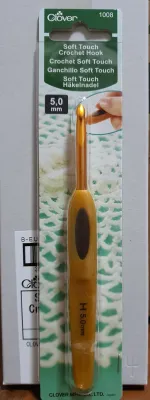
Your primary tool is the crochet hook. Instead of purchasing a massive set containing dozens of sizes, start with just one or two medium-sized hooks. A 4.0 mm (often labeled G/6 in US sizing) or a 5.0 mm (H/8) hook is highly recommended for beginners. These sizes are comfortable to hold and pair perfectly with standard medium-weight yarns. When shopping, always verify the sizing on the packaging. Sizing systems can vary by region, so look for the metric measurement in millimeters (mm), which is the most reliable and universal standard.
Products mentioned in this guide
![[✅SG Ready Stock] 70Pcs DIYI Crochet Kit for Beginners Complete Crochet Knitting Kit Adorable Animal Crochet Starter Pack](https://img.lazcdn.com/g/p/2d3fdc639d4d617dd2a33c60c591bddb.png_400x400q80.png_.webp)
![[SG Ship]4-Ply Milk Cotton Yarn Yellow Pink White Red Knitting Crochet 4-Strand](https://img.lazcdn.com/g/p/cdff029035ac4266f5d7c84a3fec8225.jpg_400x400q80.jpg_.webp)
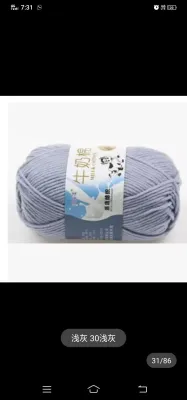
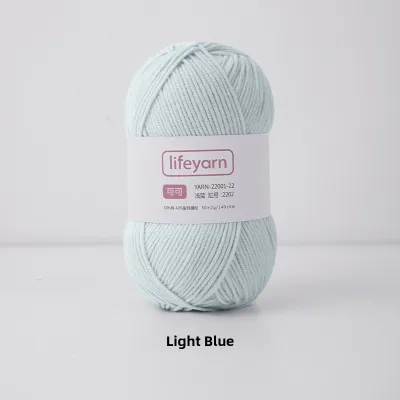
Prices are valid at publication and may change. Please refer to the product page for the latest price.
Crochet hooks generally come in two main design styles: inline and tapered. Inline hooks have a throat that is cut at a sharp angle, keeping the hook head in line with the shaft. Tapered hooks have a rounded head and a throat that gently slants inward. Neither style is universally superior; rather, they offer different physical sensations. Inline hooks provide excellent control over stitch size, while tapered hooks glide smoothly through loops. Trying one of each style in a medium size can help you discover which design feels more natural in your hands.
The material of the hook also affects your crafting experience. Aluminum hooks are highly recommended for beginners because they are durable, inexpensive, and allow yarn to glide effortlessly. Plastic hooks are lightweight and budget-friendly but can sometimes feel sticky with certain acrylic yarns. Wooden and bamboo hooks offer more friction, which can help prevent slippery yarns from sliding off too quickly, though they can occasionally snag if not polished perfectly.
In addition to a hook, you will need a few simple accessories to complete your first projects. A yarn needle, also known as a tapestry needle, is essential for weaving in loose ends when you finish a piece. These needles have blunt tips and large eyes to accommodate thick yarn. You will also need stitch markers to keep track of your stitches and mark the beginning of rows. While commercial plastic locking stitch markers are inexpensive, you can easily use household alternatives like safety pins, paperclips, or even a contrasting scrap piece of yarn.
Finally, a pair of scissors is necessary for cutting your yarn. You do not need to purchase specialized embroidery scissors or high-end fabric shears right away. Any sharp, small household scissors that can cleanly cut fiber without fraying the ends will work perfectly for your initial practice sessions.
How to Choose Your First Crochet Yarn
Selecting the right yarn is crucial for a smooth learning experience. The wrong fiber or color can make it difficult to see your stitches, leading to frustration and dropped loops.

For your very first project, look for medium-weight yarn, often categorized as worsted weight, Aran, or number 4 on the standard yarn weight scale. This thickness is easy to handle and allows you to see the structure of each stitch clearly. In terms of fiber content, acrylic or cotton-acrylic blends are excellent choices for beginners. Acrylic is highly affordable, widely available, and durable. In warm, humid climates, lightweight cotton blends are also highly practical because they are breathable and comfortable to handle during long crafting sessions. Avoid 100% wool or luxury animal fibers initially, as they can be expensive and may felt or split easily during practice.
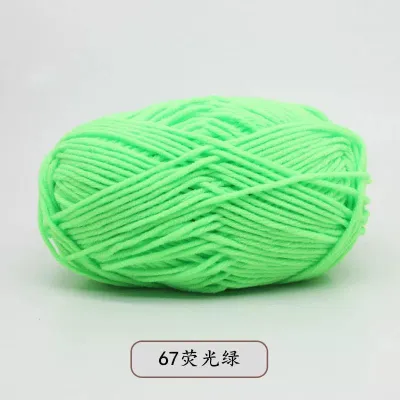
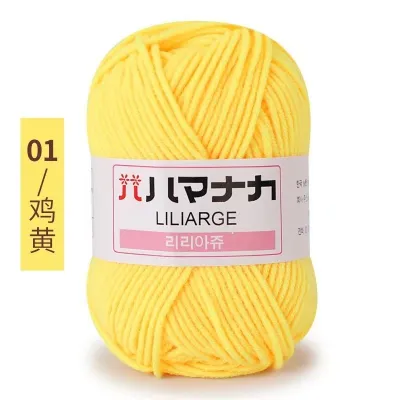
Color selection plays a surprisingly large role in how quickly you learn. Always choose light, bright, or pastel solid colors, such as cream, soft blue, yellow, or mint green. These shades reflect light well, making it easy to identify where to insert your hook for the next stitch. Avoid dark colors like black, navy blue, or deep forest green, as they absorb light and obscure stitch definition. You should also steer clear of heavily variegated, textured, or “fuzzy” novelty yarns for your first few projects, as they hide mistakes and make it incredibly difficult to count your stitches.
Before purchasing any yarn, take a close look at the paper band wrapped around the skein. This label contains vital information that will save you time and money. It lists the fiber content, the total weight, and the estimated yardage. Crucially, the label also features a small diagram recommending a specific crochet hook size in millimeters. Checking this recommendation ensures you do not pair a tiny hook with a thick yarn, which would make crocheting nearly impossible.
The yarn label also contains care instructions and a dye lot number. The dye lot number is particularly important if you are buying multiple skeins for a single project. Skeins from the same dye lot were dyed in the same batch, ensuring the color matches perfectly. Even a slight variation in dye lots can result in a visible line across your finished work, so matching these numbers is a simple way to ensure a consistent appearance.
Optional Upgrades to Consider Later
As you progress beyond basic chains and single crochet stitches, you may find yourself spending more time with your hook in hand. This is the point where certain comfort and organizational upgrades become worth considering.
Ergonomic crochet hooks are a fantastic upgrade once you commit to the hobby. Standard aluminum hooks can sometimes cause hand fatigue or cramping during extended sessions. Ergonomic hooks feature wider, cushioned handles made of rubber, silicone, or smooth wood. These grips reduce the strain on your fingers and wrists by allowing a more relaxed hold. When choosing an ergonomic hook, look for a handle shape that fits comfortably in your palm, whether you hold your hook like a pencil or a knife.
You might also look into organization and measuring tools as your collection grows. A simple tape measure or a sliding gauge ruler helps you check your project dimensions and stitch tension. While specialized items like ceramic yarn bowls (which keep your yarn ball from rolling across the floor) and mechanical yarn winders are popular, they are entirely optional. You can easily organize your yarn in simple storage bins or reusable bags until you decide to invest in dedicated craft room organization.
In humid climates, storing your growing yarn collection properly is essential to prevent dust, moisture, and pests from damaging the fibers. Simple airtight plastic storage bins with snap-on lids are highly effective for keeping your yarn clean and dry. You can also place a small silica gel packet or a cedar block inside the bin to absorb any residual moisture and keep your supplies fresh for your next project.
Building Your First Starter Kit on a Budget
Assembling your first crochet kit does not have to be expensive. With a strategic approach, you can gather high-quality, reliable supplies for under S$15 to S$20.
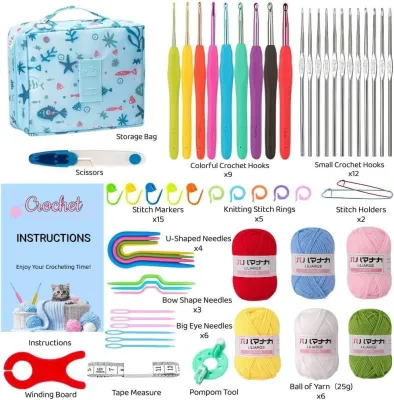
Many retailers offer pre-made beginner crochet kits, but these require careful evaluation. Some commercial kits are packed with cheap, unusable filler items like flimsy plastic hooks that bend, tiny scissors that do not cut, or low-quality yarn that splits instantly. When assessing a pre-made kit, look closely at the quality of the primary tools. It is often much better to buy a single high-quality aluminum hook and one good skein of yarn individually than to purchase a cheap, multi-piece kit filled with items you will never use.
Sourcing your supplies individually is often the most cost-effective route. Local craft shops, specialty stationery stores, and online marketplaces offer a wide selection of individual hooks and budget-friendly yarn. You can often find reliable aluminum hooks for just a few dollars each. If you want to keep costs low, consider checking second-hand platforms or community craft swaps, where hobbyists often sell unused yarn skeins and extra tools at a fraction of their retail price.
When building your budget kit, there are a few common pitfalls to avoid. Steer clear of extremely cheap, unbranded plastic or wooden hook sets that have rough seams or splinters. These imperfections will snag your yarn fibers and ruin your work. Additionally, avoid mystery yarn skeins that lack a paper label. Without a label, you will not know the fiber content, care instructions, or recommended hook size, making it difficult to achieve consistent results.
Frequently Asked Questions (FAQ)
Do I need to buy an expensive crochet hook set to start?
No, you do not need to buy an expensive set to begin. Purchasing just one or two individual aluminum hooks in standard sizes, such as 4.0 mm or 5.0 mm, is far more cost-effective for a beginner. This allows you to test the hobby and find your preferred hook style without a large upfront investment. A comprehensive set only becomes necessary later when you begin working on advanced patterns that require a wide variety of specific, non-standard hook sizes.
Can I use knitting yarn for crochet?
Yes, you can absolutely use knitting yarn for crochet. Yarn is not craft-specific; the same skein can be used for knitting, crocheting, weaving, or crafting. However, you must always check the recommended hook size on the yarn label. This ensures that the thickness of the yarn matches the hook you plan to use, preventing your stitches from becoming too tight or too loose.
How do I know if a crochet hook is good quality?
You can evaluate a crochet hook’s quality through a few simple physical checks. Run your fingers along the throat and the bowl of the hook to ensure the surface is completely smooth and free of sharp metal ridges, plastic seams, or wooden splinters that could snag your yarn. Additionally, look for size markings that are deeply engraved or molded into the handle rather than just printed on the surface, as printed markings tend to rub off quickly with the friction of your hands.

Community discussion
Share your experience or ask a question. Comments are reviewed before publication.